Sinitic Civilization-Book 1
Sinitic Civilization-Book 2
Tribute of Yu

Heavenly Questions
Zhou King Muwang's Travels
The Legends of Mountains & Seas
The Bamboo Annals - Book 1
The Scourge-of-God-Tetralogy:
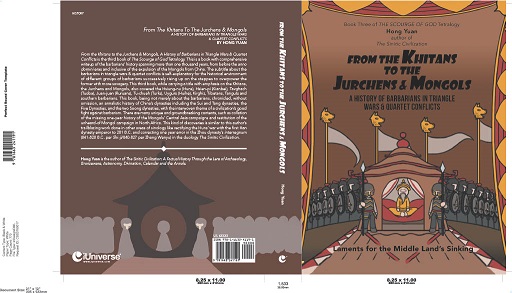
From the Khitans to the Jurchens & Mongols: A History of Barbarians in Triangle Wars and Quartet Conflicts
(available at iUniverse;
Google;
Amazon;
B&N)
|
|
America, i.e., the United States, was and is still shortsighted today, not knowing that Korea, at one time paradise of the American Evangelicals, was delivered into the hands of the Japanese imperialists as a result of the Anglo-American confrontation against Czar Russia, and in this geopolitical process, China, the land of the Great Sinitic Civilization (Barnes & Noble,
Amazon,
Google Play|Books
and
Nook Book), was made into a piggy-backed sacrificial/funereal object --the land ruled by the most evil cult called 'communism' that was an 'import' or an 'export' of Soviet Russia.
America would not learn the lesson that the geopolitical actions it is taking today would yield the 'bad fruit' 50 years or 100 years down the road.
America, and their British cousins, must have forgot the twenty-year Anglo-Japanese military alliance that allowed Japan to develop the warplanes and aircraft carriers to invade mainland China, not to mention the post-WWI ten-year arms embargo against Republic China and George Marshall's post-WWII arms embargo against Republic China 1946-1948.
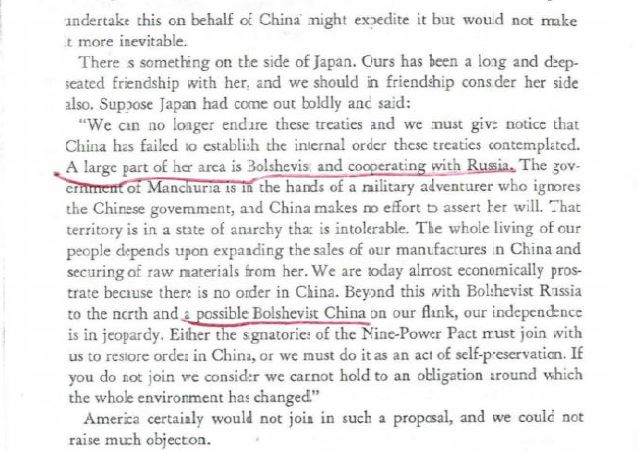
They forgot that in 1931, President Herbert Hoover gave Japan a free hand in the invasion of Manchuria on the pretext that Japan could not tolerate a half-Bolshevik China.
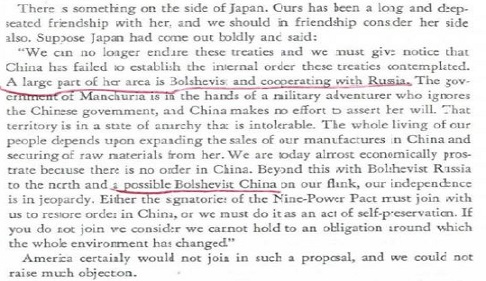 Earlier, in the 1920s, President Hoover, who personally nipped the post-WWI communist uprisings in Germany and Hungary with the grains embargo, fed Lenin the ingenuity, i.e., the [worldwide communist revolution] road to Paris lay through Peking.
They of course forgot that
after the eruption of the 1937 Sino-Japanese War, the Americans, biased towards Japan and against China, adopted a policy of "neutrality" (what Utley called by "unpositive neutrality") against the 'belligerent' countries, namely, Japan and China, which was free and unrestrained arms sale to Japan and de facto arms embargo against China.
Note that the Japanese navy had a full blockade of China's coastline.
Note that the blockade would choke China since China did not have an industrial base to produce the basic weapons while Japan's factories could roll out the warships and airplanes on a wholesale scale.
Also note that in contrast with the Americans, the European powers, being constrained by the mediation role of the League of Nations, dared not openly sell arms to Japan.
Through 1940-1941, prior to the U.S. revocation of the 1911 U.S.-Japan Commerce Treaty, the Americans were the biggest supplier of raw material, oil, aviation oil, and weapons, to the extent that some U.S. senator called by Scott making a claim that out of every one million Chinese killed by the Japanese, 544,000 Chinese were killed by the Americans.
Thirty-one U.S. congressional members made a joint declaration to the effect that the U.S., not NAZI Germany, nor Italy, was the best ally of Japan.
Earlier, in the 1920s, President Hoover, who personally nipped the post-WWI communist uprisings in Germany and Hungary with the grains embargo, fed Lenin the ingenuity, i.e., the [worldwide communist revolution] road to Paris lay through Peking.
They of course forgot that
after the eruption of the 1937 Sino-Japanese War, the Americans, biased towards Japan and against China, adopted a policy of "neutrality" (what Utley called by "unpositive neutrality") against the 'belligerent' countries, namely, Japan and China, which was free and unrestrained arms sale to Japan and de facto arms embargo against China.
Note that the Japanese navy had a full blockade of China's coastline.
Note that the blockade would choke China since China did not have an industrial base to produce the basic weapons while Japan's factories could roll out the warships and airplanes on a wholesale scale.
Also note that in contrast with the Americans, the European powers, being constrained by the mediation role of the League of Nations, dared not openly sell arms to Japan.
Through 1940-1941, prior to the U.S. revocation of the 1911 U.S.-Japan Commerce Treaty, the Americans were the biggest supplier of raw material, oil, aviation oil, and weapons, to the extent that some U.S. senator called by Scott making a claim that out of every one million Chinese killed by the Japanese, 544,000 Chinese were killed by the Americans.
Thirty-one U.S. congressional members made a joint declaration to the effect that the U.S., not NAZI Germany, nor Italy, was the best ally of Japan.
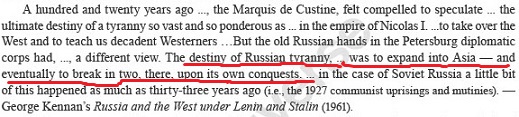 America, the 'stars' that engendered or heralded the rise of the [Japan] 'sun', long ago had the blueprint to make Japan into a stalwart against China the source of the Yellow Peril and Russia the source of the Half-Tartars, respectively, --whom the Americans could not assimilate according to George Kennan.
William Christian Bullitt Jr. (1891-1967) disclosed that the Americans' national policy or strategic aim was to see the Russians and Japanese' holding a balance of power against each other in China rather than seeing either the Russians or the Japanese overpowering the other party in taking control of China.
In making this geopolitical decision, you have victimized the 1 billion humble Chinese peasants.
(Note President Wilson's doctrine that the intactness of China was vital to the white civilization -- in the sense that the nation of China should be managed delicately, that is, should not be allowed to grow too powerful to pose a threat to the white civilization, nor should it be allowed to be hijacked by a non-U.S. power since China's immense human labor could be turned against the white civilization.
The theme of China to the white civilization, morphing superficially into a ***hypocritical*** American national policy of engagement with Communist China for changing the Chinese communists' behavior, rested on the same underlying logic:
"The
China Exception: Russian Communism being wicked, the
Chinese are good communists", which is an inherent fear
of the Yellow Peril,
i.e., billion Chinese would actually enjoy real
democracy, go to college and develop their intelligence.
Now, President Biden, a stooge of Communist China, explicitly abandoned the
hypocritical American policy of engagement to change communist China to his imbecilic communist buddy and dictator Xi Jinping.
Other than the stooge Bidens who ripped communist China's financial coffer (Tony Bobulinski FULL INTERVIEW Tucker Carlson), don't forget that President Roosevelt boasted of his family's ripping the China trade money in the 19th century, i.e., the opium trade;
and President Hoover certainly got the first bin of gold from the Kai-luan coal mine in collusion with the British during the 1900-1901 boxers' incident-related invasion.)
America, the 'stars' that engendered or heralded the rise of the [Japan] 'sun', long ago had the blueprint to make Japan into a stalwart against China the source of the Yellow Peril and Russia the source of the Half-Tartars, respectively, --whom the Americans could not assimilate according to George Kennan.
William Christian Bullitt Jr. (1891-1967) disclosed that the Americans' national policy or strategic aim was to see the Russians and Japanese' holding a balance of power against each other in China rather than seeing either the Russians or the Japanese overpowering the other party in taking control of China.
In making this geopolitical decision, you have victimized the 1 billion humble Chinese peasants.
(Note President Wilson's doctrine that the intactness of China was vital to the white civilization -- in the sense that the nation of China should be managed delicately, that is, should not be allowed to grow too powerful to pose a threat to the white civilization, nor should it be allowed to be hijacked by a non-U.S. power since China's immense human labor could be turned against the white civilization.
The theme of China to the white civilization, morphing superficially into a ***hypocritical*** American national policy of engagement with Communist China for changing the Chinese communists' behavior, rested on the same underlying logic:
"The
China Exception: Russian Communism being wicked, the
Chinese are good communists", which is an inherent fear
of the Yellow Peril,
i.e., billion Chinese would actually enjoy real
democracy, go to college and develop their intelligence.
Now, President Biden, a stooge of Communist China, explicitly abandoned the
hypocritical American policy of engagement to change communist China to his imbecilic communist buddy and dictator Xi Jinping.
Other than the stooge Bidens who ripped communist China's financial coffer (Tony Bobulinski FULL INTERVIEW Tucker Carlson), don't forget that President Roosevelt boasted of his family's ripping the China trade money in the 19th century, i.e., the opium trade;
and President Hoover certainly got the first bin of gold from the Kai-luan coal mine in collusion with the British during the 1900-1901 boxers' incident-related invasion.)
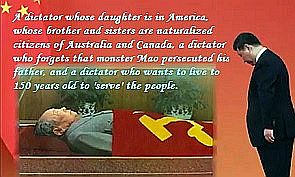 Now you, as the midwife who delivered China into the communist hands, are morally obligated to take China [and North Korea {and Vietnam}] out of communism.
This time, you may feel your hands forced as North Korea, with its nuclear weapons, could become Communist China's cecal appendix in a repeat of history.
(The Chicoms don't understand the urgency of Trump's trade war having the roots in nuclear North Korea, nor the domino effect on North Korea and Russia after the knock-out of communist China.
Putin thought he would reap profits by sitting on the fence of the U.S.-China trade war, i.e., the Zheltorossiya dream - revitalized by Aleksandr Gelyevich Dugin
[, and India would not be satisfied with grabbing South Tibet, Bhutan and Sikkim alone].
Previously, this webmaster thought that the Americans could be hoodwinked by the Chicoms who might just sign any agreement just for sake of getting a red carpet at the White House in lieu of a visit to Mar-a-Lago.
With Trump's war with Communist China flaring up, this webmaster believed that China's dictator would continue to commit blunders and became the tomb digger for the Chinese communist regime.
The thuggery communists, who would not allow the millions of the Hongkong people to have autonomy, could have caused the demise of the regime over the inevitable crackdown, not knowing that the communist ascension to power had its very roots in Churchill's collusion with Roosevelt in selling out the Republic of China for sake of retaining crown jewel Hongkong after hoodwinking Wellington Koo and Chiang Kai-shek that Britain would return Hongkong to China after Japan was to surrender so as not to damage the British wartime morale. --What happened was that Putin first jumped off the fence ahead of communist China in launching an invasion of Ukraine.)
Now you, as the midwife who delivered China into the communist hands, are morally obligated to take China [and North Korea {and Vietnam}] out of communism.
This time, you may feel your hands forced as North Korea, with its nuclear weapons, could become Communist China's cecal appendix in a repeat of history.
(The Chicoms don't understand the urgency of Trump's trade war having the roots in nuclear North Korea, nor the domino effect on North Korea and Russia after the knock-out of communist China.
Putin thought he would reap profits by sitting on the fence of the U.S.-China trade war, i.e., the Zheltorossiya dream - revitalized by Aleksandr Gelyevich Dugin
[, and India would not be satisfied with grabbing South Tibet, Bhutan and Sikkim alone].
Previously, this webmaster thought that the Americans could be hoodwinked by the Chicoms who might just sign any agreement just for sake of getting a red carpet at the White House in lieu of a visit to Mar-a-Lago.
With Trump's war with Communist China flaring up, this webmaster believed that China's dictator would continue to commit blunders and became the tomb digger for the Chinese communist regime.
The thuggery communists, who would not allow the millions of the Hongkong people to have autonomy, could have caused the demise of the regime over the inevitable crackdown, not knowing that the communist ascension to power had its very roots in Churchill's collusion with Roosevelt in selling out the Republic of China for sake of retaining crown jewel Hongkong after hoodwinking Wellington Koo and Chiang Kai-shek that Britain would return Hongkong to China after Japan was to surrender so as not to damage the British wartime morale. --What happened was that Putin first jumped off the fence ahead of communist China in launching an invasion of Ukraine.)
|
President Trump
understood the China situation and the China problem.
Should the American politicians follow the footsteps of Anson Burlingame (1820-1870),
Paul Samuel Reinsch (1869-1923)
and
Patrick Jay Hurley (1883-1963), i.e., three most prominent U.S. statemen who loved China and the Chinese people,
then the Chinese people could have a chance of salvation from the communist tyranny.
Note the historic recurrence and the repetition of similar events:
Anson Burlingame, in opposition to the anti-Chinese discriminatory whirlwinds rampant in the U.S. in the 19th century, authored the Burlingame Treaty for China and
died for China in 1870 in St. Petersburg
while still on the Manchu China's mission to the U.S. and Europe;
Paul Samuel Reinsch, who was disillusioned by President Wilson's betrayal of China over the division of WWI spoils at the Paris Peace Conference, quit the minister-to-China job to work for China and died for China in Shanghai in 1923;
and
Patrick Jay Hurley, who convinced President Roosevelt of the American moral blunders in selling out the Republic of China at Tehran and Yalta, personally travelled to Moscow and London for sake of averting and reverting China's fate of becoming a victim of WWII war spoils (i.e., the loss of Port Arthur and Hong Kong, etc.), but failed to make remedy to the secret Tehran and Yalta agreements in the aftermath of President Roosevelt's death in April 1945.
|
|
For better understanding the head-on collision between the United States and Communuist China,
refer to
the U.S.-China fatalistic conjunction through the hands of the Japanese firepower during WWII, that derived from the American unpositive neutrality;
the U.S.-China fatalistic conjunction through the hands of communist army's firepower during the 1945-1950 civil war, that derived from American-supplied Soviet August Storm weapons; and
the U.S.-China fatalistic conjunction through Joseph Stalin, Kim Il Sung and Mao Tse-ting's hands during the 1950-1953 Korean War.
|
|
|
|
More, refer to the Communist Platonic Club at wartime capital Chungking
and
The American Involvement in China: the Soviet Operation Snow, the I.P.R. Conspiracy, the Dixie Mission, the Stilwell Incident, the O.S.S. Scheme, the Coalition Government Crap, the Amerasia Case, & The China White Paper.
|
|
|
|
TRAGEDY OF CHINESE
REVOLUTION - PART II
(*** machine-translated Chinese language version:  ***) ***)
Xin Hai Revolution: External vs Internal Inducements
Manchu Army System & Northern Warlords
Founding Of The Republic Of China (ROC)
Yuan Shi-kai - First President of ROC
Song Jiaoren - Re-organization of Kuomingtang (KMT)
Song Jiaoren's Assassination Death & Second Revolution
Yuan Shi-kai Trampling On Republic
First World War & China - Japan's Twenty-one Demands
Yuan Shi-kai's Imperial Enthronement
The Republic Restoration Wars
Duan Qirui's Ascension To Power, & Compromises
Re-convening of Parliament & Revival Of Parties
Duan Qirui's Premier Post vs Li Yuanhong's Presidency
Zhang Xun's Restoration Of Imperial House
Southern Government & Protecting 'Interim Agreed-Upon Laws'
Civil Wars Among Northern Warlords
Russia, Britain & Japan - Tibet, Xinjiang, Mongolia & Manchuria
Russian Revolution: Nationalism vs Internationalism
Sun Yat-sen's Return To Canton After Expelling Gui-xi
"Allying Multiple Provinces For Self-Determination"
|
Cai Yuanpei, Hu Shi, Chen Duxiu & New Culture Movement
WWI, Workers' Awakening & Their Anti-Imperialism Role
Versailles Conference & May 4th Students' Movement
USSR/Comintern Seeking & Implanting Chinese Partners
Guangdong-Guangxi War & Li Zongren's Emergence
Chen Jiongming Rebellion Against Sun Yat-sen
USSR / Comintern Alliance With KMT & CCP
KMT First National Congress (Jan 1924)
Founding of Chinese Communist Party
CCP-Organized Workers' Movements
Peasants' Poverty Is China's Poverty
Mao Tse-tung & Peasant/Land Revolution
Borodin, Moscow & Chinese Revolution
Li Zongren Quelling Guangxi & Wars In Southwest China
Chiang Kai-shek & Whampoa Military Academy
5-30 Bloody Incident, HK-Guangdong Strike, & Boycotts
Wang Jingwei & KMT Left-Wing
Zhongshan Warship Incident
Northern Expedition & Unification Of China
KMT Purging CCP: Tragedy of The 'Grand Revolution'
|
| [ last page: revolution.htm ] |
[ this page: tragedy.htm ] |
Continuing from revolution.htm:
Generations of people in the 20th century, including Dr. Sun Yat-sen, had naive and utopian fondness for the Russian October Revolution of 1911.
Sun Yat-sen misunderstood Lenin's "goodwill" lip-service in nullifying the unequal treaties imposed on China by Czar Russia, and hence entered into an alliance with the Soviet Union and the Chinese Communist Party (CCP).
Sun Yat-sen, in order to win support from the USSR, had contacted Lenin two times in 1918, and in 1922 correspondence with Joffe, expressed much softer stance on the Mongolia independence and the Chinese Eastern Railroad.
Chicherin, back on July 4th, 1918, had rescinded the unequal treaties during the 5th Soviet Congress, and Karakhan, further on July 25th, 1919, re-affirmed the USSR's rescission of unequal treaties.
From 1920 to 1923, the U.S.S.R. continuously sent representatives to China for talks with the northern/southern warlords as well as with Dr. Sun Yat-sen and the communism activists. Joffe, a representative of Lenin, came to Shanghai, and on January 26th, 1923, promised to Sun Yat-sen in a joint declaration that they would help China to reunite under the Three People-ism without implanting communism in China.
Mikhail Borodin's military supplies (120,000 rifles) and a package of 2 million Mexican dollars in annual aid made Sun Yat-sen declare a new policy of "allying with the U.S.S.R. and allowing the CCP members to join the KMT individually".
Dr. Sun Yat-sen, after 26 January 1923 Sun-Joffe Joint Statement, had fallen into a de facto Soviet agent, sowing the seeds of struggles and conflicts between the KMT and the CCP as well as the disasters of the Chinese people in the 20th century.
(Historian Tang Degang blamed China's bloody path of "state socialism" [of both Chiang Kai-shek's Nationalist Party and Mao Tse-tung's Communist Party] on Sun Yat-sen's beliefs and practice of "radical socialism" which ended in his collusion with Russian Bolshevikism (Bolshevism) in the 1920s and designation of his "principle of livelihood" as equivalent to communism.)
China's fate and fortune did not evolve by itself.
Note that two countries that had both impacted China enormously would be Russia and Japan. The demise of the Republic of China on mainland China being attributed to the American sellout, though, the actual agents and saboteurs inside the American government were mostly implanted by the Russians and the Comintern. The Russians provided the roubles that fomented the world revolution by violence in the 20th century. Before the alliance with the USSR, Sun Yat-sen was noted for his collusion with the Japanese in opposing both the Manchu court and Yuan Shi-kai's imperial enthronement.
Significant in the Chinese revolution would be the Japanese factor, as evidenced by the fact that the ceremony for the convention of Sun Yat-sen's "Tong Meng Hui" [i.e., the 'Allied Society of China' or the 'Revolutionary Alliance'] was first held inside the building of semi-governmental Japanese " Kokuryukai [black dragon society]".
The Japanese national policy, however, was to fund and support any Chinese faction and rivalry against the centralized regime for sake of creating chaos and turmoil in China.
(Though, Mme Chiang Kai-shek, who personally met Dr Sun Yat-sen's Japanese friends in HK in early 1938 for war mediation, emphasized that among the 72 martyrs buried on the Huanghuagang Hill would be one Japanese friend who participated in the 29 March 1911 uprising.)
Note that Sun Yat-sen's decision to ally with Russia and the CCP was induced by the antagonisms from the imperialistic powers.
Sun Yat-sen complained to reporters of "New York Times" in July, 1923 about this kind of imperialistic antagonisms towards the Chinese revolution.
After Sun Yat-sen reorganized the military government in Canton in December 1923, the foreign diplomatic corps stopped the funding of 13% of the customs surplus that was due to the southern government on the pretext that the Canton government did not represent the whole area of Southwest China as stipulated by the prior funding agreement.
Wu Tingfang protested against the foreign corps' Canton legation and threatened to take over custody of the customs office as a revenge. To counter the threat of the Canton government, the foreign powers sailed their warships and gunboats to
Bai'E'Tan [i.e., white swan pond]
area of Canton as a show of force.
As pointed out by Xin Hao-Nian, Dr. Sun Yat-sen's threat to take over the customs and withhold surplus from the Canton Customs was opposed by various imperialistic powers. In December of 1923, Britain, the U.S., France, Japan, Italy and Portugal etc., sent their warships and gunboats to Canton to exert pressure on Sun Yat-sen for sake of protesting against the threat of customs tax withholding. It is no strange that the imperialist powers would oppose Sun Yat-sen since China's revolution was induced by the invasion of the foreign powers in the first place. From the outset of the Xin Hai Revolution of 1911, the imperialist powers had opposed China's democracy process, and this is best exemplified by the U.S. ambassador's pressuring the Manchu government into recalling Yuan Shi-Kai for sake of cracking down on the 1911 Xin Hai Revolution.
At http://www.larouchepub.com/other/2004/3123morgan_v_dr_sun.html, Mike Billington wrote for "Executive Intelligence Review" an article entitled "How London, Wall Street
Backed Japan's War Against
China and Sun Yat Sen", pointing out the behind-the-scene manipulation as to "SYNARCHISM AND WORLD WAR".
As stated by Mike Billington, "... British synarchist banking interests, centered around Bank of England head Montagu Norman, Hongkong and Shanghai Bank director Sir Charles Addis, and J.P. Morgan chief executive Thomas Lamont, deployed militarily and politically to destroy Sun Yat Sen and his influence.
... when their subversion and looting failed to crush Sun's republican movement, the British threw their weight behind the synarchist/fascist forces in Japan, financing the Japanese military occupation of the Chinese mainland...
By 1931, J.P. Morgan had floated $263 million in loans for Japanese borrowers, including direct loans to the government in 1930", with quite some of the funds going direct to the Southern Manchurian Railway under disguise to avert the world opinions.
The Anglo-American hostility and subversion against China continued well into the 1940s, at which time General Wedemeyer, right after succession of Stilwell's post in 1944, reported to Washington D.C. in a cable, stating that "...British Ambassador personally suggested to me that a strong unified China would be dangerous to the world and certainly would jeopardize the white man's position immediately in Far East and ultimately throughout the world".
More available at
"Changing Alliances On the International Arena", "Century-long American hypocrisy towards China", "Anglo-American & Jewish romance with the Japanese", "Joe Stilwell's Authorization To Assassinate Chiang Kai-shek", and "What Foreign Powers Did To The Flowery Republic Prior To, During And After The 1911 Revolution".
(Anglo-American supremacists, today, should have no worry about China anymore since the so-called "elites" of China, relatives and families of the Chinese government officials, and the "street and market people of the cities", men and women included, had already capitulated to the West. What remained "unconquered" would be the humblest people of this earth, i.e., billion peasant Chinese, whom the communist government had already enslaved and bondaged on behalf of the West.
The Chinese communist rulers, who were pre-occupied with "pleasure-seeking and literature-decoration" like the Manchu rulers, would most likely lose badly during the next confrontation which could be very well against the old feud [i.e., Japan, now a lethal force under the American umbrella, but having no memory of either the pardon from the Republic of China or the humiliation of being declined a decent surrender by the Russians].)
In conclusion, the Chinese Revolution, being cornered since inception, would never be able to escape the web knit by the superpowers and financial conglomerates of the 20th century.
That is what I will call here as the Tragedy of the Chinese Revolution, not the same as Harold Isaacs' book Tragedy of The Chinese Revolution, i.e., the Chinese revolution failed as a result of the ideological difference between Stalin, Bukharin and Trotsky on the matter whether China's revolution was at the stage of the Russian 1905 Revolution or the Russian 1917 Revolution.
On January 17th, 2004, reformer Zhao Ziyang, after 15 years of house arrest, passed away.
People who had hoped for a change at this juncture might be disappointed should no significant mourning-related activity or political loosening happen in China.
In history, China's dynastic substitution was mostly the results of usurpation, mutiny or foreign invasion, except for the Yellow Turbans of Eastern Han Dynasty and the Red Turbans of Yuan Dynasty: mutiny applied to Li Zicheng & Zhang Xianzhong rebellion in late Ming Dynasty, and the Xin Hai Revolution in late Qing Dynasty, as well as applies to the scenario of the 1927 Communist Revolution against the Nationalist Government.
The 1895 aborted Canton Uprising and the 1900 Huizhou Uprising had ensued in the aftermath of the Manchu debacle in the Sino-Japanese War and the Manchu debacle in the boxer movement, respectively.
Hence, one would have to pessimistically expect that the Chinese communists would commit suicide by themselves one way or the other [e.g., attacking Taiwan] in order to see a revolution similar to the Xin Hai Revolution that had overthrown the Manchu rule.
(After we have closely examined the historical context of China's reforms from 1979 to 1989, we would understand that in today's China, i.e., year 2005, there will be void of any chance of change. This is because the "Enlightened Intelligentsia" had been routed since the 4 June 1989 Massacre, while no significant regenerating force had ever emerged.
The damage to China's fortune was many times worse than the abortion of the late Manchu-era "Hundred Day Reformation" at which time incessant foreign invasion had sustained the fighting spirits and martialness of the Chinese people, as seen in the Assassination & Uprisings.)
Cai Yuanpei, Hu Shi, Chen Duxiu & the New Culture Movement
The Chinese communists (CCP) had a saying, 'At the sound of the cannon blasting from the Russian October Revolution of 1917, China was bestowed with the gift of the Marxism/Leninism creeds.' Further, the CCP claimed that the May 4th Student Movement of 1919 had guided the Chinese proletarian to the front stage of the revolution in the attempt of legalizing the founding of the Chinese Communist Party in 1921 [or 1920]. maoism.org/msw/vol2/mswv2_13.htm carried an article written by Mao Tse-tung in 1939, emphasizing the role of the working people (i.e., workers and peasants).
Further, there had been confusion as to the "New Culture Movement" and the "May 4th 1919 Students' Movement".
Prof Zhou Yueshan's viewpoint is that the "New Culture" movement brought about the "May 4th Movement", and the concept of the "New Culture" movement was further propagated in the aftermath of the "May 4th Movement".
Hu Qiuyuan biographical memoirs stated that China's intellectuals had undertaken three roads to counter Japan's 21 demands presented to Yuan Shikai on January 8th, 1915, i.e. launching the "New Culture Movement" among other things.
No matter the "New Culture" movement or the "May 4th Movement", China's enlightenment movement was doomed to be overtaken by politics & patriotism in an era that the jungle law dictated the history of mankind.
What Is the New Culture Movement?
Prof Zhou Yueshan had listed Luo Jialun & Fu Sinian's magazine "New Tide" together with the "Weekly Commentary" newspaper and Chen Duxiu's "New Youth", and called the three publications the three big contributors to the New Culture Movement.
It was widely agreed that Cai Yuanpei, after the assumption of the principal post at Peking University in 1917, had taken a series of drastic reform measures on the issues of i) academic freedom and ii) student autonomy.
Prof Zhou Yueshan claimed that Cai Yuanpei had promoted the combination of Chen Duxiu's "New Youth" activists and Peking University activists. Among the top guest professors at Peking University would be Chen Duxiu, Hu Shi, Qian Xuantong, Liu Bannong, Shen Yinmo and Zhou Shuren [Lu Xun], i.e., prominent activists who advocated for the "literal revolution".
Later, when Sun Yat-sen expressed support for the students arrested during the May 4th Movement, he pointed to the "few conscientious promulgators" by inferring to those above-mentioned leaders of the New Culture Movement and endorsed the term "new culture movement".
Conclusion is that it was Cai Yuanpei who, a revolutionary and patriot in essence, heralded China's new culture movement [i.e., the new cultural movement or the new intellectual movement].
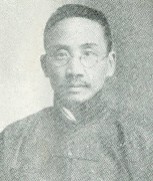 Cai Yuanpei [1868-1940] was a Manchu era "imperial academy" scholar who passed the imperial exam for "xiu cai" [distinguished student] at age 17, "ju ren" [recommended examinee for the capital exam] at age 23, and "jing shi" [the imperial examinee secondary in excellence, after top 3 titles of 'zhuang yuan', 'bang yan' and tan hua'] at age 24. Cai Yuanpei, after seeing the demise of the "Hundred Day Reformation", resigned for hometown where he devoted himself to education at Shaoxing's China-West School where the students included Jiang Menglin. In 1901, Cai Yuanpei taught at Shanghai's South-Sea Public School. In 1902, Cai Yuanpei co-established the "Patriotic Women School" in Shanghai. After a short visit to Japan, Cai Yuanpei returned to assume the post of president of the "Chinese Education Society". Cai Yuanpei resigned his post at the South-Sea Public School to lend support to China's first student protests at the school, and then established the "Patriotic Society" and invited Wu Zhihui & Zhang Taiyan as teachers. In 1905, Cai Yuanpei joined Sun Yat-sen's "Allied Society" and assumed the post of the Shanghai branch of the secret society. From 1907 to 1911, Cai Yuanpei studied philosophy, literature, anthropology, psychology, aesthetics and ethics in Germany. After the 1911 Xin Hai Revolution, Cai Yuanpei returned to China to assume the post of education minister. Cai Yuanpei would be responsible for designing China's curricula for schools and colleges, but he would resign in protest of Yuan Shi-kai's ruling. After intermittent studies in Germany, Cai Yuanpei returned to China on December 26th, 1917 for the post of principal of the National Peking University.
The New Culture Movement would yield the following results: i) adoption of the commonly-spoken Chinese language ('bai hua wen', i.e., vernacular) and abolition of the classical Chinese language ('wen yan wen'); ii) emergence of a whole generation of great writers and thinkers like Lu Xun, Hu Shi, Liu Bannong, Guo Moruo etc; iii) the women's liberalization movement, and iv) the enlightenment and liberation of free thoughts for students and intellectuals.
(Tang Degang pointed out that Liang Qichao, who wrote on September 3rd, 1915 "What a weird thing to talk about the National System?"
on "Jing [Peking] Bao [newspaper]" in so-called "baozi [newspaper] wen [language]", would portend the coming age of the New Culture.
Tang Degang stated that the elderly people of his times had predicted that when the kids grew up, they would be reading and writing in the "Newspaper Language", i.e., the intermediary between the classics Chinese language and vernacular Chinese language.)
The side effects would be the trashing of the Chinese tradition and essences, the decadence lifestyle resulting from sexual liberalization, the nihilism of the Chinese nationality and the wholesale Westernization, the embracing of Bolshevikism, and the conversion of numerous intellectuals into the communists who looked to the Bolshevik Russians as their 'step-father'. (The Chinese communists, when joking about their death or sacrifice of life, often stated that they were to report to Marx in their after-life.)
The early twentieth century would also see a "fad" among China's young men and women for the West, with Hu Shi being an adorer of Browning and revolutionary-monk Su Manshu an adorer of British Poet Byron who died in the Greek independence war.
The fad could be equivalent to each young man or woman picking one European name as his or her adorer: Hu Shi was an adorer of Browning while studying in America, while
Revolutionary-monk Su Manshu, an adorer of British poet who died in the Greek independence war, had called on fellow countrymen to fight Yuan Shi-kai's imperial enthronement in 1916 by means of an analogy, possibly alluding to his maternal birth background as a Japanese. (Su Manshu translated the "Biography of Byron" into Chinese.)
Marx writings and German "superman philosopher" Friedrich Nietzsche writings were included among those schools of thoughts. Sun Yat-sen's faithful follower, i.e., martyr Zhu Zhixin, had written a book with admiration for both Marx and Nietzsche.
Numerous men and women poets and writers took extreme delight in the Russian romance writings and practiced the "Nora" lifestyle as preached by the NORA Literature, i.e., Henrik Ibsen's "A Doll's House".
Different scholars differed on the definition of the new culture movement. Hu Shi emphasized the parallel by pointing to the European Renaissance.
Mainland Chinese thinker Li Zehou, having studied the new culture movement, concluded that China's enlightenment movement was unfortunately overtaken by the "politics and patriotism" movement that invariably became the mainstream thoughts in the context of the Japanese invasion. (Li Zehou, 1986, disapproved Su Xiaokang's "River Elegy" which was a whole-hearted embracing of the "blue civilization" in lieu of the "yellow civilization".)
The Impact of the Russian October Revolution On the Chinese Intellectuals
As cited by Xin Hao-nian in "Which Is The New China", Historian Zhang Yufa pointed out that Marxism spread to China much earlier than 1917; that in 1903, Zhao Bizhen translated into Chinese the Japanese book "Modern Socialism" (Kinsei Shakaishugi by Fukui Junzo); that in 1906, Newspaper "Min Bao" (People's Newspaper) began to publish segments of the "Communist Manifesto"; that in 1912, a so-called 'Research Society Into Socialism' was set up; that Liang Qichao began to publish research series into the 'Das Kapital', 'Perspectives on Historical Materialism', and 'Marxist Socialism' etc; and that in 1912/1913, immediately ensuing the 1911 Xin Hai Revolution, Xu Qiwen established the "Workers' Party of ROC" and Jiang Kanghu established the "Chinese Socialist Party".
The "Gongxue-she" [study together society] under Liang Qichao and Jiang Baili had published a series of books on Marx.
Hu Hanmin and Dai Jitao wrote about 'materialism' in the winter of 1919; and on November 1st, Dai translated an article about interpretation of the "Das Kapital".
From 1919 onward, among writers or translators on communism, Lenin and Marx would be Yuan-quan, Zhi-xi, Gu Zhaoxiong [Gu Mengyu], Huang Lingshang [Huang Wenshan], Liu Binglin, Chen Qixiu, Wei-ci, Zhou Binglin, Li Zezhang, Wang Lian, Jun-li [Zhang Junli?], Gong-zhan [Hu Gongzhan?] and Lü-qin.
In addition to Marx/Engels, many works by Adam Smith, John Stuart Mill, Herbert Spencer and Thomas Huxley had already appeared in Chinese translations.
Note many of those translations were actually second-hand, namely, translated from the Japanese version.
Zhang Yufa further stated that the initial reaction of the Chinese media to the Russian revolution was a surprise at the coup d'etat and that only after Lenin showed the lip-service about nullifying unequal treaties with China did some intellectuals like Li Dazhao express admiration for the victory of Bolshevik communism in 1918. Zhang Yufa claimed that Marxism was treated more as an academic subject around that time and that
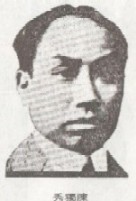 Chen Duxiu's magazine, "The New Youth", in the May 1919 edition, had merely selected the subject of Marxism as its monthly special edition.
Aside from "New Youth" & "Weekly Commentary", the Progressive Party's "Morning Post" and KMT's "ROC Daily" & "Construction Magazine" had carried discussion on socialism and Marxism.
As cited by Xin Hao-nian, the Russian October 1917 Revolution had nothing to do with Marxism spreading to China and that the May 4th Movement of 1919 had nothing to do with the working people's awakening to and participation in the Chinese revolution.
Chen Duxiu's magazine, "The New Youth", in the May 1919 edition, had merely selected the subject of Marxism as its monthly special edition.
Aside from "New Youth" & "Weekly Commentary", the Progressive Party's "Morning Post" and KMT's "ROC Daily" & "Construction Magazine" had carried discussion on socialism and Marxism.
As cited by Xin Hao-nian, the Russian October 1917 Revolution had nothing to do with Marxism spreading to China and that the May 4th Movement of 1919 had nothing to do with the working people's awakening to and participation in the Chinese revolution.
Scholars who resented communism often alluded to the personal life of Chen Duxiu and Lu Xun as exemplifying the low quality of early communism activists. Indeed, Chen Duxiu's decadent life style with the Japanese prostitutes of the Ginzai entertainment district, prior to his return to Shanghai to launch the magazine in 1915, could be validated by his attempts to have the revoltionary-monk Su Manshu identify with him.
Chen Yongfa stated that it was Shanghai's anarchists who had first applauded the Russian Revolution in "Labor" magazine.
"Labor" magazine, in March 1918, wrote about "Herald of the Social Revolution in Russian" and "Brief Introduction to Li-ning [Lenin]".
However, the anarchists worldwide soon blasted the Bolsheviks for the crackdown on their French master who went to Moscow for cheering up the revolution.
Chen Yongfa further stated that the U.S.S.R. did not pay attention to the Orient till after gaining an upper hand in the Civil Wars that started from November 1917. Prior to a march at Eastern Siberia, the U.S.S.R. issued its "First Karakhan Proclamation" of July 25th, 1919, re-affirming the USSR's rescission of unequal treaties.
Chen Yongfa cited Wang Yujun's research in pointing out that Peking's northern warlord government did not get a copy of the "Karakhan Proclamation" till just days before Grigorii N. Voitinsky (Zarkhin) visit. (See alternative analysis of the two-faceted "karakhan manifesto".)
Nevertheless, the Russian October 1917 Revolution had certainly inspired the Chinese intellectuals' interest in communism. The USSR's offer of nullifying all unequal treaties had won a "delighted and sympathetic hearing for Russia among all classes of Chinese" per Harold Isaacs. The 'Communism study group' or 'Marxism study group' had been first formed in 1918.
The Western Betrayal To China On Japan's Inheriting the German Interests
To celebrate the November 11th, 1918 victory of China as an WWI ally, China's Duan Qirui government declared a three-day holiday. Duan Qirui held a military parade on the Tian'an'men Square, and numerous activists gave their speech on the square.
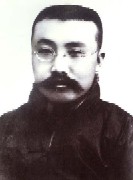 Li Dazhao gave a speech stating that the WWI victory was the victory of commoners. Li Dazhao, who earlier published an article on 'Comparison of the French Revolution and the Russian Revolution' on July 1st, 1918, would send to the "New Youth" magazine another article entitled 'The Victory of Bolshevikism' for publication on November 15th, 1918, i.e., for applauding the Russian revolution's anniversary. On November 28th, Li Dazhao repeated his early speech in today's Zhongshan Park of Beijing where the late German minister Baron Klemens von Ketteler's tombstone was transferred there with the new inscription 'Victory of Justice'.
Chen Yongfa claimed that China's intellectuals, deeply disappointed over the evaporation of the Wilson 14 principles, finally turned to Russian Bolshevikism as a result of the Western betrayal to China on the matter of Japan's inheriting the German interests.
Chen Yongfa cited Chen Duxiu's change of attitude in calling Wilson by "wei [W] da [big] pao [cannon]' [i.e., the 'false promise crook'] rather the 'first good man of this world'.
Chen Yongfa stated that philosopher Zhang Dongsun had commented that socialism research had become a fad after WWI in China.
Li Dazhao gave a speech stating that the WWI victory was the victory of commoners. Li Dazhao, who earlier published an article on 'Comparison of the French Revolution and the Russian Revolution' on July 1st, 1918, would send to the "New Youth" magazine another article entitled 'The Victory of Bolshevikism' for publication on November 15th, 1918, i.e., for applauding the Russian revolution's anniversary. On November 28th, Li Dazhao repeated his early speech in today's Zhongshan Park of Beijing where the late German minister Baron Klemens von Ketteler's tombstone was transferred there with the new inscription 'Victory of Justice'.
Chen Yongfa claimed that China's intellectuals, deeply disappointed over the evaporation of the Wilson 14 principles, finally turned to Russian Bolshevikism as a result of the Western betrayal to China on the matter of Japan's inheriting the German interests.
Chen Yongfa cited Chen Duxiu's change of attitude in calling Wilson by "wei [W] da [big] pao [cannon]' [i.e., the 'false promise crook'] rather the 'first good man of this world'.
Chen Yongfa stated that philosopher Zhang Dongsun had commented that socialism research had become a fad after WWI in China.
The cause and effect of Western countries' betrayal to China on the matter of Japan inheriting the German interests on the Shandong Peninsula would be the students' movement on May 4th, 1919.
So to say that the New Culture Movement had brought about the liberalization of thoughts among the intellectuals and students who in turn pushed forward with the agenda of the anti-imperialism May 4th Movement, i.e., a student movement that today's communists both have revered and feel haunted by.
The New Culture Movement vs the May 4th 1919 Students' Movement
As put forward by Prof Zhou Yueshan of Taiwan's Politics University in 1979, the communists had mutated the history of the New Culture Movement and May 4th Students' Movement by selectively listing some subprime figures such as Li Dazhao and Lu Xun. Though, people are easily confused by the fact that quite some activists of the new culture and the May 4th student movements had been founders of the communist party.
Lu Xun, who was working inside of the culture ministry of the northern government in 1919, had later commented in apathy about newspapermen using students' uniform as a vendor jacket. In another sense, Li Dazhao and Lu Xun did not count among the mainstream thinkers and propagators of the New Culture Movement, per Zhou Yueshan.
Right after the May 4th Movement of 1919, Li Dazhao published his article 'My Marxist Perspectives' on "New Youth". Li Dazhao was said to have been ahead of Chen Duxiu in accepting communism by half a year. Chen Duxiu, on June 8th of 1919, debated with scholar Hu Shi in regards to "more research into issues and less talk about ism".
Hu Shi, after visiting Sun Yat-sen in Shanghai, returned to Peking with a copy of Sun Yat-sen's "Guideline For Building China" and propagated "more research and less talk about ism".
Chen Duxiu was arrested by the government for his political activity in June 1919, and Li Dazhao continued to engage Hu Shi by writing "Another Discussion In Regards To Issue vs Ism" on August 17th.
Hu Shi [Hu Shih], a student of the American empiricism school of thought, engaged Li Dazhao by publishing the "Third Discourse On Issue & Ism" and the "4th Discourse On Issue & Ism" on the "Weekly Commentary".
By "hollow talks about ism", Hu Shi was alluding to Li Dazhao et al., on the matter of twisting the Bolshevikism after perusal of a few pages of Britannica.
After being released from prison, Li Dazhao escorted Chen Duxiu to Tientsin, where Chen Duxiu made a further trip to Shanghai. Chen Duxiu re-oriented his "New Youth" magazine's guidelines in October of 1919, took over the leadership as the only editor per Zhou Zuoren, and published a declaration of magazine editorial standgrounds. On November 12th, Chen Duxiu wrote 'The Basis For Practicing Democracy'. On December 1st, Chen Duxiu published an article entitled 'To The Workers Of Beijing' on the "Morning Post" [i.e., Progressive Party's newspaper].
"The New Youth" also carried a commentary on the First Karakhan Proclamation on July 25th, 1919.
There had been a surge of activities in anti-Confucianism propagation by the intellectuals and students across the nation, i.e., the New Culture Movement.
The New Culture Movement, with staunch proponents like Hu Shi, Cai Yuanpei, Chen Duxiu and Lu Xun etc., had sowed the seeds of rebellion among the young students who took to the streets on May 4th, 1919 in protest of the humiliation imposed by the League of Nations in having WWI victor country China acknowledge Japan's inheritance of the German interests on the Shandong Peninsula.
The May 4th Movement of 1919, not necessarily something which had pushed China's working people onto the stage of revolution, had led to subsequent organization of various 'Marxism study groups', precursors to the 'Socialist societies' in 1919 and various provincial sections or branches of the Chinese Communist Party Organization Committees in 1920. Among the founders of the CCP would be student leader Zhang Guotao who led the students' attack at the Northern Government ministers' residencies during the May 4th Movement.
The "New Youth" Magazine
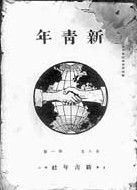 Chen Duxiu launched the "The New Youth" at age 36 in 1915 as a counter against the "Revering Confucius & Reviving Antiquity" movement that was endorsed by Yuan Shi-kai.
We could not discount the role played by "The New Youth", on the September 1915 edition of which Chen Duxiu (Ch’en Tu-hsiu), a professor at Peking National University, advocated for a new thinking that mandated the breakaway from the Chinese tradition and Confucianism. As Harold Isaacs put it down, Chen Duxiu proclaimed that the new youth should "fight Confucianism, the old tradition of virtue and rituals, the old ethics and the old politics . . . the old learning and the old literature."
In January 1919 edition of "New Youth", Chen Duxiu advocated Mr. De (i.e., democracy and political thoughts of the West) and Mr. Sai (i.e., natural sciences of the West) as well as trashed China's 'national essence' and 'classics literature'.
Chen Duxiu launched the "The New Youth" at age 36 in 1915 as a counter against the "Revering Confucius & Reviving Antiquity" movement that was endorsed by Yuan Shi-kai.
We could not discount the role played by "The New Youth", on the September 1915 edition of which Chen Duxiu (Ch’en Tu-hsiu), a professor at Peking National University, advocated for a new thinking that mandated the breakaway from the Chinese tradition and Confucianism. As Harold Isaacs put it down, Chen Duxiu proclaimed that the new youth should "fight Confucianism, the old tradition of virtue and rituals, the old ethics and the old politics . . . the old learning and the old literature."
In January 1919 edition of "New Youth", Chen Duxiu advocated Mr. De (i.e., democracy and political thoughts of the West) and Mr. Sai (i.e., natural sciences of the West) as well as trashed China's 'national essence' and 'classics literature'.
The direct link of Chen Duxiu's "The New Youth" magazine to the ghost or specter of communism in China would be the Russian implication.
The Soviet archives had revealed that the 'Russo-Chinese News Agency' in Shanghai had utilized "The New Youth" publishing house and its branches across China as a nexus for developing the 'Chinese Socialist Youth League', precursors to the Marxism study groups and the Chinese Communist Party.
Conservatist Confucians & Buddhism-humanitarianism Blended Confucians
Following Chen Duxiu's call for "Down With Confucian Academy !" would be Li Dazhao who polarized the relationship between emperor and citizens and between liberty and dictatorship. Scholar Wu Yu criticized Confucian's filial piety. Lu Xun criticized the 'National Essence School of Thought' and the 'School of Thought on Western Means & Chinese Essence'.
In contrast, the conservatives upheld Confucianism as the creed for ruling a country like China. Yuan Shi-kai, who had enthroned as an emperor for 83 days in 1916, had sorted out the Confucius descendants for theorizing his imperial restoration. Yuan Shi-kai first issued the Confucian decree in 1913.
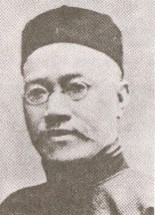 Yan Fu and Liang Qi-chao, with 200 scholars, established a Confucianism Public Society; and in Shanghai, Kang You-wei was made into president of the Confucianism Society. In September 1916, Kang You-wei, who had proclaimed Confucian a 'reformist' for sake of pushing through the 1898 'Hundred Day Reform', would petition with the Peking government to have Confucianism declared a state creed (i.e., state religion). After Yuan Shi-kai's abortive attempt at the imperial restoration, Zhang Xun, a 'pigtail general' of the northern military lineage as well as a conservative Confucian, had a short-lived imperial restoration in July 1917.
(Zhang Binglin rebuked the Confucianism societal movement.)
Yan Fu and Liang Qi-chao, with 200 scholars, established a Confucianism Public Society; and in Shanghai, Kang You-wei was made into president of the Confucianism Society. In September 1916, Kang You-wei, who had proclaimed Confucian a 'reformist' for sake of pushing through the 1898 'Hundred Day Reform', would petition with the Peking government to have Confucianism declared a state creed (i.e., state religion). After Yuan Shi-kai's abortive attempt at the imperial restoration, Zhang Xun, a 'pigtail general' of the northern military lineage as well as a conservative Confucian, had a short-lived imperial restoration in July 1917.
(Zhang Binglin rebuked the Confucianism societal movement.)
Liang Suming, i.e., the Last Confucian Of China, wrote an article "An Exploration Into Yuan Dynasty"
in 1918 and hence was appointed lecturer of philosophy in Peking
University at the age of 25. He would later advocate a new school of
Buddhism based on the humanitarianism, loving-kindness and compassion. He
was labeled a conservative for his criticisms of facile westernization
and modernization. Later in the 1930s, he launched an experiment with
agriculture in Shandong Province by setting up village schools and
Confucian academies, i.e., the "Rural Reconstruction Movement".
Liang Suming and Hu Shi differed on the matter of Confucianism.
Hu Shi, i.e., a returnee from America as well as a student of John Dewey, had claimed to his Chinese classmates in the U.S. that they should not mind politics but concentrate on studies at the outbreak of the May 4th, 1919 student movement.
It would be during his late years that Hu Shi acknowledged to Tang Degang that he was wrong in 1919.
Liang Qi-chao, who was first a "royalist" and then a "constitutional monarchist", was merely a chess piece in a board game per Mike Billington who stated that "London's leading synarchist spokesman, Bertrand Russell, traveled to China in 1921-22, sponsored by none other than Liang Chi-chao's 'Society for Chinese Lectures'. Liang also sponsored John Dewey's trip to China, which was financed by the New Republic, a journal set up by Morgan partner, and old China hand, Willard Straight. Between them, Russell and Dewey set in motion a process of subversion which would infest China for decades, leading all the way to the nightmare of the Cultural Revolution in the 1960s".
|
The origin of 1) the May 4th Movement and 2) the Chinese communist party could be traced to the three thousand returnee-students from Japan in May-July of 1918. Li Dazhao, who had been mailing out the anti-Japan pamphlets to schools across China, was one of the founding member of "The Young China Society", i.e., an organization that would yield the 1) radical faction of the Chinese communist members and 2) the Youth Party which advocated for strong nation-ism and nationalism. Li Dazhao, having steered away members towards communism, apparently took pleasure in membership of multiple societies, organizations and parties, and later in 1922, was to launch a "Democratic Socialist Party" or the sort.
|
|
America, i.e., the United States, was and is still shortsighted today, not knowing that Korea, at one time paradise of the American Evangelicals, was delivered into the hands of the Japanese imperialists as a result of the Anglo-American confrontation against Czar Russia, and in this geopolitical process, China, the land of the Great Sinitic Civilization (Barnes & Noble,
Amazon,
Google Play|Books
and
Nook Book), was made into a piggy-backed sacrificial/funereal object -the land ruled by the most evil cult called 'communism' that was an 'import' or an 'export' of Soviet Russia.
America would not learn the lesson that the geopolitical actions it is taking today would yield the 'bad fruit' 50 years or 100 years down the road.
America, and their British cousins, must have forgot the twenty-year Anglo-Japanese military alliance that allowed Japan to develop the warplanes and aircraft carriers to invade mainland China, not to mention the post-WWI ten-year arms embargo against Republic China and George Marshall's post-WWII arms embargo against Republic China 1946-1948.
They forgot that in 1931, President Herbert Hoover gave Japan a free hand in the invasion of Manchuria on the pretext that Japan could not tolerate a half-Bolshevik China.
Earlier, President Hoover, who personally nipped the post-WWI communist uprisings in Germany and Hungary with the grains embargo, fed Lenin the ingenuity, i.e., the [worldwide communist revolution] road to Paris lay through Peking.
They of course forgot that
after the eruption of the 1937 Sino-Japanese War, the Americans, biased towards Japan and against China, adopted a policy of "neutrality" (what Utley called by "unpositive neutrality") against the 'belligerent' countries, namely, Japan and China, which was free and unrestrained arms sale to Japan and de facto arms embargo against China.
Note that the Japanese navy had a full blockade of China's coastline.
Note that the blockade would choke China since China did not have an industrial base to produce the basic weapons while Japan's factories could roll out the warships and airplanes on a wholesale scale.
Also note that in contrast with the Americans, the European powers, being constrained by the mediation role of the League of Nations, dared not openly sell arms to Japan.
Through 1940-1941, prior to the U.S. revocation of the 1911 U.S.-Japan Commerce Treaty, the Americans were the biggest supplier of raw material, oil, aviation oil, and weapons, to the extent that some U.S. senator called by Scott making a claim that out of every one million Chinese killed by the Japanese, 544,000 Chinese were killed by the Americans.
Thirty-one U.S. congressional members made a joint declaration to the effect that the U.S., not NAZI Germany, nor Italy, was the best ally of Japan.
Not to mention that the Japanese navy had a full blockade of China's coastline.
America, the 'stars' that engendered or heralded the rise of the [Japan] 'sun', long ago had the blueprint to make Japan into a stalwart against China and Russia, i.e., the source of the Yellow Peril and the source of the Half-Tartars [or the Russians], respectively, --whom the Americans could not assimilate according to George Kennan.
William Christian Bullitt Jr. (1891-1967) disclosed that the Americans' national policy or strategic aim was to see the Russians and Japanese' holding a balance of power against each other in China rather than seeing either the Russians or the Japanese overpowering the other party in taking control of China.
In making this geopolitical decision, you had victimized the 1 billion humble Chinese peasants.
(Note President Wilson's doctrine that the intactness of China was vital to the white civilization -- in the sense that the nation of China should be managed delicately, that is, should not be allowed to grow too powerful to pose threat to the white civilization, nor should it be allowed to be hijacked by a non-U.S. power since China's immense human labor could be turned against the white civilization.
The theme of China to the white civilization, morphing superficially into a ***hypocritical*** American national policy of engagement with Communist China for changing the Chinese communists' behavior, rested on the same underlying logic:
"The
China Exception: Russian Communism being wicked, the
Chinese are good communists", which is an inherent fear
of the Yellow Peril,
i.e., billion Chinese would actually enjoy real
democracy, go to college and develop their intelligence.
Now, President Biden, a stooge of Communist China, explicitly abandoned the
hypocritical American policy of engagement to change communist China to his imbecilic communist buddy and dictator Xi Jinping.
Other than the stooge Bidens who ripped communist China's financial coffer (Tony Bobulinski FULL INTERVIEW Tucker Carlson), don't forget that President Roosevelt boasted of his family's ripping the China trade money in the 19th century, i.e., the opium trade;
and President Hoover certainly got the first bin of gold from the Kai-luan coal mine in collusion with the British during the 1900-1901 boxers' incident-related invasion.)
Now, you, as the midwife who delivered China into the communist hands, are morally obligated to take China [and North Korea {and Vietnam}] out of communism.
This time, you may feel your hands forced as North Korea, with its nuclear weapons, could become Communist China's cecal appendix in a repeat of history.
(The Chicoms don't understand the urgency of Trump's trade war having the roots in nuclear North Korea, nor the domino effect on North Korea and Russia after the knock-out of communist China.
Putin thought he would reap profits by sitting on the fence of the U.S.-China trade war, i.e., the Zheltorossiya dream
- revitalized by Aleksandr Gelyevich Dugin
[, and India would not be satisfied with grabbing South Tibet, Bhutan, and Sikkim alone].
Previously, this webmaster thought that the Americans could be hoodwinked by the Chicoms who might just sign any agreement just for sake of getting a red carpet at the White House in lieu of a visit to Mar-a-Lago.
With Trump's war with Communist China flaring up, this webmaster believed that China's dictator would continue to commit blunders and became the tomb digger for the Chinese communist regime.
The thuggery communists, who would not allow the millions of the Hongkong people to have autonomy, could have caused the demise of the regime over the inevitable crackdown, not knowing that the communist ascension to power had its very roots in Churchill's collusion with Roosevelt in selling out the Republic of China for sake of retaining crown jewel Hongkong after hoodwinking Wellington Koo and Chiang Kai-shek that Britain would return Hongkong to China after Japan was to surrender so as not to damage the British wartime morale.
--What happened was that Putin first jumped off the fence ahead of communist China in launching an invasion of Ukraine.)
|
President Trump
understood the China situation and the China problem.
Should the American politicians follow the footsteps of Anson Burlingame (1820-1870),
Paul Samuel Reinsch (1869-1923)
and
Patrick Jay Hurley (1883-1963), i.e., three most prominent U.S. statemen who loved China and the Chinese people,
then the Chinese people could have a chance of salvation from the communist tyranny.
Note the historic recurrence and the repetition of similar events:
Anson Burlingame, in opposition to the anti-Chinese discriminatory whirlwinds rampant in the U.S. in the 19th century, authored the Burlingame Treaty for China and
died for China in 1870 in St. Petersburg
while still on the Manchu China's mission to the U.S. and Europe;
Paul Samuel Reinsch, who was disillusioned by President Wilson's betrayal of China over the division of WWI spoils at the Paris Peace Conference, quit the minister-to-China job to work for China and died for China in Shanghai in 1923;
and
Patrick Jay Hurley, who convinced President Roosevelt of the American moral blunders in selling out the Republic of China at Tehran and Yalta, personally travelled to Moscow and London for sake of averting and reverting China's fate of becoming a victim of WWII war spoils (i.e., the loss of Port Arthur and Hong Kong, etc.), but failed to make remedy to the secret Tehran and Yalta agreements in the aftermath of President Roosevelt's death in April 1945.
|
|
For better understanding the head-on collision between the United States and Communuist China,
refer to
the U.S.-China fatalistic conjunction through the hands of the Japanese firepower during WWII, that derived from the American unpositive neutrality;
the U.S.-China fatalistic conjunction through the hands of communist army's firepower during the 1945-1950 civil war, that derived from American-supplied Soviet August Storm weapons; and
the U.S.-China fatalistic conjunction through Joseph Stalin, Kim Il Sung and Mao Tse-ting's hands during the 1950-1953 Korean War.
|
|
|
|
More, refer to the Communist Platonic Club at wartime capital Chungking
and
The American Involvement in China: the Soviet Operation Snow, the I.P.R. Conspiracy, the Dixie Mission, the Stilwell Incident, the O.S.S. Scheme, the Coalition Government Crap, the Amerasia Case, & The China White Paper.
|
|
|
|
The So-called Workers' Awakening & Their Anti-Imperialism Role
Xin Haonian was correct in saying that the May 4th Movement had nothing to do with the workers' awakening to and participation in the Chinese revolution. The Chinese merchant guilds, Petit-Bourgeois, popular press, dock workers, students and ordinary citizens already participated in numerous boycotts.
There had occurred an anti-American boycott in 1905 in reaction to the racially discriminating U.S. policies toward the Chinese coolie workers inside the United States.
Leftist writer Ah Ying pointed out that the anti-American boycott originated from China's opposition to the 1904 American attempt at renewing the 1880 Peking Treaty, by citation of which the U.S. had expanded the "excluding-Chinese constraints" to as many as 61 clauses.
When the overseas Chinese launched a petition with the Manchu government against the Peking Treaty renewal, the mainland Chinese answered with anti-U.S. boycotts.
Per Ah Ying, the Chinese were first "shanghai'ed" to California in 1847 in the aftermath of the American annexation of the Mexican province.
The second wave of coolies came in 1865 when the U.S. constructed the continental railways and highways.
http://memory.loc.gov/ammem/award99/cubhtml/cicTitles12.html contained a dossier of files on "The Chinese in California, 1850-1925".
In California, the Chinese coolies dug the canal, built the dykes, and turned 400,000 acres of the Sacramento marsh land into the agricultural land.
"The Chinese Exclusion Act" was based on an 1879 California state law which discriminated against the Chinese as scapegoats for the 1877 economic recession.
The Peking Treaty of 1880 buried inside such clauses as allowing the U.S. government to take measures against the Chinese coolies.
(See cprr.org/Museum/Fusang.html for the Chinese Railroad Men working as coolie in America under the ferocious White men's racial discrimination. Also see SAN LUIS OBISPO'S CHINESE for the context of the 1882 Chinese Exclusion Act, ironically after the anti-slavery 1861-65 U.S. Civil War and the enactment of the Civil Rights Act.)
From 1883 to 1903, the Chinese who lived in America had decreased to 100,000 from 300,000.
The U.S. government, after acquiring Hawaii in summer of 1898 and the Philippines in December 1898, applied the "Chinese Exclusion Act" to the Chinese on the two islands, and further, President Theodore Roosevelt signed into law to have the "Chinese Exclusion Act" applied throughout the U.S.-controlled islands and territories over the world, making the Chinese the lowest caste, a fundamental cause in Chinese suffering in ethnic cleansing which occurred in the Philippines, Indonesia and Malaysia etc. [The Philippines fought independence war against Spain on June 12th, 1898 and declared independence against the U.S. on July 4th, ending in about 600000 casualties in the clashes with the U.S. in the next two years.]
In 1943, the CHINESE EXCLUSION ACT was repealed by the American Congress, with China awarded a yearly immigration quota of 102 persons.
The U.S. was not the only country to have used the Chinese coolie.
From 1847 to 1875, 150,000 Chinese coolies sold to Cuba as 'zhu zai' [i.e., piggy coolie], and the Portuguese specialized in selling the Chinese women and Chinese girls overseas as sex slaves throughout the latter half of the 19th century.
Chinese coolies built the Panama Railway.
Peru, Pacific Islands, West Indies, North Africa, South Africa, and Australia had all engaged in the Chinese coolie slave trade.
The anti-American boycott was the strongest in Guangzhou (Canton) of Guangdong Province where most coolies had departed on the sea trip for the so-called Jin-shan [San Francisco, i.e., Mount Gold]. The Chinese in Shanghai, Tianjin (Tientsin) and Singapore had all echoed their support even though the imperialist authorities in various extra-territories had issued edicts against the boycott and cracked down on it. Among the demands that arose in the anti-American boycott would be revocation of the concession granted to an American firm for construction of the Guangzhou-Hankou (Canton-Hankow) Railway.
After the anti-U.S. boycott would be the anti-Japan boycott of 1908. The anti-Japanese boycott was more anti-governmental in nature. It arose from the Chinese authorities' submission to Japan in connection with a shipping incident. The merchants across the nation burned the Japanese merchandise, and workers at the docks refused to unload goods from the Japanese vessels.
China's modern industry beginning with the 1863 weapons manufacturing [per Zhou Cezong], rapid growth was seen during the time period of WWI as a result of European nations' entanglement in the war than dumping of cheap manufactured goods to China.
From 1914 to 1920, China enjoyed its golden age of industrial development, with textile and flour processing factories springing up across the country. The Chinese no longer treated "land" as the only investment but turned to industrial, commercial and banking industries.
By 1920, the Chinese "silver dollar" replaced the Mexican dollar as the currency of commerce.
Old style money centers transformed to the banks.
Cities exploded in population growth. In 1919, Peking had 600,000 people. By 1923, Peking doubled its population to 1.1 million.
Bankrupt and the poverty-stricken peasants either turned to cities to be workers or enrolled in the militarist armies as soldiers.
Per Harold Isaacs, "at the end of 1916 there were already nearly 1,000,000 industrial workers in China and their number nearly doubled by 1922"; "in 1918, according to incomplete records, there were twenty-five recorded strikes in the country, involving fewer than 10,000 workers"; and "an army of nearly 200,000 Chinese laborers had been sent to Europe during the war. Many of them learned to read and write and, even more significantly, came in contact with European workers and the higher European standard of living. They returned with new ideas about man's struggle to better his estate. Nationalist sentiment had taken strong hold among them. Many on their way back from Europe had refused to step ashore at Japanese ports during the furor over Shantung. When strikes in factories began to deepen the roar of the May 4 movement, the returned laborer was already regarded as 'the stormy petrel of the Chinese labor world' ... the guilds were beginning to break up and to divide into labor unions and chambers of commerce. Chinese workers, new to their machines and new to the ideas and techniques of labor organization, were thrust at once into the political turmoil that rose around them. Their strikes in Shanghai and other cities in 1919 more than anything else forced the release of student demonstrators arrested in Peking and hastened the resignation of the offending government officials".
The Versailles Conference & the May 4th Students' Movement
|
Out of three thousand returnee-students from Japan in May-July of 1918, prominent activists, like Zeng Qi, Wang Guangqi, Chen Yusheng, Zhou Taixuan, and Li Dazhao, founded "The Young China Society", i.e., an organization that would yield the 1) radical faction of the Chinese communist members and 2) the faction of the Youth Party which advocated for strong nation-ism and nationalism.
"The Young China Society" mapped Giuseppe Mazzini's The Young Italy (La Giovane Italia) political movement.
The Soviet Russia's equivalent would be the Young Communist International.
"The Young China Society", on and off, continued till 1925.
|
|
Before China's student movements, the Korean students already launched a massive protest against the Japanese colonial rule.
Jin Baifan, aka, Jin Jiu [Kin Kau, aka Kim Ku, i.e., friend of Chinese revolutionaries Huang Xing & Chen Qimei], returned to Korea to join the March 1st, 1919 Korean Student Movement against Japan after being released by the Japanese for implication in December 1909 An Jung-geun's assassination of Hirobumi Ito.
After the Japanese crackdown on the Korean student movements, Jin Jiu escaped to China via Andong [Dandong] to take charge of the "interim Korean government", i.e., "Da Haan Minh Guo", an entity that was sabotaged by the U.S.A. after it implanted pro-American Syngman Rhee after WWII.
The Korean patriots, like Li Chengwan [Syngman Rhee], established a Korean restoration movement in Shanghai under the Chinese auspice.
The "interim Korean government" was set up for sake of sending a rep to the Geneva Peace Conference as an answer for Wilson's call for the national self-determination.
On April 11th, 1919, inside of the French concession territory in Shanghai, the Korean exiles passed ten clauses of the interim Korean constitution, and made Syngman Rhee into president of "Da Haan Minh Guo"; however,
Syngman Rhee and An Changhao were refused entrance to the Geneva meeting.
(Back in 1912, Chen Qimei, a friend of An Jung-geun, established with the "Korean patriots" a "New Asia Mutual Aid Society" in Shanghai.)
The May 4th Students' Movement was induced by, again, China's humiliation in the hands of foreign imperialists. As a victor of the First World War, China was abandoned by the West in the conflicts over Japan's succession of Germany's interests in China's Shandong Province.
Throughout WWI, the Chinese people had been holding out high hopes for
"Woodrow Wilson's promises of self-determination and social justice for all peoples".
Per Mike Billington, "United States Ambassador Reinsch...in 1917, ... was called upon to convince China also to join the war against Germany... by promising the Chinese that they would be granted sovereignty over the former German territories in China, which had been occupied by Japan at the start of the war".
(Bollington could be wrong as Reinsch, one of the few pro-China Americans ever in history, was the one who wanted China to join the war to reap the benefits post-WWI, not the United States government.)
On November 11th, 1918, the Chinese government declared a three day celebration of the victory of WWI. The von Ketteler’s monument was dismantled. On November 17th, 60000 people paraded on the streets. The Chinese people believed that the Wilson 14 Points [first raised on January 8th, 1918] would secure China's sovereignty, including the rescission of the secret treaty with Japan and recovery of the Shandong Peninsula.
However, once the Versailles Conference started on January 18th, 1919, news came from Paris that Japan might inherit the German interest in Shandong.
After WWI, the Peking government dispatched a team of diplomats, headed by Lu Zhengxiang and Gu Weijun [Wellington Koo], to the conference for sake of revoking the German/Austrian interests in China, nullifying partial if not whole set of the 1915 Sino-Japanese Agreements, and restoring China's rights to the extra-territories (leased territory or concession territories), extraterritoriality and the customs office. Diplomat Gu Weijun had several rounds of debates with the Japanese representative and leaders of the West in regards to China's restoration of territorial integrity on the Shandong Peninsula. The Japanese representative tried to invoke a 1918 secret treaty between China and Japan to maintain its claim of interests in Shandong. Chinese delegation speaker, Wang Zhengting, disclosed that it was a diplomatic memorandum exchange by China's emissary Zhang Zongxiang, only. Japan was angered by China's claim that China would publish the secret treaty and advised China in observing the diplomatic protocol. Japan tried to have the Peking government recall those Chinese diplomats from Paris, but various Chinese provinces wired over support to the Peking's government. China published Japan's memorandum in regards to Japan's notification. With Peking's ambiguous instructions, the Chinese representatives published the secret agreements on February 12th of 1919 (lunar calendar). Two months later, the Conference touched on China's issue again. Japan opposed Wilson and Lloyd's suggestion to have Shandong taken over by the League of Nations and threatened the Conference with refusal to sign the peace treaty with defeated Germany as a closure of war. Japan also threatened to disclose its secret treaties signed with Britain-France-Italy in regards to its succession of the German interest in Shandong. George Lloyd apologized to Gu Weijun for the secret treaty with Japan and Wilson cited that China had already agreed to the terms with Japan in 1915/1918 and should observe its obligations.
At the Versailles Conference, the West, including U.S. President Woodrow Wilson, claimed that China had already agreed to the terms among the infamous Japanese 'Twenty-one Demands' of 1915 that China was coerced into when Japan and Britain attacked Germany's Far East interest during the early years of WWI.
China protested against Britain-U.S.-France's decision in regards to transfer of the German interest to Japan. Wilson, who brought the '14 Points Peace Plan' to the conference, left France in disappointment, and the U.S. Congress refused to ratify the Paris Conference terms or join the League of Nations.
The Chinese students in Japan first took action against the "traitor ministers" of the Peking government, and then students of Peking answered with a massive protest that would come to be called the May 4th, 1919 Students' Movement.
The May 4th, 1919 Students' Movement would compel China's diplomats into refusal to sign the peace treaty in Paris.
Reinsch, sympathetic to China all along, on June 7, 1919, resigned his position as the United States envoy to China, and warned Wilson that "the fruits of 140 years of American work will be lost."
(Later on May 20th, 1921, the Northern Warlord Government signed the first equal treaty with a Western power, i.e., Germany, in modern history. Li Ao eulogized the Peking government for its foresight in joining WWI while the KMT elements had mostly objected to China's war participation. By the way, Hitler had at one time expressed extreme hatred of the Japanese for the deaths of Germans in Qingdao and deprivation of the German interests in the Far East during a talk with a Chinese representative in late 1930s.)
Per Mike Billington, "...on the sidelines of the Versailles Conference, ...The newly created [Anglo-American] Consortium, with representatives from Britain, the United States, France, and Japan, met at the Paris offices of the Banque de l'Indo-Chine, chaired by Thomas Lamont. Fresh from their victory at Versailles, the Japanese delegation to the Consortium insisted that Manchuria and Inner Mongolia be excluded from the agreements of the Consortium, due to Japan's "special interests." Although Lamont agreed, the international anger over the betrayal of China at Versailles made it impossible to agree fully to the Japanese demand. Instead, the Consortium agreed that the South Manchurian Railroad, and other already existing Japanese projects in China, would be excluded from Consortium oversight, but they would not grant any regional exclusion—at least, not publicly. Lamont then arranged a trip to Japan for early 1920 to further discuss the synarchist strategy for Asia.
... Lamont's 1920 trip to Tokyo marked the beginning of a process whereby the British and their Morgan ally would systematically support and finance the Japanese occupation of China over the 1920s and 1930s, ... Lamont established close personal relationships with Inouye Inosuke, who would alternate between head of the Bank of Japan and Finance Minister, until his death in 1932, and Mitsui head Baron Takuma Dan, perhaps the richest man in Japan."
* In Commemoration of China's Fall under the Alien Conquests in A.D. 1279,
A.D. 1644 & A.D. 1949 *
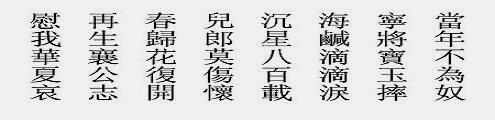 U.S.S.R./Comintern Alliance with the KMT & CCP (1923-1927)
 Korean/Chinese Communists & the 1931 Japanese Invasion of Manchuria Korean/Chinese Communists & the 1931 Japanese Invasion of Manchuria
American Involvement in China: Soviet Operation Snow, IPR Conspiracy, Dixie Mission, Stilwell
Incident, O.S.S. Scheme, Coalition Government Crap, Amerasia Case & The China White Paper
* Stay tuned for "Republican China 1911-1955: A Complete Untold History" *
|
|
Zou Rong's Revolutionary Army;
Shin Kyu Sik's
Shrine (Spirit, Kunitama) of Korea
|
This snippet is for sons and daughters of China:
Heed the sons & ministers' agony and sorrow of our ancestors who died or lived through the Mongol, Manchu and Soviet-Chicom conquest
and
the Yongjia, Jingkang and Jiashen cataclysms !
Jeanne d'Arc of China:
Teenager girl Xun Guan breaking out of the Wancheng city to borrow the relief troops in the late Western Jinn dynasty;
Liu-Shao-shi riding into the barbarian army to rescue her husband in the late Western Jinn dynasty;
teenager girl Shen Yunying breaking into Zhang Xianzhong's rebels on the horseback to avenge on father's death in the late Ming dynasty.
China's Solitary and Lone Heroes:
Nan Jiyun breaking out of the Suiyang siege and charging back into the city in the Tang dynasty;
Zhang Gui & Zhang Shun Brothers breaking through the Mongol siege of Xiangyang in the Southern Soong dynasty;
Liu Tiejun breaking through three communist field armies' siege of Kaifeng in the Republican China time period;
Zhang Jian's lone confrontation against the communist army during the June 3rd & 4th Massacre of 1989.
|
|
|
The Chinese students in Japan were the first group of protesters and they had lay siege of Zhang Zongxiang, a pro-Japan ROC emissary to Japan. Chinese students in Japan asked Zhang Zongxiang why he had not sold out his wife after he had sold out China. Students in Peking, hearing of the students' activities in Japan, launched into full motion a city-wide protest movement that would come to be known as May 4th Students' Movement (later to be designated Communist China's Youth Memorial Day).
Students across Peking made preparations on May 3rd.
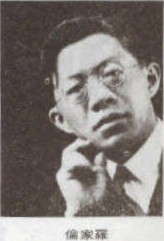 Inside of Peking University, at 10:00 am on May 4th 1919, Sunday, student leader Luo Jialun just returned from a visit to Peking Advanced Normal College. At the proposal by Di Junwu, Luo Jialun wrote a student proclamation in the name of eight colleges and universities of Peking.
The draft called for workers and merchants of the nation to take action [strikes] immediately and called for a National Convention for sake of punishing the traitors and arguing for national sovereignty.
The proclamation was to be printed by Li Xinbai's "populace printing house", to be distributed by 20000 copies.
Zhang Guotao had been deputy chief of the students' association for Beijing University, and later acted as the chairman for the united student associations of Beijing colleges and universities during the May 4th Movement of 1919.
Fu Sinian was the chairman for the student association of Beijing University, and led the charge at residency of foreign minister.
Fu Guoyong, at http://www.secretchina.com/news/articles/3/11/14/55145.html, stated that two days before the eruption, Cai Yuanpei, the schoolmaster of Peking University, had assembled class heads for instigating the student movements.
Inside of Peking University, at 10:00 am on May 4th 1919, Sunday, student leader Luo Jialun just returned from a visit to Peking Advanced Normal College. At the proposal by Di Junwu, Luo Jialun wrote a student proclamation in the name of eight colleges and universities of Peking.
The draft called for workers and merchants of the nation to take action [strikes] immediately and called for a National Convention for sake of punishing the traitors and arguing for national sovereignty.
The proclamation was to be printed by Li Xinbai's "populace printing house", to be distributed by 20000 copies.
Zhang Guotao had been deputy chief of the students' association for Beijing University, and later acted as the chairman for the united student associations of Beijing colleges and universities during the May 4th Movement of 1919.
Fu Sinian was the chairman for the student association of Beijing University, and led the charge at residency of foreign minister.
Fu Guoyong, at http://www.secretchina.com/news/articles/3/11/14/55145.html, stated that two days before the eruption, Cai Yuanpei, the schoolmaster of Peking University, had assembled class heads for instigating the student movements.
At about 1:00 pm, on May 4th, over 3000 students converged upon Tian'an'men Square, with banners calling for "Revocation of 21 Demands", "Return of Qingdao" and "Punishing Traitors".
After 2:00 pm, students marched towards the foreign legation area; however, extraterritorial police in front of the American embassy refused to let students walk through.
Students then decided to go straight to the residency of Cao Rulin.
Police in front of Cao Rulin's house did not stop the students.
Students climbed into the place through a window, ransacked the furnishings, and caught and hit Zhang Zongxiang who happened to be visiting Cao Rulin.
Cao Rulin himself hid in a secret room and escaped the students.
Students then lit the mosquito vent and burnt Cao Rulin's so-called Zhaojialou Residency.
Police reinforcement arrived, put down the fire, and arrested about 32 stranded students.
After the students were arrested, colleges and universities across China echoed the support.
Cai Yuanpei, i.e., the schoolmaster of Peking U, claimed to be willing to take the blame so that students could be released.
By May 7th, Peking authority had to release the students.
Students across the nation propagated the "national salvation". In Yixing of Jiangsu Province, i.e., a typical southern Chinese town, Xu Zhucheng [1907-?], during the timeframe of summer school break, witnessed the spread of posters and slogans across the town, with such wording as "Return My Qingdao !", "Would Rather Die To Resist Japanese Commodities !", and "Never Let The [Patriotic] Fever Last Five Minutes !".
Students put up dramas entitled "The Hatred Of Koreans Over Loss Of Country".
Wan Yijun, a student who returned to hometown from Shanghai for summer break, acted as Korean assassin An Jung-geu [An Chongwen]. (Per Xu Zhucheng, Wan Yijun joined the communist movement and died during 1928 Yixing Uprising.)
Further details of May Fourth Movement will be covered at May4th.htm
Chen Yongfa claimed that China's intellectuals, deeply disappointed over the evaporation of Wilson 14 principles, finally turned to Russian Bolshevikism as a result of the Western betrayal to China on the matter of Japan's inheriting German interests.
Chen Yongfa cited Chen Duxiu's change of attitude in calling Wilson a 'big cannon W' [i.e., 'false promise crook'] rather 'first good man of this world'.
Chen Yongfa stated that philosopher Zhang Dongsun had commented that socialism research had become a fad after WWI in China.
* In Commemoration of China's Fall under the Alien Conquests in A.D. 1279,
A.D. 1644 & A.D. 1949 *
U.S.S.R./Comintern Alliance with the KMT & CCP (1923-1927)
Korean/Chinese Communists & the 1931 Japanese Invasion of Manchuria
American Involvement in China: Soviet Operation Snow, IPR Conspiracy, Dixie Mission, Stilwell
Incident, O.S.S. Scheme, Coalition Government Crap, Amerasia Case & The China White Paper
* Stay tuned for "Republican China 1911-1955: A Complete Untold History" *
|
|
Zou Rong's Revolutionary Army;
Shin Kyu Sik's
Shrine (Spirit, Kunitama) of Korea
|
This snippet is for sons and daughters of China:
Heed the sons & ministers' agony and sorrow of our ancestors who died or lived through the Mongol, Manchu and Soviet-Chicom conquest
and
the Yongjia, Jingkang and Jiashen cataclysms !
Jeanne d'Arc of China:
Teenager girl Xun Guan breaking out of the Wancheng city to borrow the relief troops in the late Western Jinn dynasty;
Liu-Shao-shi riding into the barbarian army to rescue her husband in the late Western Jinn dynasty;
teenager girl Shen Yunying breaking into Zhang Xianzhong's rebels on the horseback to avenge on father's death in the late Ming dynasty.
China's Solitary and Lone Heroes:
Nan Jiyun breaking out of the Suiyang siege and charging back into the city in the Tang dynasty;
Zhang Gui & Zhang Shun Brothers breaking through the Mongol siege of Xiangyang in the Southern Soong dynasty;
Liu Tiejun breaking through three communist field armies' siege of Kaifeng in the Republican China time period;
Zhang Jian's lone confrontation against the communist army during the June 3rd & 4th Massacre of 1989.
|
|
|
The USSR/Comintern Seeking & Implanting Chinese Partners
USSR had three groups of diplomats and activists in China: Peking's U.S.S.R. embassy in Peking was in contact with Wu Peifu's northern warlord lineage government; Comintern stationed in Shanghai and its rep Hendricus (Henk) Josephus Franciscus Marie, aka Maring, was in charge of organizing and supporting the CCP; and U.S.S.R. stationed a second corps in Guangzhou (Canton) in charge of relations with Sun Yat-sen's KMT government.
Chen Yongfa stated that U.S.S.R. did not pay attention to the Orient till after gaining an upper hand in the Civil Wars that started from November 1917. In May 1919, U.S.S.R. first established First Communist International.
By late 1919, Soviet Red Army crossed the Urals and entered Baikal Lake area.
 In April 1920, U.S.S.R. established Chita Far East Republic for countering the intervention by US and Japan.
Prior to a march at Eastern Siberia, U.S.S.R. issued its "First Karakhan Proclamation" of July 25th 1919, re-affirming USSR's rescission of unequal treaties.
Grigorii N. Voitinsky was dispatched to China by V.D. Vilensky-Sibiryakov.
Chen Yongfa cited Wang Yujun's research in pointing out that Peking's northern warlord government did not get a copy of "Karakhan Proclamation" till just days before Voitinsky visit.
In April 1920, U.S.S.R. established Chita Far East Republic for countering the intervention by US and Japan.
Prior to a march at Eastern Siberia, U.S.S.R. issued its "First Karakhan Proclamation" of July 25th 1919, re-affirming USSR's rescission of unequal treaties.
Grigorii N. Voitinsky was dispatched to China by V.D. Vilensky-Sibiryakov.
Chen Yongfa cited Wang Yujun's research in pointing out that Peking's northern warlord government did not get a copy of "Karakhan Proclamation" till just days before Voitinsky visit.
Contact With Wu Peifu
In August of 1920, Duan Qirui's Wan-xi [Anhui Province faction] Cabinet was overthrown by Wu Peifu's Zhi-xi [Hebei Province faction] Cabinet.
Wu Peifu revoked Czarist Russian embassy, allowed the delegation of U.S.S.R. Far East Republic (i.e., Chita Government) to visit Peking, and nullified the military agreements with Japan. Irkutsk Bureau of the Comintern, U.S.S.R. Foreign Relations Ministry as well as U.S.S.R. Far East Republic all tried to have breakthroughs in relations with China. M. I. Yurin delegation came to Peking on August 26th of 1920, and Comintern emissary Grigorii N. Voitinsky (Wei-jing-si-ji in Chinese) paid a visit to Wu Peifu's counselor in Luoyang of Henan Province on October 9th. Another Comintern rep Marin wrote in his memoirs that Chita Republic and Comintern reached a conclusion that Wu Peifu was a better choice than southern government led by Sun Yat-sen.
Wu Peifu defeated pro-Japan Warlord Zhang Zuolin, i.e., Feng-xi of Manchuria in 1922. Wu Peifu, a staunch Chinese nationalist, never compromised with Russians on the matter of Mongolia.
On March 15th of 1922, U.S.S.R. Far East special emissary reported to Lenin about China's factions/parties and their influences around the country and proposed that U.S.S.R. should cooperate with Zhi-xi's Wu Peifu. A few months later, V. Vilensky wrote to Trotsky and Chicherin about Wu Peifu's importance in China's politics.
Contact With Sun Yat-sen
Sun Yat-sen was very much ignored by U.S.S.R. in the beginning. Sun Yat-sen had congratulated U.S.S.R. on the victory of the revolution on the New Year Day of 1918, and Lenin asked Chicherin relay a reply to Sun Yat-sen which was never received per Xin Haonian. Sun Yat-sen sent another wire to U.S.S.R. in late 1918 for a united revolution front. Comintern probed the possibility of cooperation with Sun Yat-sen few times, and in the autumn of 1920, Voitinsky met Sun Yat-sen in Shanghai. Sun Yat-sen had high hope for cooperation with USSR. However, M. I. Yurin kind of despised Sun Yat-sen's political influences in Canton. More Russian agents wrote reports on Sun Yat-sen. Maring came to China in the spring of 1921 and met Sun Yat-sen in Guangxi Province. On October 31st of 1921, Chicherin wired to Chita Republic's foreign affairs ministry to inquire about the possibility of establishing relations with Canton Government without antagonizing the Peking Government. Chicherin, further, wrote to Lenin with an attachment of a letter from Sun Yat-sen. With Lenin's approval, Chicherin instructed U.S.S.R. emissary to China, A. K. Paikes, to have secretive contacts with Sun Yat-sen in Canton.
Maring observed the January 1922 Seaman's Strike in Canton/HK and appreciated the Chinese nationalism under Sun Yat-sen's KMT leadership.
More available at Russians-Sun_Yat-sen.pdf.
(Check
RepublicanChina-pdf.htm
page for up-to-date updates.)
* In Commemoration of China's Fall under the Alien Conquests in A.D. 1279,
A.D. 1644 & A.D. 1949 *
U.S.S.R./Comintern Alliance with the KMT & CCP (1923-1927)
Korean/Chinese Communists & the 1931 Japanese Invasion of Manchuria
American Involvement in China: Soviet Operation Snow, IPR Conspiracy, Dixie Mission, Stilwell
Incident, O.S.S. Scheme, Coalition Government Crap, Amerasia Case & The China White Paper
* Stay tuned for "Republican China 1911-1955: A Complete Untold History" *
|
|
Zou Rong's Revolutionary Army;
Shin Kyu Sik's
Shrine (Spirit, Kunitama) of Korea
|
This snippet is for sons and daughters of China:
Heed the sons & ministers' agony and sorrow of our ancestors who died or lived through the Mongol, Manchu and Soviet-Chicom conquest
and
the Yongjia, Jingkang and Jiashen cataclysms !
Jeanne d'Arc of China:
Teenager girl Xun Guan breaking out of the Wancheng city to borrow the relief troops in the late Western Jinn dynasty;
Liu-Shao-shi riding into the barbarian army to rescue her husband in the late Western Jinn dynasty;
teenager girl Shen Yunying breaking into Zhang Xianzhong's rebels on the horseback to avenge on father's death in the late Ming dynasty.
China's Solitary and Lone Heroes:
Nan Jiyun breaking out of the Suiyang siege and charging back into the city in the Tang dynasty;
Zhang Gui & Zhang Shun Brothers breaking through the Mongol siege of Xiangyang in the Southern Soong dynasty;
Liu Tiejun breaking through three communist field armies' siege of Kaifeng in the Republican China time period;
Zhang Jian's lone confrontation against the communist army during the June 3rd & 4th Massacre of 1989.
|
|
|
The Soviets' Contact With the Chinese Communism Activists
The Comintern's claws entered China with the assistance of a Chinese-turned Russian Bolshevik called Yang Mingzhai (aka Yang Haode). In April 1920 (May 6th per solar calendar), Voitinsky, aka Hu Dingkang in Chinese, a rep from the Irkutsk Bureau of the Comintern (i.e., the Far East Bureau), brought a team to Peking of China, with Yang Mingzhai as an interpreter. Voitinsky and Yang Mingzhai met Li Dazhao several times and requested for meeting with the student leaders such as Zhang Guotao [aka Zhang Teli], Li Meigeng, Liu Renjing and Luo Zhanglong et al, inside of the library of Beijing University. Voitinsky, a graduate of political economy from some American university, also invited the students to his hotel for individual talks and disbursed the politics-related books in multiple languages.
(Yang Mingzhai, born in 1892 in Pingdu County of Shandong Province, went to Manchuria in 1901 for seeking a better livelihood. Yang Mingzhai went on to Vladivostok, Siberia and Moscow for employment consecutively. During the Soviet October Revolution, Yang Mingzhai enrolled himself in the Bolshevik party and participated in the various Russian civil wars. Yang Mingzhai was later sent to the "Toiler's University of the Far East" for training, and after graduation, was dispatched to Vladivostok for taking charge of the 'Overseas Chinese United Society'.
Yang later spent the years of 1925-1927 working at Sun Yat-sen University in Moscow, retired himself to the academic studies in Peking during the time period of 1928-1929, and went back to Irkutsk in 1931 where he was killed during the Stalin Great Purge.
The last Chinese who ever saw Yang Mingzhai would be either Shi Zhe, i.e., Mao Tse-tung's Russian translator, or some Northeastern Army officer who retreated into the U.S.S.R after losing the resistance battles in the aftermath of the 1931 Japanese invasion of Manchuria.)
* In Commemoration of China's Fall under the Alien Conquests in A.D. 1279,
A.D. 1644 & A.D. 1949 *
U.S.S.R./Comintern Alliance with the KMT & CCP (1923-1927)
Korean/Chinese Communists & the 1931 Japanese Invasion of Manchuria
American Involvement in China: Soviet Operation Snow, IPR Conspiracy, Dixie Mission, Stilwell
Incident, O.S.S. Scheme, Coalition Government Crap, Amerasia Case & The China White Paper
* Stay tuned for "Republican China 1911-1955: A Complete Untold History" *
|
|
Zou Rong's Revolutionary Army;
Shin Kyu Sik's
Shrine (Spirit, Kunitama) of Korea
|
This snippet is for sons and daughters of China:
Heed the sons & ministers' agony and sorrow of our ancestors who died or lived through the Mongol, Manchu and Soviet-Chicom conquest
and
the Yongjia, Jingkang and Jiashen cataclysms !
Jeanne d'Arc of China:
Teenager girl Xun Guan breaking out of the Wancheng city to borrow the relief troops in the late Western Jinn dynasty;
Liu-Shao-shi riding into the barbarian army to rescue her husband in the late Western Jinn dynasty;
teenager girl Shen Yunying breaking into Zhang Xianzhong's rebels on the horseback to avenge on father's death in the late Ming dynasty.
China's Solitary and Lone Heroes:
Nan Jiyun breaking out of the Suiyang siege and charging back into the city in the Tang dynasty;
Zhang Gui & Zhang Shun Brothers breaking through the Mongol siege of Xiangyang in the Southern Soong dynasty;
Liu Tiejun breaking through three communist field armies' siege of Kaifeng in the Republican China time period;
Zhang Jian's lone confrontation against the communist army during the June 3rd & 4th Massacre of 1989.
|
|
|
Voitinsky was then referred to Chen Duxiu in Shanghai by Li Dazhao. Voitinsky discussed with Chen about establishing the CCP. In May of 1920, Yang Mingzhai attended the founding of the 'Marxism Research Society' of Shanghai. In Aug, Yang Mingzhai, together with Chen Duxiu, Li Hanjun, Shen Xuanlu, Chen Wangdao, Yu Xiusong and Shi Cuntong [aka Shi Fuliang whose woman Wang Yizhi went for Zhang Tailei], established the 'Communist Party Launch Panel of Shanghai'.
Thereafter, Yang Mingzhai and Yu Xiusong founded the 'Socialist Youth League of Shanghai'.
Yang Mingzhai contributed to the publication of "The New Youth" and "Communist" by writing articles.
Yang Mingzhai rented a two-storey detached house at 6 Yuyangli Street of Shanghai for hosting the Russo-Chinese News Agency, the Foreign languages Society and the Socialist Youth League Office.
Yang Mingzhai acted as the president for the Russo-Chinese News Agency and the Foreign languages Society. The Foreign Languages Society was a school that later sent numerous agents to the U.S.S.R. for studies, including Liu Shaoqi, Ren Bishi, Xiao Jingguang, Luo Yinong, Ren Zuomin, He Jinliang and Xi Zhizhen. Ms. Voitinsky taught the Russian at the foreign language school.
Yang Mingzhai and Chen Duxiu hosted the 'Shanghai Machinist Society' launch panel meeting at this location on October 3rd of 1920.
Voitinsky and Yang Mingzhai frequently traveled between Shanghai and Beijing. Yang Mingzhai stopped over in his native Shandong Province where he guided Wang Jingmei and Deng Enming in setting up the communism study group of Shandong Province.
Voitinsky worked with Li Dazhao and Zhang Guotao et al., in setting up the communism study group in Beijing in October 1920. Luo Zhanglong recalled that Voitinsky had held the founding meeting inside of Li Dazhao's library office before he departed for the USSR. More activists, like Deng Zhongxia and Gao Junyu, joined the Beijing branch. Luo Zhanglong was in charge of "The Workers Weekly" newspaper, while Zhang Guotao in charge of organization.
In Spring of 1921, Yang Mingzhai and Zhang Tailei went back to the Russian Far East to report to the Comintern. In June of 1921, Yang Mingzhai and Zhang Tailei attended the Comintern Third Congress in Moscow. (Zhang Guotao, for his later betrayal, was frequently omitted in the records; however, Zhang Guotao had been among the earliest revolutionaries to have personally met Lenin.
Similarly, Luo Zhanglong was forgot in history, as well as Hu Feng, all being among Li Dazhao's lieutenants.)
Bu June of 1921, eight communism study groups were in action for organizing the CCP, including i) Beijing (Peking) city - Li Dazhao, Zhang Tailei, Deng Zhongxia, Zhang Guotao, Liu Renjing, Luo Zhanglong and Li Meigeng; ii) Wuhan city - Chen Tanqiu, Dong Biwu, Bao Huiseng and Li Hanjun; iii) Guangdong Province - Tan Pingshan, Chen Gongbo and Chen Dacai; iv) Jinan city, Shandong Province - Wang Jingmei and Deng Enming; v) Hunan Province - Mao Zedong; and vi) the Tokyo city - Shi Cuntong and Zhou Fohai [Zhou Fuhai].
By late 1921, a "Far East Exploited Peoples' Conference", a.k.a. the Toilers' Conference, was held in Moscow.
Recent release of the Soviet archives dated December 21st of 1920 show that Voitinsky and four Chinese revolutionaries set up a 'revolutionary committee' in Shanghai, with three offices of publication, information and organization. The Comintern established a 'Russo-Chinese News Agency' in Shanghai, with a branch in Beijing. Voitinsky claimed that this 'revolutionary committee' had hosted several "conference of students' representatives" in Beijing, with attendants from the universities in Beijing, Tianjin, Hankou and Nanjing (Nanking) etc, which resulted in the official founding of the 'Socialist Youth League' of China on August 17th of 1922. The students' representatives were admitted to the 'revolutionary committee'.
(Mao Tse-tung, working as a library assistant, paled in comparison with the trio Zhang Guotao, Luo Zhanglong and et al.
What was obscured here would be the role of Hu Feng, a follower of Li Dazhao in Peking in the 1920s as well as a member of the JCP in the 1930s.
For Hu Feng's being classified as a revolutionary during the "Anti-Hu Feng Movement" in the early 1950s and banished to the coolie labor for dozens of years, Hu Feng's contribution to the communist cause was kind of erased from history.)
Shanghai's Russo-Chinese News Agency was temporarily taken over by Peking's U.S.S.R. embassy, and Comintern Rep Maring was dispatched to Shanghai for organizing the Chinese Communist Party (CCP) after the Second Comintern Congress was over. (From 1921 to 1923, Maring paid three visits to China in total.) Maring's notes in the Dutch archives mentioned that Chen Duxiu was the leader of the CCP in Shanghai, with his "The New Youth" magazine enrolling a total of 50-60 people in 7-8 centers across the nation. Maring mentioned that the 'revolutionary committee' set up a so-called spare-time laborer's school called the Workers' Club and that the school had to stop operation when funds ran out after the departure of Voitinsky. At that time, Chen Duxiu left for an education minister post in Guangdong Province at the invitation of Chen Jiongming. (The Communist records stated that Chen Duxiu and Li Dazhao were instructed to do the propaganda work for the warlords in the south and north respectively as a way of making the communist case, not for making a living, with Chen Duxiu supporting Chen Jiongming against Sun Yat-sen, and Li Dazhao working with Wu Peifu to have hijacked the railway bureau.)
When the various provincial representatives convened in Shanghai for founding the CCP in July 1921, Chen Duxiu was absent. Maring said that the CCP was considered a branch of the Comintern and that the CCP, headed by Maring and Zhang Guotao, requested with Chen Duxiu for abandoning his education official career in Canton. The CCP planned to have Chen Duxiu return to Shanghai for publishing a monthly communism magazine as well as organizing the workers' trade union in major cities like Shanghai, Canton and Peking. (The KMT had in fact the complete control of the workers' union in Shanghai prior to the communist meddling.)
When Chen Duxiu returned to Shanghai 20 days after the party founding, Maring persuaded him into agreeing to an alliance with KMT and then left for Canton for a meeting with Liao Zhongkai. Liao Zhongkai sent Maring to Sun Yat-sen who was organizing his own Northern Expedition army as a result of discord with Chen Jiongming.
Per Chen Gongbo, 'Russo-Chinese News Agency' set up a branch in Canton where they debated with the anarchists on such party organ newspapers as "Socialist" and "Laborer World".
Maring, having stayed in China from 1921 to 1923, was responsible for maintaining contacts with both KMT and CCP, with often conflicting orders from U.S.S.R. Foreign Affairs Ministry and Comintern.
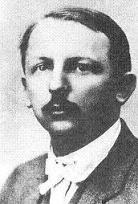 In June of 1922, Maring pushed through the Moscow demand, at the Second CCP National Session, to have CCP ally with KMT against the objection of such senior CCP founders as Zhang Guotao.
Zhang Guotao, who practiced an early CCP policy to mobilize workers' movement in northern China, suffered a setback when Wu Peifu cracked down on the February 7th 1923 Jing-Han Railroad Workers' Strike. During the second session of the Second CCP National Session, Zhang Guotao agreed to shifting CCP's revolutionary agenda to Shanghai/Canton in the south and accepting the KMT-CCP alliance.
The fundamental reason that CCP needed the cover of KMT would be the fact that communists were seen as "monsters" in the eyes of the warlord governors in both southern and northern China while KMT was a legalized party organization after the death of Yuan Shi-kai. That's why Cai Yuanpei etc., could still worked as schoolmaster in Peking while Sun Yat-sen's Canton government was in military conflict with the Peking government. Communists, by tagging themselves as KMT members, played the procedural workaround to expand its own ranks, making its underground activity legalized.
Though, communists' agenda was apparently the ultimate revolution, and they never hid this prediction in front of KMT leadership.
In June of 1922, Maring pushed through the Moscow demand, at the Second CCP National Session, to have CCP ally with KMT against the objection of such senior CCP founders as Zhang Guotao.
Zhang Guotao, who practiced an early CCP policy to mobilize workers' movement in northern China, suffered a setback when Wu Peifu cracked down on the February 7th 1923 Jing-Han Railroad Workers' Strike. During the second session of the Second CCP National Session, Zhang Guotao agreed to shifting CCP's revolutionary agenda to Shanghai/Canton in the south and accepting the KMT-CCP alliance.
The fundamental reason that CCP needed the cover of KMT would be the fact that communists were seen as "monsters" in the eyes of the warlord governors in both southern and northern China while KMT was a legalized party organization after the death of Yuan Shi-kai. That's why Cai Yuanpei etc., could still worked as schoolmaster in Peking while Sun Yat-sen's Canton government was in military conflict with the Peking government. Communists, by tagging themselves as KMT members, played the procedural workaround to expand its own ranks, making its underground activity legalized.
Though, communists' agenda was apparently the ultimate revolution, and they never hid this prediction in front of KMT leadership.
 KMT leader Wu Zhihui was shocked to utter a claim that KMT had a life expectancy of only 30 years. That was because
Chen Duxiu claimed to KMT elderly Wu Zhihui that China might take 30 years to reach socialism.
KMT leader Wu Zhihui was shocked to utter a claim that KMT had a life expectancy of only 30 years. That was because
Chen Duxiu claimed to KMT elderly Wu Zhihui that China might take 30 years to reach socialism.
At the Second CCP National Plenary, CCP leader Chen Duxiu etc., echoed Maring's opinions that China's revolution should go through two stages the same way as U.S.S.R. had undergone the 1905 & 1917 revolutions, i.e., i) democratic revolution and ii) socialist revolution.
Zhang Guotao and Cai Hesen etc., however, believed that China could skip the first stage to enter socialist revolution right away.
At the Third CCP National Plenary of 1923, Chen Duxiu had an upper hand. By the Fourth CCP National Plenary, Zhang Guotao weighed over Chen Duxiu in advocating a Proletarian socialist revolution in lieu of a Bourgeois democratic revolution.
For more about Soviet scheme against China, please refer to
The USSR, Comintern, KMT & CCP
[Modified : Saturday, 31-Mar-2012 04:10:20 EDT]
The Guangdong-Guangxi War & Li Zongren's Emergence
Chen Jiongming Rebellion Against Sun Yat-sen
At
http://www.larouchepub.com/other/2004/3123morgan_v_dr_sun.html], Mike Billington wrote about the "SYNARCHISM" work of imperialists and capitalists in an article entitled "How London, Wall Street
Backed Japan's War Against
China and Sun Yat Sen".
Mike Billington pointed out that "British refusal to work with Sun Yat Sen was transformed into overt military operations against him in 1922. The British Consul General in Shanghai, after reviewing Sun's International Development of China, accused Sun of trying to supplant colonial Hongkong as a trans-shipping center by Canton, and linked Sun to Bolshevik activities in the South. The British, under Addis' direction, provided Chen Chung-ming, a warlord in the Canton region, with a $500,000 loan to conduct a military assault on Sun and his KMT base in Canton, which nearly succeeded. At the same time Addis began making direct economic and military deals with other regional warlords, encouraging them to act independently of either Peking or Canton."
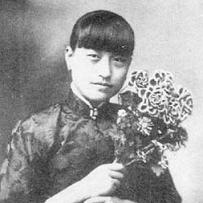 Chen Jiongming's ultimate rebellion against Sun Yat-sen was very much a trickery of Chiang Kai-shek. According to Chen Jieru's Memoirs, before and after the confrontation between Sun Yat-sen and Chen Jiongming, Chiang Kai-shek had sowed dissension by writing to various military and political leaders inside of southern government. Chiang Kai-shek's personal character had doomed China from right here. Similar scenario of dissension would be subsequent Chiang Kai-shek trickery against Liu Zhenhuan [Guangxi army] and Yang Ximin [Yunnan army], i.e., two generals who had contributed to the overthrow of Chen Jiongming regime.
Chen Jieru's conclusion is that Chiang Kai-shek could easily turn his friends into foes.
Chen Jiongming's ultimate rebellion against Sun Yat-sen was very much a trickery of Chiang Kai-shek. According to Chen Jieru's Memoirs, before and after the confrontation between Sun Yat-sen and Chen Jiongming, Chiang Kai-shek had sowed dissension by writing to various military and political leaders inside of southern government. Chiang Kai-shek's personal character had doomed China from right here. Similar scenario of dissension would be subsequent Chiang Kai-shek trickery against Liu Zhenhuan [Guangxi army] and Yang Ximin [Yunnan army], i.e., two generals who had contributed to the overthrow of Chen Jiongming regime.
Chen Jieru's conclusion is that Chiang Kai-shek could easily turn his friends into foes.
On October 8th, Sun Yat-sen proposed the "Act for Northern Expeditions" to the Parliament in Canton, and shortly thereafter, held the ceremony of "Oath of Northern Campaigns" in Canton.
On October 15th, Sun Yat-sen took ride of Warship Baobi and arrived in Wuzhou of Guangxi Province on October 17th.
In Guangxi Province, Sun Yat-sen toured numerous cities, made public speeches as to northern campaigns, designated his 'grand military base' in Guangxi, and re-organized the armies under his immediate influence. Sun Yat-sen conferred CIC (commander-in-chief) of Dian-jun onto Zhu Peide, CIC of Gan-jun (Jiangxi Province army) onto Peng Chengwan, CIC of Qian-jun onto Gu Zhenglun, chief military counselor post onto Li Liejun, and secretary post onto Hu Hanmin.
At Wuzhou of Guangxi Province, Sun Yat-sen re-organized armies into three corps, with Li Liejun, Xu Chongzhi and Li Fulin in charge, respectively. Sun wired to Chen Jiongming for a meeting about northern campaigns in Wuzhou as well as a plan for appropriation of 40 battalions of Yue-jun army, but Chen Jiongming declined it.
At this time, Chen Jiongming stationed his troops at Nanning of Guangxi Province.
On October 25th, Sun arrived in Nanning and paid a visit to Chen for enlisting support of the northern campaigns. Chen Jiongming claimed that he would need half a year for a rest of his troops.
On 29th, Sun returned to Wuzhou.
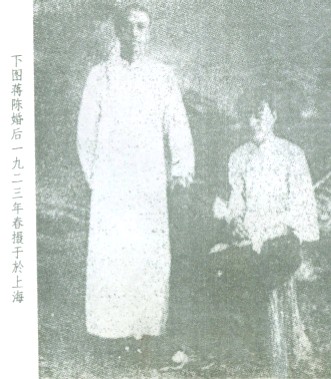 Maring, who came to China in the spring of 1921, met Sun Yat-sen in Guangxi Province.
On October 31st of 1921, Chicherin wired to Chita Republic's foreign affairs ministry to inquire about the possibility of establishing relations with Canton Government without antagonizing the Peking Government.
Bao Huiseng's Memoirs claimed that it was Maring who gave Sun Yat-sen, someone who lacked real command of loyal forces, the hope and courage in revoking Chen Jiongming's posts in June of 1922. However, Sun Yat-sen's personal charisma among Southwestern China's generals or militarists should never be discounted. Sun Yat-sen's later acceptance of Russian packages should be ascribed to frustration at the Chen Jiongming rebellion as the correct cause-effect.
Maring, who came to China in the spring of 1921, met Sun Yat-sen in Guangxi Province.
On October 31st of 1921, Chicherin wired to Chita Republic's foreign affairs ministry to inquire about the possibility of establishing relations with Canton Government without antagonizing the Peking Government.
Bao Huiseng's Memoirs claimed that it was Maring who gave Sun Yat-sen, someone who lacked real command of loyal forces, the hope and courage in revoking Chen Jiongming's posts in June of 1922. However, Sun Yat-sen's personal charisma among Southwestern China's generals or militarists should never be discounted. Sun Yat-sen's later acceptance of Russian packages should be ascribed to frustration at the Chen Jiongming rebellion as the correct cause-effect.
More available at Chen_Jiongming-Rebellion-Against-Su_Yat-sen.pdf
(Check
RepublicanChina-pdf.htm
page for up-to-date updates.)
* In Commemoration of China's Fall under the Alien Conquests in A.D. 1279,
A.D. 1644 & A.D. 1949 *
U.S.S.R./Comintern Alliance with the KMT & CCP (1923-1927)
Korean/Chinese Communists & the 1931 Japanese Invasion of Manchuria
American Involvement in China: Soviet Operation Snow, IPR Conspiracy, Dixie Mission, Stilwell
Incident, O.S.S. Scheme, Coalition Government Crap, Amerasia Case & The China White Paper
* Stay tuned for "Republican China 1911-1955: A Complete Untold History" *
|
|
Zou Rong's Revolutionary Army;
Shin Kyu Sik's
Shrine (Spirit, Kunitama) of Korea
|
This snippet is for sons and daughters of China:
Heed the sons & ministers' agony and sorrow of our ancestors who died or lived through the Mongol, Manchu and Soviet-Chicom conquest
and
the Yongjia, Jingkang and Jiashen cataclysms !
Jeanne d'Arc of China:
Teenager girl Xun Guan breaking out of the Wancheng city to borrow the relief troops in the late Western Jinn dynasty;
Liu-Shao-shi riding into the barbarian army to rescue her husband in the late Western Jinn dynasty;
teenager girl Shen Yunying breaking into Zhang Xianzhong's rebels on the horseback to avenge on father's death in the late Ming dynasty.
China's Solitary and Lone Heroes:
Nan Jiyun breaking out of the Suiyang siege and charging back into the city in the Tang dynasty;
Zhang Gui & Zhang Shun Brothers breaking through the Mongol siege of Xiangyang in the Southern Soong dynasty;
Liu Tiejun breaking through three communist field armies' siege of Kaifeng in the Republican China time period;
Zhang Jian's lone confrontation against the communist army during the June 3rd & 4th Massacre of 1989.
|
|
|
On June 20th, 1922, Chen's rebels attacked Hu Hanmin in Shaoguan. Hu Hanmin left Shaoguan for a trek across the mountains to find Xu Chongzhi's army.
Hu Hanmin retreated to Ganzhou of Jiangxi Province on June 27th. On July 2nd, the majority of the Northern Expedition armies, Xu Chongzhi, Li Fulin, Zhu Peide and Huang Dawei, turned around to fight the Yue-jun Army's rebellion; Li Liejun remained in Jiangxi to protect the rear. However, the first division, headed by Liang Hongkai, marched straight back to Huizhou to serve under Chen Jiongming. Xu Chongzhi et al, changed route to fight the rebels in Shaoguan, with Zhu Peide's Dian-jun Army as the herald force.
Liang Hongkai and his 1st Div of the Guangdong Province Army slipped away to join Chen Jiongming.
Hu Hanmin suggested following the footstep of Liang Hongkai and then attacked Chen Jiongming by taking advantage of the havoc, but Xu Chongzhi advocated for retaking Shaoguan.
Liang Hongkai joined Xiong Lüe against the northern expedition army; Shen Hongying destroyed two thirds of Huang Dawei's 1st Corps at Wenyuan; and Tan Meng's brigade under Chen Jiayou's Hunan Province Army steered away some of Li Fulin's 3rd Corps.
At a hospital in Nanxiong, Li Liejun and Xu Chongzhi split into two groups for Hunan & Fujian, respectively.
Li Liejun was disarmed by Zhao Hengti in Hunan.
In Fujian, Xu Chongzhi's 2nd Corps and Li Fulin's 3rd Corps took over Tingzhou. With Lu Yongxiang's mediation, Hu Hanmin reached an agreement with Wang Yongquan of the Wan-xi Clique against rival Li Houji who defected to the Zhi-xi Clique after the July 1920 Zhi-xi vs Wan-xi War.
More available at Chen_Jiongming-Rebellion-Against-Su_Yat-sen.pdf
(Check
RepublicanChina-pdf.htm
page for up-to-date updates.)
* In Commemoration of China's Fall under the Alien Conquests in A.D. 1279,
A.D. 1644 & A.D. 1949 *
U.S.S.R./Comintern Alliance with the KMT & CCP (1923-1927)
Korean/Chinese Communists & the 1931 Japanese Invasion of Manchuria
American Involvement in China: Soviet Operation Snow, IPR Conspiracy, Dixie Mission, Stilwell
Incident, O.S.S. Scheme, Coalition Government Crap, Amerasia Case & The China White Paper
* Stay tuned for "Republican China 1911-1955: A Complete Untold History" *
|
|
Zou Rong's Revolutionary Army;
Shin Kyu Sik's
Shrine (Spirit, Kunitama) of Korea
|
This snippet is for sons and daughters of China:
Heed the sons & ministers' agony and sorrow of our ancestors who died or lived through the Mongol, Manchu and Soviet-Chicom conquest
and
the Yongjia, Jingkang and Jiashen cataclysms !
Jeanne d'Arc of China:
Teenager girl Xun Guan breaking out of the Wancheng city to borrow the relief troops in the late Western Jinn dynasty;
Liu-Shao-shi riding into the barbarian army to rescue her husband in the late Western Jinn dynasty;
teenager girl Shen Yunying breaking into Zhang Xianzhong's rebels on the horseback to avenge on father's death in the late Ming dynasty.
China's Solitary and Lone Heroes:
Nan Jiyun breaking out of the Suiyang siege and charging back into the city in the Tang dynasty;
Zhang Gui & Zhang Shun Brothers breaking through the Mongol siege of Xiangyang in the Southern Soong dynasty;
Liu Tiejun breaking through three communist field armies' siege of Kaifeng in the Republican China time period;
Zhang Jian's lone confrontation against the communist army during the June 3rd & 4th Massacre of 1989.
|
|
|
The U.S.S.R. / Comintern Alliance With KMT & CCP
Three agencies of the USSR, i.e., the U.S.S.R. embassy in Peking, the Comintern stationed in Shanghai and the U.S.S.R.'s TASS news corps in Guangzhou (Canton), were involved in China's politics. The three groups had different agenda and objectives and often had some conflicting function and redundant tasks. Voitinsky and Maring were responsible for developing and organizing the CCP. Maring and Joffe were responsible for changing the Comintern's "Irkutsk line" to full cooperation with Sun Yat-sen. With Trotsky's financial support and endorsement, Borodin brought 120,000 (?) rifles and 2 million Mexican dollars to Sun Yat-sen's KMT in Canton and contributed to the so-called China's "Da Ge-ming" (i.e. the "Grand Revolution"), also termed the 'First Revolutionary Civil War' by the CCP, a campaign that would unite China under Sun Yat-sen's KMT government.
More available at USSR-Comintern-KMT-CCP.
(Check
RepublicanChina-pdf.htm
page for up-to-date updates.)
* In Commemoration of China's Fall under the Alien Conquests in A.D. 1279,
A.D. 1644 & A.D. 1949 *
U.S.S.R./Comintern Alliance with the KMT & CCP (1923-1927)
Korean/Chinese Communists & the 1931 Japanese Invasion of Manchuria
American Involvement in China: Soviet Operation Snow, IPR Conspiracy, Dixie Mission, Stilwell
Incident, O.S.S. Scheme, Coalition Government Crap, Amerasia Case & The China White Paper
* Stay tuned for "Republican China 1911-1955: A Complete Untold History" *
|
|
Zou Rong's Revolutionary Army;
Shin Kyu Sik's
Shrine (Spirit, Kunitama) of Korea
|
This snippet is for sons and daughters of China:
Heed the sons & ministers' agony and sorrow of our ancestors who died or lived through the Mongol, Manchu and Soviet-Chicom conquest
and
the Yongjia, Jingkang and Jiashen cataclysms !
Jeanne d'Arc of China:
Teenager girl Xun Guan breaking out of the Wancheng city to borrow the relief troops in the late Western Jinn dynasty;
Liu-Shao-shi riding into the barbarian army to rescue her husband in the late Western Jinn dynasty;
teenager girl Shen Yunying breaking into Zhang Xianzhong's rebels on the horseback to avenge on father's death in the late Ming dynasty.
China's Solitary and Lone Heroes:
Nan Jiyun breaking out of the Suiyang siege and charging back into the city in the Tang dynasty;
Zhang Gui & Zhang Shun Brothers breaking through the Mongol siege of Xiangyang in the Southern Soong dynasty;
Liu Tiejun breaking through three communist field armies' siege of Kaifeng in the Republican China time period;
Zhang Jian's lone confrontation against the communist army during the June 3rd & 4th Massacre of 1989.
|
|
|
For more about Soviet scheme against China, please refer to
The USSR, Comintern, KMT & CCP
[Modified : Saturday, 31-Mar-2012 04:10:20 EDT]
The KMT First National Congress (Jan 1924)
On March 2nd, 1923, the grand marshal office for the infantry and navy was re-established in Canton, with Chiang Kai-shek acting as military tactician, which Chiang Kai-shek did not report to till 1.5 months later.
Chen Jieru's Memoirs stated that Chiang Kai-shek caused his clients a loss of 20,000 yuan in buying textile stocks on the Shanghai Bund. After Zhang Jingjiang paid off the debts, they sent off Chiang Kai-shek to Canton where the couple arrived on April 20th.
During this time period, Chiang Kai-shek couple was invited to Wang Jingwei's residency for a banquet in honor of Gui-jun General Liu Zhenhuan. Sun Yat-sen, calling the 35-year-old general as "Buddha Liu", eulogized his bravery by pointing out that Liu Zhenhuan had incurred two bullets piercing through the shoulder and stomach without letting up at the Battle Of Boluo. Wang Jingwei's wife, i.e., Chen Bijun [aka Beeky], explained to Chen Jieru why the revolutionary movements had failed in the past and why the Russian assistance might change the picture this time around.
At the banquet, Chiang Kai-shek, in order to befriend and impress General Liu Zhenhuan, offered a HK tour invitation. The Liu Zhenhuan couple were delighted to tour HK with Chiang Kai-shek introducing the rich "patriotic" businessmen [i.e., Sun Yat-sen's financial donors, including Lee Po's sons, Mei Quong-Tart, and Lamese Zee-min Lee] and British customs officer Joseph Brennan.
On August 14th of 1923, i.e., on July 13th [lunar calendar], Sun Yat-sen dispatched Chiang Kai-shek and a delegation to Moscow for a three-month inspection trip.
Chen Jieru's Memoirs stated that Chiang Kai-shek departed Canton on July 28th, arrived in Shanghai on August 2nd and met Maring on August 5th.
The four person team included Chiang Kai-shek, Shen Dingyi, Zhang Tailei and Wang Dengyun.
The team arrived in Moscow on September 2nd.
From August to November 1923, Chiang Kai-shek wrote at least five letters to Chen Jieru, with repeated mentioning of the black cloak that he was wearing.
Chen Jieru secretly ordered a cloak with James Zee-min Lee in HK after she found out that Chiang Kai-shek was captivated by the black-colored cloak that Joseph Brennan was wearing.
Chiang Kai-shek's letters stated that he met with Georgy Vasilyevich Chicherin, I.V. Galinin [Jia-li-ning], Grigory Yevseyevich Zinovyev (G.Y. Zinoviev) [Ji-luo-wei-ye-fu], Leon Trotsky and et al, discerned the dual politico-military leadership in the Soviet Red Army 144th Infantry Regiment, audited the mass meeting attended by 220,000 people, and bought Marx's book "Das Capital".
In Russia, Chiang Kai-shek came into conflict with the Chinese communist activists as to disrespect for Sun Yat-sen.
After returning to Shanghai on December 15th, 1923, Chiang Kai-shek deliberately delayed his report to Sun Yat-sen over his dissatisfaction with Sun Yat-sen's nomination of Borodin in his absence.
After a complaint to Sun Yat-sen when no response was heard, Chiang received a wire from Sun Yat-sen in late December to have Chiang Kai-shek go to Canton immediately.
On October 5th, 1923, Cao Kun became president after bribing the Parliament members. Sun Yat-sen issued a most-wanted list for the Parliament members as well as Cao Kun.
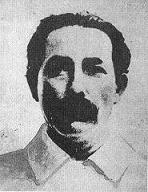 On October 6th, Mikhail Markovich Borodin, aka Mikhail Gruzenberg (Grusenberg or Gerg), arrived in Canton after making stopovers in Harbin, Shenyang and Beijing.
Borodin had served as counselor in Mexico, Scotland and Turkey consecutively, as well as counselor to Mustapha Kemal Pasha before taking on the task for China. In Karakhan's September 23rd letter to Sun Yat-sen, Borodin was touted as a trust-worthy rep of Karakhan himself as well as the rep of the U.S.S.R. Five days after Borodin arrival, Sun Yat-sen began the work of re-organizing the KMT with Borodin. Per Soviet adviser Alexander I. Cherepanov, Sun Yat-sen had ignored the CCP's request for re-organizing the KMT till Borodin arrival. Borodin's proposals included the revision of the KMT guidelines to emphasize the 'mass propaganda', to stipulate the party objectives, to establish a second KMT center in Shanghai and branches elsewhere, to hold a KMT national congress as soon as possible, and to detail the tasks and work style for the individual KMT members.
On October 6th, Mikhail Markovich Borodin, aka Mikhail Gruzenberg (Grusenberg or Gerg), arrived in Canton after making stopovers in Harbin, Shenyang and Beijing.
Borodin had served as counselor in Mexico, Scotland and Turkey consecutively, as well as counselor to Mustapha Kemal Pasha before taking on the task for China. In Karakhan's September 23rd letter to Sun Yat-sen, Borodin was touted as a trust-worthy rep of Karakhan himself as well as the rep of the U.S.S.R. Five days after Borodin arrival, Sun Yat-sen began the work of re-organizing the KMT with Borodin. Per Soviet adviser Alexander I. Cherepanov, Sun Yat-sen had ignored the CCP's request for re-organizing the KMT till Borodin arrival. Borodin's proposals included the revision of the KMT guidelines to emphasize the 'mass propaganda', to stipulate the party objectives, to establish a second KMT center in Shanghai and branches elsewhere, to hold a KMT national congress as soon as possible, and to detail the tasks and work style for the individual KMT members.
More available at KMT_First_National_Congress.pdf.
(Check
RepublicanChina-pdf.htm
page for up-to-date updates.)
* In Commemoration of China's Fall under the Alien Conquests in A.D. 1279,
A.D. 1644 & A.D. 1949 *
U.S.S.R./Comintern Alliance with the KMT & CCP (1923-1927)
Korean/Chinese Communists & the 1931 Japanese Invasion of Manchuria
American Involvement in China: Soviet Operation Snow, IPR Conspiracy, Dixie Mission, Stilwell
Incident, O.S.S. Scheme, Coalition Government Crap, Amerasia Case & The China White Paper
* Stay tuned for "Republican China 1911-1955: A Complete Untold History" *
|
|
Zou Rong's Revolutionary Army;
Shin Kyu Sik's
Shrine (Spirit, Kunitama) of Korea
|
This snippet is for sons and daughters of China:
Heed the sons & ministers' agony and sorrow of our ancestors who died or lived through the Mongol, Manchu and Soviet-Chicom conquest
and
the Yongjia, Jingkang and Jiashen cataclysms !
Jeanne d'Arc of China:
Teenager girl Xun Guan breaking out of the Wancheng city to borrow the relief troops in the late Western Jinn dynasty;
Liu-Shao-shi riding into the barbarian army to rescue her husband in the late Western Jinn dynasty;
teenager girl Shen Yunying breaking into Zhang Xianzhong's rebels on the horseback to avenge on father's death in the late Ming dynasty.
China's Solitary and Lone Heroes:
Nan Jiyun breaking out of the Suiyang siege and charging back into the city in the Tang dynasty;
Zhang Gui & Zhang Shun Brothers breaking through the Mongol siege of Xiangyang in the Southern Soong dynasty;
Liu Tiejun breaking through three communist field armies' siege of Kaifeng in the Republican China time period;
Zhang Jian's lone confrontation against the communist army during the June 3rd & 4th Massacre of 1989.
|
|
|
For more about Soviet scheme against China, please refer to
The USSR, Comintern, KMT & CCP
[Modified : Saturday, 31-Mar-2012 04:10:20 EDT]
Founding of the Chinese Communist Party
As to the date of July 1921 for the founding of the Chinese communist party, Jung Chang had apparently picked up Xin Haonian's claim that Chinese communist party should be deemed officially founded in the summer of 1920 when the Russians knocked on Chen Duxiu's door in Shanghai. After reading Zhang Guotao's "The Rise of Chinese Communist Party", this webmaster has reason to believe that Chinese communist party was merely in the process of being organized in 1920. Zhang Guotao himself, while living in Chen Duxiu's Shanghai residence, could only overhear the secret talks between Chen and the Russians. After Zhang Guotao's return to Peking, some sort of communist party launch panel was organized in Peking as well. However, in 1920, senior communism activist Li Dazhao still very much treated communism as academic and philosophical, definitely not a party entity with a practical aim and methods. Li Dazhao, already a second-rate founding member of "Young China Society", apparently took pleasure in memberships in multiple socieities, organizations and parties, and later in 1922, was to launch a "Democratic Socialist Party" or the sort.
Russians, out of their sinister motives, had been lurking in China before knocking on Chen Duxiu/Li Dazhao. At least one batch of Russian agents came before Votinsky. And, after Votinsky visit, one more batch of Russian agents, in the name of "Tass Canton Agency", had colluded with several Chinese anachists in establishing "Chinese Communists at Canton" on Oct 3rd 1920. After CHen Duxiu came to Canton in Nov 1920, as education minister for Canton Governor Chen Jiongming, Chen Duxiu managed to take over control of communism activity from the Russians and re-organized "Chinese Communists at Canton" in March 1921. By that time, Chen Duxiu was claiming to his followers that similar organizations had already existed in Shanghai and Peking. -Strictly speaking, Chinese communists, under Chen Duxiu, did not have an official and open founding date till even after its First National Congress of July 1921. While Russians were spending roubles in China, they were smart enough to have sent agents to Paris in 1921 as well. On basis of the communist youth league established by CHen Duxiu's two sons in 1920, Russian rouble successfully converted hundreds of overseas Chinese students into Third Comintern communists.
|
|
The curriculum for China's colleges and universities invariably included three political courses, 'History of the CCP', 'The Dialectical and Historical Materialism' and 'The Marxist Philosophy'. (Similar but simplified versions of the three textbooks would be offered at both the junior and senior high schools, all shitty cliché designed to brainwash the young people as well as wear out their will and youth.) Yin Zuowei, a university professor in charge of the CCP history course in the early 1980s, always mentioned Zhang Guotao's fate, i.e., natural death in a Canadian 'hospice' in December 1979, as something for ridiculing a deserter or traitor. In comparison with those veterans who died of the persecution during the cultural revolution, Zhang Guotao could be considered a lucky guy.
Li Dazhao's propagating Communism Among the College Students
In 1918, at Peking University, Li Dazhao was banned from organizing the "Marxism thought research society".
Among Li Dazhao's disciples would be student leader Zhang Guotao.
Zhang Guotao, born in Pingxiang County of Jiangxi Province in 1897, was among the most prominent early practitioners of communism and hosted the founding meeting for the Chinese Communist Party (CCP) in Shanghai in July 1921 at the absence of both Li Dazhao and Chen Duxiu.
Zhang Guotao had been deputy chief of the students' association for Beijing University, and later acted as the chairman for the united student associations of the Peking [Beijing] colleges and universities during the May 4th Movement of 1919.
During the May 4th Movement, Fu Sinian & Zhang Guotao led the siege and burning of a Northern Government minister.
In May 1919, Li Dazhao published the Morning Post newspaper in Peking and opened a special column for the Marxism research.
Also in May 1919, Mao Zedong organized the Hunan student united society to echo the Peking student movement during the May 4th Movement.
70,000 Shanghai workers held a strike in support of the Peking students.
On January 29th, 1920, Zhou Enlai led over thousand students for a petition protest in front of the Governor's office for Zhili Province. 24 student leaders, including Zhou Enlai, would be arrested by police chief Yang Yide and imprisoned for 180 days.
In March, Li Dazhao, Deng Zhongxia, Gao Junyu, Qu Qiubai, Heh Mengxiong and Luo Zhanglong re-established the "Marxism thought research society" in Peking.
Yun Daiying, meanwhile, established the "Liqun Book Society" together with the Lin Biao and Lin Yueying cousins in Wuchang of Hubei Province for propagating the communism.
Voitinsky & Yang Mingzhai's Mission To China
In March-April of 1920, Voitinsky [Wu Tingkang in Chinese] and a Chinese-turned Russian Bolshevik called Yang Mingzhai, came to Peking where they met Li Dazhao through the referral of a Russian professor [Bao-li-wei], and later met with student leaders such as Zhang Guotao, Li Meigeng, Liu Renjing and Luo Zhanglong inside of the library of Beijing University.
Voitinsky was then sent to Shanghai for meeting Chen Duxiu by Li Dazhao for talks about establishing the CCP.
In April, Mao Zedong dropped by at Confucius' birthplace Qufu while en route to Shanghai from Peking.
Mao visited Zhou Zuoren in Peking, paid visit to Sun Yat-sen [Sun Zhongshan] as well as Chen Duxiu in Shanghai.
Mao returned to Changsha where he worked with Heh Shuheng in setting up the "Russia studies society", the "Hunan society for promoting reform", and the "cultural book society".
Mao was implicated to the Yali school, part of the Yale-in-China institution for his conducting the activities on the Yali sites in Changsha.
About this timeframe, Mao Tse-tung, together with his pal Peng Huang, obtained some 20,000 to 30,000 silver dollars from Zhang Shizhao, a Hunan Province leader, with the source of funds coming from the Hunan provincial governor as a bribe for diffusing the opposition movement.
Mao could be implicated in the disappearance and death of Peng Huang according to Chen Xiaoya, with the whereabouts of the silver dollars unaccounted for.
The silver dollars, which were purportedly collected for funding the studies of the Hunan students in France, were never delivered to the overseas Chinese students, ending in the students' breaking into the Chinese legation in Paris as well as the students' violent confrontation with the French police in Lyon and the radical students' wholesale turning towards Soviet Russia for salvation.
(As people had suspected, Mao could have used the 20,000 silver dollars to have launched a family factory in hometown Shaoshan.)
In May of 1920, Yang Mingzhai attended the founding of the 'Marxism Research Society' of Shanghai.
In June, Shi Cuntong and Zhou Fohai established the communism study group in Japan after taking the "Da Kapital" course from Japanese Marxist professor Kawakami Hajime ("Research on Social Problems"), and in July, Cai Hesen advocated organization of a communist party in France.
In Aug, Yang Mingzhai, together with Chen Duxiu, Li Hanjun, Li Da, Shen Yanbin, Shen Xuanlu, Chen Wangdao, Yu Xiusong and Shi Cuntong, established the 'Communist Party Launch Panel of Shanghai'. Chen Wangdao translated the 'communist manifesto' into Chinese.
(Dai Jitao exited the founding panel after Sun Yat-sen rebuked his communism activities.)
Thereafter, Yang Mingzhai and Yu Xiusong founded the 'Socialist Youth League of Shanghai'.
Yang Mingzhai rented a two-storey detached house at 6 Yuyangli Street of Shanghai for hosting the Russo-Chinese News Agency, the Foreign languages Society and the Socialist Youth League Office.
Voitinsky and Yang Mingzhai frequently traveled between Shanghai and Beijing. Yang Mingzhai stopped over in his native Shandong Province where he guided Wang Jingmei and Deng Enming in setting up a communism study group of Shandong Province.
In October 1920,
Voitinsky worked with Li Dazhao and Zhang Guotao et al., in setting up a communism study group in Beijing.
Also in Oct, Changsha of Hunan Province, Guangdong Province, and Wuhan of Hubei Province launched the communism groups.
(Mei Lanfang began his fame in Beijing Opera.)
In Spring of 1921, Yang Mingzhai and Zhang Tailei went back to the Russian Far East to report to the Comintern.
In April 1921, Liu Shaoqi and a dozen youth boarded a freight ship for Vladivostok via a stopover in Nagasaki. At the Japanese-controlled Vladivostok, Liu Shaoqi et al., were briefly detained by the consulate official of the northern [Peking] government. With pass from Prof Ivanov of Vladivostok University, they slipped through the Yi-man River border into Khabarovsk [Boli], took a three-month train ride for Moscow and later became the first batch of graduates of the Oriental Toiler University.
By June of 1921, eight communism study groups were in action for organizing the CCP, including i) Beijing (Peking) - Li Dazhao, Zhang Tailei, Deng Zhongxia, Zhang Guotao, Liu Renjing, Luo Zhanglong and Li Meigeng; ii) Wuhan - Chen Tanqiu, Dong Biwu, Bao Huiseng and Li Hanjun; iii) Guangdong - Tan Pingshan, Chen Gongbo and Chen Dacai; iv) Jinan, Shandong - Wang Jingmei and Deng Enming; v) Hunan - Mao Zedong; and vi) Tokyo - Shi Cuntong and Zhou Fohai (Zhou Fuhai).
For more about Soviet scheme against China, please refer to
The USSR, Comintern, KMT & CCP
[Modified : Saturday, 31-Mar-2012 04:10:20 EDT]
'Junior CCP Traveler-Branch In Europe'
In Paris of France, Zhou Enlai, in cooperation with the Sichuan natives (such as Deng Xiaoping [? too junior] and Zhu De), organized the so-called 'Junior CCP Traveler-Branch In Europe', namely, the Young Communist International equivalent, in June 1921.
The Paris activists would include Li Fuchun, Zhao Shiyan, Chen Yannian, Li Weihan, Cai Hesen and Xiang Jingyu, i.e., the remnant overseas students from the 'qin gong jian xue' movement that was organized by Cai Yuanpei's Sino-French Education Board. (The Sino-French Education Board abandoned the project in January 1921 as a result of the education board's pursuit of the French government refunding the overcharged boxer indemnity for sake of establishing the Sino-French education institutions inside of China.
The majority of the Paris radical students, after the Lyon Incident, were deported back to China.
The Chinese Youth Party, with their background from Sichuan Province and having roots in the Young China Society, was launched in the aftermath of the radical students' tilting towards communism, and stayed on in Europe as a counterweight against the pro-Soviet communist students till 1924, when the KMT and CCP were to start a collaboration under the Soviet auspice and then to call on their members to return to China.)
Zhou Enlai was said to have analyzed the coal-miners' strike of Britain in April of 1921 and worked with Zhao Shiyan et al., in setting up a CCP branch on basis of the communism study group of Paris in June of 1921.
In Paris, Zhou Enlai was seen as a housekeeper kind of figure of the Marxism lectures conducted by a French communist leaders together with a blonde teaching assistant.
The 'Junior CCP Traveler-Branch In Europe', the Young Communist International equivalent, was later renamed to the 'Chinese Communist Youth League Traveler-Branch In Europe'.
Zhou's self account stated that he had organized the Chinese Communist Youth League after he returned to France from Germany in 1922, by which time membership swelled to over 300 across the four countries (France, Germany, Britain and Britain) from original 20 something. Zhou's team included Wang Ruofei and Luo Mai in addition to Zhu De [in Germany], Nie Rongzhen [in Belgium], and Chen Yi [in France].
In August of 1922, Zhou Enlai took charge of editing the magazine "Shao Nian" (i.e., the Juniors) and propagated the theories of communism in Paris.
Zhou's self account also stated that over 100 members of the youth league later joined the CCP and that in 1923, he was authorized by Sun Yat-sen to organize the KMT-in-Europe in cooperation with a KMT activist by the name of Wang Jingqi. The KMT activists in Europe included Zhang Lisheng and Zhang Daofan and their main agenda was to fight another Chinese party called the "Youth Party" for influence and membership.
That is, the KMT and CCP had collaborated in opposing the Youth Party ahead of the official collaboration of the CCP and KMT in China proper.
("The Youth Party", i.e., an overseas Chinese statist organization mapping the Italian scheme, was headed by Zeng Qi and Li Huang. Deng Xiaoping was active in writing articles against "The Youth Party" and later was accused by the French of conspiring in the assassination of the "Youth Party" leaders.
The overseas communism activists, who often brawled with the Youth Party members, carried on this tradition till the 1930s, when they often had the fist fights against the R.O.C. embassy and consulate officials in Germany and elsewhere.
After the overseas students' protest in regards to the May 30th Bloody Incident, Deng Xiaoping, under the French police monitoring, left for Moscow in early 1926.
When the Youth Part leaders suddenly saw the absence of the Chinese communists in France, they realized that the communists had changed the theater to China proper, and frantically made a decision to follow the communists to mainland China for sake of stopping the communists from expanding the membership.)
Other than fighting the "Youth Party", Zhou Enlai was noted for his activities against Belgium-born French Priest Father Vincent Lebbe who, a devout priest first sent to China in 1895, went back to France to assist with the Chinese students.
Zhou Enlai, directly under the French Comintern per YMC, edited "The Red Light Fortnightly" [i.e., Chi Guang], attacked Father Lebbe by propagating the notion that "Religion is the opiate that enslaves the people."
(Father Lebbe, later from 1937 to 1940, would organize the medical relief activities to the Chinese during the resistance war against Japan. He died in June 1940 after being released by the communist forces led by Liu Bocheng.
For details, see THE ENEMY FROM WITHIN.)
A Brief History Of Zhou Enlai & Deng Xiaoping
In France, Zhou Enlai nominally made a living by acting as a correspondent for the newspapers in China. In contrast, Deng Xiaoping worked as a machinist in an iron & molding factory, a handicraft worker in a raincoat and rubber tire factory, an assistant in a restaurant, and a worker in an auto assembly line while spending his 5 years in France. Deng Xiaoping first traveled to France at the early age of sixteen.
Deng Xiaoping possibly joined Zhou Enlai's 'Junior CCP Traveler-Branch In Europe' (i.e., the Young Communist International equivalent) in 1922.
In June 1923, Deng Xiaoping was admitted to the renamed 'Chinese Communist Youth League Traveler-Branch In Europe' as nicknamed "Dr. mimeograph" for printing "The Red Light" semi-monthly that started in February 1924.
Zhou was born in Huai'an of Jiangsu Province but claiming an ancestry at Shaoxing of Zhejiang Province which supposedly had produced the majority 'shi ye' [i.e., county magistrate's counselors] for the nation, a job that he would hold for Mao Tse-tung throughout his life. Zhou was said to have the remote blood relationship with Lu Xun [Zhou Shuren]. Zhou, who later transferred to his junior uncle's wife for the lineage, went to Manchuria in 1910 to be with his father and elder uncle. In 1913, Zhou entered Nankai Middle School, participated in the students' movement against Japan's 21 Demands in 1915, went to Japan for further studies in 1917, returned to China during the 5-4-1919 Movement, enrolled in Nankai University where he edited the newspaper for the Tientsin [Tianjin] city students' united associations.
Zhou Enlai was arrested in January 1920 for leading the students' movement at Nankai University, Tianjin.
Also arrested would be Zhou Enlai's girlfriend Zhang Ruoming. The two, after being released in November 1920, left for France together.
(Zhou Enlai, in his September 1946 interview with an American journalist, Lieberman?, did not mention his private life. See secretchina.com/news/articles/3/5/5/41621.html for Sima Lu's article about Zhou Enlai and his women. We could not tell why Zhou Enlai and Zhang Ruoming broke off in Paris, but revelation show that Zhou had impregnated a fat German servant girl at a German guest house where Zhou had stayed. The guest house appeared to be a chain of liaison points established across Europe for transporting the communism activists to and fro Moscow. During Zhou's visit to Germany in the early 50s, a mingle-face young man was presented to Zhou as his 'grandson'.)
In France, Zhou Enlai was among the student leaders who were coordinating the student organizations across several European countries, with the main focus being the competition against the Youth Party for membership expansion.
With the KMT-CCP alliance going on in Canton, Zhou Enlai received assignments from Sun Yat-sen as well.
The 'Chinese Communist Youth League Traveler-Branch In Europe' kept the direct liaison with the Comintern in Moscow.
After a student protest movement against the legation of the Republic of China, the French police paid increasing attention to the Chinese communism activists.
One step ahead of the French police, Deng Xiaoping
traveled to the Soviet Union after 1924. He was in the Soviet Union until 1926 when he returned to China.
The Comintern's Third Congress & Founding of the Chinese Communist Party
In June of 1921, Yang Mingzhai and Zhang Tailei attended the Comintern Third Congress in Moscow.
Meanwhile, Maring was pushing through the CCP establishment inside China.
On July 21st of 1921, Zhang Guotao, with Chen Duxiu and Li Dazhao as absentee leaders, hosted the First National Session of the Chinese Communist Party in Shanghai.
(Chen Yongfa claimed that the Peking area dispatched their representatives to Nanking's "Young China Society" instead of Shanghai's "communist party launch panel meeting".
That is, the communist launch panel in Shanghai was conducted at the exact same time as the Young China Society's annual meeting in Nanking.)
Twelve more representatives across the nation and two Russians (Maring & Nikolsky) attended the meeting, which was later moved from the Shanghai extraterritorial area to a boat on the Lake Nanhu, Jiaxing, Zhejiang Province. Li Da's wife suggested the lake's locality where she had attended the high school earlier. Representatives would include Zhang Guotao and Liu Renjing from Peking [Beijing], Mao Zedong and He Shuheng from Hunan, Wang Jingmei [a college student] and Deng Enmin [a high school student] from Shandong, Li Hanjun, Dong Biwu, Chen Tanqiu and Bao Huiseng from Hubei, Chen Gongbo from Guangdong, Zhou Fuhai and Li Da from Shanghai.
In contrast with the secret communism Shanghai meeting, a huge crowd with representatives nationwide attended the Young China Society meeting in Nanking.
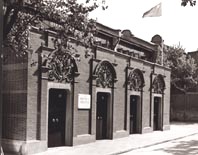 The relocation of the meeting away from "shi-ku-men" [i.e., a stone-grotto-style gated residence areas] at 76 Xingye Road (previously 3 Shudeli Lane, 106 Wangzhi Road [Bei-le-lu Road?] of the French concession territory), now known as the First CCP Congress Memorial Hall, was due to some stranger knocking on the door and breaking in on the night of July 30th while meeting was in session. Ten minutes after the representatives' vacating the house, 3 French policemen led the detectives and inspectors to the house for checking out on two Russians (Maring and Nikolsky) who were spotted earlier by the French-hired detectives.
Among the founders, Chen Gongbo [Ch'en Kung-po] & Zhou Fohai [Chou Fu-hai] later went to the KMT [Kuomintang] camp.
Zhou Fohai separated himself from the communists after accepting a post at a university, enrolled in the KMT under the influence of the CC Clique, and became a minister of the KMT's Propaganda Department, with publication of a book entitled "Theory & System Of the Three People's Principles".
Chen Duxiu and Li Dazhao, nicknamed Southern Chen and Northern Li, did not have the convenience to attend the meeting.
Chen Duxiu and Li Dazhao were both busy with the military agitation work with the southern warlords and northern warlords in the spirits of the Soviet directives to hijack the Chinese military for revolution.
24-year-old Zhang Guotao was declared as the organization minister of the CCP while Chen Duxiu was made in absentee the secretary general for the politburo and Li Da the propaganda minister of CCP.
(Later, Zhou Enlai was said to have emphasized to Zhang Guotao on one occasion that Zhang Guotao should not leave the party that he had founded. However, Zhang Guotao fled to the Nationalist territory on April 5th of 1938, after he joined the CCP group for the sacrificial oblation activities at the Huangdi's Pilgrimage in middle Shenxi Province. Zhang Guotao, whose main forces were lost to the Ma Family Muslim cavalry during the western expedition, had begun to think about dessertation after his son was said to have been bullied by Mao Zedong on a street in Yenan. In exchange for Zhang Guotao's renouncing his CCP membership but keeping mouth shut about the communist secrets, Mao Zedong released Zhang Guotao's wife Yang Zilie from Yan'an.)
Still one interesting thing would be CCP's denial of the first communist party established by Yang Shangkun's brother in Sichuan Province in 1920.
No matter how many self-acclaimed communist parties there were, only the one recognized by the Soviets and the Comintern could count.
At the absence of Chen Duxiu, Maring assisted Zhang Guotao in founding the CCP in July 1921 as a branch of the Comintern. Within weeks of the July 1921 meeting, Maring was pushing through his agenda to have the KMT and CCP form an alliance.
In Aug, Guo Moruo published poems "Goddess" and Mao Zedong launched the "Hunan Self-Study University".
The Comintern Instruction As To Alliance With the KMT & the "Two-Stage Revolution"
Zhang Guotao visited the U.S.S.R. and met Lenin. After return to China, Zhang Guotao was at one time against Chen Duxiu and the Comintern's instructions as to acceptance of Sun Yat-sen's Nationalist Party, i.e., Kuomintang (Guomingdang) or the KMT, as the revolutionary leader. Zhang Guotao was criticized as an 'opportunist' by Borodin and Pavel Mif et al.
Zhang Guotao personally propagated the Marxism among the workers, railroad workers and miners, and helped to set up the 'workers' club, the workers' associations, and the workers' consolidated associations [i.e., the trade union equivalent].
In June of 1922, Maring pushed through the Moscow demand, at the Second CCP National Session, to have the CCP ally with the KMT against the objection of Zhang Guotao. Zhang Guotao, having suffered a setback when Wu Peifu cracked down on the February 7th, 1923 Jing-han Railroad Workers' Strike, agreed to shifting the CCP's revolutionary agenda to Shanghai/Guangzhou in the south and accepting the KMT-CCP alliance during the Second Plenary of the Second CCP National Session. The CCP agreed with Maring that China's revolution should go through the two stages the same way as the U.S.S.R. had undergone the 1905 & 1917 revolution, i.e., i) a democratic revolution in 1905 and ii) a socialist revolution in 1917.
On May 20th, 1924, Zhang Guotao was arrested by the Northern Warlord Government and would not be set free till December 25th.
A Short History Of Zhang Guotao
Zhang Guotao, appearing like a black horse within the CCP, had one more antagonism to the communist policies.
After Chiang Kai-shek (Jiang Jieshi) purged the communists and Wang Jingwei wavered in his stance on the alliance with the CCP and USSR, Zhang Guotao was empowered as a special emissary of the CCP Central Committee to launch the armed rebellion, i.e., the "August 1st, 1927 Nanchang Uprising [Mutiny]" in Jiangxi Province. However, Zhang Guotao did not fully agree with the uprising till noon of July 31st because Zhang Guotao was still hoping that KMT's Zhang Fakui, who had sheltered the communists after Wuhan's separation of the CCP from the KMT, would stand on the same side as the CCP. August 1st would later become CCP's army founding memorial date. Zhang Guotao, who was originally dispatched to Nanchang to oppose the armed rebellion, would give in to Zhou Enlai et al., in launching the August 1st Nanchang Uprising [Mutiny], which was earlier than Mao Zedong's "Autumn Harvest Uprising [Mutiny] in Hunan Province".
In 1928, at the order of the Comintern, the CCP held its Sixth National Session in the USSR. Chen Duxiu, a staunch supporter of the Comintern policies, tactics and instructions, refused to go to the U.S.S.R. for the meeting which had already blamed Chen Duxiu as a scapegoat for the disintegration of the Nationalist-Communist Alliance.
Zhang Guotao attended the meeting in Moscow where he was detained for brainwashing the 'opportunism' tendency till 1931. Meanwhile, the U.S.S.R. sent over the so-called 28.5 Bolsheviks, including Wang Ming, Bo-gu, Zhang Wentian, Kang Sheng, Lu Dingyi et al., for taking over the leadership of the CCP.
In 1931, Zhang Guotao, together with Chen Changhao, returned to China from the USSR, via the Trans-Siberia Railroad route, passing through the Japanese-controlled Manchuria and riding on the Japanese ships to Shanghai. As one scholar commented, the Japanese agents knowingly let through the Russia-trained Chinese communist insurgents, even after checking out the passport names like Zhou Enlai et al., the same way as the German Kaiser’s releasing Lenin for sabotaging Russia and changing the WWII developments. The Japanese agents often cautioned the communists that though they were safe on ship, they might not be so upon arrival in Shanghai. Zhang Guotao and Chen Changhao, escorted to Wuhan by Gu Shunzhang (who was caught by the KMT and turned into a traitor shortly), would change vehicles mid-way and successfully arrive in the communist guerilla areas where they organized the CCP's 4th Flank Red Army in the cross-border areas of Hubei-Henan-Anhui provinces. The CCP Central Flank Red Army broke through the KMT siege in Jiangxi Province for a long march, while Zhang Guotao already led his 4th Flank to Sichuan where they multiplied into 50,000 men. At the time when the Central Flank converged with the 4th Flank in 1935, Mao Zedong had less than 10,000 men. Mao Zedong and Zhang Guotao had a dispute in regards to leadership as well as the direction of communist movement. Mao Zedong, being afraid of Zhang Guotao's possible coup d'etat, would flee the scene, and Zhang Guotao had convened a temporary CCP Central Committee. The two had later reconciled at the intervention of the Comintern, but this incident had sowed the seed of strife between the two. Mao Zedong later 'borrowed the enemy knife' in ordering a Western Expedition of Zhang Guotao's army for confrontation with Ma family cavalry in the Qinghai-Gansu areas. The end result would be Zhang Guotao's losing the military forces and leadership and the eventual defection of Zhang Guotao to the KMT territories in 1938.
For more about Soviet scheme against China, please refer to
The USSR, Comintern, KMT & CCP
[Modified : Saturday, 31-Mar-2012 04:10:20 EDT]
The CCP Organized Workers' Movement
The CCP Organized Workers' Movement
The CCP began to get heavily involved in the workers' movement right after its founding.
Beginning from late 1921, the CCP northern bureau organized the railroad workers' strikes on eight railroads. By April of 1922, at Changxindian, the CCP prepared for organization of the consolidated union for the Jin-Han Railroad.
The communist success on the railways of northern China was a result of Li Dazhao's collusion with the northern warlord government as well as the Soviet scheme to convert strongmen like Wu Peifu and Feng Yuxiang to the communist cause.
In the Shanghai area, the KMT members were in charge of the trade unions, while the communist activities were insignificant.
Liu Shaoqi was recalled back to China from Moscow. Chen Duxiu personally dispatched Liu Shaoqi to Hunan Province in the summer of 1922. Liu Shaoqi was to report to Mao Tse-tung's CCP Hunan Executive Committee, a building where Mao Tse-tung and Yang Kai-hui took as their residency. This would be the first meeting of the two who would become life and death feuds during the cultural revolution of the 1960s.
On May 1st, the Anyuan miners established a workers' club. Mao Tse-tung and Li Lishan had instigated among the workers at Anyuan consecutively since late 1921.
On September 9th, 2400 railroad workers at the segment of the Yue-Han Railroad established a worker club and declared a strike.
In Hanyang, the Metal Factory workers also launched a strike.
Mao Tse-tung dispatched Liu Shaoqi to Anyuan on September 11th for assisting Li Lishan.
On September 14th of 1922, Li Lishan and Liu Shaoqi launched the 13,000 men "Anyuan Miners' Strike" and "Zhuzhou-Pingxiang Railroad Workers Strike" at the Hunan-Jiangxi border, defeated the crackdown by the army, and forced the authorities into signing off concession by September 18th. Among 13,000 men would be 12000 miners and 1000 railroad workers.
Liu Shaoqi personally went to see the curfew garrison commander during this strike.
On September 18th, Li Lishan and Liu Shaoqi celebrated the victory with over 10000 workers.
Per Deng Zhongxia, Liu Shaoqi's accomplishments of establishing the seven workers' school, five reading rooms, one worker library, and two consumer cooperatives would become the only glorious establishment in the aftermath of February 7th, 1923 crackdown on the Jin-Han Railroad Workers' Strike.
The Consolidated Union for the Jing-Han Railroad was scheduled for its commencement on February 1st of 1923, with open invitation of over 300 presidents and activists of all railroad union and workers' unions. But, on January 29th, Wu Peifu, being notified of the event by Zhengzhou's railroad chief Zhao Jixian, ordered Jin Yun'e to crack down on the meeting.
Wu Peifu, who had allowed the communists to take over the railway bureau administration, had a fallout with the Soviets.
The Zhengzhou police declared the martial law on February 1st and encircled the union gathering. Shi Wenbin, in face of the crackdown, declared the founding of the union. By late afternoon, the police destroyed the scene of the meeting. Luo Zhanglong, Shi Wenbin and Wang Zhongyi made a decision for a general concerted strike across the country (from Peking to Zhengzhou to Wuhan) beginning on February 5th [? February 4th per Wang Jianji & Wang Yuanchao].
The 1000 kilometer long Jin-Han Railway collapsed within 3 hours of the strike.
10,000 workers in the Wuhan city paraded on the streets to echo the strike of 30000 railway workers.
At Zhengzhou, Jin Yun'e, chief of the 14th division, arrested several workers' representatives who had earlier visited his military office for appealing the workers' case. At Jiang'an, the workers forced the authorities into releasing some representatives. At Wuhan, the workers dispatched a delegation to Jiang'an to show support for the strike.
At Changxindian, on the night of February 6th, Cao Kun's army began to attack the workers and arrested workers' leaders including Shi Wenbin. Luo Zhanglong was called to Changxindian, near the Lugouqiao Bridge, for organizing the rescue activity. Luo Zhanglong and Ge Shugui led 3000-4000 workers and encircled the police bureau where two army battalions were stationed. Another battalion came to crack down on the workers, and altogether five activists were killed and 29 wounded. Luo Zhanglong, wounded in the fight, relocated his strike office to Peking.
On the afternoon of February 7th, Governor-general Xiao Yaonan (for Hunan Province) slaughtered the workers at Jiang'an train station of Hankou and killed 32 workers including Lin Xiangqian (a CCP member). Another activist, Shi Yang, was arrested and executed on February 15th. The crackdown also went on at Baoding, Baobeidian, Zhangde, Xinyang, Xinxiang and Yancheng.
This would be termed the "Feb 7th 1923 Jing-Han (Peking-Wuhan) Railroad & Mine Strike". Altogether over 40-50 people died, 300 injured, 60 arrested, and 1000 workers dismissed.
To avoid further sacrifice, the CCP northern bureau declared a termination of strike.
Zhao Jixian, however, proposed to Wu Peifu and Cao Kun for a continuous crackdown on the CCP. The Peking government announced whoever communist to be caught would be executed. In Peking, the government broke into a workers union guest house and arrested the person in charge; the printing house under Beijing University was destroyed; and "Workers Weekly" was closed down. The Tianjin city's "Workers Weekly" was destroyed, too. Over 40 people in Peking, Tianjin, Zhengzhou and Fengtai were arrested.
On March 22nd, 1923, over one thousand people, including Mrs. Shi Yang, attended the funeral of the February 7th Strike victims against the government's pressure. In Shanghai, some similar mourning activity was held. The Canton's Chinese Seamen's Consolidated Union sent over wire of condolences.
In late 1924, Liu Shaoqi relocated to Canton as deputy committee chair for the Chinese Consolidated Workers' Trade Union.
When the Japanese capitalists of the "Inside-Outside 7th Textile Factory" cracked down on the Shanghai workers and killed 20-year-old CCP leader Gu Zhenghong on May 15th, 1925, the CCP members took blood-stained clothes to schools and factories and led the mass protests on May 30th. The British extraterritorial police made arrests of the protesters.
At 3:00 pm, 10000 protested converged upon the Laozha extraterritorial police bureau on the Nanking Road.
The Protesters surrounded the extraterritorial police bureau. The British, on May 30th, shot dead dozen protesters on the Nanking Road.
On the night, the CCP made a decision to launch a city-wide protest against the imperialists, with Liu Shaoqi, Li Lishan and Liu Hua in charge of the frontline struggles. On June 1st [May 31st per Wang Jianji & Wang Yuanchao], the Shanghai Consolidated Workers Union was established, with Li Lishan acting as chair.
200000 workers and 30000 students launched a strike.
Liu Shaoqi promptly arrived in Shanghai from Qingdao where he had held the Sifang Machinery Factory strike, and Liu Shaoqi took on the post of general affairs director (i.e., general secretary) for the Shanghai unions.
Schools, factories, shops, transportation all came to a halt in Shanghai.
By June 10th, the imperialist authorities cracked down on the protesters nine times, killed over 60 Chinese, and inflicted heavy injuries to over 70 Chinese.
Nationwide, the Chinese launched the anti-imperialism protests.
On June 11th, 200000 Shanghai workers held another gathering in demand of revocation of the extraterritoriality and foreign troop garrisons.
The CCP's "Hot Blood Newspaper" and the KMT's "Nationality Newspaper" bombarded imperialism.
The imperialists resorted to cutting off the water and electricity to counter the strike movement.
When the Shanghai Chamber of Commerce declared a cessation of shop closures on June 26th, ending the "three strike" movement, Liu Shaoqi's worker unions insisted on the struggle.
Soon, the CCP had to yield to an end to the student strike and worker strike.
On August 22nd, the rascals intruded into the office of the Shanghai Consolidated Workers Union but failed to arrest the CCP leaders.
On September 18th, the Feng-xi military faction closed down the Shanghai Consolidated Workers Union and put out a most-wanted-list for Liu Shaoqi.
Liu Shaoqi left for Hunan in Dec.
Hunan Governor-general Zhao Hengti arrested him on December 16th, 1925 and released him on January 16th under the pressure of nationwide appeals.
(It was said that it was Liu's classmate, i.e., Yang Jianxiong who had contacted Heh Yaozu & Ye Kaixin in petitioning for freeing Liu Shaoqi; however, Yang Jianxiong, who followed Cheng Qian in the "Hunan Province uprising" in 1949 for the communist camp, failed to be accorded a visit from Liu Shaoqi in Peking, got arrested by the Ningxiang communist police upon returning home, and consequently got executed by the Hunan communist government as "evil hegemony" with a purported Liu Shaoqi instruction that Yang Jianxiong should be dealt with in accordance with the party guidelines.)
Liu Shaoqi returned to Canton on February 19th, 1924 and took on the task of leading the Guangdong-HK Strike.
At the time of May 30th, 1925 Movement, the communist party, which had firm control of the Shanghai University as a citadel, had been using the campus as its base.
The Shanghai University was converted in 1922 from a low accreditation college called the "Southeast Advanced Vocational Normal School".
Initially, KMT senior leader Yu Youren assumed the schoolmaster post, but let CCP member Deng Zhongxia take charge as the "education director".
Consequently, the leftist and communist figures entered the college as professors, including Qu Qiubai, Cai Hesen, Yun Daiying, and Zhang Tailei.
Per Chen Fangming's "Commentary Biography of Xie Xuehong" [Vanguard Publishing House, Taipei, Taiwan, July 1991 edition], Shanghai U was deemed the CCP's 2nd most important theoretical cradle.
Lots of Moscow returnees had lectured at Shanghai U.
Xie Xuehong, who had followed her lover from Taiwan to Tokyo to China, would participate in the May 30th, 1925 Movement in Shanghai by joining the group of Taiwan patriots in the name of the "Taiwan autonomy society". The Taiwan patriots, who already launched the socialist and communist activities in Taiwan, would propagate the slogan of "Recovering Taiwan" during the Shanghai parade. Xie Xuehong, aka Xie Feiying, got admitted to Shanghai U in June with the CCP auspice.
Among the schoolmates would be the later Taiwan communist gang called the "Shanghai University faction".
A few months later, Xie Xuehong was sent to the Orient University [i.e., the Toilers' University] in Moscow, while another Taiwan native, i.e., Lin Mushun, was sent to Dr Sun Yat-sen University.
(The "Taiwan autonomy society" was founded by Cai Xiaoqian, Lian Zhiwang & Lin Weijin in May 1924.
Cai Xiaoqian, a so-called longmarcher, was sent back to Taiwan in the late 1940s, caught by the government agents, feared for his life, surrendered, was assigned a job in the special agency of the reorganized KMT organization department.
For his betrayal to the communist party, Cai Xiaoqian was poisoned to death by an undercover communist mole, using the radioactivity-contaminated pen --which was among some of the remnant materials locked up in a metal safe, that was fetched from the mainland at the time of the communist army crossing the Yangtze, materials that belonged to some leftover Atomic-bomb and uranium experiments that was ordered to be conducted by Chiang Kai-shek who was shocked by the powerfulness of the said bombs dropped to Hiroshima and Nagasaki in 1945.
This radioactive poisoning of Cai Xiaoqian in the hands of a communist mole could be said to be a first such incident in light of the poisoning death of Alexander Litvinenko, a former officer of the Russian Federal Security Service (FSB), in London.
Also note that several memoirs mixed up the two Russian universities: Dr Sun Yat-sen University was open to the KMT members, while Orient University mainly for the communists.)
Peasants' Poverty Is China's Poverty
Harold Isaacs stated in chapter 2 of his book 'The Tragedy of The Chinese Revolution':
"More than three-quarters of China's population, or more than 300,000,000 people, depend upon the land for their livelihood. The problems of these millions are the problem of China. Their poverty is China's poverty. All of China's hopes for the future depend on releasing the productive energies of this great mass of people. Up to now they have been drained by a system which has taken away from them the fruits of their infinite toil as well as the land itself, and has given them nothing in return."
Harold Isaacs pointed out that "one official estimate made in 1927 held that 55 percent of the Chinese peasantry was entirely landless and 20 percent holders of inadequate land." He further stated that "from sectional studies made under his direction, Professor Chen Han-seng [i.e., an undercover communist under Lattimore] estimated in 1936 that no less than 65 percent of the peasant population was either entirely landless or land hungry, i.e., possessing land in parcels too small and too burdened by all the adverse conditions of the regime to provide a living even on the barest subsistence level."
Harold Isaacs had a point-blank viewpoint as to the failure of China's industrialization to rescue the peasants from bankruptcy. He echoed Chen Han-sheng's opinion that "unlike the European burghers of the past, the urban men of property in China remained bound by a thousand links to the pre-capitalist or semi-feudal system of exploitation on the land. The peasant was subject to the depredation of landlord, usurer, merchant, banker, war lord, tax collector, and local official. The interests of these groups fused and became the interlaced interests of the ruling class as a whole."
Deeply rooted in this setting would be the conflicts of the Chinese city bourgeois and the Chinese peasants in their struggle and revolution for liberation, with the only common thread being the overthrow of the yoke imposed on the two parties by the foreign imperialists.
On the matter of peasants, Mao Zedong (Mao Tse-tung) was not the only nor the first person who had heralded the peasants' movement. Per Harold Isaacs, "the peasants had also begun to stir and group themselves into organizations before the revived Kuomintang made its appearance in 1924. The modern Chinese peasant movement was cradled in Haifeng, in the East River districts of Kwangtung, by Peng Pai, one of the most appealing figures of the Chinese revolution." Peng Pai, similar to Mao, was born in landlord's family. Peng Pai, originally a school teacher who lost his job due to leading his students on the May Day demonstration in 1921, joined the CCP and went back to the countryside where he organized the Haifeng Peasant Association. Again per Harold Isaacs, "thus begun, the organization spread rapidly to neighboring districts and the framework of a Kwangtung Provincial Peasant Association was already in existence before the middle of 1923... Peasant struggles against the landlords, against the magistrates, police, and soldiery, multiplied throughout the East River districts and ignited similar conflicts in the west and north of the province... Demands (for) reduction of land rent passed over almost immediately to demand for its total abolition. "
Per anthology "Seventy Year Wind & Cloud Records of CCP" (Chinese Periodical Publication Inc, San Gabriel, Ca, 1992 edition), the first peasant movement leader should be ascribed to Shen Dingyi who, a Shanghai CCP founder, donated his family fortune to the revolution and later returned to his native town of Yaqian-zhen Town, Xiaoshan-xian County, Zhejiang Province where he set up an elementary school and later recruited 68 year old peasant called Li Chenghu for establishing a peasant association on September 27th of 1921.
Eight villages in Xiaoshan-Shaoxing area had imitated Yaqian in setting up peasant associations within one month, with full set of Yaqian peasant association declaration and guidelines transcribed. The government cracked down on the peasants' movement for 'reduction in land rents' and Li Chenghu was arrested and tortured to death in prison on January 24th of 1922. "The New Youth" magazine and Shanghai newspapers had reports on this incident.
(Shen Dingyi went on a four person Dr Sun Yat-sen Delegation tour of U.S.S.R. with Chiang Kai-shek. After communist leader Qu Qiubai seduced his daughter-in-law in 1924, Shen took another turn by joining the West Hill faction and joined senior KMT leaders for a meeting in front of Sun Yat-sen's altar in Peking. Expelled from CCP as well as disliked by Chiang Kai-shek's KMT, Shen Dingyi was assassinated in August 1928. See Keith Schoppa's "Blood Road: The Mystery of Shen Dingyi in Revolutionary China", Berkeley, 1995.)
Exploiting the land & peasant problems of China, Mao Zedong's Land Revolution (Peasant Revolution or Agrarian Revolution), which was supposed to strive for the happiness of the mass of people, had inflicted only pains on the Chinese peasants and enslaved the Chinese peasants into a caste of uneducated, obedient and poverty-stricken people who had been deprived of both their land and their right to leave the land. This caste society was covered in another section where we discussed the formation of 'agricultural cooperatives' three years after the victory of communist revolution and later the "people's communes".
Mao Zedong & the Peasant/Land Revolution
Mao had survived because of his cunningness, his cowardice, and his opportunism:
Mao slipped away from the gentry-organized militia by bribing them with money [and likely betrayed the county communist leaders to save his life, not an escape through bribery]; Mao deliberately rejected the order of the "Autumn Harvest Uprising" [i.e., attacking Changsha], steered the Whampoa-cadet-led army to the mountains, only to be saved after Zhu De's defeat and relocation of the communist army to Mt Jingangshan; Mao overpowered the political enemies by sowing dissension among the Moscow returnees; and Mao apparently had his own line of Russian/American spies in the 30s-40s that were doing the 'damage control' by dancing on the rope of the Sino-Russian international plays, including Solomon Adler and Chen Hansheng. Whatever, he was still someone in the palm of Stalin who was the evil genius to have managed to turn Japan & Germany against Britain and the USA.
However, Mao was not born a monster as Jung Chang said. He was a spoiled kid, after spending 7-8 years with a grandma. He only had left the countryside after his first wife died.
Mao, who hated his father for the possibility that his father might have raped his first wife and caused his wife to commit suicide in the second day of a lunar new year, never returned to hometown till after his father's death.
Mao could manage to learn quite a bit by going through several county-level high schools.
Then he spent around one year in a provincial library before going to a normal college, apparently liking the idea of "self-study", not the lazy-bug as depicted by Jung Chang.
It was discovered that Mao's attending of the schools was related to his uncle-in-law and other in-law family members' arrangement.
Mao then organized the "New Citizen Society", apparently a good organizer. Mao did not have any "violent" ideas till after Russell & Dowey visit of Oct 1920, when the two philosophers preached the non-Bolshevik way of reforming society in Hunan Province and Mao acted as some kind of stenographer. Mao was asked by Chen Duxiu to organize the communist Hunan branch but he was busy with the idea of "Hunan Province Republic" and "provincial autonomy" till Nov 1920. Mao attended the July 1921 CCP meeting in secrecy, with him and Heh Shuheng being the only two Hunanese to be notified of the CCP founding meeting.
Mao, contrary to what I had read before, did not go for the peasant association in his hometown in 1924 at all, apparently falling way behind Peng Pai in the utilization of peasants for revolution. Mao was organizing the so-called "branches of May 30th Anti-Imperialism Societies" in his hometown.
As to the date of July 1921 for the founding of the Chinese communist party, Jung Chang had apparently picked up Xin Haonian's claim that the Chinese communist party should be deemed officially founded in the summer of 1920 when the Russians knocked on Chen Duxiu's door in Shanghai. After reading Zhang Guotao's "The Rise of Chinese Communist Party", this webmaster has reason to believe that the Chinese communist party was merely in the process of being organized in 1920. Zhang Guotao himself, while living in Chen Duxiu's Shanghai residence, could only overhear the secret talks between Chen and the Russians. After Zhang Guotao's return to Peking, some sort of the communist party launch panel was organized in Peking as well. However, in 1920, senior communism activist Li Dazhao still very much treated communism as academic and philosophical, definitely not a party entity with a practical aim and methods. Li Dazhao, already a second-rate founding member of the "Young China Society", apparently took pleasure in memberships in multiple societies, organizations and parties, and later in 1922, was to launch a "Socialism Democracy Party [?]" or the sort.
The Russians, out of their sinister motives, had been lurking in China before knocking on Chen Duxiu/Li Dazhao. At least one batch of Russian agents came before Votinsky. And, after Votinsky visit, one more batch of Russian agents, in the name of "Tass Canton Agency", had colluded with several Chinese anarchists in establishing "Chinese Communists at Canton" on Oct 3rd 1920. After CHen Duxiu came to Canton in Nov 1920, as education minister for Canton Governor Chen Jiongming, Chen Duxiu managed to take over control of communism activity from the Russians and re-organized "Chinese Communists at Canton" in March 1921. By that time, Chen Duxiu was claiming to his followers that similar organizations had already existed in Shanghai and Peking. -Strictly speaking, Chinese communists, under Chen Duxiu, did not have an official and open founding date till even after its First National Congress of July 1921. While Russians were spending roubles in China, they were smart enough to have sent agents to Paris in 1921 as well. On basis of the communist youth league established by CHen Duxiu's two sons in 1920, Russian rouble successfully converted hundreds of overseas Chinese students into Third Comintern communists.
BBS - Mao vs Stalin/Russians:
http://www.chinahistoryforum.com/index.php?showtopic=12238
More available at Mao_Tse-tung.htm
|
|
Mao Zedong [Mao Tse-tung], a figure who had changed China for much worse, had been first described by Edgar Snow in his book "Red Star Over China". Edgar Snow, who secretly entered communist territory in June of 1936 under the escort of CCP's special agent Deng Fa, had first-hand interview with Mao Zedong, Zhou Enlai and Peng Dehuai etc. Edgar Snow stayed in Yan'an for 4 months and covered extensively the stories of the Long March. At the insistence of Snow, Mao Zedong disclosed his early life, and the chapter on Mao's personal life would later be transcribed in various Shanghai publications around 1937-8.
Mao Zedong disclosed to Snow his 1907 marriage with an 18-year-old girl from the neighboring Luo family. Mao Zedong told Snow she was 20 and they had no intimacy with each other.
Mao's total denial of this relationship stemmed from the possibility that his father might have raped his first wife and caused his wife to commit suicide in the second day of a lunar new year.
Mao never returned to hometown till after his father's death.
Mao, while at school or college, never returned home during the school break -as recollected by classmates in memoirs.
As Mao's personal letters showed, Mao's mother also left the Shaoshan hometown to stay with Mao's uncle-in-law.
At that time of marriage, Mao Zedong was four years younger than his wife but he already grew into a tall lad. Mao family of Shaoshan and his wife's Luo family, both local wealthy land-owners and Confucian gentry, had been engaged in generations of inter-marriages per the familial lineage records. Per scholar Peng Mingdao, Mao Zedong had acted as kind of half-son for his father-in-law.
The death of Luo could have spelled a curse on the Mao family as Mao's brother did not get a wife locally, but a poor family's girl from the remote area.
In 1911, after the death of his first wife in 1910, Mao Zedong, still a student in Changsha the capital of Hunan Province, had gone to his father-in-law's place, about 6 Chinese li distance, for planting paddy rice as half-son; in 1925, Mao Zedong and his second & official wife had visited his old father-in-law; and in January of 1927, Mao Zedong paid a last visit to his old father-in-law.
When Mao Zedong's first wife, Yi-xiu, died in 1910, 17-year-old Mao Zedong was in extraordinary sorrow and wrote the later disputed poem which his second wife (Yang Kaihui) had shown to her best friend (Li Shuyi).
Yang Kaihui, i.e., Mao's wife, at one time showed her best friend Li Shuyi a sorrowful poem written by Mao Tse-tung in remembrance of this first wife, a poem that Li Shuyi tried to ask from Mao as a bestowal in the 1950s and a poem that Mao later in the 1970s recited prior to his death.
Peng Mingdao pointed out that Mao's family tree records had a sentence stating that Mao's youngest son, Mao Anlong, be adopted by the family of his old father-in-law. Peng said that Mao Zedong had instructed his eldest son to see the Luo family in 1950 and offer financial support. In 1959, Mao Zedong returned to Shaoshan home and had a dinner with his first wife's youngest sister who married a Mao cousin in neighboring Maohua-chun Village. Peng stated that Mao Zedong and his first wife, contrary to what Mao told Snow in the 1936 interview, had very good terms for three years.
In April of 1910, at Changsha the provincial capital, hunger-stricken people stormed the governor's office, customs office and foreign consulates after inflation led to suicides of a worker and his sons, i.e., a tragic event of suicide by jumping into the river as a result of the earlier suicide death of the mother of the children. Manchu government cracked down on the rebels and displayed decapitated heads of the rebels on the Liuyang-men City-gate. Some escapees passed through Mao's hometown school, relaying the news, which had shaken the mind of Mao and his classmates considerably.
After the death of Yi-xiu, Mao Zedong invited all his past teachers for a banquet and asked them persuade his father into giving up the idea to have Mao inherit the family's rice merchant business so that he would be allowed to leave for the Hunan provincial capital for studies. Mao hence began his long journey of revolution which later recruited and sacrificed numerous family members.
(See Peng Mingdao's analysis of Yi-xiu story for more details. In 1957, Li Shuyi, whose husband Liu Zhixun, a ruthless communist murderer of landlords, scarified his life for Mao's revolution around the Honghu Lake of Hubei Province in 1932 [in fact, being purged by the communist peers], wrote to Mao Tse-tung with a poem she wrote for her late husband in 1933 and mentioned a Mao poem that Yang Kaihui had shown her; Mao re-wrote a different poem on May 11th, 1957 as a reply to Li Shuyi; and Mao would recall his original 1910 poem to his personal nurse Wu Xujun in 1973. Liu Zhixun was beaten to death by the CCP's "reactionary purge committee" per Wen Yu's 1994 book "Leftist Catastrophe of China".
Incidentally,
Jiang Qing, jealousy of Mao Tse-tung's emotions for the first wife, would write a letter to Tang Na [Li Jiliang] in 1958 and asked a movie director to pass on to Tang Na who was operating a restaurant in Paris at the time.)
While in Changsha, the 1911 Revolution broke out and the Manchu rule was overthrown.
Mao joined the revolution army for six months and quit the army after Yuan Shi-kai & Sun Yat-sen reached a deal about the unification of China.
In 1913, at age 20, Mao Zedong, with the purported highest score, was admitted to Changsha's Hunan Fourth Normal College (which later converged with the First Normal College). For 4 years, Mao persisted in the cold water shower each morning. While studying at Changsha's First Normal College, Mao Zedong began to read the books by both the reformists (i.e., monarchists) and the revolutionaries as well as the anarchists.
In 1915, Mao organized a student movement trying to expel the college president, wrote about 'national shame' on the student magazine in regards to Yuan Shi-kai's acceptance of Japan's 21 Demands, and posted a public notice for making penpal friends during the summer break, with Luo Zhanglong, Li Lishan and et al., answering his pen-pal call.
Also in this year, boycott against the Japanese products went into a full swing in the major cities, and Chen Duxiu published his "New Youth" magazine in Shanghai.
Later CCP leader Liu Shaoqi, at age 18, entered Ningxiang Middle School at Changsha with a recommendation letter attentioned to Heh Shuheng, and subsequently applied for admission to Governor-general Tan Yankai's Infantry Military Academy which broke down into ashes during the 1917 Constitution Restoration War.
Mao participated and hosted the establishment of students' society, at one time enjoying the highest vote as the most popular guy.
In April 1917, Mao published his first article on "New Youth". During summer break, Mao toured 5 counties with Xiao Zisheng as a companion. In December 1917, Mao hosted free nighttime education for 120 workers at the college.
Also in 1917, Mao and his college classmates, together with city police, successfully encircled about 2000 fatigued north warlord army via a military tactics from ancient 36 tactics and disarmed the soldiers.
On April 14th 1918, Mao, together with Cai Hesen and Xiao Zisheng, participated and hosted "Xin Min Xue-hui" (i.e., New Citizens Society). Mao had assembled 21 cadres by posting his pen-pal advertisement on campuses of all major Changsha colleges, including the women's normal college (where the notice aroused schoolmaster's suspicion).
Mao continued to lead college students for maintaining peace in Changsha when Zhang Jingyao of northern warlord lineage army engaged southern revolutionary government in military conflicts and fighting.
First Normal College would later produce hundreds of communism activists, with over one hundred of them to fall martyrdom to struggles between CCP and KMT. (This same Hunan Normal College would be attended in 1979 by an activist called Liang Heng who bragged, in "Son Of The Revolution", about his being 'a good student of Chairman Mao', the "Son Of The Revolution" and his exotic love with a female American professor and the subsequent marriage attended by various communist cadres and revolutionaries. Note the farce that the same opportune and practical cadres and revolutionaries, not many years before that, had vehemently shouted 'Down With American Imperialism'.
Jung Chang's "Wild Swans" would be another good example to illustrate the "going West" mentality among sons and daughters of communist cadres as well as the kind of nepotism relationship which was invoked for sending their sons and daughters to "Worker-Peasant-Soldier University" and consecutively obtaining the limited "overseas study" quota.)
Teaching at First Normal College would be an intellectual called Yang Changji who had spent 10 years studying in Japan and Britain, consecutively. Prof Yang Changji returned to Changsha for a teaching career in 1913, and he was noted for assembling students at his home for debates and discussions. Prof Yang Changji's daughter, i.e., Yang Kaihui (1901-1930), was an intelligent girl who was admitted to No. 40 Junior School of Changsha at age 7. Prof Yang Changji often claimed that Xiao San was his best disciple and intended to have his daughter engage with Xiao San.
In 1914, Mao Zedong first met Yang Kaihui at Prof Yang's home. This would implicate the loss of human lives in Yang family in the future. One of Mao Zedong's classmates mentioned that they did not even utter a single word during lunch or dinner at Prof Yang's home, not to mention any chance of direct talk with the little girl.
Mao Zedong had few most intimate classmates during this timeframe, including Tao Siyong, a classmate as well as a girlfriend. Tao Siyong was counted as one of three talented female students by Prof Yang Changji, with the other two being Ren Peidao and Cai Chang. Among Mao's alumni would be Cai Hesen and a later poet Xiao San (aka Xiao Zisheng), counted with Mao as Prof Yang's three talented male students. (Among most Mao biographies I read, I only found "Mao Tse-tung's Youth Years" carrying reference to Prof Yang's talented students of 3 males and 3 females. After checking with Yi Lirong, Peng Mingdao, at http://www.secretchina.com/news/articles/4/7/18/68721.html, analyzed a Mao poem dated December 1923 to have reached a conclusion that it could be for Tao Yi, i.e., Tao Siyong.)
In 1918, France, which had recruited over 150,000-200,000 Chinese labor for its war efforts against Germany during WWI, encouraged Chinese students to study there. Cai Yuanpei, Wu Yuzhang and Li Shi organized the so-called 'qin gong jian xue' movement, which was to help liaison Chinese students for going to France for studies while performing diligent working part-time off-campus as a means of support. Beijing (Peking) had 'qin gong jian xue' HQ, while branches were set up in Shanghai and hinterland provinces. ('qin gong jian xue' movement sounds similar to modern-day brokering agencies which milk money out of Chinese youths eager to desert China for a better life in Japan, Australia/New Zealand, Europe and North America. Student patriotism in 1910-20s, however, should not be discounted. Some French philanthropist had written about their agency's helping those students. Later, around 1920, about 2000 Chinese students incurred livelihood problems after Sino-Franco Bank, a financial organization supported by French communism and socialism supporters, collapsed.
http://www.secretchina.com/news/articles/3/9/2/49955.html pointed out i) that Sino-French Education Board failed to raise more funds; ii) that beginning from 1920, organizers like Li Shizeng lost interest in 'qin gong jian xue' as a result of French government plan in refunding overcharged boxer indemnity for establishing Sino-French education institutions in China; and iii) Cai Yuanpei announced in 1921 that Sino-French Education Board would no longer support overseas students.)
Mao Zedong and thousands of students from Hunan-Sichuan provinces went to Beijing in August of 1918 for studying French and making preparations for overseas studies.
Numerous historians commented that overseas studies in France were no more than enrollment in some language prep school while majority students could not solve livelihood problems. In late 1919, Mao Zedong etc., went to Shanghai to board the ship, and at the last minute, Mao changed mind and went to the dock to see his classmates, including Xiao San, Xiang Jingyu and Cai Hesen, and comrades, depart for France instead. In early 1920, Mao cited Prof Yang as a good example that going overseas was not a must for gaining knowledge. Mao was said to have been responsible for borrowing money for the trip of his classmates by going to a rich Hunan Province native in Shanghai, and Mao had reimbursed this rich Hunan man after the 1949 victory of revolution. (Nobody had second-guessed the reasons why Mao did not go to France in 1919. One explanation was an attempt to link Mao Zedong's cancelling Paris trip to the illness of his mother who had passed away on October 5th 1919 at age 52. Mao's father whom Mao had rebelled against in early years would die of sudden illness at age 50 on January 23rd 1920. I would not rule out Mao's entanglements with his women in Changsha, including Tao Siyong.)
In the summer of 1918, Prof Yang Changji relocated to Peking University at the referral of scholar Zhang Shizhao.
Mao was graduated from college in June.
By Aug-Sept of the year, Mao Zedong came to Peking, too, and with the referral from Prof Yang, Mao worked as an assistant librarian under Li Dazhao at the Peking University library. While in Peking in 1918, Mao Zedong first met Li Dazhao and Chen Duxiu, the earliest propagators of communism.
Mao Zedong disclosed to Edgar Snow that he began to fall in love with Yang Kaihui while staying in Peking, which is disputable in light of fact that Mao Zedong's classmates had disclosed that the young girl would usually sit by quietly, listening to the discussion between her father and her father's students.
In this year, Li Dazhao was banned from organizing "Marxism thought research society" at Peking University.
In May 1919, Mao organized "Hunan student united society" to answer Peking student's movement during the May 4th Movement. Meanwhile, 70,000 Shanghai workers held a strike in support of Peking students.
Liu Shaoqi departed Changsha for Peking at the encouragement of May 4th Movement.
Mao Zedong left for Hunan Province thereafter, but paid a visit to Prof Yang in Peking and had a short stay in Prof Yang's home in Peking. Mao Zedong claimed that he had turned into a Marxist believer after the second visit to Peking. Mao Zedong returned to Changsha of Hunan Province where he might have had the disputed love affair with Tao Siyong. Mao Zedong's best friends and classmates had touched on Mao's love story with Tao Siyong, with definite conclusion that it did not break up because of Yang Kaihui. In another word, Mao-Tao broke up with Tao Siyong before Yang Kaihui returned to Changsha. (secretchina.com/news/articles/3/3/22/37809.html carried an article claiming that Mao hand-picked heir, Hua Guofeng, was Mao Zedong's son from a 1920 affair with a Yao-surname woman whose father was a Shanxi Province merchant doing business in Changsha. Hua Guofeng, with a reign from 1976 to 1980, was responsible for building the Mao Zedong Memorial Hall where the crystal coffin was housed. Hua Guofeng paid yearly visit to Mao Zedong with his family members, personally issuing the order to have three bows in front of Mao's dead body.)
In May 1919, Li Dazhao published the "Morning Post" newspaper in Peking and opened a special column for Marxism research.
In neighboring Tianjin, Zhou Enlai and Ma Jun launched the "Society of Awakening" [i.e., "Jue Wu She"] in Nankai University. In this year, Fu Sinian first advocated Romanization of Chinese characters.
On June 11th, Chen Duxiu was put into prison for his radical thoughts on "New Youth" Magazine.
In July 1919, Mao Zedong edited a publication called "Xiang-jiang River Commentary" and wrote articles appealing for the release of Chen Duxiu from the government's imprisonment.
In July of 1919, Mao Zedong wrote an article about Russian revolution, entitled 'The Great Unification of Common Peoples'.
In late August of 1919, thousands of Tianjin-Peking students surrounded the Presidential Palace in protest of Ma Liang's crackdown on the students in Shandong Province, ending in the arrest of student rep Ma Jun. Liu Shaoqi, unable to afford tuition for the college in Peking, joined the students in forcing the northern government into the release of Ma Jun on August 30th. After that, Liu Shaoqi entered Baoding's Yuede Middle School for one year "simultaneous study and work program", but quit the idea of going to France when the news came that the French authorities prohibited the Chinese students from going there.
Also in August 1919, in Hunan Province, Hunan Governor-general Zhang Jingyao censored Mao's "Xiang-jiang River Commentary" magazine.
Mao organized the movement for expelling Governor-general Zhang Jingyao of the northern warlord lineage and led the Hunan students' delegation to Peking where he appealed to the nationwide for support and revealed Zhang Jingyao's atrocities in Hunan Province. Historians stated that Mao Zedong's thoughts turned to anarchism from his original belief in Kang You-wei/Liang Qi-chao's reformist school. Mao Zedong once proposed for Hunan Province to be an independent statelet in addition to eulogizing Russia's October Revolution.
By late 1919, Mao was introduced by Li Dazhao and Deng Zhongxia for enrolment in the "Society of Young (Junior) China".
In August 1920, Mao Zedong and He Shuheng et al., set up the 'Russia Studies Society' and the 'Communist Studies Hunan Branch'.
Liu Shaoqi, hearing of the 'Russia Studies Society', made up his mind for the "simultaneous study and work program" in Russia in lieu of France.
Liu Shaoqi, with recommendation from Heh Minfan of the Chuanshan [Wang Chuanshan] Society, enrolled in the "Socialist Youth League". After some brief studies of the Russian language in Shanghai, Liu Shaoqi departed for Russia in April 1921 together with Ren Bishi, Xiao Jingguang, Zhou Zhaoqiu and Hu Shilian et al.
Jiang Jingguo, i.e., Chiang Kai-shek's son, was secretly instigated by the communists for overseas studies in the U.S.S.R., where he was to remain a hostage for twelve years.
Chen Jieru's Memoirs claimed that she supported Jiang Jingguo's decision, and furthermore sent money to the U.S.S.R. for supporting Jiang Jingguo, for which Jiang Jingguo made arrangement for settling Chen Jieru in Hongkong after Chen Jieru relocated to Hongkong.
When Yang Kaihui's father passed away in 1920, Yang Kaihui returned to Changsha.
According to an account by Mao Zedong's classmate (i.e., Xiao San) who was studying in France, Yang Kaihui wrote a letter to him from Peking, stating that her father had passed away, that her father always thought of him as the best disciple, and that she was going back to Changsha of Hunan Province.
In Changsha, Yang Kaihui enrolled in the Xiangfu Women's Middle School under the help of Li Shuyi's father. Tao Siyong, apparently having broken off with Mao Zedong, left Hunan Province for Shanghai where she worked as an educator.
In the summer of 1920, Chen Duxiu set up the first communism study group. Mao Zedong paid a second visit to Shanghai and met with Chen Duxiu. Mao Zedong later recalled that Chen Duxiu's firm belief in communism had been a major factor shaping Mao's thoughts.
By the end of 1920, Mao Zedong got married with 19-year-old Yang Kaihui.
On January 1st of 1921, Mao Zedong, at a "New Citizen Society" meeting, advocated communism over the "socialist democracy".
For the whole year of 1921, Mao Zedong devoted himself to the establishment and operations of the 'Hunan communist organization'. In Feb, Mao Zedong and his brother Mao Zemin went back to Shaoshan for the Spring Festival. In the spring, Mao Zedong, together with Yi Lirong and Chen Shu'nong, visited the schools of several Hunan counties, including Yueyang, Huarong, Nanxian, Changde and Xiangyin. Mao Zedong went to Hengyang with Xia Minghan for organizing the communist party. In June, Mao Zedong left for Shanghai where he attended the two-month-long conference for establishing the Chinese Communist Party (CCP). In Aug, Mao organized a self-study college in Changsha, and in September and Nov-Dec, Mao visited the Anyuan Mine twice for organizing the workers' movement.
(Yang Kaihui enrolled in the CCP right after Mao Zedong's return from the First National Session of the Chinese Communist Party. Yang Kaihui worked in Mao Zedong's 'self-study college' in 1920, went to Shanghai in 1923 where Mao Zedong had relocated one year ago as the minister of organization for the CCP, and born three sons for Mao Zedong. The eldest son, Mao Anying, was born in 1922, and later in November 1950 died in Korea from the kerosene bombs (i.e., the incendiary bomb) dropped by the American airplanes.)
In December of 1921, Peking's "Morning Post" printed Lu Xun's writing "The Diary Of A Psychic Man".
In January 1922, Mao organized a funeral for two worker leaders who died during the Changsha Textile Factory's crackdown on the worker protest as well as established the so-called Hunan Youth Library. In Feb, the HK workers launched a general strike against the British authority and made HK a dead port.
In April, Mao made a speech at the 3rd Normal College in Hengyang, and in May, Mao organized the CCP's Hunan committee and made himself the secretary in charge.
In Sept, Mao Zedong, Guo Liang, Li Lishan and Liu Shaoqi organized the railroad worker strike, cement and carpenter worker strike, printing house worker strike and Anyuan Railroad and Mine Strike.
In December 1922, Mao led the workers' representative for talks with Governor Zhao Hengti.
A Short History Of Mao Tse-tung After 1923
More available at Mao_Tse-tung.htm
Borodin, Moscow & Chinese Revolution
Borodin and Sun Yat-sen, however, did possess the differing viewpoints on the matter of anti-imperialism. Sun Yat-sen intended to oppose the imperialists who exploited China only, while Borodin attempted to incorporate China's national revolution into the general umbrella of worldwide anti-imperialism revolution. Sun Yat-sen explained to Borodin multiple times that China could not afford to support the revolutionaries in Korea, Vietnam and India in their fighting against imperialism.
(Patriotic Korean exiles often toured the Chinese schools and colleges to propagate the salvation and resistance movements of the Koreans against the Japanese. In 1921, one such Korean, by the name of Jin Zaitian, visited Hu Qiuyuan's Qianchuan Middle School with photos showing the Japanese massacre of Koreans.)
Jiang Yongjing interpreted Sun Yat-sen's stance as a continuance of his long-standing policies of 'quelling the internal enemies before expelling the external invaders'. The CCP members, meantime, followed through with the Comintern instruction in inciting the 'mass movements'. Jiang Yongjing mentioned that Chiang Kai-shek, against the CCP objection, had ended the year-long Guangdong-HK Strike for sake of launching the Northern Expeditions. Jiang Yongjing ascribed Chiang Kai-shek's decision of purging the communists to the CCP's provoking such anti-foreign incidents as in Shanghai and Nanking. Jiang Yongjing went further to point out that Chiang Kai-shek, in face of the Japanese provocation and slaughter of the Ji'nan civilians and KMT soldiers, had fully adopted Sun Yat-sen's policies of 'quelling the internal enemies before expelling the external invaders' by circumventing around the Ji'nan City of Shandong Province for sake of completing the Northern Expeditions.
Also a member of CCP would be a Vietnamese revolutionary by the name of Ho Chi Minh. The Chinese version of Ho Chi Minh legends would put him in the cloak of inheriting the given name and surname of a Chinese pal who had sacrificed his life in the Northern Expeditions. The Vietnamese version would elevate Ho Chi Minh into a figure who took instructions direct from Borodin. According to the Vietnamese account, "in secret, aboard an ice-covered Soviet vessel, Ho Chi Minh put into Leningrad... for two years the Russians paid him flattery. In Leningrad they lent Ho a fur coat, treated him to roast meats and two-finger-long cigarettes. In Moscow they invited Ho, about 30 years old, to sit with the President of the Third International. In return, Ho helped the Russians organize their 'University for Toilers of the East', and accepted training... After graduation from Moscow in 1925, Ho embarked upon a slithering, 15-year journey through the Communist underground of the world. He would appear shaven-headed in Thailand, disguised as a Buddhist monk, he would show up in the Latin Quarter of Paris, explaining to waiters how to prepare his food. In Canton, Ho worked for Borodin, the Russian intriguer who helped undermine China. In Singapore, Ho organized Southeast Asia's Comintern. And when Indo-China's Nationalist Party rebelled against the French in 1930, Ho Chi Minh played it coldly; although he was constantly posing as a Nationalist, Ho and his Reds stood aside and let the Nationalists die." (Likewise, Kim Il-sung of North Korea, who joined the Chinese communist guerilla forces in Manchuria, might have appropriated the same name of a martyr who died in the resistance war against Japan.)
Borodin was responsible for assisting the establishment of the Whampoa (Huangpu) Military Academy which started its first session of 470 students in May 1924.
Seven months earlier, on August 14th of 1923 [i.e., on July 13th per lunar calendar], Sun Yat-sen dispatched Chiang Kai-shek and a delegation to Moscow for a three-month inspection trip, and Chiang Kai-shek remained in the U.S.S.R. for three months.
Per Harold Isaacs, "on his return to Canton at the end of the year, Chiang became the dark-haired darling of Borodin and the Russian military advisers."
However, Chen Jieru pointed out that after returning to Shanghai on December 15th, 1923, Chiang Kai-shek deliberately delayed his report to Sun Yat-sen over dissatisfaction with Sun Yat-sen's nomination of Borodin in his absence. After a complaint to Sun Yat-sen when no response was heard, Sun Yat-sen wired to Chiang in late December to have Chiang Kai-shek go to Canton immediately.
In Moscow, the Comintern reorganized the 'University for Toilers of the East' into 'Sun Yat-sen University' in honor of the late Sun Yat-sen who passed away on March 12th of 1925.
More available at University-for-Toilers-of-the-East.
(Check
RepublicanChina-pdf.htm
page for up-to-date updates.)
* In Commemoration of China's Fall under the Alien Conquests in A.D. 1279,
A.D. 1644 & A.D. 1949 *
U.S.S.R./Comintern Alliance with the KMT & CCP (1923-1927)
Korean/Chinese Communists & the 1931 Japanese Invasion of Manchuria
American Involvement in China: Soviet Operation Snow, IPR Conspiracy, Dixie Mission, Stilwell
Incident, O.S.S. Scheme, Coalition Government Crap, Amerasia Case & The China White Paper
* Stay tuned for "Republican China 1911-1955: A Complete Untold History" *
|
|
Zou Rong's Revolutionary Army;
Shin Kyu Sik's
Shrine (Spirit, Kunitama) of Korea
|
This snippet is for sons and daughters of China:
Heed the sons & ministers' agony and sorrow of our ancestors who died or lived through the Mongol, Manchu and Soviet-Chicom conquest
and
the Yongjia, Jingkang and Jiashen cataclysms !
Jeanne d'Arc of China:
Teenager girl Xun Guan breaking out of the Wancheng city to borrow the relief troops in the late Western Jinn dynasty;
Liu-Shao-shi riding into the barbarian army to rescue her husband in the late Western Jinn dynasty;
teenager girl Shen Yunying breaking into Zhang Xianzhong's rebels on the horseback to avenge on father's death in the late Ming dynasty.
China's Solitary and Lone Heroes:
Nan Jiyun breaking out of the Suiyang siege and charging back into the city in the Tang dynasty;
Zhang Gui & Zhang Shun Brothers breaking through the Mongol siege of Xiangyang in the Southern Soong dynasty;
Liu Tiejun breaking through three communist field armies' siege of Kaifeng in the Republican China time period;
Zhang Jian's lone confrontation against the communist army during the June 3rd & 4th Massacre of 1989.
|
|
|
Li Zongren Quelling Guangxi Province, & Wars In Southwest China
Chiang Kai-shek & the Whampoa Military Academy
Chiang Kai-shek (Jiang Jieshi, aka Jiang Zhongzheng) was quite a senior revolutionary in comparison with the communist counterparts. Chiang Kai-shek participated in both the Xin Hai Revolution of 1911 and the Second Revolution of 1913.
Chiang Kai-shek did not appear again in Sun Yat-sen's southern revolution till the year of 1918. Sun Yat-sen often lamented the death of Chen Qimei (aka Chen Yingshi) as a result of Yuan Shi-kai'a assassination in 1913, and likened Chiang Kai-shek, a disciple of Chen Yingshi, to the brave and chivalric anti-Manchu secret society that Sun Yat-sen once led prior to 1911 Xin Hai Revolution. Sun Yat-sen, before his 1925 death in Peking, had murmured the name 'jieshi' (i.e., Chiang Kai-shek's first name) several times.
Sun Yat-sen, at his deathbed, also left the enigma when he said that the enemies were just beside you after Whang Jingwei repeatedly asked for the last words from Sun.
Ding Zhongjiang stated that Sun Yat-sen, wary of the ambition and disobedience of Chen Jiongming, first wired to Chiang Kai-shek on March 2nd of 1918 to have Chiang serve as director of the tactics department under Chen Jiongming's Guangdong army on March 15th.
During the several rounds of power struggles between Sun Yat-sen and Chen Jiongming, Chiang Kai-shek resigned multiple times and left Guangdong for Shanghai.
Chiang Kai-shek did not enjoy the full trust from Sun Yat-sen till he came to the ranks of Sun Yat-sen on the Warship Yongfeng during the Chen Jiongming Rebellion.
Even so, Chiang Kai-shek was recorded to have written to Sun Yat-sen a letter requesting that Sun Yat-sen trust him (Chiang) the same way Sun Yat-sen had placed trust in Chen Qimei.
On June 16th, 1922, Chen Jiongming rebelled against Sun Yat-sen. Chiang Kai-shek received a telegraph on the 18th, departed Shanghai on the 25th, and arrived in Canton on the 29th.
In August of 1922, Sun Yat-sen left Canton for Shanghai in the aftermath of Chen Jiongming's rebellion.
By August 9th, Chiang Kai-shek served Sun Yat-sen for 40 days.
Thereafter, Chiang Kai-shek served one month duty in Fujian's Sun Yat-sen army as tactician for the 2nd Corps of the "Eastern Route Army For Campaigning Against Chen Jiongming".
On January 26th, 1923, the Joffe-Sun Declaration was issued in Shanghai.
Sun returned to Canton after Chen Jiongming was driven out of Canton.
On February 18th, 1923, Sun Yat-sen and the revolutionary leaders called upon Chiang Kai-shek numerous times; however, Chiang Kai-shek did not depart Shanghai till April 15th.
Chiang served for less than 3 months this time around.
After touring the U.S.S.R. for three months, Chiang Kai-shek returned to his hometown on December 15th and did not return to duty till January 16th, 1924.
On January 24th, Chiang was empowered with the post of chairman for the preparatory committee of the Whampoa academy.
Chiang resigned his post by claiming that this post had no real military authorization.
Chiang did not depart Shanghai again till April 14th when Yue-jun [Guangdong Province] Commander Xu Chongzhi promised to offer Chiang a post as the chief military tactician.
Chiang Kai-shek left for Shanghai when Sun Yat-sen planned to assign the post of commandant for the Whampoa Academy onto Xu Chongzhi and did not return till Sun Yat-sen fully empowered Chiang Kai-shek with the said post.
After Sun Yat-sen went to Peking for the peace talks in early 1925, Chen Jiongming's remnants in the Dongjiang area attempted a comeback.
Ultimately, Chiang Kai-shek led his Whampoa cadet army on the two Eastern Expedition against Chen Jiongming and expelled Chen Jiongming to H.K. from Guangdong, laying the foundation of the national revolution that would overthrow the northern warlord lineage government and unite China under the KMT's southern government.
A Short History Of Chiang Kai-shek
In 1895, at age 8, Chiang Kai-shek's father Jiang Zhaocong passed away, and his mother Wang Caiyue left the Jiang home with allocation of a portion of the Jiang family's assets.
In 1901, Chiang was married with Mao Fumei who was 5 years ahead of Chiang, and 14 year old Chiang was recorded to be busy about playing the fireworks rather than going through the matrimony.
Li Dongfang's "Complete Biography of Chiang Kai-shek" traced Chiang's family history to the 3rd son of Zhou Dynasty Duke Zhougong, and repeated the disputed claim that Chiang cut the pigtail in Ningbo while studying at the Longjin Middle School of Fenghua in 1906.
(Chen Jieru stated that her mother's private detective heard that Chiang Kai-shek's mother relocated to Zhejiang Province by making his son an adopted son of the Chiang family, i.e., the story of "Zheng San-fa-zi". However, Li Dongfang's "Complete Biography of Chiang Kai-shek" traced Chiang's family history to the 3rd son of Zhou Dynasty Duke Zhougong, and repeated the disputed claim that Chiang cut the pigtail in Ningbo while studying at the Longjin Middle School of Fenghua in 1906.
Communist premier Zhou Enlai could have a hand in the publication or non-publication of two books, i.e., Chen Jieru's memoirs [which did not get published till after the death of Chen Jieru and Chiang Kai-shek] and an undercover communist writer Tang-ren (Yan Qingshu)'s book Jinling [Nanking] Chunmeng [springtime dreams], which was a satirical novel about Chiang Kai-shek.
See below for further exposes of Chen Jieru's Memoirs' mistake on the official launch of the Republican China's legal tender in the 1930s.
Chen Jieru's Memoirs was apparently wrong on the official launch of the Republican China's legal tender in the 1930s, with a claim that the "blue jacket" agents mounted an arson attack at the finance ministry in Wuhan for TV Soong to exit the Wuhan government, and that TV Soong, having arrived at Nanking in late 1927, began to run the mint factory around the clock for printing the paper currency [i.e., 'fa bi' or the legalized currency].
The memoirs also repeated the communist cliche about the April 12, 1927 crackdown, stating that "5000 workers were killed or had disappeared while another 5000 were arrested.")
At age 18 (?), Chiang, with financial assistance from his uncle-in-law, traveled to Baoding of Hebei Province for studies in a Manchu preparatory military school.
Li Ao keenly pointed out that Chiang Kai-shek's 1st visit to Japan in March [lunar calendar] of 1906, funded by his mother, ended in his return to China the second year when Japan's military school refused to admit Chiang Kai-shek for lack of the Manchu certification.
Zhang Qun's memoirs stated that around 1907, he was admitted as a Sichuan Province student when the Manchu government established "tongguo [nationwide] lujun [infantry] sucheng [fast track] xuetang [academy]" in Baoding of Hebei Province.
Chiang Kai-she's 1944 self-account stated that he was admitted as one of the 40 students from Zhejiang Province.
Clearly, the financial assistance from Chiang Kai-shek's uncle-in-law funded the trip to Baoding.
In the winter of 1907, about 60 students, including Zhang Qun & Chiang Kai-shek, were selected for the further military studies in Japan.
In Japan, Chiang enrolled in the 11th Session of the Zhenwu Military Academy in 1908. Ding Zhongjiang stated that while practicing sword in Japan on one morning, Chiang was spotted by Chen Qimei, an activist in Sun Yat-sen's "Tong Meng Hui" organization. (Chen Qimei, inspired by his brother Chen Qicai's career success due to the overseas studies in Japan, was sponsored for studies in a Tokyo police academy in Japan by his brother at age 30 in 1906 and thereafter joined the revolutionary movement.)
The KMT records stated that Chiang Kai-shek, in 1908, for a second time, went to Japan where he joined the "Society Of Alliance" ['tong men hui'] with Chen Qimei's referral and earnestly read Zou Rong's book "Revolutionary Ranks" ['ge ming jun'].
Li Ao pointed out that Chiang never went to Japan's infantry cadet academy for studies but served in 1910 as a second-class private in a Japanese field cannons column [i.e., the 19th Echelon of the Field Cannon Army of the 13th Japanese Division] after studies in the Zhenwu Academy. (To rebut the deceit, Li Ao, in his book "Li Ao On Chiang Kai-shek, Book One", listed all Chinese graduates from Japan's infantry cadet academy from the 1st Session to the 10th Session to prove the non-existence of Chiang Kai-shek. Li Ao cited Li Zongren in pointing out Chiang Kai-shek's false claim as a 6th session graduate of the cadet. Note: Jiang Zuobin was a 4th session graduate; Wang Zhaoji, Li Genyuan, Liu Chunhou [Liu Cunhou?], Luo Peijin, Yan Xishan, Sun Chuanfang, Lu Xiangting, Zhou Yinren, Tang Jiyao, Li Liejun, and Cheng Qian were the 6th session graduates of Japan Cadet; Xu Shuzheng was a 7th session graduate; Zhang Huizan was 8th session graduate; and Wang Boling & Zhang Qun were the 10th session graduates.)
Book "Biography Of Tang Jiyao" clearly provided the process of the Japanese military school system, with internship a pre-requirement for entering the academy.
Chiang, for his returning to China for the 1911 revolution, never went back to the Japanese military academy to finish the studies.
Li Ao pointed out that the KMT records deliberately lied in stating that Chiang Kai-shek first met Sun Yat-sen in June 1910. Sun Yat-sen, after being expelled from Japan years ago, had a 15-day stopover in Japan before being sent away to Singapore by Japan in the summer of 1910. Meanwhile, Chen Qimei, being not in Japan for the whole year of 1910, would not be able to present Chiang to Sun at all.
In Japan, Chiang also became the youngest of three sworn blood brothers with Chen Qimei & Huang Fu. However, Li Ao pointed out that Huang Fu's "Iron & Blood Great Men Society" ['zhang fu hui'], a small circle of the cadet students who later became the nucleus of provincial military leaders during the 1911 uprising, did not see Chiang Kai-shek on the roster. (Li Ao did not know that the pre-requirement of membership in 'zhang fu hui' would be the cadet identity.)
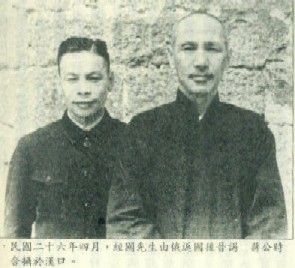 Chiang Kai-shek, during the summer break in 1911, came back to the Xikou-zhen Town, Fenghua-xian County, Zhejiang Province to see his newly born son Jiang Jingguo who was born by Chiang's first wife Mao Fumei.
The KMT records stated that Jiang Jingguo was born on April 27th, 1910 [March 18th, 1910 per the lunar calendar].
Li Ao pointed out that either Chiang Kai-shek had slipped back into China sometime in 1909 or satiric writer Jiang Nan's assassination death might be related to the description of some deviation of Jiang Jingguo's personal appearances from that of his father.
Namely, Jiang Nan was assassinated for his hint that Jiang Jingguo was not Chiang Kai-shek's son at all.
Chiang Kai-shek, during the summer break in 1911, came back to the Xikou-zhen Town, Fenghua-xian County, Zhejiang Province to see his newly born son Jiang Jingguo who was born by Chiang's first wife Mao Fumei.
The KMT records stated that Jiang Jingguo was born on April 27th, 1910 [March 18th, 1910 per the lunar calendar].
Li Ao pointed out that either Chiang Kai-shek had slipped back into China sometime in 1909 or satiric writer Jiang Nan's assassination death might be related to the description of some deviation of Jiang Jingguo's personal appearances from that of his father.
Namely, Jiang Nan was assassinated for his hint that Jiang Jingguo was not Chiang Kai-shek's son at all.
In 1911, when the Wuchang Uprising broke out, Chiang Kai-shek, at the request of Chen Qimei, immediately returned to Shanghai with Zhang Qun & Chen Xingshu by faking a leave of absence and then mailing the uniforms back to his Japanese officer. In Shanghai, he joined the staff of Chen Qimei (Ch'en Ch'i-mei, aka Chen Yingshi) and organized the 'dare-to-die column' for recovering Shanghai from the Manchu rule.
(Li Dongfang's "Complete Biography of Chiang Kai-shek" claimed that Chiang returned to China from Japan, met with Chen Qimei and was dispatched to Zhejiang Province for the preparatory work, then went back to Japan to report to his Japanese officer when vacation ran up, and did not leave for China till two months later, i.e., after the Xin Hai Revolution. Further, Chiang had returned to China with about 120 students and cadet practitioners, with acquiesce of the Japanese officers, per Li Dongfang.)
On November 3rd, 1911, Chen Qimei was arrested by the Manchu while leading the attack on the Manchu's Shanghai Manufacturing Bureau. The next day, revolutionaries sacked the garrison and freed Chen. Chen's crony, later in a meeting, coerced the Shanghai revolutionary factions into making Chen the governor-general by means of a display of the firearms at the meeting.
In Zhejiang Province, on the morning of November 4th, Chiang, with five columns or 100 comrades, participated in attacking Manchu Governor Zeng-yun's office.
A Manchu battalion chief, Gu Naibin, echoed the uprising. Chiang later joined the Jiangsu-Zhejiang allied forces in attacking Jiangsu's provincial capital, i.e., Nanking.
In the Yangtze Delta, Restoration Society prevailed in the fights against the Manchu, with numerous martyrs such as Xiong Chengji, Xu Xilin and Qiu Jin etc.
Chiang Kai-shek, on January 14th, 1912, was responsible for assassinating Tao Chengzhang the leader of the Restoration Society. (Li Ao cited Deng Wenyi's "Chairman Chiang Kai-shek" in stating that Chiang Kai-shek, on January 14th, 1912, personally shot Tao Chengzhang inside of the Guangci Hospital at the order of Chen Qimei. Three days earlier, Tao Chengzhang received a letter from Sun Yat-sen demanding an explanation for Tao's 1909 accusation of 14 crimes. At the times of Chiang Kai-shek's death in 1975 and Mao Tse-tung death in 1976, this webmaster read about an article in regards to the Guangci Hospital murder. Shang Mingxuan pointed out that Chiang bought over a Restoration Society traitor called Wang Zhuqing for the job at 2:00 am on January 14th.)
Ding Zhongjiang's pro-KMT writing stated that i) Chiang Kai-shek later went overseas for an inspection tour and handed over the control of his army to Zhang Qun and that ii) Zhang Qun subsequently delivered the same army to Chen Qimei when Zhang Qun himself went to Britain for a tour of the foreign industries.
Chen Jieru's Memoirs stated that Chiang Kai-shek quit his job in 1912 because the rank was too low for him.
Jiang Huiguo mentioned that Chiang Kai-shek went into hiding in his Zhejiang hometown after the assassination of Tao Chengzhang.
Ding Zhongjiang stated that during the Second Revolution, both Chiang Kai-shek and Zhang Qun returned to Shanghai from Japan and that Chiang Kai-shek called on his followers to support Chen Qimei as the commander-in-chief of the 'Shanghai Army for Campaigning Against Yuan Shi-kai's Imperial Enthronement'.
During the Second Revolution War, in Shanghai, Chen Qimei ordered that Chiang Kai-shek attack the Gaochang-miao Weapons Depot which was guarded by Yuan Shi-kai's 1300 navy soldiers under Zheng Rucheng. Chiang Kai-shek attacked Gaochang-miao for few days in vain, and then rerouted towards Songjiang and attacked it in vain, either.
Li Dongfang's "Complete Biography of Chiang Kai-shek" claimed that Chiang's mother had sold properties for providing financial support to Chiang Kai-shek, Niu Yongjian & Chen Qimei.
The Second Revolution ended with the defeat of Li Liejun by Yuan Shi-kai's army and the loss of Nanchang in Jiangxi Province on August 18th of 1913. In Anhui Province, Yuan Shi-kai's crony, Ni Sichong, took over the governor-general post on August 28th of 1913. In Jiangsu Province, Zhang Xun sacked Nanking. In the Shanghai area, Yuan Shi-kai conferred the post of "zhen shou shi" (i.e., garrison commissary) of Shanghai onto Zheng Rucheng, "zhen shou shi" of Songjiang onto Yang Shande, and governor-general of Fujian Province onto Liu Guanxiong. In Guangdong Province, Long Jiguang assumed the governor-general post and Chen Jiongming fled on August 5th. In Sichuan Province, Xiong Kewu declared independence on August 9th but resigned within one month. In Hunan Province, Li Yuanhong recommended Tang Xiangming (Tang Hualong's brother) to Yuan Shi-kai for the governor-general post to have Tan Yankai and Zhao Hengti replaced on October 24th of 1913.
After the failure of the Second Revolution, Chiang Kai-shek & Zhang Qun left for Japan. Zhang Qun re-entered Japan's cadet in Tokyo to become the 10th session graduate in 1915.
It was through Chen Qimei that Chiang Kai-shek first met Sun Yat-sen in early 1914.
(Li Ao did list two speeches by Chiang Kai-shek to validate the timing of the first possible encounter between Chiang Kai-shek and Sun Yat-sen to be in Shanghai sometime in 1913.
Before that, Chiang Kai-shek, for sake of elevating himself to the rank of Sun Yat-sen, made himself a sworn brother with both Zhang Jingjiang and Chen Qimei.
Zhang Jingjiang [Chang Ching-chiang], in 1909, gained Sun Yat-sen's confidence by donating half of his Paris assets during the anti-Manchu revolutionary time period.)
On July 8th of 1914, in Japan, Sun Yat-sen re-organized his party into the Chinese Revolutionary Party.
Chen Qimei was the first to press his fingerprints on the personal allegiance form while some other revolutionaries were turned away by Sun Yat-sen's stringent demand.
Chiang Kai-shek was No. 102 on the roll among 741 members who had registered from December 1913 to July 1914.
Chiang was dispatched back to Shanghai for organizing rebellion. After the Shanghai rebellion aborted, Chiang was sent to Manchuria for checking out the revolutionary movement, which turned out to be a scam by someone for obtaining the revolutionary funding per Ding Zhongjiang.
In October of 1915, Chen Qimei regrouped his forces for rebellion. On November 10th, Zheng Rucheng was assassinated by Chen Qimei's men. On December 5th, the uprising aborted when only one warship, Zhaohe-jian, echoed the rebels on the Huangpujiang River.
Chen Qimei and Chiang Kai-shek slipped away when they heard Chen Guofu intentionally argued with the French police downstairs.
Chen Jieru's Memoirs claimed that Chiang Kai-shek believed that this aborted rebellion had helped propel the nationwide struggles against Yuan Shi-kai's imperial enthronement.
Zhang Qun accepted a teaching job at Batavia in 1915 for making a living and would not return to China till Yuan Shi-kai's death the next year.
Zhang Qun termed the struggle against Yuan Shi-kai imperial enthronement as the "Third Revolution".
On March 22nd, 1916, Yuan Shi-kai abandoned his emperor's title after about 81 days' enthronement.
In April 1916, Chiang Kai-shek and Yang Hu went to join a rebellion in the Jiangyin Battery of Jiangsu Province. But on May 18th, 1916, Chen Qimei was assassinated by Yuan Shi-kai's cronies, which was a setup by Li Haiqiu in luring Chen Qimei into a trap by means of asking Chen to act as a guarantor of a mining enterprise in exchange for funding the revolutionary movement.
Further details could be seen at "Struggles Against Yuan Shi-kai's Imperial Enthronement by Chinese Revolutionary Party".
After 1916, Chiang Kai-shek's intermediate career was shrouded in mystery and notoriety. Chiang was depicted as quite decadent, anything you could imagine what a Shanghai Bund rascal, speculator or broker would be.
Chen Jieru's Memoirs claimed that Chiang Kai-shek had become decadent as a result of death of Chen Qimei.
Chen Jieru stated that Chiang Kai-shek, from 1917 to 1920, was "unemployed" in Shanghai; however, editor of the memoirs corrected this statement in pointing out that it did not conform with some historical writings.
Zhang Qun claimed that he and Chiang Kai-shek served Sun Yat-sen as attaché inside of Sun Yat-sen's "grand marshal office" which was established on August 31st, 1917 after Cheng Biguang's Navy escorted Sun Yat-sen to Canton from Shanghai. Available evidence would be a "grand marshal" entourage photo taken on March 3rd, 1918, with Chiang Kai-shek inside.
Chiang, from 1918 onward, had served Sun Yat-sen on and off. From March 1918 to June 1922, Chiang had been in active duty for one and half years, and participated in one real war, i.e., the Battle of Yongtai.
In 1920, Chiang Kai-shek joined Zhang Jingjiang, Dai Jitao and Chen Guofu in trading stocks on the Shanghai Bund, and declined Sun Yat-sen's invitation numerous times.
Li Ao, after spending over two days sorting through Chiang Kai-shek's traces, pointed out that Chiang Kai-shek, for 14 times, from 7/31/1918 to 2/21/1924, had either quit the jobs or deserted the posts or resigned his work, with the first occurrence being the 7/31/1918 quitting the "tactician" job under Chen Jiongming [after four months' service] and the last occurrence being the 2/21/1924 quitting the Whampoa academy preparatory committee due to Sun Yat-sen's plan [?] in assigning the "principal" job onto Xu Chongzhi.
To gain a glimpse of Chiang Kai-shek's past, one would have to rely upon "Chen Jieru's Memoirs", a book that was published in a different name entitled "I Had Been Chiang Kai-shek's Wife For Seven Years" (Solidarity Publishing House, July 2002, Peking, China, ISBN 7-80130-593-0).
On the Shanghai Bund, Chiang Kai-shek, per Harold Isaacs, "came into contact with Yu Ya-ch'ing, then already a powerful comprador, and Chang Ching-chiang, a millionaire banker and dealer in bean curd and curios. Chiang also associated with Huang Ching-yung, one of Shanghai's notorious underworld leaders, and is generally believed to have become a member at this time of the most powerful secret society in Shanghai, known as the Green Circle ['qing bang']. Gangsters, bankers, military men, murderers, thieves, smugglers, and brothel-keepers helped draw the original lines of the portrait the world was to come to recognize as Chiang Kai-shek." Chiang Kai-shek, who went into financial entanglements with powerful rich men, would later be bailed out by those tutors or sponsors, to be shipped to Canton for service under Sun Yat-sen.
Recent revelation of Chiang Kai-shek's private diaries, purportedly written during the Shanghai Bund time period, had quite some pages about his abortive fights against lust and sex. It is extremely difficult to make a linkage of this kind of decadent Chiang Kai-shek to a later political figure who instructed his elder son as to diligent studies of the ancient Chinese classics (such as "shuo wen jie zi") in the private aspect and commanded the Whampoa Cadet Army in the public aspect.
In 1927, Chiang Kai-shek forced Chen Jieru into making a trip to the USA for sake of marrying Soong Meiling.
Chen Jieru received a warm welcome from the governor of Hawaii and the Chinese compatriots in the U.S. in almost all cities, but was denied assistance by China's diplomatic legation.
After return to China, Chen Jieru spent her time in Shanghai till she fled to Chongqing in the aftermath of the Pacific War.
Chen Jieru, in 1961, under the arrangement of CCP leader Zhou Enlai, migrated to HK where she authored the memoirs that was sold out by her dealer to Chiang Kai-shek's cronies.
There could be a communist red hand in the publication of Chen Jieru's Memoirs.
The KMT Preparation For Establishing the Military Academy
Back on March 2nd, 1923, Sun Yat-sen's grand marshal office had decided to set up a military lecture school to be headed by Cheng Qian, which would be to mimic the various schools set up by provincial army factions like Dian-jun, Xiang-jun [Hunan Military Academy], Yue-jun [Xijiang Military Academy], Yu-jun and Gan-jun.
In mid-1923, Sun Yat-sen decided to dispatch a four-person "Dr Sun Yat-sen Delegation" panel, consisting of Chiang Kai-shek and Zhang Tailei, to Moscow for studying the Red Army system. Chiang Kai-shek left China in July 1923 [Aug? per solar calendar] and remained in the U.S.S.R. for three months.
On November 26th, the KMT executive committee decided to launch the National Army Cadet School, to be headed by Chiang Kai-shek and Liao Zhongkai.
Per Harold Isaacs, "on his return to Canton at the end of the year, Chiang became the dark-haired darling of Borodin and the Russian military advisers."
Chen Jieru's Memoirs stated that Chiang Kai-shek delayed his report and went straight home instead of going to Canton as a show of protest about Sun Yat-sen's hiring Borodin while Chiang Kai-shek was still touring the USSR.
In January 1924, Sun Yat-sen first established a field army lecture academy named the "Cadet Academy of the National Army", with himself to act as principal. With the Russian funding, Sun Yat-sen renamed the school into the "Preparatory Committee of the Cadet Academy of the National Army", with Chiang Kai-shek serving as the committee chairman, and designated the site of the former navy academy and infantry school on the Huangpu Island as the school location.
Chen Jieru's Memoirs stated that 200000 silver dollars were allocated as the launching expenses and that Russia only supplied the equipment, weapons and ammunition.
The "Preparatory Committee" was established on February 6th, with Wang Boling, Li Jishen and Ye Jianying et al, acting as members. Military lecturers included Qian Dajun, Gu Zhutong, and Liu Zhi etc. The Russian advisers, totaling 50, would include Alexander I. Cherepanov [Qi-lie-po-nuo-fu] and General V.V. Blücher (Galin, i.e., Jia-lun). Deng Yanda and Xu Qian acted as two assistants to Chiang Kai-shek.
Chen Jieru's Memoirs stated that Chiang Kai-shek was conferred the post of "commissar" of the KMT Military Commission on February 3rd, 1924.
On May 3rd, 1924, Chiang Kai-shek was made into the 'president' (principal/commandant) of the academy as well as garrison commander for the Changzhou Castle on the Huangpu (Whampoa) Island.
Chen Jieru's Memoirs stated that they moved into their first fixed residency on the island on May 15th.
The Whampoa Military Academy
Xu Xiangqian, a Shanxi native who had enrolled in the Shanxi Provincial National Normal College (a paramilitary college fully funded by Yan Xishan [Yen Hsi-shan] the governor of Shanxi Province) from 1919 to 1921 and later unsuccessfully worked as a school teacher, would leave for Shanghai's preliminary Whampoa Academy exam with several pals in February 1924 under the help of his elder brother who had connection to some officer in the Nationalist Army.
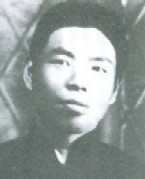 After passing the preliminary exam in Shanghai, the Shanxi gang were sponsored for a further trip to Canton for the final exam, and some folks expressed desire to sell themselves as 'zhu zai' (i.e. piggy coolie) for the overseas work or to go to France for the "diligent overseas studies" should they fail the final. At Canton, over a dozen Xu pals took the exam at the Guangdong Advanced Normal College and were all admitted even though Xu Xiangqian stated that he scored zero on the math exam. Similarly, the examinees from neighboring Shenxi Province, with the referral letter from Yu Youren, were all admitted as well.
Also passing the Shanghai prelim exam would be Hu Zongnan and Ling Guangya who rode the Japanese ship Songshan-wan (Matsuyama) for Canton. Heh Zhonghan and Jiang Fusheng, who missed the Shanghai exam, would hire a boat for chasing the Japanese ship. With the help of Hu and Ling, Heh and Jiang climbed up the ship, and the four became good friends since. Heh and Jiang were allowed to take the final exam after writing a letter to Liao Zhongkai stating that they, with the prior overseas studies in Russia, had given up a career as reporters for sake of joining the military training at Whampoa.
Chen Xizeng, i.e., the nephew of Chen Qimei, was admitted to Whampoa without a test.
After passing the preliminary exam in Shanghai, the Shanxi gang were sponsored for a further trip to Canton for the final exam, and some folks expressed desire to sell themselves as 'zhu zai' (i.e. piggy coolie) for the overseas work or to go to France for the "diligent overseas studies" should they fail the final. At Canton, over a dozen Xu pals took the exam at the Guangdong Advanced Normal College and were all admitted even though Xu Xiangqian stated that he scored zero on the math exam. Similarly, the examinees from neighboring Shenxi Province, with the referral letter from Yu Youren, were all admitted as well.
Also passing the Shanghai prelim exam would be Hu Zongnan and Ling Guangya who rode the Japanese ship Songshan-wan (Matsuyama) for Canton. Heh Zhonghan and Jiang Fusheng, who missed the Shanghai exam, would hire a boat for chasing the Japanese ship. With the help of Hu and Ling, Heh and Jiang climbed up the ship, and the four became good friends since. Heh and Jiang were allowed to take the final exam after writing a letter to Liao Zhongkai stating that they, with the prior overseas studies in Russia, had given up a career as reporters for sake of joining the military training at Whampoa.
Chen Xizeng, i.e., the nephew of Chen Qimei, was admitted to Whampoa without a test.
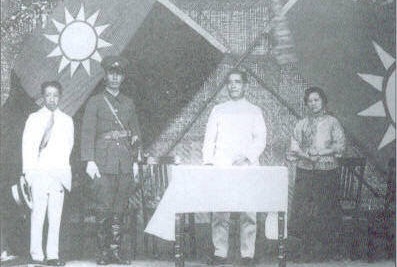 Xuan Xiafu, a Zhuji native of Zhejiang Province, was sent to the Canton's Whampoa Academy by the CCP with about one dozen youths. (Xuan Xiafu returned from Japan in 1922, joined Yu Xiusong, Xuan Zhonghua & Yu Datong in the revolutionary activity in Zhejiang, and enrolled in the "socialist youth league" and the "communist party" successively.)
Chen Geng [1903-1961], who was sent to the military academy under Sun Yat-sen's grand marshal office in Canton in November 1923, would take exam for the Whampoa Academy under the CCP instruction in April 1925. (Later on October 27th, 1925, Chen Geng rescued Chiang Kai-shek on the battlefield for which he would be spared death and allowed to flee Nanking in 1933.)
All the above folks became the attendees of the First Session of the Whampoa Academy. The stories of Hu Zongnan & Xu Xiangqian would probably be enough to serve as a snapshot of the CCP-KMT histories.
Xuan Xiafu, a Zhuji native of Zhejiang Province, was sent to the Canton's Whampoa Academy by the CCP with about one dozen youths. (Xuan Xiafu returned from Japan in 1922, joined Yu Xiusong, Xuan Zhonghua & Yu Datong in the revolutionary activity in Zhejiang, and enrolled in the "socialist youth league" and the "communist party" successively.)
Chen Geng [1903-1961], who was sent to the military academy under Sun Yat-sen's grand marshal office in Canton in November 1923, would take exam for the Whampoa Academy under the CCP instruction in April 1925. (Later on October 27th, 1925, Chen Geng rescued Chiang Kai-shek on the battlefield for which he would be spared death and allowed to flee Nanking in 1933.)
All the above folks became the attendees of the First Session of the Whampoa Academy. The stories of Hu Zongnan & Xu Xiangqian would probably be enough to serve as a snapshot of the CCP-KMT histories.
More available at Whampoa_Military_Academy.pdf.
(Check
RepublicanChina-pdf.htm
page for up-to-date updates.)
* In Commemoration of China's Fall under the Alien Conquests in A.D. 1279,
A.D. 1644 & A.D. 1949 *
U.S.S.R./Comintern Alliance with the KMT & CCP (1923-1927)
Korean/Chinese Communists & the 1931 Japanese Invasion of Manchuria
American Involvement in China: Soviet Operation Snow, IPR Conspiracy, Dixie Mission, Stilwell
Incident, O.S.S. Scheme, Coalition Government Crap, Amerasia Case & The China White Paper
* Stay tuned for "Republican China 1911-1955: A Complete Untold History" *
|
|
Zou Rong's Revolutionary Army;
Shin Kyu Sik's
Shrine (Spirit, Kunitama) of Korea
|
This snippet is for sons and daughters of China:
Heed the sons & ministers' agony and sorrow of our ancestors who died or lived through the Mongol, Manchu and Soviet-Chicom conquest
and
the Yongjia, Jingkang and Jiashen cataclysms !
Jeanne d'Arc of China:
Teenager girl Xun Guan breaking out of the Wancheng city to borrow the relief troops in the late Western Jinn dynasty;
Liu-Shao-shi riding into the barbarian army to rescue her husband in the late Western Jinn dynasty;
teenager girl Shen Yunying breaking into Zhang Xianzhong's rebels on the horseback to avenge on father's death in the late Ming dynasty.
China's Solitary and Lone Heroes:
Nan Jiyun breaking out of the Suiyang siege and charging back into the city in the Tang dynasty;
Zhang Gui & Zhang Shun Brothers breaking through the Mongol siege of Xiangyang in the Southern Soong dynasty;
Liu Tiejun breaking through three communist field armies' siege of Kaifeng in the Republican China time period;
Zhang Jian's lone confrontation against the communist army during the June 3rd & 4th Massacre of 1989.
|
|
|
Confrontation With the Canton Merchant Guild
Chen Jieru memoirs stated that it would be "heavy taxation" that caused Canton's merchant guilds in threatening a "closing shops" strike. Chen Jieru wrote that both the merchants and the intellectuals of Canton hated Sun Yat-sen and Chiang Kai-shek for harboring communists as well as retaining the Yunnan-Guangxi provincial armies at their expenses.
Hence, Canton's merchant guilds, under the leadership of Chen Lianbo [i.e., a broker at Hongkong-Shanghai Bank], made a purchase of 9000 rifles overseas for arming their members.
At the order of Sun Yat-sen, Chiang Kai-shek confiscated 1000 guns from a Norwegian ship and more over, transferred the goods to Whampoa Island.
More available at Whampoa_Military_Academy.pdf.
(Check
RepublicanChina-pdf.htm
page for up-to-date updates.)
* In Commemoration of China's Fall under the Alien Conquests in A.D. 1279,
A.D. 1644 & A.D. 1949 *
U.S.S.R./Comintern Alliance with the KMT & CCP (1923-1927)
Korean/Chinese Communists & the 1931 Japanese Invasion of Manchuria
American Involvement in China: Soviet Operation Snow, IPR Conspiracy, Dixie Mission, Stilwell
Incident, O.S.S. Scheme, Coalition Government Crap, Amerasia Case & The China White Paper
* Stay tuned for "Republican China 1911-1955: A Complete Untold History" *
|
|
Zou Rong's Revolutionary Army;
Shin Kyu Sik's
Shrine (Spirit, Kunitama) of Korea
|
This snippet is for sons and daughters of China:
Heed the sons & ministers' agony and sorrow of our ancestors who died or lived through the Mongol, Manchu and Soviet-Chicom conquest
and
the Yongjia, Jingkang and Jiashen cataclysms !
Jeanne d'Arc of China:
Teenager girl Xun Guan breaking out of the Wancheng city to borrow the relief troops in the late Western Jinn dynasty;
Liu-Shao-shi riding into the barbarian army to rescue her husband in the late Western Jinn dynasty;
teenager girl Shen Yunying breaking into Zhang Xianzhong's rebels on the horseback to avenge on father's death in the late Ming dynasty.
China's Solitary and Lone Heroes:
Nan Jiyun breaking out of the Suiyang siege and charging back into the city in the Tang dynasty;
Zhang Gui & Zhang Shun Brothers breaking through the Mongol siege of Xiangyang in the Southern Soong dynasty;
Liu Tiejun breaking through three communist field armies' siege of Kaifeng in the Republican China time period;
Zhang Jian's lone confrontation against the communist army during the June 3rd & 4th Massacre of 1989.
|
|
|
Upheavals In Peking & Sun Yat-sen's Northern Trip
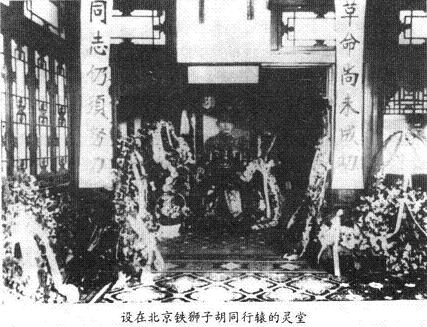
Feng Yuxiang, taking advantage of Zhi-xi & Feng-xi War, would rebel against Cao Kun & Wu Peifu.
Wu Peifu ordered three pronged attacks at Manchuria, departing Jing-Feng Railway, Xifengkou Pass, and Gubeikou-Jehol, respectively.
While being ordered on the northern route of Gubeikou Pass, Feng Yuxiang reached a secret agreement with Zhang Zuolin's Manchurian Army for toppling Cao & Wu.
On October 23rd, 1924, Feng Yuxiang's army suddenly made a stealthy entry into Peking.
In Peking, Feng Yuxiang put Cao Kun under house arrest in Yanqinglou and later executed Cao Kun's military attaché Li Yanqing. Parliament representatives, who had elected Cao Kun as a result of voting bribery, fled to neighboring Tianjin.
Feng Yuxiang and Duan Qirui etc., wired to Sun Yat-sen for a joint meeting about unification of China.
More available at Sun_Yat-sen_Northern_Trip.pdf
(Check
RepublicanChina-pdf.htm
page for up-to-date updates.)
* In Commemoration of China's Fall under the Alien Conquests in A.D. 1279,
A.D. 1644 & A.D. 1949 *
U.S.S.R./Comintern Alliance with the KMT & CCP (1923-1927)
Korean/Chinese Communists & the 1931 Japanese Invasion of Manchuria
American Involvement in China: Soviet Operation Snow, IPR Conspiracy, Dixie Mission, Stilwell
Incident, O.S.S. Scheme, Coalition Government Crap, Amerasia Case & The China White Paper
* Stay tuned for "Republican China 1911-1955: A Complete Untold History" *
|
|
Zou Rong's Revolutionary Army;
Shin Kyu Sik's
Shrine (Spirit, Kunitama) of Korea
|
This snippet is for sons and daughters of China:
Heed the sons & ministers' agony and sorrow of our ancestors who died or lived through the Mongol, Manchu and Soviet-Chicom conquest
and
the Yongjia, Jingkang and Jiashen cataclysms !
Jeanne d'Arc of China:
Teenager girl Xun Guan breaking out of the Wancheng city to borrow the relief troops in the late Western Jinn dynasty;
Liu-Shao-shi riding into the barbarian army to rescue her husband in the late Western Jinn dynasty;
teenager girl Shen Yunying breaking into Zhang Xianzhong's rebels on the horseback to avenge on father's death in the late Ming dynasty.
China's Solitary and Lone Heroes:
Nan Jiyun breaking out of the Suiyang siege and charging back into the city in the Tang dynasty;
Zhang Gui & Zhang Shun Brothers breaking through the Mongol siege of Xiangyang in the Southern Soong dynasty;
Liu Tiejun breaking through three communist field armies' siege of Kaifeng in the Republican China time period;
Zhang Jian's lone confrontation against the communist army during the June 3rd & 4th Massacre of 1989.
|
|
|
Chiang Kai-shek's Sacrificing 3000 Whampoa Cadets
In Jan, taking advantage of Sun Yat-sen's departure for Peking, Chen Jiong-ming assembled 70,000 army against Canton in collaboration with the Fujian-Jiangxi-Hunan armies, with Lin Hu and Hong Zhaolin in command.
In Canton, Yang Ximin, a Dian-jun general, was made into the leader of a joint army consisting of Xu Chongzhi's Yue-jun, Tan Yankai's Xiang-jun, Liu Zhenhuan's Gui-jun, Fan Zhongxiu's Yu-jun and the remnants of Hubei, Shanxi-Shenxi guest army soldiers.
However, Chen Jieru's Memoirs claimed that it was Chiang Kai-shek who initiated the attack at the 30000 strong army of feud Chen Jiongming at Huizhou [i.e., the so-called 1st precarious pass of southern China].
Chen Jieru disclosed that Chiang Kai-shek always had a slogan at the academy, which was to state that "to unite China, first thing to do is to unite Guangdong". Hence, Chiang Kai-shek heavily enrolled the communists for staffing his Whampoa academy for the communist "agitation skills" as well as the "heightened political consciousness".
Chen commented that Chiang had worn the red color tie to show his propensity for the Bolshevik and communist cause, over which President Hoover, later in 1931, called Chiang Kai-shek's Republic of China by a half-Bolshevik China that Japan could not tolerate but to invade Manchuria as a counter measure.
Li Ao, in his book on Chiang Kai-shek, adopted the title of a military leader of "chi jun" [i.e., the red-colored army] for Chiang Kai-shek. (Separately, the communists, during the later rebellion, called their peasant-organized local defense army by the so-called "chi [red] wei [defense] jun [army]".)
Chen Jieru stated that "lives of the 3000 youths were used for defeating Chen Jiongming".
Chen Jieru called it by the well-known "Jieshi [Kai-shek] War", which proved that none of the other army heads had any desire for a war other than Chiang Kai-shek himself.
On January 15th, the eastern expedition order was issued.
A decisive battle was waged at Danshui on February 15th, with 2000 cadet soldiers defeating the 6000-men strong Chen Jiongming army.
On February 1st, 1925, 3000 students from the Whampoa military academy formed two regiments and joined the First Eastern Campaign against Chen Jiongming, and together with Xu Chongzhi's Yue-jun Army, defeated the 30,000 strong enemy within two months, penetrated to Shantou (i.e., Chen Jiongming's homebase), and drove Chen's remnants to Fujian Province. The Whampoa students sacked Dongguan on February 5th, Danshui on February 15th, Haifeng and Lufeng by late Feb, Lihu on March 3rd, Chaozhou and Shantou on March 7th, Mianhu on March 13th.
Hu Zongnan, who was appointed a lieutenant in the 8th company of the 3rd battalion of the 1st regiment, was promoted to chief of the machinegun platoon at the Battle of Mianhu. Hu Zongnan, before the battle, wrote a letter to Heh Zhonghan, expressing determination for martyrdom. After defeating Lin Hu's 20,000 forces, the Whampoa students chased the enemies out of the Dongjiang River area, causing Chen Jiongming into fleeing to H.K., Hong Zhaolin fleeing to the Fujian border, and Lin Hu fleeing to the Jiangxi Province.
The final battle at Huizhou in mid-March was recorded to be a bloody one by Chen Jieru.
Academy cadets altogether broke through four barriers: barbed iron-wire-made cauldrons, wooden-plates with 3 inch nails, wooden-horses with barbed wires, and 15 feet high electricity walls.
Chen Jiongming fled to HK, Hong Zhaolin fled to Fujian Province, while Lin Hu fled to Jiangxi Province.
Per Chen Jieru, Chiang Kai-shek made a speech at Huizhou, disclosing that they had incurred a casualty of over 3000 among the cadets. Chiang Kai-shek stated that over half of his students had sacrificed their lives.
That is probably why Xu Xiangqian later mentioned that he had located mostly cadets from the 3rd & 4th sessions among the 1927 Canton Commune insurgents.
Hu Hanmin, having learnt of Sun Yat-sen's death in Peking on March 12th, did not disclose the news to the students till after the Dongjiang [East River] area was secured.
Chiang Kai-shek Stealing Xu Chongzhi's Guangdong Province Army
Chiang Kai-shek Dismissing Xiong Kewu's Sichuan Province Army
Chiang Kai-shek's Trickery Against Yang Ximin/Liu Zhenhuan
Second Eastern Expedition Against Chen Jiongming
Li Zongren Frustrating Tang Jiyao's Attempt At Canton Usurpation By Defeating Dian-jun
Tang Jiyao, who declined the post of "deputy marshal" for disliking Hu Hanmin's "proxy marshal" title, would attempt at an usurpation of Canton government after Sun Yat-sen passed away in Peking on March 12th 1925.
More available at Tang_Jiyao-Downfall.
(Check
RepublicanChina-pdf.htm
page for up-to-date updates.)
* In Commemoration of China's Fall under the Alien Conquests in A.D. 1279,
A.D. 1644 & A.D. 1949 *
U.S.S.R./Comintern Alliance with the KMT & CCP (1923-1927)
Korean/Chinese Communists & the 1931 Japanese Invasion of Manchuria
American Involvement in China: Soviet Operation Snow, IPR Conspiracy, Dixie Mission, Stilwell
Incident, O.S.S. Scheme, Coalition Government Crap, Amerasia Case & The China White Paper
* Stay tuned for "Republican China 1911-1955: A Complete Untold History" *
|
|
Zou Rong's Revolutionary Army;
Shin Kyu Sik's
Shrine (Spirit, Kunitama) of Korea
|
This snippet is for sons and daughters of China:
Heed the sons & ministers' agony and sorrow of our ancestors who died or lived through the Mongol, Manchu and Soviet-Chicom conquest
and
the Yongjia, Jingkang and Jiashen cataclysms !
Jeanne d'Arc of China:
Teenager girl Xun Guan breaking out of the Wancheng city to borrow the relief troops in the late Western Jinn dynasty;
Liu-Shao-shi riding into the barbarian army to rescue her husband in the late Western Jinn dynasty;
teenager girl Shen Yunying breaking into Zhang Xianzhong's rebels on the horseback to avenge on father's death in the late Ming dynasty.
China's Solitary and Lone Heroes:
Nan Jiyun breaking out of the Suiyang siege and charging back into the city in the Tang dynasty;
Zhang Gui & Zhang Shun Brothers breaking through the Mongol siege of Xiangyang in the Southern Soong dynasty;
Liu Tiejun breaking through three communist field armies' siege of Kaifeng in the Republican China time period;
Zhang Jian's lone confrontation against the communist army during the June 3rd & 4th Massacre of 1989.
|
|
|
Ideological Struggles Inside the Whampoa Military Academy
The Whampoa Military Academy was also a ground for brewing the political struggles.
Inside Whampoa, communist member
Xuan Xiafu claimed to the classmates that Chiang Kai-shek was a 'neo-warlord'. Classmate Luo Jinwu reported it to Chiang Kai-shek, and Chiang Kai-shek rebuked Xuan Xiafu.
On July 6th, 1924, Chiang Kai-shek assumed commissar for the KMT special party HQ inside of the Whampoa Academy.
Chiang Kai-shek designated group leaders, including Xuan Xiafu, for heading the sub-committees of the KMT special party HQ inside of the Whampoa Academy. Xuan Xiafu proposed an election instead. After refusing to write a repentance letter, Xuan Xiafu left the Whampoa Academy. Later, on July 31st, 1945, Xuan Xiafu was ordered to be abducted and executed by Chiang Kai-shek while Xuan Xiafu was serving as a representative of the Xi'an office of communist-controlled Eight Route Army.
Xu Xiangqian stated that the CCP established a branch right after commencement and CCP member Jiang Xianyun was responsible for organizing the "Joint Society of the Young Military Men" in January 1925. Xu Zhen stated that Li Zhilong and Zhou Yiqun were responsible for this communist society. (Jiang Xianyun later died as a regiment chief during the northern campaigns.) Xu Zhen also wrote that it would the communists who assassinated Liao Zhongkai in the attempt of transplanting the crime onto Hu Hanmin. In antagonism to the "Joint Society of Young Military Men", Heh Zhonghan (He Zhonghan), Yuan Shouqian, Feng Ti and Miao Bin established the "Sun Wen [Sun Yat-sen] Ism Society". The two organizations fought against each other within the academy.
Chiang Kai-shek and Wang Jingwei had to intervene to have the two factions stop fighting each other.
In late 1924, the Chinese communist party issued an urgent secret order to various provinces to urge its activists in recommending the examinees for the Whampoa Academy. Lin Biao, who had assisted Yun Daiying and Lin Yueying in the early communism activity, was sent to Canton for attending the Whampoa 4th Session.
Heh Zhonghan, when relocated to the Meixian county, worked with Hu Zongnan in setting up a branch of the "Sun Wen [Sun Yat-sen] Ism Society" in Meixian. Li Zhilong was said to have disrupted Heh Zhonghan's preparatory activity of a meeting room at Meixian.
Chiang Kai-shek, at one time, demanded that Zhou Enlai hand over a list of the communist members inside of Whampoa, but Zhou deferred it by saying that he had to consult with the CCP central committee.
As a compromise, Zhou Enlai relocated Li Zhilong away from the Whampoa Academy and assigned Li Zhilong a job at the weapons depot and navy consecutively.
By April 1926, Chiang Kai-shek ordered that both societies dissolve on their own accords. Xu Xiangqian claimed that the "Joint Society of the Young Military Men" had impacted over 2000 military officers and played a considerable role in advancing the communist agenda.
Meanwhile, Peng Pai and Mao Zedong launched the peasant movement lecture and practice school under the KMT's party apparatus. Mao Tse-tung [Mao Zedong] also served as deputy propaganda minister for some time.
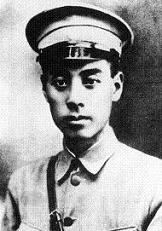 Back in November 1924, Zhou Enlai returned to China for serving as director of the politics department at the academy.
(Zhou Enlai's self account stated that he returned to China in the summer of 1924, first acted as a lecturer, and then promoted to director of the politics department at the Whampoa Academy by the winter in contradiction with some anti-commie claim that Zhou was appointed the director via a recommendation letter from some top Soviet leader.
Zhou Enlai's self account also stated that he taught 4 sessions at the academy, participated in the two eastern campaigns against Chen Jiongming in 1925, and left the director post after Chiang Kai-shek's Zhongshan Warship Incident in March 1926.
Chen Jieru memoirs claimed that it was the red-tie-wearing Chiang Kai-shek who enrolled Zhou Enlai in the KMT and promoted Zhou Enlai to the post of director of the politics department.)
Back in November 1924, Zhou Enlai returned to China for serving as director of the politics department at the academy.
(Zhou Enlai's self account stated that he returned to China in the summer of 1924, first acted as a lecturer, and then promoted to director of the politics department at the Whampoa Academy by the winter in contradiction with some anti-commie claim that Zhou was appointed the director via a recommendation letter from some top Soviet leader.
Zhou Enlai's self account also stated that he taught 4 sessions at the academy, participated in the two eastern campaigns against Chen Jiongming in 1925, and left the director post after Chiang Kai-shek's Zhongshan Warship Incident in March 1926.
Chen Jieru memoirs claimed that it was the red-tie-wearing Chiang Kai-shek who enrolled Zhou Enlai in the KMT and promoted Zhou Enlai to the post of director of the politics department.)
The 5-30 Bloody Incident, HK-Guangdong Strike, & Boycott Movements
Workers and sailors in HK, back in January 1922, organized a "HK Sailors Strike". When British authorities closed down two unions and arrested workers' leaders, over 100000 people held a strike. To lend assistance to HK workers and sailors, Canton's sailor union office organized a blockade of HK.
To help with subsistence of the workers and sailors on strike, sailor union office called upon 100000 workers and sailors in walking back to Canton.
On March 4th 1922, workers and sailors, on the way back from HK and when passing through Shamian, encountered police crackdowns, which led to a death toll of 6 workers and a casualty of several hundreds.
Railroad workers in Canton, Jing-Han Line, and Long-Hai Line rose up in support of HK workers and sailors.
56 days later, British authorities had to make shipping companies increase wage by 15-30%, reinstate the unions, release the arrested leaders, and reimburse the families for the victims of "Shamian Bloody Incident".
More available at Anti-Imperialist-Movements.pdf
(Check
RepublicanChina-pdf.htm
page for up-to-date updates.)
* In Commemoration of China's Fall under the Alien Conquests in A.D. 1279,
A.D. 1644 & A.D. 1949 *
U.S.S.R./Comintern Alliance with the KMT & CCP (1923-1927)
Korean/Chinese Communists & the 1931 Japanese Invasion of Manchuria
American Involvement in China: Soviet Operation Snow, IPR Conspiracy, Dixie Mission, Stilwell
Incident, O.S.S. Scheme, Coalition Government Crap, Amerasia Case & The China White Paper
* Stay tuned for "Republican China 1911-1955: A Complete Untold History" *
|
|
Zou Rong's Revolutionary Army;
Shin Kyu Sik's
Shrine (Spirit, Kunitama) of Korea
|
This snippet is for sons and daughters of China:
Heed the sons & ministers' agony and sorrow of our ancestors who died or lived through the Mongol, Manchu and Soviet-Chicom conquest
and
the Yongjia, Jingkang and Jiashen cataclysms !
Jeanne d'Arc of China:
Teenager girl Xun Guan breaking out of the Wancheng city to borrow the relief troops in the late Western Jinn dynasty;
Liu-Shao-shi riding into the barbarian army to rescue her husband in the late Western Jinn dynasty;
teenager girl Shen Yunying breaking into Zhang Xianzhong's rebels on the horseback to avenge on father's death in the late Ming dynasty.
China's Solitary and Lone Heroes:
Nan Jiyun breaking out of the Suiyang siege and charging back into the city in the Tang dynasty;
Zhang Gui & Zhang Shun Brothers breaking through the Mongol siege of Xiangyang in the Southern Soong dynasty;
Liu Tiejun breaking through three communist field armies' siege of Kaifeng in the Republican China time period;
Zhang Jian's lone confrontation against the communist army during the June 3rd & 4th Massacre of 1989.
|
|
|
Wang Jingwei & the KMT Left-Wing
Wang Jingwei (1883-1944), aka Wang Zhaoming, was a senior revolutionary who joined Sun Yat-sen's "Tong Meng Hui" in Japan in 1905. Wang Jingwei was noted for his agitation and propaganda skills, first demonstrated in his debates on "Min Bao Newspaper" [People's Journal] against monarchist Liang Qi-chao's "Xin-Min [New Citizen] Ye Bao" newspaper and later observed by Hu Hanmin during 1908 speeches among overseas Chinese in Singapore. Wang Jingwei, a person commented to be handsome and smart, was also courageous in his 1910 attempted assassination of Manchu Qing Regent.
Hu Hanmin and Wang Jingwei, deemed right hand and left hand of Sun Yat-sen since 1905, were at one time also 'slick throat' comrades. Hu Hanmin was recorded to have burst into big cries at night when he dreamt of Wang Jingwei's being executed by Manchu Regent Zai-feng; similarly, Wang Zhaoming, upon hearing of the defeat of the March 29th 1911 Canton Uprising, would take for granted the prison guards' words that Hu Hanmin had died in the uprising, cried about the death of Hu Hanmin, and wrote three mourning poems.
However, Wang Jingwei's latter half of the life, since 1925, was tinted, per JYJ (page 6 of "The Land-Sea Ebb History of KMT", "zhuanji wenxue publishing house", Taipei, Taiwan, 1993 edition). Wang Jingwei, with the encouragement of Borodin and the assistance of Liao Zhongkai, became obsessed with power control after the death of Sun Yat-sen. In the end, Wang Jingwei threw himself into the camp of the Japanese invaders in setting up the Puppet Nanking Government during WWII.
Dr. Sun Yat-sen conferred the post of "da yuanshuai" (i.e., grand marshal) and governor for Guangdong Province onto Hu Hanmin before departing for Peking for sake of peace talks with Northern Warlord Lineage government. Sun Yat-sen's Grand Camp in Canton was controlled by 'KMT Central Politics Meeting', with three members of Hu Hanmin, Liao Zhongkai and Wu Tiyun.
When Sun Yat-sen fell ill, Borodin, Wang Jingwei and Ma Chaojun, et al., went inside of the Russian embassy for discussion with Leo Karakhan. Borodin told Wang Jingwei that he should be a natural successor of Sun Yat-sen.
On March 12th, Sun Yat-sen passed away in Peking due to liver cancer. Peking newspapers eulogized Sun Yat-sen as the 'founding father' of ROC, a reverence name later adopted by KMT standing committee on March 21 of 1940. (Sun Yat-sen, before his death, had mentioned that 'enemies are just beside you' when Wang Jingwei requested time and again for death bed instructions. I would not be able to tell whether Sun Yat-sen had realized his blunder in allying with USSR/CCP and meant the 'enemies' to be Russian and CCP agents.)
Hu Hanmin added Wang Jingwei to the three-member 'KMT Central Politics Meeting'. Wang Jingwei, with the support of Liao Zhongkai, began to expand 'KMT Central Politics Meeting' into 11-member "national government commissar meeting". Wang Jingwei renamed the Grand Camp of the Grand Marshal in Canton to the 'National Government'.
After manipulations, Wang Jingwei was elected to be the chairman of the new National Government.
On June 15th, Wang Jingwei decided to organize the grand marshal office into the National Government.
Chen Jieru memoirs stated that Chiang Kai-shek demanded on June 20th, 1925, that the KMT executive commissar committee admit him as a member by displaying military forces via a curfew.
Chiang Kai-shek, for his harsh arrests of senior KMT members, was nicknamed "Ningbo's Napoleon".
In the lower Yangtze, "Orient Magazine" published some photos of Chiang Kai-shek and Borodin.
When some publications cautioned against the emergence of neo-warlords [i.e., Chiang Kai-shek], KMT senior leader Wu Zhihui disputed it by claiming that he saw no sign of such a neo-warlord.
On August 20th, 1925, Liao Zhongkai was assassinated. The KMT ordered a special commissar committee for handling the emergency, with Wang Jingwei, Xu Chongzhi and Chiang Kai-shek on board.
Soon, investigations would implicate both Hu Hanmin and Xu Chongzhi in the assassination.
In a resolution passed on September 1st, 1925, Wang Jingwei and Chiang Kai-shek expelled Hu Hanmin to the U.S.S.R. and Xu Chongzhi to Shanghai, making Chiang Kai-shek a de factor military leader.
More available at Assassination-of-Liao_Zhongkai.pdf
(Check
RepublicanChina-pdf.htm
page for up-to-date updates.)
* In Commemoration of China's Fall under the Alien Conquests in A.D. 1279,
A.D. 1644 & A.D. 1949 *
U.S.S.R./Comintern Alliance with the KMT & CCP (1923-1927)
Korean/Chinese Communists & the 1931 Japanese Invasion of Manchuria
American Involvement in China: Soviet Operation Snow, IPR Conspiracy, Dixie Mission, Stilwell
Incident, O.S.S. Scheme, Coalition Government Crap, Amerasia Case & The China White Paper
* Stay tuned for "Republican China 1911-1955: A Complete Untold History" *
|
|
Zou Rong's Revolutionary Army;
Shin Kyu Sik's
Shrine (Spirit, Kunitama) of Korea
|
This snippet is for sons and daughters of China:
Heed the sons & ministers' agony and sorrow of our ancestors who died or lived through the Mongol, Manchu and Soviet-Chicom conquest
and
the Yongjia, Jingkang and Jiashen cataclysms !
Jeanne d'Arc of China:
Teenager girl Xun Guan breaking out of the Wancheng city to borrow the relief troops in the late Western Jinn dynasty;
Liu-Shao-shi riding into the barbarian army to rescue her husband in the late Western Jinn dynasty;
teenager girl Shen Yunying breaking into Zhang Xianzhong's rebels on the horseback to avenge on father's death in the late Ming dynasty.
China's Solitary and Lone Heroes:
Nan Jiyun breaking out of the Suiyang siege and charging back into the city in the Tang dynasty;
Zhang Gui & Zhang Shun Brothers breaking through the Mongol siege of Xiangyang in the Southern Soong dynasty;
Liu Tiejun breaking through three communist field armies' siege of Kaifeng in the Republican China time period;
Zhang Jian's lone confrontation against the communist army during the June 3rd & 4th Massacre of 1989.
|
|
|
The Zhongshan Warship Incident
On March 20th of 1926, Wang Jingwei's left-wing suffered a setback when Chiang Kai-shek fought back by having his crony, Wang Boling, organize a coup. This would be the 'Zhongshan Warship Incident' where 'zhongshan' was a pen name that Sun Yat-sen adopted possibly after a Japanese royal noble name. Conflicting stories exist as to the cause of this incident. The captain of Zhongshan Warship, Li Zhilong, was a CCP member who used to serve Chiang Kai-shek on the trip between Canton and Huangpu (Whampoa). Li Zhilong, after throwing himself into Wang Jingwei's camp, was promoted from KMT party commissar to the captain of the warship and then promoted to the bureau chief for Navy Department consecutively.
On basis of communist account, before March 18th of 1926, Li Zhilong obtained the approval of Wang Jingwei to have some warship soldiers replaced when rumors spread that Chiang Kai-shek planned to have his crony take over the ship. Meanwhile, Chiang Kai-shek heard the rumor that Li Zhilong planned to abduct Chiang during the next ride and send Chiang to Vladivostok in Russian Far East.
Xu Zhen stated that Chiang was alerted by repeated phonecalls by Deng Yanda in regards to the time of Chiang Kai-shek's return to Whampoa Academy from Canton.
After Chiang said he was not to return to Whampoa, Li Zhilong called Chiang and answered that he was under Deng Yanda's order to have sailed warship back and forth between Whampoa and Canton.
Li Dongfang claimed that Chiang never disclosed the name of the person who made repeated calls on March 19th but it was thought to be Wang Jingwei.
Chen Jieru claimed that Chen Bijun [i.e., Wang Jingwei's wife] called her five times on March 18th to check out the itinerary of Chiang Kai-shek, and that it would be Chen Jieru's warning that Chiang Kai-shek called Whampoa Academy's education section chief to check out a conspiracy against him.
More available at Zhongshan-Warship-Incident.pdf
(Check
RepublicanChina-pdf.htm
page for up-to-date updates.)
* In Commemoration of China's Fall under the Alien Conquests in A.D. 1279,
A.D. 1644 & A.D. 1949 *
U.S.S.R./Comintern Alliance with the KMT & CCP (1923-1927)
Korean/Chinese Communists & the 1931 Japanese Invasion of Manchuria
American Involvement in China: Soviet Operation Snow, IPR Conspiracy, Dixie Mission, Stilwell
Incident, O.S.S. Scheme, Coalition Government Crap, Amerasia Case & The China White Paper
* Stay tuned for "Republican China 1911-1955: A Complete Untold History" *
|
|
Zou Rong's Revolutionary Army;
Shin Kyu Sik's
Shrine (Spirit, Kunitama) of Korea
|
This snippet is for sons and daughters of China:
Heed the sons & ministers' agony and sorrow of our ancestors who died or lived through the Mongol, Manchu and Soviet-Chicom conquest
and
the Yongjia, Jingkang and Jiashen cataclysms !
Jeanne d'Arc of China:
Teenager girl Xun Guan breaking out of the Wancheng city to borrow the relief troops in the late Western Jinn dynasty;
Liu-Shao-shi riding into the barbarian army to rescue her husband in the late Western Jinn dynasty;
teenager girl Shen Yunying breaking into Zhang Xianzhong's rebels on the horseback to avenge on father's death in the late Ming dynasty.
China's Solitary and Lone Heroes:
Nan Jiyun breaking out of the Suiyang siege and charging back into the city in the Tang dynasty;
Zhang Gui & Zhang Shun Brothers breaking through the Mongol siege of Xiangyang in the Southern Soong dynasty;
Liu Tiejun breaking through three communist field armies' siege of Kaifeng in the Republican China time period;
Zhang Jian's lone confrontation against the communist army during the June 3rd & 4th Massacre of 1989.
|
|
|
For more about Soviet scheme against China, please refer to
The USSR, Comintern, KMT & CCP
[Modified : Saturday, 31-Mar-2012 04:10:20 EDT]
The Northern Expedition & the Unification Of China
In northern and central China, warlords engaged in escalating conflicts.
During "Zhi-xi vs Feng-xi War", Feng Yuxiang defection led to the collapse of Cao Kun Regime.
In mid-Sept 1925, Feng-xi's Manchurian Army arrived in Shanghai, leading to Sun Chuanfang's decision in expelling Feng-xi Manchurian army.
In late 1925, Zhang Zuolin's Feng-xi military faction entered Shanhaiguan Pass, and Feng Yuxiang's National Army evacuated from Peking.
Feng Yuxiang's National Army fought against Zhang Zuolin's Feng-xi Manchurian army in March 1926, which led to the blockade of Tagukou Port by Feng Yuxiang's National Army.
Japanese shelled Feng Yuxiang's National Army and protested against Peking government by citation of the 1901 Boxer Protocol.
Duan Qirui's bodyguards shot dead over twenty students including two females who petitioned against an ultimatum from eight countries in regards to the blockade of Tagukou Port, i.e., "March 18th Bloody Incident".
Wu Peifu took advantage of the "Tianjin War" between Feng Yuxiang and Zhang Zuolin's Feng-xi Manchurian Army in making a comeback.
Wu Peifu led his army northward. Wu Peifu collaborated with Zhang Zuolin in defeating Feng Yuxiang's National Army.
Duan Qirui resigned his post in April 1926. Northern China was in chaos.
In central China, Li Zongren of Guangxi Province instigated Hunan Prov's Tang Shengzhi into a defection to the revolutionary camp of southern government.
In Feb, Li Zongren dispatched Bai Chongxi & Xia Wei on a mission of accompany Ye Qi [Tang Shengzhi's rep] to Canton.
In March, Tang Shengzhi, i.e., 4th Div Chief under Zhao Hengti, demanded that Zhao revoke the "provincial constitution' of Hunan Province.
Tang's three brigades attacked Changsha, Liling and Hengshan.
Li Zongren dispatched troops into Hunan Province for assisting Tang Shengzhi's fight against Zhao Hengti [i.e., Wu Peifu's crony].
Zhao refused to order his three other division commanders on a counter-attack, resigned his governor post for Shanghai On March 11th, named Tang proxy governor, and refused to meet with Wu Peifu while en route to Shanghai.
3rd Div Chief Ye Kaixin requested that Wu Peifu enter Hunan Province for fighting Tang Shengzhi.
Ye Kaixin lost Yueyang in late March, but retook the city on April 19th with the help of Wu Peifu.
In early May, two other division chiefs of Hunan Province army, i.e., Heh Yaozu & Liu Xing, joined in to fight Tang.
Li Zongren went to Canton to sell the idea that
Southern Government should assist Tang Shengzhi in attacking Wu Peifu before Zhi-xi Army and Manchurian army hit south after winning a possible upper hand over Feng Yuxiang at the Battle of Nankou in northern China.
Wu Peifu diverted his forces for a fight with Feng Yuxiang in Nankou, northern China.
Later during the Nankou Battle, Feng Yuxiang was defeated by the Manchurian Army.
With the urging by Li Zongren as well as the volunteering by Li Jishen, southern government mounted a northern expedition that would re-unite China.
Sun Chuanfang's Taking Control Over Five Lower Yangtze Provinces
Li Zongren Declaring Guangxi Prov's Allegiance to Canton Government
Li Zongren Pushing For the "Northern Expedition"
Li Jishen Volunteering To Be Herald Troops Of "Northern Expedition"
* In Commemoration of China's Fall under the Alien Conquests in A.D. 1279,
A.D. 1644 & A.D. 1949 *
U.S.S.R./Comintern Alliance with the KMT & CCP (1923-1927)
Korean/Chinese Communists & the 1931 Japanese Invasion of Manchuria
American Involvement in China: Soviet Operation Snow, IPR Conspiracy, Dixie Mission, Stilwell
Incident, O.S.S. Scheme, Coalition Government Crap, Amerasia Case & The China White Paper
* Stay tuned for "Republican China 1911-1955: A Complete Untold History" *
|
|
Zou Rong's Revolutionary Army;
Shin Kyu Sik's
Shrine (Spirit, Kunitama) of Korea
|
This snippet is for sons and daughters of China:
Heed the sons & ministers' agony and sorrow of our ancestors who died or lived through the Mongol, Manchu and Soviet-Chicom conquest
and
the Yongjia, Jingkang and Jiashen cataclysms !
Jeanne d'Arc of China:
Teenager girl Xun Guan breaking out of the Wancheng city to borrow the relief troops in the late Western Jinn dynasty;
Liu-Shao-shi riding into the barbarian army to rescue her husband in the late Western Jinn dynasty;
teenager girl Shen Yunying breaking into Zhang Xianzhong's rebels on the horseback to avenge on father's death in the late Ming dynasty.
China's Solitary and Lone Heroes:
Nan Jiyun breaking out of the Suiyang siege and charging back into the city in the Tang dynasty;
Zhang Gui & Zhang Shun Brothers breaking through the Mongol siege of Xiangyang in the Southern Soong dynasty;
Liu Tiejun breaking through three communist field armies' siege of Kaifeng in the Republican China time period;
Zhang Jian's lone confrontation against the communist army during the June 3rd & 4th Massacre of 1989.
|
|
|
Phase I Of the "Northern Expedition"
The Changsha Military Meeting
Battles of Miluo-he River, Dingsi-qiao Bridge & Hesheng-qiao Bridge
Siege of Wuchang
* In Commemoration of China's Fall under the Alien Conquests in A.D. 1279,
A.D. 1644 & A.D. 1949 *
U.S.S.R./Comintern Alliance with the KMT & CCP (1923-1927)
Korean/Chinese Communists & the 1931 Japanese Invasion of Manchuria
American Involvement in China: Soviet Operation Snow, IPR Conspiracy, Dixie Mission, Stilwell
Incident, O.S.S. Scheme, Coalition Government Crap, Amerasia Case & The China White Paper
* Stay tuned for "Republican China 1911-1955: A Complete Untold History" *
|
|
Zou Rong's Revolutionary Army;
Shin Kyu Sik's
Shrine (Spirit, Kunitama) of Korea
|
This snippet is for sons and daughters of China:
Heed the sons & ministers' agony and sorrow of our ancestors who died or lived through the Mongol, Manchu and Soviet-Chicom conquest
and
the Yongjia, Jingkang and Jiashen cataclysms !
Jeanne d'Arc of China:
Teenager girl Xun Guan breaking out of the Wancheng city to borrow the relief troops in the late Western Jinn dynasty;
Liu-Shao-shi riding into the barbarian army to rescue her husband in the late Western Jinn dynasty;
teenager girl Shen Yunying breaking into Zhang Xianzhong's rebels on the horseback to avenge on father's death in the late Ming dynasty.
China's Solitary and Lone Heroes:
Nan Jiyun breaking out of the Suiyang siege and charging back into the city in the Tang dynasty;
Zhang Gui & Zhang Shun Brothers breaking through the Mongol siege of Xiangyang in the Southern Soong dynasty;
Liu Tiejun breaking through three communist field armies' siege of Kaifeng in the Republican China time period;
Zhang Jian's lone confrontation against the communist army during the June 3rd & 4th Massacre of 1989.
|
|
|
Phase II Of the "Northern Expedition"
The KMT Purging of the CCP
Hu Hanmin Credited With Harsh Measures 'Purging Communists' of 1927
CCP and Borodin Maneuvered For the Return of Wang Jingwei From France
Mao Zedong Fomenting the Rascal-proletariat "Peasant Movement"
Tang Shengzhi's Rise To Power
CCP-Led Workers' Uprisings In Shanghai
The Nanking Bloody Incident In the Hands Of Communists and Imperialists
During Chiang Kai-shek's trip to Japan in December 1927, rumor went that American ambassador to Japan visited Chiang Kai-shek and obtained a guarantee as to American interests in China. In early 1928, Huang Fu had to make an apology for the British-American human loss and property damages that were incurred after communist-dominated 6th & 2nd Corps of the Nationalist Army took over Nanking on March 24th, 1927 and engaged in a rampage against foreigners for provoking a wider anti-imperialist war. Chiang Kai-shek blamed on communist-infiltrated 6th & 2nd Corps for the turmoil. Seagrave mistakenly cited an "American investigation" in pointing out that the northern lineage troops pillaged foreigners for instigating the international intervention though the KMT rightists blamed the 1927 Nanking Bloody Incident on the communists. - Dorothy Borg and Leighton Stuart were adamant that it was Chinese communists who perpetrated the crime of killing Westerners in Nanking. The communist culprit who directed the rampage later instigated the 1933 Fujian Mutiny, by the way.
Conflicts Between KMT Leftists & Rightists
Chiang Kai-shek Cracking Down On Communists In Collusion With Gui-xi
'Ning (Nanking) - Han (Wuhan) Split'
Continuing Northern Expedition By Wuhan & Nanking Regimes
KMT Leftist Splitting With Communists Due To Schemes Disclosed By Comintern Rep M.N. Roy
Communist Mutiny At Nanchang
Reconciliation Between KMT Leftists & Rightists
The Second Northern Expedition
The Red Terror vs White Terror
The Communist Armed Revolution
The Japanese Invasion (1931-1945)
The 1945-1949 Civil Wars
The Bloody 50 Years: 1949-1999
Wu [no] Wang [forgetting] Zai [at] Ju [the Ju fort]
Xin Hai Revolution: External vs Internal Inducements
Manchu Army System & Northern Warlords
Founding Of The Republic Of China (ROC)
Yuan Shi-kai - First President of ROC
Song Jiaoren - Re-organization of Kuomingtang (KMT)
Song Jiaoren's Assassination Death & Second Revolution
Yuan Shi-kai Trampling On Republic
First World War & China - Japan's Twenty-one Demands
Yuan Shi-kai's Imperial Enthronement
The Republic Restoration Wars
Duan Qirui's Ascension To Power, & Compromises
Re-convening of Parliament & Revival Of Parties
Duan Qirui's Premier Post vs Li Yuanhong's Presidency
Zhang Xun's Restoration Of Imperial House
Southern Government & Protecting 'Interim Agreed-Upon Laws'
Civil Wars Among Northern Warlords
Russia, Britain & Japan - Tibet, Xinjiang, Mongolia & Manchuria
Russian Revolution: Nationalism vs Internationalism
Sun Yat-sen's Return To Canton After Expelling Gui-xi
"Allying Multiple Provinces For Self-Determination"
|
Cai Yuanpei, Hu Shi, Chen Duxiu & New Culture Movement
WWI, Workers' Awakening & Their Anti-Imperialism Role
Versailles Conference & May 4th Students' Movement
USSR/Comintern Seeking & Implanting Chinese Partners
Guangdong-Guangxi War & Li Zongren's Emergence
Chen Jiongming Rebellion Against Sun Yat-sen
USSR / Comintern Alliance With KMT & CCP
KMT First National Congress (Jan 1924)
Founding of Chinese Communist Party
CCP-Organized Workers' Movements
Peasants' Poverty Is China's Poverty
Mao Tse-tung & Peasant/Land Revolution
Borodin, Moscow & Chinese Revolution
Li Zongren Quelling Guangxi & Wars In Southwest China
Chiang Kai-shek & Whampoa Military Academy
5-30 Bloody Incident, HK-Guangdong Strike, & Boycotts
Wang Jingwei & KMT Left-Wing
Zhongshan Warship Incident
Northern Expedition & Unification Of China
KMT Purging CCP: Tragedy of The 'Grand Revolution'
|
| [ last page: revolution.htm ] |
[ this page: tragedy.htm ] |
Written by Ah Xiang
|
|
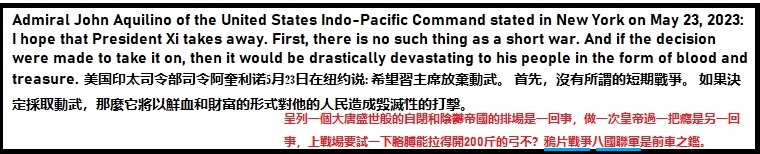
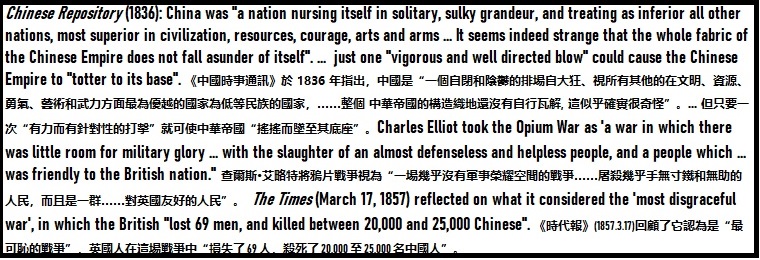
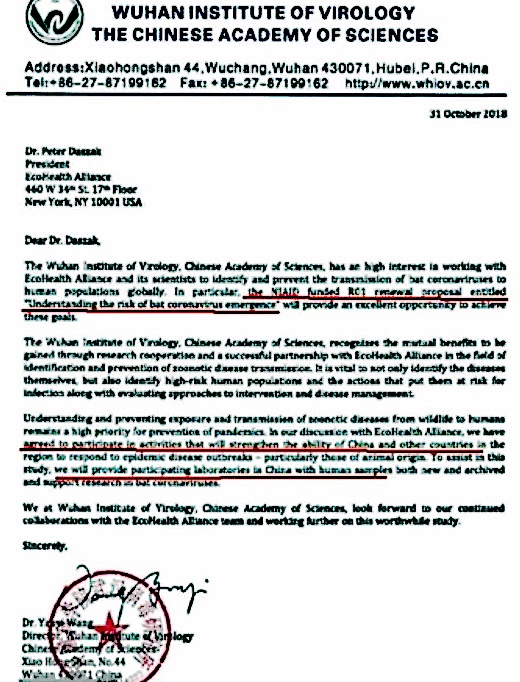

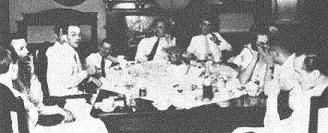
![Though, Anna Wang [Anneliese Martens], in her memoirs, expressed jealousy over Gong Peng by stating that the Anglo-American reporters had flattered the Chinese communists and the communist movement as a result of being entranced with the goldfish-eye'ed personal assistant of Zhou Enlai](GongPeng.jpg)