Sinitic Civilization-Book 1
Sinitic Civilization-Book 2
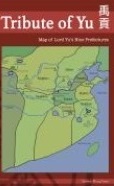
Tribute of Yu

Heavenly Questions
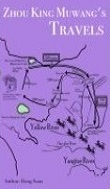
Zhou King Muwang's Travels

The Legends of Mountains & Seas
The Bamboo Annals - Book 1
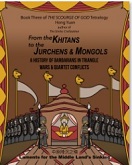
The Scourge-of-God-Tetralogy:
From the Khitans to the Jurchens & Mongols: A History of Barbarians in Triangle Wars and Quartet Conflicts
(available at iUniverse;
Google;
Amazon;
B&N)
|
|
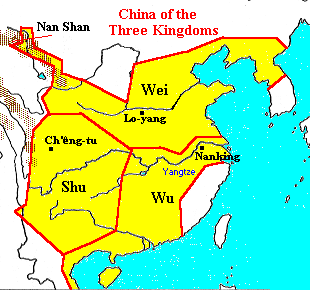
THREE KINGDOMS
The time period of the Three Kingdoms was very well covered by Luo Guanzhong's San Guo Yan-yi. The Chinese people often take for granted that Luo Guanzhong's San Guo Yan Yi was history. In the 70s, across China, radio stations had been broadcasting various yan-yi (i.e., romance) stories, including
Liu Lanfang's story about General Yue Fei of Northern Song Dynasty,
Shan Tianfang's story about the Sui-Tang Dynasty generals,
Yuan Kuocheng's story about the Three Kingdoms,
among others.
This section would be based on Fan Ye's Hou Han Shu, and Chen Shou's San Guo Zhi. So far, this webmaster had transcribed Chen Shou's section on the Xianbei/Wuhuan of Manchuria and the Eastern Yi barbarians (like the Koreans and Japanese) in the Korean section. A lot of extra work is needed to cover the Three Kingdoms.
The Three Kingdoms time derived from the demise of Latter Han Dynasty. The Han Dynasty possessed the typical characteristic as far as the pattern of power corruption was concerned. There would appear the 'empress power' (in-law power, in fact), the 'eunuch power' and the 'warlord power'. The tripartite functions of the imperial house gradually lost their influences, and the departments like 'shangshu sheng' (state affairs) and 'zhongshu sheng' (secretariat) would weigh on the emperors. The influence from people in the palace, i.e., the 'empress power' or the 'in-law power', led to the demise of the Western Han Dynasty. Wang Mang, who usurped Western Han and founded Xin Dynasty, derived his power from Empress Wang. All three forms of power corruption led to the demise of Eastern Han. During late Eastern Han (Latter Han), five emperors were erected by empress-related ministers, and six dowager empresses had intervention in politics. To combat the excess power of in-law families, weak Han emperors resorted to their best friends, i.e., the eunuchs, for assistance, which led to rise of the eunuch power. When empress-related ministers (i.e., wai qie or in-law ministers) invited governors-general ('zhou-mu') to the capital for cracking down on the eunuchs, the outcome would be: i) the death of both the eunuchs and the in-law ministers and ii) the emergence of various governors-general. governors-general ('zhou mu'), however, had grown in strength due to the uprising of the Yellow Turbans Rebellion, and their power had become unrestrained during the process of recruiting the armies. Cai Dongfan gave four names as the representative of various powers weighing on the emperors, i.e., Empress Denghou, in-law minister Liang Ji, eunuch Cao Teng, and governor-general Cao Cao. The rise of the Yellow Turbans was a result of corrupt governance and over-exploitation by the government. Compounding the Yellow Turbans rebellion would be the Qiangic rebellions. While Cao Cao rose to power in the process of cracking down on the Yellow Turbans, Dong Zhuo achieved his power via cracking down on the Qiangs in the northwestern part of China. We would touch on the thread of events below.
Han Emperor Lingdi deposed his empress. Two years later, a concubine by the name of He (Heh) bore a son for the emperor and was upgraded to empress. Empress He-hou was recorded to be a beauty who had a height of 7 Chinese feet and 1 inch. Her son would be called Liu Bian who would later be the short life expectancy emperor (King Hongnong-wang, r. A.D. 189-189) poisoned by Dong Zhuo in A.D. 189. Dowager Empress Hehou was of a butcher's family. After becoming empress, her brother Heh Jin was conferred the post of 'shi-zhong', and her father Heh Zhen, the post of 'che-ji jiang-jun' (chariot general) and Marquis Wuyang-hou. Hehou poisoned a concubine for bearing a boy called Liu Xie who would later be the last Han Emperor Xiandi (r. A.D. 190-220). The in-law minister, Heh Jin (i.e., He Jin), would invite Governor-General Dong Zhuo to the capital for sake of cracking down on the eunuchs. Once Heh Jin and the eunuchs boiled down with each other, Dong Zhuo would come to dominate the Han court. Dong Zhuo, who hand-picked last Han Emperor Xiandi, might have some heritage of the nomads in the Qiangic northwest area on the maternal side.
The Yellow Turbans
Han Emperor Lingdi was notorious for his sexual indulgence, game playing and resorting to over 10 eunuchs ('zhong-chang-shi') for governance. One story about Lingdi would be his game of making his palaces into a shopping mall, with concubines acting as vendors and himself acting as a buyer; Lingdi would often personally drive a cart with four donkeys into the mall for shopping.
Lindi was also notorious for having the palace maids wear the open crotch pants.
Several righteous ministers were executed, and three remaining 'san gong' (three dukes equivalent) ministers colluded with the eunuchs in controlling the court.
At the Julu-jun Commandery, three Zhang brothers, i.e., Zhang Jiao, Zhang Bao and Zhang Liang, secretly set up a society in the name of Huang Lao, i.e., the Yellow Lord and Lao-zi's Daoism. (Lao-zi was recorded to have grown yellow beard and he was called Huang Lao or the Yellow Elderly.)
When the epidemic erupted over the nation, Zhang Jiao devised some prescription for curing the patients, with a curing success rate of 90%. Hence, Zhang Jiao proclaimed himself 'Taiping Daoren, i.e., a Daoist of Grand Peace, and dispatched disciples across the nation for expanding membership. Over a dozen years later, Zhao Jiao's influence reached eight prefectures, covering today's provinces of Jiangsu, Henan, Shandong, Hebei and Hubei. Membership swelled to over 100,000. Zhang Jiao zoned his members into 36 domains, with larger domain controlling as many as 10,000 people and small domain 6-7000 people. Each domain was controlled by a person called 'qu shuai', similar to marshal. Zhang Jiao secretly propagated a slogan stating that the grey sky was to die, that the yellow sky was to emerge, that the transition would be in the year of jia zi (the first year of a cycle of sixty years, i.e., the 7th year reign of Lingdi), and that the nation would be in great luck after that.
Ma Yuanyi, 'qu-shuai' of today's Hubei and Jiangsu areas, secretly entered the Han capital city and bribed one eunuch (Xu Feng) and other officials for assistance in rebellion. Ma Yuanyi then notified Zhang Jiao that he was ready for rebellion in the capital on March 5th. A disciple under Zhang Jiao, Tang Zhou, betrayed the scheme to the government. The Han court arrested and executed Ma Yuanyi and over 1000 accomplices in the capital. Upon hearing of the divulsion of the rebellion scheme, Zhang Jiao ordered that his disciples in the 36 domains launch the uprising right away. In A.D. 184, rebellion broke out.
Zhang Jiao called himself General Tian-gong (the Heaven Duke), Brother Bao General Di-gong (the Earth Duke), and Brother Liang General Reng-gong (the Human Duke).
Hence, the Han dynasty felt into disarray, which led to China's population drop by 90% in the subsequent half a century. At the time of Han Emperor Huandi's 3rd year of the Yongshou Era, China had 10.670 million households or about 56.48 million people. By the time of the Three Kingdoms' time period, China merely had 1.47 million households per San Guo Shi-huo Zhi section by R.O.C. historian Tao Yuanzhen.
Emperor Lingdi conferred the title of 'da Jiang-jun' (Grand General or Generalissimo) and Marquis Shenhou onto Heh Jin for sake of cracking down on the Yellow Turbans.
'si-tu' Yang Ci sent Kong Rong to congratulating Heh Jin on his promotion.
Kong Rong, also known as Kong Wen Ju, was noted for being a prodigy at age 10 when he visited Li Ying, claiming that he was a relative for his ancestor Confucius' relationship with Daoist founder Lao-zi.
Kong Rong was also noted for competing for death penalty with brother and mother over the case of harboring Zhang Jian who fled the late Han dynasty's 'dang-gu' persecution case, namely, the incident of 'dang ren' (ministers and generals who worked together against the eunuchs and in-law clans).
(Li Ying's claim of descent from Taoist founder Lao-zi could have the same lineage as the Li-surnamed officials from the early Han dynasty time period. As a result of book burning, the identity of Lao-zi was shrouded in mystery, with Sima Qian listing at least four theories, like a Zhou dynasty librarian called Li Dan, a Chu Principality old peasant man called Lao-lai-zi, a Zhou dynasty chronicler called Tai-shi-Dan, or someone with son Duan'gan Zong acting as a general for the Wei Principality. Sima Qian then gave the lineage of grandson Duan'gan Zhu, great grandson Duan'gan Gong who further had a 'xuan sun' grandson Duan'gan Jia or Li Jia serving Han Emperor Xiaowendi, and another generation later, Duan'gan Jie (Li Jie/Li Xie) serving King Jiaoxi-wang. Scholar Heh Bingti, citing Sima Tan's studying under Li Xie, or Li Jie, an 8th generation grandson of Lao-zi and a tutor for King Jiaoxi-wang Liu Mao, claimed that Lao-zi was born about 440 B.C., later than Confucius' year of passing-away of 479 B.C. Modern historian Qian Mu, expanding on top of other contemporary historians' doubts about the Duan'gan family's relations with Lao-zi, further implied that Lao-zi was a product of Zhuang-zi's fables.)
Huangfu Song, 'tai-shou' (governor/prefect) of the Beidi Commandery, proposed that Emperor Lingdi absolve the previous persecution against the 'dang ren' (ministers and generals who worked together against the eunuchs and in-law clans) and that Emperor Lingdi disburse the royal savings for sake of fighting the Yellow Turbans.
Emperor Lingdi further conferred the post of 'bei zhong-lang jiang' (Northside zhong-lang General) onto 'tai-wei' Lu Zhi, the post of 'zuo zhong-lang jiang' (Leftside Zhong-lang General) onto Huangfu Song, the post of 'you zhong-lang jiang (rightside Zhong-lang general) onto 'da-fu' Zhu Jun (Zhu Juan).
Two ministers, Lü Qiang and Zhang Jun, impeached the ten eunuchs for the exploitation and oppression that the common people suffered in the hands of the families, relatives and friends of the ten eunuchs across the nation. Lü Qiang and Zhang Jun blamed the Yellow Turban rebellion on the ten eunuchs. The Ten Eunuchs, headed by Zhang Rang, would make Emperor Lingdi order that the two be arrested. Lü Qiang committed suicide, and Zhang Jun was beaten to death at prison. Emperor Lingdi deprived Yang Ci of the 'tai-wei' (grand captain) post and conferred it onto Deng Wei.
Emperor Lingdi replaced Zhang Ji's 'si-kong' post with Zhang Wen.
Wang Yun, as 'ci-shi' for Yuzhou, also reported to the emperor about the eunuchs' collusion with the Yellow Turbans.
Eunuch ZHang Rang managed to have Wang Yun arrested.
Wang Yun was spared death at the petition by Heh Jin, Yuan Kui and Yang Ci.
At Yingchuan, Lu Zhi, Huangfu Song and Zhu Jun (Zhu Juan) were engaged in bitter fighting with a Yellow Turban rebel called Bo-cai and suffered some setbacks. At Nanyang, Yellow Turban rebel Zhang Mancheng killed 'tai-shou' Chu Gong. At Runan, 'tai-shou' Zhao Qian was defeated by the Yellow Turbans.
At Youzhou, 'tai-shou' Liu Wei and 'ci-shi' (circuit inspector or satrap) Guo Xun were both killed by the Yellow Turbans. At the city of Changshe, Huangfu Song's several thousand soldiers were surrounded by Bo-cai's Yellow Turbans. Huangfu Song used a fire attack at the Yellow Turban camp and defeated rebel Bo-cai who boasted of tens of thousands of head counts.
At this time, Cao Cao, 'qi duwei' (cavalry captain), came to the aid of Huangfu Song.
Huangfu Song, Cao Cao and Zhu Jun (Zhu Juan) combined their armies and thoroughly defeated Bo-cai's Yellow Turbans. Huangfu Song was conferred the title of Marquis Duxiang-hou.
(Cao Cao's son would be the later founder of Cao Wei Dynasty, while Cao Cao's father was an adopted son of Eunuch Cao Teng.)
Huangfu Song then led Zhu Jun (Zhu Juan) and Cao Cao against the Yellow Turbans at Runan and Chen'guo, and quelled the rebellion there. Hence, Zhu Jun (Zhu Juan) was conferred the title of Marquis Xixiang-hou, and Cao Cao was conferred the post of 'Ji'nan xiang' (prime minister for Ji'nan). Huangfu Song was ordered to attack the Yellow Turbans in Dong-jun Commandary, and Zhu Jun (Zhu Juan) was to attack Yellow Turbans in Nanyang.
Lu Zhi defeated Zhang Jiao and lay a siege of the city of Guangzong. A eunuch claimed to Emperor Lingdi that Lu Zhi did not have the courage to sack the city; Lu Zhi was arrested and ordered to be replaced by Dong Zhuo ('tai-shou' of the He-dong Commandery). Dong Zhuo, famous for his strength and capabilities of shooting the arrows with both hands, was from Lintiao of today's Shenxi Province.
(Dong Zhuo earlier followed zhong-lang jiang Zhang Huan in quelling the Qiangic rebellions and was conferred the post of 'jun si-ma' by Emperor Huandi; he was later offered the post and title of 'lang-zhong 'ci-shi' of Bingzhou, and 'tai-shou' of the Hedong Commandery.
Zhang Huan, a follower of paramount in-law minister Liang Ji, was 'Anding-shu-guo du-wei' since A.D. 155, responsible for cracking down on the Hunnic and Wuhuan rebellion; in A.D. 158 commanded the southern Hun mercenaries against Xianbei; in A.D. 161 acted as 'du-Liao jiang-jun' against the barbarians in today's Manchuria; and in A.D. quelled the Qiangic and Xianling Qiang rebellion in western China.)
Zhang Jiao would launch a counter-attack out of the city of Guangzong, defeated Dong Zhuo, chased Dong Zhuo to the city of Quyang, and took over Quyang from the Han army. Dong Zhuo was deprived of his post by Emperor Lingdi, and Huangfu Song was ordered to replace Dong Zhuo. At this time, Zhang Jiao got ill, and Zhang Liang was in charge of the Yellow Turbans. When news came that Zhang Jiao had died, Huangfu Song counter-attacked the Yellow Turbans, killed Zhang Liang and then sacked the city of Guangzong. The Yellow Turbans, numbering tens of thousands, were drowned in a river when being chased by Huangfu Song. Huangfu Song went on to attack Quyang which was guarded by Zhang Bao. With the help of Julu (Pingxiang, Hebei) 'tai-shou' Guo Dian, Huangfu Song defeated Zhang Bao and captured over 100,000 Yellow Turbans. The heads of three Zhang brothers were cut off and sent to the capital. Lingdi conferred the title and post of 'zuo che-ji jiang-jun' (leftside chariot general), 'zhou-mu' (governor-general) of Jizhou and Marquis Kuili-hou onto Huangfu Song. Huangfu Song declined an advice of a counsellor called Yan Zong, which was about going to the capital and purging the eunuchs. Yan Zong left for Liangzhou where he was later made into a warlord by the rebels there.
At Nanyang, Zhu Jun (Zhu Juan) fought the Yellow Turbans headed by Zhang Mancheng. The new 'tai-shou' of Nanyang, Qin Xie, would kill Zhang Mancheng. The Yellow Turbans made another rebel, Zhao Hong, into their new leader, and sacked the city of Wancheng. Zhu Jun (Zhu Juan), together with Qin Xie and Xu Qiu, defeated Zhao Hong. The Yellow Turbans erected Han Zhong as the new leader. Zhu Jun (Zhu Juan) deliberately withdrew the siege.
When Han Zhong fled the city, Zhu Jun (Zhu Juan) ordered an attack and captured Han Zhong. The remnant Yellow Turbans erected Sun Xia as their head and fled to the mountains. Zhu Jun (Zhu Juan) followed the rebels into the mountains and quelled them. Zhu Jun (Zhu Juan) was conferred the post of 'you che-ji jiang-jun' by Emperor Lingdi.
Fu Xie, '>hujun ' under Zhu Jun (Zhu Juan), impeached the eunuchs and was assigned the post of 'du-wei' of Anding. Wang Yun, 'ci-shi' of Yuzhou, was arrested for submitting to the court the letters between the Yellow Turban and the counsellors of the eunuchs. When Zhu Jun (Zhu Juan) returned to the court, Emperor Lingdi changed the era of the 7th year of Guanghe to the 1st year of the Zhongping Era. Amnesty was declared. Both Wang Yun and Lu Zhi were spared. Zhu Jun (Zhu Juan) was conferred the post of 'guang lu da-fu'. Huangfu Song recommended Lu Zhi for the post of 'tai-wei'.
In the earlier years, Lu Zhi had several students, including Gongsun Zan of Liao-xi, Liu Deran and Liu Bei of the Zhuoxian County. Liu Bei would be the later founder of Shu Han Dynasty. Liu Bei's ancestor was Liu Sheng, who was King Zhongshan-jing-wang and son of Former Han Emperor Jingdi. Liu Bei was recorded to have a height of 7 Chinese feet and 5 inches, or 173 centimeters, and he had big dangling ears that he could see with his own eyes. At age 15, he went to Lu Zhi for receiving tutorship. Liu Bei was joined by two blood-sworn brothers, Guan Yu of the Hedong Commandery and Zhang Fei of the Zhuojun Commandery. To be blood brothers, ancient Chinese needed to dip blood together in a bowl and drink it. Guan Yu, recorded to have a red hairy face, had fled to the Zhouzhou area after killing someone in a brawl in his hometown. The three had promised to be blood brothers in Dao Yuan (i.e., the Peach Garden) at the backyard of butcher Zhang Fei's house. When the Yellow Turbans invaded the Zhuoxian county, the three would answer county 'jiao-wei' (i.e., captain) Zou Jing in assembling the soldiers and fighting the rebels. When the Yellow Turbans were driven off, Zou Jing recommended Liu Bei for officialdom. Liu Bei was assigned the post of 'wei' (captain) for the Anxi-xian county. While on the post, the three brothers beat an arrogant government postal official, surrendered the county seal, and went into exile.
The Scourges-of-God Tetralogy
would be divided into four volumes covering
Hsiung-nu (Huns), Hsien-pi (Xianbei), Tavghach
(Tuoba), Juan-juan (Ruruans), Avars, Tu-chueh (Turks), Uygurs (Huihe), Khitans, Kirghiz, Tibetans, Tanguts, Jurchens, Mongols and Manchus and
southern barbarians.
Book I of the tetralogy would extract the contents on the Huns from
The Sinitic Civilization-Book II,
which rectified the Han dynasty founder-emperor's war with the Huns on mount Baideng-shan to A.D. 201 in observance of the Qin-Han dynasties' Zhuanxu-li calendar.
Book II of the Tetralogy would cover the Turks and Uygurs.
And
Book IV would be about the Manchu conquest of China.
From the Khitans to the Jurchens & Mongols: A History of Barbarians in Triangle Wars and Quartet Conflicts
, i.e., Book III of
the Scourge-of-God-Tetralogy,
focused on the Khitans, Jurchens and Mongols, as well as provided the annalistic history on the Sui and Tang dynasties, the
Five Dynasties & Ten Kingdoms, and the two Soong dynasties.
Similar to this webmaster' trailblazing work in rectifying the Han dynasty founder-emperor's war with the Huns to 201 B.C. in The Sinitic Civilization - Book II,
this Book III of the Scourge-of-God-Tetralogy
collated
the missing one-year history of the Mongols' Central Asia campaigns and restituted the
unheard-of Mongol campaign in North Africa.
|
The Scourges of God: A Debunked History of the Barbarians" - available at iUniverse|Google|Amazon|B&N
From the Khitans to the Jurchens & Mongols: A History of Barbarians in Triangle Wars and Quartet Conflicts
(The Barbarians' Tetralogy - Book III)
Epigraph,
Preface,
Introduction,
Table of Contents,
Afterword,
Bibliography,
References,
Index
|
|
Table of Contents
(From the Khitans to the Jurchens & Mongols: A History of Barbarians in Triangle Wars and Quartet Conflicts)
Chapter VII: The Tibetans .........................................................................................................80
Origin of the Qiangs and Tibetans ..............................................................................................82
The Qiang [1] vs. the Di [1] People ...........................................................................................84
The Tuyuhun Xianbei, the Tibetans & the Tanguts .......................................................................87
The Tibetans vs. the Tuyuhun ......................................................................................................89
The Tibetans vs. the Tang Chinese ..............................................................................................91
The Khitans, the Shatuo, the Tanguts vs. the Five Dynasties .......................................................170
Chapter XV: The Tangut Xia Dynasty (A.D. 1038-1227) ..........................................................258
Origin of the Tanguts ................................................................................................................259
The Tanguts vs. the Five Dynasties ...........................................................................................261
The Tanguts vs. the Soong Dynasty ...........................................................................................263
The Tanguts Attacking the Western Corridor Garrisons, the Tibetans & the Uygurs.......................264
Launch of the Grand Xia (Da-Bai-Gao-Xia) Dynasty .....................267
The Soong Debacle at the Battles of Sanchuankou (in A.D. 1040) , Haoshuichuan
(in A.D. 1041) and Dingchuanzhai (in A.D. 1042) ..............................271
The Triangle & Quartet Wars Among the Khitans, Jurchens, Tibetans,
Tanguts and Soong ..............................................273
The Triangle & Quartet Wars Among the Tanguts, Jurchens, Mongols and Soong .......................280
The Mongols' Attacking the Jurchen & Soong's Western Territories after
Elimination of the Tangut Xia Dynasty ............................360
Chapter XXII: The Mongol Attacks on the Tatars, Naimans, Keraits, Tanguts,
Jurchens, Khitans in Manchuria & Kara-Khitay (from A.D. 1202
to 1219) .....403
Continuous Mongol Attacks on the Tanguts ...............................................................................421
Chapter XXIV: Demise of the Tangut Xia Dynasty (A.D. 1038-1227) ........................................453
Southern Soong's Triangle & Quartet Wars with the Tanguts, Jurchens and
the Mongols .................................................................553
|
|
The Qiangic Rebellion
During the 2nd year reign of Zhongping Era, the Han royal palace experienced a fire disaster. In order to rebuild the palace, Lingdi adopted eunuchs' advice in levying some extra taxes on the populace and extracting the building materials from various prefectures. Lu Kang, 'tai-shou' of Le'an, was impeached by the eunuchs for objecting to levying taxes. Sima Zhi, 'tai-shou' of Julu, committed suicide for rejecting the court order. Under the oppression, the populace resorted to banditry all over the country. Various bands, under such nicknames as Leigong (lightening duke or grandpa), Baiqi (white horse knight), Damu (big eye), and Feiyan (flying swallow), erupted over the nation. The Han court pacified bandit Feiyan (Chu Yan) of Changshan and conferred him the post of 'pingnan zhong-lang jiang' in charge of the areas north of the Yellow River. In Longxi (Gansu), the [Yuezhi-]Hu and Qiang nomads rebelled as well.
By the end of the Han Dynasty, the Qiangs were controlled by warlord governors in the northwestern part of China. They had rebellion every once a while. Under Emperor Huandi, General Zhang Huan had campaigned against the Qiangs and quelled them.
Zhang Huan in A.D. quelled the Qiangic and Xianling Qiang rebellion in western China.
When the Qiangs rebelled again, Huangfu Song, Zhang Wen and Dong Zhuo were called upon to quell the Qiangs. Later, during the Three Kingdom time period, the Qiangs and Xianbei had participated in the wars as mercenaries for Cao Wei and Shu Han dynasties, respectively.
In the Xi-liang area, including the Fuhan County and Bei-di-jun Commandery, the Yicong-Hu (i.e., Yuezhi) and Xianling-qiang barbarians selected someone called Beigong Boyu and Li-wen-hou as a general in A.D. 184, sacked Fuhan and Heguan counties,
and killed 'hu-Qiang jiao-wei' Leng Zheng.
Beigong Boyu (Beigong Yu) was a Yicong-Hu or Yuezhi from Huangzhong.
The rebels colluded with the Xianling Qiangs (of the Beidi-jun Commandery) and the bandits in pillaging the country.
The bandits abducted Bian Zhuang and Haan Sui at Jincheng, and made them into the military heads.
Sa Guo Zhi stated that Song Yang and Beigong Yu supported two renowned locals Bian Zhuang and Haan Sui as leaders.
The rebels killed official Liu Jun.
Liu Jun's subordinate Zhang Xiao, who was an adopted son of Zhang Ji, defeated the rebels to avenge the death of Liu Jun.
The rebels killed Chen Yi ('tai-shou' of Jincheng) on top of Ling Zheng ('hu-Qiang jiao-wei').
Zuo Chang, 'Longyou ci-shi', refused to come to aid of Chen Yi and Leng Zheng. Zuo Chang dispatched Gai Xun to Heyang, but the Qiangic rebels circumvented to attack Zuo Chang at Jicheng. When Gai Xun returned to the rescue of Zuo Chang, Bian Zhuang led the rebels in a retreat. Zuo Chang and his successor were both rebuked by the Han court. When the new 'hu-Qiang jiao-wei' (colonel in charge of Qiangs) Xia Yue was surrounded by the Qiangs, Gai Xun went to the relief; but Gai Xun was defeated by a Qiangic rebel called Dianwu. Dianwu released Gai Xun for his righteousness. The Han court conferred the post of 'tao-Lu jiao-wei' (i.e., colonel who campaigns against enemies) onto Gai Xun.
In the spring of
A.D. 185, the Qiangic rebels attacked east towards the Han western capital city in the name of purging the eunuchs, attacked the three San-fu capital districts, and reached the mausoleum area.
At the Han court, 'du-wei' Fu Xie rebuked 'si-tu' Cui Lie for his proposal to abandon Liangzhou. Han Emperor Lingdi ordered that Huangfu Song guard the city of Chang'an.
Emperor Lingdi sent Dong Zhuo ('zhong-lang-jiang' general) and Huangfu Song ('fu zuo che-ji jiang-jun' deputy left chariot general) to the west.
Huangfu Song beat off the invasion by Bian Zhuang and Haan Sui. Eunuchs Zhang Rang and Zhao Zhong impeached Huangfu Song, and Huangfu Song was deprived of the post of 'zuo che-ji jiang-jun'.
Huangfu Song, for offending the eunuchs before, was recalled in the autumn of the same year.
Han Emperor Lingdi conferred marquis onto the 13 eunuchs. Lingdi then ordered that 'si-kong' Zhang Wen replace Huangfu Song [who was disliked by the eunuchs].
The imperial court reassigned 'si-kong' Zhang Wen as the 'che-ji jiang-jun' general of chariots and cavalry, and 'zhi-jin-yu' Yuan Pang as the deputy general.
Serving under Zhang Wen would be two future strongmen 'bie2-jia4 cong-shi4' Sun Jian and 'yi-lang' Tao Qian.
Dong Zhuo was appointed as 'po-Lu jiang-jun' (general of breaking the enemies), and together with 'dang-Kou jiang-jun' (general of sweeping the enemies) Zhou Shen, were put under Zhang Wen's command.
The government troops stationed at Meiyang (Wugong, Shenxi) to confront the rebels.
Zhang Wen arrived at Shanyang. Zhang Wen and Dong Zhuo, with over 100,000 army, were defeated by Bian Zhuang at the beginning. In a severe winter, the month of November, when a meteorite passed through the sky and scared the war horses and donkeys with the flashing light in the sky, the Qiangic rebels were frightened and planned to return to the Jincheng homeland in today's Gansu Province.
Calling on 'you-Fufeng' Bao Hong, a Han official at You-fufeng (near the capital city of Chang'an), to assist him, Dong Zhuo led a surprise attack at the rebels the next day, defeated the rebels, and killed a few thousands.
Zhang Wen ordered that Dong Zhuo chase the Qiangs and Zhou Shen ('dang-Kou jiang-jun') chase after Bian Zhuang.
The rebels fled back to Yuzhong (Jincheng, Lanzhou, Gansu).
Bian Zhuang fled to Yuzhong. Not taking advice from 'zuo-jun si-ma' Sun Jian (who would be the founder of the later Sun Wu Dynasty), Zhou Shen was defeated by Bian Zhuang.
Bian Zhuang and Haan Sui cut off Zhou Shen's grain supply route, causing Zhou Shen to abandon the carts for a retreat.
Dong Zhuo, when chasing the Qiangs, was surrounded by a large Qiangic relief army. Dong Zhuo devised a tactic, pumping out the water of a river for retreat across the river as well as drowning the Qiangic chasers. Dong Zhuo returned to Fufeng of today's Shenxi.
In the spring of A.D. 186, Haan Sui killed Bian Zhang, Beigong Boyu and Li-wen-hou (Li Wenhou).
Sa Guo Zhi stated that Bian Zhang died of illness.
When Bian Zhuang and Haan Sui pretended to surrender to Zhang Wen, Zhang Wen sent a message to the Han court. Han Emperor Lingdi thought that the Qiangic rebellion was quelled and conferred onto Dong Zhuo the title of marquis and the post of 'zhou-mu' for Bingzhou.
Zhang Wen was conferred the three grand dukes' post of 'tai-wei' but was demoted the following year when rebellion restarted.
Gai Xun was later in A.D. 188 recommended by Zhang Weng to be 'Jing-zhao yi', i.e., capital city magistrate and garrison commander.
Dong Zhuo became arrogant and challenged Zhang Wen's authority. Sun Jian proposed to Zhang Wen that Dong Zhuo be caught and executed for insulting Zhang Wen; Zhang Wen was worried that campaigns against the Qiangs would not go smoothly should he execute Dong Zhuo.
Zhang Wen was conferred the post of 'tai-wei' (i.e., Grand Captain). Zhang Wen recommended Sun Jian for the post of 'yi-lang'. (Sun Jian was a descendant of Sun Wu, China's military strategist from the Warring States time period. Sun was made 'jun wei' and 'si-ma' of the Wu-jun Commandery. Sun later worked on the post of 'xian cheng' (i.e., county magistrate) for three terms. When the Yellow Turbans rebelled, Zhu Jun (Zhu Juan) hired Sun Jian as an assistant.)
Emergence of Governors-general
Han Emperor Lingdi re-instituted two royal officials, Yang Ci and Liu Tao, for their warning against the Yellow Turbans before the rebellion eruption. Yang Ci was conferred the post of si-kong and Marquis Linjin; Yang Ci died in a few months; Yang Ci's son, Yang Biao, inherited the marquis title. Liu Tao was assigned the post of 'jianyi da-fu'. Liu Tao impeached the eunuchs, was arrested by the eunuchs, and committed suicide at prison. Eunuch Zhao Zhong was assigned the post of 'che-ji jiang-jun', and he tried to bribe Fu Xie. To get rid of Fu Xie, the eunuchs made Lingdi order that Fu Xie be assigned the post of 'tai-shou' for Hanyang.
In the spring of A.D. 186, Haan Sui killed Bian Zhuang, colluded with Beigong Boyue, and lay siege of Longxi with over 100,000 army.
Haan Sui subsequently killed Beigong Boyu (Beigong Yu, from the Yi-cong-hu or Yuezhi Minor ethnic group) and Li-wen-hou.
In A.D. 187, Geng Bi, 'ci-shi' of Liangzhou, was defeated while attacking Jincheng.
'tai-shou' Li Xiangru colluded with Haan Sui. At Hanyang, a bandit called Wang Guo answered Haan Sui in rebellion. Geng Bi, 'ci-shi' of Liangzhou, refusing to take the advice of Fu Xie, went to fight the rebels. Geng Bi was killed at Didao. A si ma under Geng Bi, by the name of Ma Teng, refused to aid Geng Bi's army.
Ma Teng merged his troops with Haan Sui, and supported Wang Guo as leader.
The rebels laid a siege of Hanyang, and Fu Xie refused to surrender. Rebel Wang Guo dispatched 'tai-shou' of Jiuquan (Huang Yan) to Fu Xie for sake of having Fu Xie surrender the city. Fu Xie declined the offer, had a fight with the rebels outside of the city, and died. His son, Fu Gan, was retrieved by the rebels and sent to the hometown; Fu Gan later was assigned the post of 'tai-shou' for Fufeng.
Ma Teng and Haan Sui's rebels pillaged the three capital districts, and in A.D. 188, laid a siege of Chencang.
Banditry was not restricted to the Qiangs. The Yellow Turban remnants were still active in the east. In the northeast, the Xianbei remnants pillaged Youzhou and Bingzhou though their chieftain (Tanshikui) had died of illness.
In the Jiangjia area, Zhao Ci's army bandits killed 'tai-shou' Qin Xie; 'ci-shi' of Jingzhou (Wang Min) quelled Zhao Ci. At Xingyang, the county magistrate of Zhongmou was killed by the bandits. Heh Miao, 'He-nan yi', was ordered to quell the Xingyang bandits. In today's Hunan Province, banditry erupted in the Changsha and Lingling areas. Sun Jian was dispatched to Changsha for quelling rebellion there. At Yuyang, Zhang Chun and Zhang Ju killed 'tai-shou' of You-beiping (Liu Zheng), 'tai-shou' of Liaodong (Yang Zhong) and 'hu-Wuhuan jiao-wei. Zhang Chun claimed to be an emperor, while Zhang Ju called himself 'mi tian jiang-jun' (general who permeates the sky).
Han Emperor Lingdi ordered that 'qi du-wei' Gongsun Zan depart for Youzhou to quell the two Zhang rebellion.
The Hunnic tribe of Xiutu (Xiuzhu) pillaged the Xihe (west river) area, killed jun shou (Xing Ji), and then attacked Bingzhou and killed 'ci-shi' Zhang Yi. The Yellow Turbans remnants at the Taiyuan area also rebelled again in A.D. 189 under the head of Guo Tai, called 'bai bo" (white wave). The leftside Xiuzhu tribe pressured the Southern Hunnic chanyu into rebelling in the north.
Jizhou 'ci-shi' Wang Feng intended to purge the eunuchs by taking advantage of Han Emperor Lingdi's tour outside of the capital. He consulted with Cao Cao for support, but Cao Cao did not agree with it. Wang Feng, thinking that his plot was disclosed, hastily committed suicide when being recalled by the emperor.
At Yizhou (today's Sichuan Province), the Yellow Turban remnants, under Ma Xiang, rebelled against corrupt 'ci-shi' Qie Jian. tai chang Liu Yan (a descendant of Former Han King Lugong-wang) was conferred the post of 'zhou-mu' for Yizhou and the title of Marquis Yangcheng. Before Liu Yan arrived in Sichuan, the Turban rebels were quelled by a Yizhou official.
Han Emperor Lingdi then ordered that Liu Yu (a descendant of King Donghai-wang) be the 'zhou-mu' for Youzhou. (Note that beginning from Liu Yan and Liu Yu, 'zhou-mu' replaced 'ci-shi' as the leader of various 'zhou' prefectures. The 'zhou' prefectures would be in charge of various 'jun' or commandaries.)
Han Emperor Lingdi, fearing insufficiency of the palace defence, ordered that a eunuch by the name of Jian Shuo ('shang-jun jiao-wei') to replace Zhao Zhong as shang jun jiao-wei.
The emperor ordered to build a garrison army that came to be known as 'Xiyuan-jun' (i.e., the western garden's army) consisting of recruits from Xiyuan, a place to the west of Luoyang.
Under eunuch commander-in-chief Jian Shuo would be seven 'jiao-wei', i.e., captains, including Yuan Shao ('hu ben zhong-lang-jiang'), Bao Hong ('dun-ji jiao-wei'), Cao Cao ('yi-lang'), Zhao Rong, Feng Fang, Zhao Feng, Xia Mou ('jianyi da-fu'), and Chunyu Qiong ('jianyi da-fu'). The eight guys were collectively known as the Eight 'jiao-wei' or Eight Captains (or Colonels).
Gai Xun admonished Emperor Lingdi about his palace army inspection. When Gai Xun met Yuan Shao (son of late 'si-kong' Yuan Feng) and talked about the eunuchs influencing the emperor, Yuan Shao would invite Gai Xun to his residence for a talk about exterminating the eunuchs. 'tai-wei' Zhang Wen returned to the capital. Eunuch Jian Shuo recommended Gai Xun for relocation to be a 'Jing-zhao yin'.
In the Liangzhou prefecture, bandits under rebel Wang Guo laid a siege of the Chencang city in A.D. 188. Emperor Lingdi ordered that Huangfu Song / Dong Zhuo lead a 20,000 army to the relief of Chencang.
Huangfu Song had disputes with Dong Zhuo as to tactics. Huangfu Song deliberately waited for 80 days while Dong Zhuo advocated a fight with the rebels. The rebels retreated after failing to take over Chencang.
Ma Teng and Haan Sui replaced Wang Guo with Yan Zhong, a former 'ling' for Xindu.
Yan Zhong, who was ashamed of being a rebel leader, died.
Then, Huangfu Song had another dispute with Dong Zhuo. Huangfu Song ordered a chase of the retreating rebels while Dong Zhuo stated that the ancient tactics forbade chasing of retreating enemies. Huangfu Song defeated Wang Guo and killed about 10,000 rebels. When Emperor Lingdi called upon Dong Zhuo to return to the capital, Dong Zhuo deliberately delayed the trip. (Historians commented that Dong Zhuo deliberately avoided going to the capital few times for sake of retaining the control of his army: Dong Zhuo did not serve the post of 'shao-fu' at the capital; Dong Zhuo did not transfer the military to Huangfu Song; Dong Zhuo stayed on at He-dong, east of the river, for observing the developments of palace turmoil.)
Huangfu Song's son advised his father that Dong Zhuo had high ambition and should be dealt with earlier than later. Huangfu Song rebuked Dong Zhuo by writing a letter to the emperor, and the two hence became feuds.
At the Youzhou prefecture, two ex-Han officials, Zhang Chuan / Zhang Ju, were fighting Gongsun Zan. Gongsun Zan defeated Zhang Chun in the Jizhong area. Zhang Chuan invited a Wuhuan chieftain (Qiuliju) for raiding Yuyang, Hejian and Bohai. After another defeat in the hands of Gongsun Zan, Zhang Chun fled out of the border. When Gongsun Zan chased the two Zhangs to the Guanzi-cheng city in Liaoxi, the Wuhuans, under Qiuliju, surrounded Gongsun Zan for 200 days. Gongsun Zan barely survived when heavy snows fell and the Wuhuans fled to the Liucheng city. Gongsun Zan was conferred Marquis Duting-hou and the post of 'jiang-Lu jiao-wei'. Zhang Chun / Zhang Ju fled to the Xianbei camp. Liu Yu arrived in Youzhou and dispatched emissaries to the Xianbei for the heads of the two Zhangs. Xianbei chieftain Budugeng, the grandson of Tanshikui, sent the head of Zhang Chun to Liu Yu after Zhang Chun's servant killed Zhang Chun. Wuhuan chieftain Qiuliju sent emissary to Liu Yu to show submission. Liu Yu proposed to Emperor Lingdi to have peace with the Wuhuan and Xianbei and ordered that Gongsun Zan guard You-beiping with 10,000 army. Gongsun Zan, eager to fight the Wuhuan and Xianbei, hence became unhappy with Liu Yu and became feuds. Liu Yu was conferred the post of 'tai-wei'.
In-law Ministers Against the Eunuchs
In April of the 6th year reign of Han Emperor Lindi's Zhongping Era, i.e., A.D. 189, Emperor Lingdi fell sick. Eunuch Jian Shuo, in order to get rid of Heh Jin, would ask emperor decree that Heh Jin go to the west to attack bandit Haan Sui.
The emperor intended Jian Shuo to support prince Xie as the successor.
Heh Jin delayed his trip by pretending that he had ordered Yuan Shao to go to the Xuzhou and Yanzhou areas for recruiting soldiers first. Lingdi died suddenly without a will. Eunuch Jian Shuo called upon in-law minister Heh Jin to enter the palace. Heh Jin, on the road, met Pan Yin, a eunuch who was an acquaintance, and was informed that the eunuchs plan to kill him and erect junior Prince Liu Xie. Heh Jin dared not enter the palace till his sister, Dowager Empress He-hou, called him in. The eunuchs under Jian Shuo temporarily supported Dowager Empress Hehou in erecting 14 year old Liu Bian as the new emperor. Prince Liu Xie was conferred the title of King Bohai-wang. Dowager Empress He-hou conferred Yuan Kui the title of 'tai-fu' and made Yuan Kui / Heh Jin in charge of the hang shu duties.
(Yuan Kui was the uncle for Yuan Shao and Yuan Shu.)
When Yuan Shao returned to the capital, Heh Jin secretly planned to purge the eunuchs. Heh Jin assigned He Yong the title of 'bei jun zhong hou', Xun You the post of 'huangmen shilang', and Zheng Tai the post of 'tai-wei'. The eunuchs prepared for self-defence against the in-law ministers. Eunuch Jian Shuo wrote letters to other eunuchs about killing Heh Jin. One eunuch, Guo Sheng, went straight to Heh Jin's house and showed Jian Shuo's letter. Heh Jin hence took action by killing Jian Shuo first.
Heh Jin then purged a rival, 'piaoji jiang-jun' Dong Zhong and his mother (dowager grand empress Dong-tai-hou). King Bohai-wang, Liu Xie, was renamed King Chenliu-wang. Yuan Shao proposed to have all eunuchs purged; Heh Jin consulted with Empress Hehou; Dowager Empress He-hou did not approve it for fearing turmoil; Heh Jin asked Yuan Shao whether it was OK to get rid of the top eunuchs; Yuan Shao insisted that all eunuchs should be purged.
Ding Yuan, who was 'wu-meng [brave] du-wei [captain]' and 'ci-shi' for Bingzhou, was ordered by Heh Jin to come to the capital.
Ding Yuan was also one of the Xiyuan-jun captains.
Ding Yuan lit a fire at the Mengjin rivercrossing, and came to the Luoyang city.
Dowager-empress He-hou stopped Heh Jin's purge action.
The eunuchs began to bribe Heh Jin's mother (Madam Wuyang-jun) and Heh Jin's brother (Heh Miao) and expressed friendship with the Heh family.
Heh Jin and Dowager Empress He-hou hence had disagreements as to dealing with the eunuchs.
At the insistence of Yuan Shao, Heh Jin secretly sent orders to governors-general for sake of having them march on the capital. A Han minister, 'zhu-bu' Chen Lin, advised against Heh Jin's invitation for the governors-general. Cao Cao, 'dian jun jiao-wei', ridiculed Heh Jin's decision. Dong Zhuo answered Heh Jin's call from the Hedong areas and stated that he would depart for the capital in a few days. Zheng Tai, 'shi yu-shi', advised Heh Jin of Dong Zhuo's arrogance and cruelty and expressed worries that should Heh Jin confer the military leadership onto Dong Zhuo, the Han court might be endangered. Xun You stated that they had better retire to avoid turmoil. Zheng Tai retired for his home in Henan. Lu Zhi, 'tai-wei', also advised against Heh Jin's using Dong Zhuo for purging the eunuchs.
Heh Jin further ordered that Wang Kuang and Bao Xin recruit soldiers in their homeland that Qiao Mao ('tai-shou' of Dongdu) guard the Chenggao city. When the eunuchs asked Heh Miao to talk to the brother for mercy, Heh Jin dispatched Zhong Shao to Dong Duo for sake of stopping him from marching further. Dong Zhuo already arrived at Mianchi and refused to stop. Under the pressure of Zhong Shao, Dong Zhuo retreated to Xiyangting. When Yuan Shao heard about the stop order for Dong Zhuo, he went to see Heh Jin and asked him not to forget about the Dou inlaw family's mistake. Heh Jin then ordered that Yuan Shao be the so-called 'si-li jiao-wei' in charge of the purging action, that Wang Yun be magistrate for the Henan prefecture ['He-nan yin'], and that Dong Zhuo hasten his march on the capital.
The eunuchs began to come to see Heh Jin for mercy, and Heh Jin asked the eunuchs to retire for their hometowns. However, Yuan Shao privately ordered that the various prefectures arrest the family members of the eunuchs. Eunuch Zhang Rang went to see his daughter-in-law (sister of Heh Jin) and kowtowed to her, asking her to request mercy with Madam Wuyang-jun. Heh Jin and Dowager Empress He-hou disagreed over their mother Madam Wuyang-jun's amnesty request. The eunuchs, learning of Heh Jin's determination to purge them, ambushed and killed Heh Jin. The eunuchs then decreed in the name of the emperor that Yuan Shao and Wang Yun be deprived of their posts and replaced by Fan Ling and Xu Xiang. The eunuchs closed off the gates of the imperial palace and threw Heh Jin's decapitated head outside. Lu Zhi picked up the head and brought it to Heh Jin's camp to show to two subordinate officers, Wu Kuang and Zhang Zhuang. Wu Kuang and Zhang Zhuang led army against the southern palace. Yuan Shao ordered that his brother, Yuan Shu ('huben zhong-lang-jiang'), assist Wu Kuang and Zhang Zhuang in the siege of the palace. Fire was set on the southern palace, and Eunuch Zhang Rang abducted Empress He-hou, the emperor and King of Chenliu-wang to the northern palace.
At the northern palace, Yuan Shao and Heh Miao caught Eunuch Zhao Zhong. When Heh Miao showed pity for the execution of the eunuch, Wu Kuang killed Heh Miao. Altogether 3000 eunuch-related people were killed. Lu Zhi rescued Empress He-hou and chased Eunuch Zhang Rang at al., who had fled with the young emperor and King of Chenliu-wang out of the north palace gate. Lu Zhi ('shang-shu') and Min Gong ('he-na zhong-bu yuan'), riding on horses, caught up with the fleeing entourage at the Yellow River riverbank by mid-night and rescued the emperor and King Chenliu-wang. Eunuch Zhang Rang and Duan Gui jumped into a river to commit suicide.
By the early morning, Lu Zhi and Min Gong, together with the emperor and King Chenliu-wang, met Dong Zhuo's column in front of Mt. Beimang-shan. While receiving Dong Zhuo, the young emperor was too scared to say a word, while King Chenliu-wang substituted the emperor in explaining the circumstances of the turmoil. Dong Zhuo was impressed by the courage and wisdom of King Chenliu-wang. Upon return to the palace, the emperor declared a general amnesty and decreed that the Guangxi Era be changed to the Zhaoning Era.
Dong Zhuo's Turmoil
Bao Xin, 'qi duwei' (cavalry captain), returned to the capital with new recruits from Taishan. Bao Xin proposed to Yuan Shao that Dong Zhuo should be rid of so that the country could enjoy peace. Yuan Shao was hesitant about it. Bao Xin hence dismissed his new recruits and retired for his hometown (Taishan area). Dong Zhuo, with only three thousand cavalry, played a trick of deceit by ordering his soldiers leave the capital at mid-night and then march into the capital at daybreak. Dong Zhuo created a false impression that his soldiers from the northwest had been continuously coming to the capital. (In the 1920s, Xu Shuzheng, a Duan Qirui crony of the Wan-xi faction of the northern warlord lineage government, played a similar trick in re-taking Ulan Bator and Outer Mongolia, with army trucks entering Ulan Bator with soldiers standing, and then the soldiers sneaking out in the covered trucks for return the next day.)
Dong Zhuo took over control of the soldiers previously serving Heh Jin. The Emperor called upon Ding Yuan to return to the capital from the He-nei area where he was previously ordered to station troops by Heh Jin. Dong Zhuo, being fond of a strengthful person under Ding Yuan, would bribe this person with gifts, treasures and a stallion with the color of burning fire. This person would be called Lü Bu and the horse 'chi tu' (i.e., red rabbit).
At this time, Ding Yuan was acting as 'zhi-jin-yu', namely, palace garrison commander.
Dong Zhuo then instructed his hatchetman (Li Shu) to have Lü Bu assassinate Ding Yuan. Once Ding Yuan was killed, Dong Zhuo conferred Lü Bu the post of 'qi duwei' in charge of the soldiers previously serving under Ding Yuan. Lü Bu took Dong Zhuo as an adopted father.
Dong Zhuo hence controlled the armies of Heh Miao (i.e., Heh Jin's brother), and Ding Yuan.
Dong Zhuo deprived Liu Hong of the si-kong post and assumed it himself. Dong Zhuo, hearing of the fame of an ex-Han official called Cai Yong, would forcefully call Cai Yong into the capital; within 3 days, Dong Zhuo conferred Cai Yong the posts of 'jijiu', 'shi yushi', 'shi shu yushi' and 'tai-wei'. Dong Zhuo further contacted the Yuan family for support. Dong Zhuo made Yuan Kui 'tai-fu'. Dong Zhuo called upon Yuan Shao for sake of having him support the idea of deposing the young emperor and erecting King Chenliu-wang. Yuan Shao countered it by stating that the young emperor had no fault and the change of emperor should be decided by the ministers. Dong Zhuo pulled out his blade, put it on the table and threatened Yuan Shao. Yuan Shao pulled out his blade and said to Dong Zhuo, "Are you sure that there is no other ferocious fighter other than Dong Zhuo in this world?"
Yuan Shao then left for his office, hanged his seal on the front door, and fled to the Ji-zhou prefecture. Dong Zhuo assembled ministers and proposed to have the emperor deposed. Lu Zhi, 'tai-wei', opposed Dong Zhuo; Dong Zhuo pulled out his blade and chased Lu Zhi; Cai Yong went to Dong Zhuo for pacification; Lu Zhi left the court for his hometown by taking an alternative route; Dong Zhuo sent assassins after Lu Zhi but failed to catch Lu Zhi; Dong Zhuo forcefully asked Yuan Kui to have the emperor deposed.
Dong Zhuo and Yuan Kui went to Empress He-hou, explaining why they decided to depose the emperor: The reason was because the emperor did not show sorrow for the death of Emperor Lingdi. In September of this year, King Chenliu-wang (Liu Xie) was made into Emperor Xiandi (181-234; reign 189-220).
The dowager-empress returned the regency to the new emperor.
The young emperor stayed on the throne for only five months, and was downgraded to King Hongnong-wang.
Dong Zhuo would order Empress Dowager He-hou be poisoned for her early crime in poisoning Lingdi's concubine (i.e., Xiandi's mother) and Dowager Grand Empress Dong-hou.
Pei Songzhi, in San Guo Zhi, cited a claim that Qiao Mao, 'tai-shou' for the Dong-jun Commandery, had authored a letter in the name of three dukes' equivalents to call on restoring the deposed emperor.
San Guo Zhi carried an oath of war against Dong Zhuo, which was in the name of the governors and generals of eastern China, including Liu Dai ('ci-shi' for Daizhou), Kong Zhou ('ci-shi' for Yuzhou), Zhang Miao ('tai-shou' for Chenliu), Qiao Mao ('tai-shou' for the Dong-jun Commandery), and Zhang Chao ('tai-shou' for the Guangling-jun Commandery).
The rebels supported Yuan Shao as the commander-in-chief.
Meanwhile, the Yellow Turbans remnants at the Taiyuan area also rebelled again under the head of Guo Tai, called 'bai bo" (white wave).
Niu Fu, a follower of Dong Zhuo, was sent to cracking down the Turbans in vain.
Dong Zhuo declared himself 'tai-wei' (i.e., Grand Captain) and his mother Madam Chiyang-jun. Dong Zhuo further conferred 'da (grand) si-ma' onto Liu Yu, 'si-kong' onto Yang Biao, and 'si-tu' onto Huang Wan.
Since Kong Rong was opposed to Dong Zhuo's deposing Emperor Shao-di (Liu Bian, 176-190; reign 189-189), Dong Zhuo sent Kong Rong to hometown as 'xiang' for Beihai, hoping that the Yellow Turbans on the Shandong peninsula would take care of the political enemy.
Dong Zhuo, to win over the opposition, took the advice from Zhou Bi and Wu Qiong to invoke members of the 'dang-ren' gang for staffing the ministries, including Xun Shang, Chen Ji and Haan Rong at al.
Dong Zhuo appointed Yuan Shao, Haan Fu, Liu Dai, Kong Zhou, Zhang Miao and Zhang Zi as heads of Bohai, Jizhou, Yanzhou, Yuzhou, Chenliu and Nanyang.
Dong Zhuo instigated Lü Bu to get Ding Yuan killed, hence consolidating control of the military in the capital district area.
Yuan Shu fled the capital city for Nanyang.
Cao Cao, who was offered the post as 'xiao-ji jiao-wei', fled east, and en route, was arrested by the local officials at Zhongmou.
Arriving at Chenliu, Cao Cao obtained the help of Wei Ci, and spent his family's fortune to organize a five thousand men volunteer army.
Cao Cao and Sun Jian answered Yuan Shao's rallying to attack Dong Zhuo.
In December of A.D. 189, Cao Cao officially announced the campaign against Dong Zhuo at Jiwu (Ningling, Henan).
In January of A.D. 190, Yuan Shao put out the campaign banner.
The officials and generals included
Yuan Shao ('ci-shi' for Bohai),
Yuan Shu ('hou [hind] jiang-jun' of 'tai-shou' for Nanyang),
Haan Fu ('mu' for Jizhou),
Kong Zhou ('ci-shi' for Yuzhou),
Liu Dai ('ci-shi' for Yanzhou),
Wang Kuang ('tai-shou' for He-nei),
Zhang Miao ('tai-shou' for Chenliu),
Zhang Chao ('tai-shou' for Guangling),
Qiao Mao ('tai-shou' for the Dong-jun Commandery),
Yuan Yi ('tai-shou' for Shanyang),
Bao Xin ('xiang' for Ji-bei), and
Sun Jian ('tai-shou' for Changsha, and Marquis Wucheng-hou).
When the news came that governors and generals in eastern China started the rebellion for sake of restoring the deposed emperor, Dong Zhuo sent Li Ru ('lang-zhong-ling') to poisoning Emperor Shao-di.
Emperor Shao-di sang a Chu Ci style farewell song while his favourite concubine Tang-ji danced.
Dong Zhuo further ordered that He-hou's mother, Madam Wuyang-jun, be killed.
Yuan Shao and Wang Kuang stationed the army in He-nei, with Zhang Yang's troops included.
Zhang Miao, Liu Dai, Qiao Mao and Yuan Yi stationed in Suanzao (jujube, i.e., Yanjin, Henan), with Cao Cao subordinate to Zhang Miao.
Yuan Shu stationed in Luyang, with Sun Jian joining him.
En route, Sun Jian killed Wang Rui and Zhang Zi to take over the post of 'ci-shi' for Yuzhou.
Kong Zhou stationed in Yingchuan.
Haan Fu, sitting in Yecheng, was responsible for logistics.
Dong Zhuo, fearing the opponents, forcefully ordered the relocation of the nation's capital city to Chang'an from Luoyang.
Dong Zhuo killed Zhou Bi and Wu Qiong for the objection to relocation.
The Luoyang city was burnt down.
Dong Zhuo killed Yuan Kui, Yuan Ji and their families before leaving Luoyang.
Dong Zhou ordered the confiscation of property from the wealthy and digging of the emperors' mausoleum for treasures.
Historians cited this event on par with Qin Shihuang's book-burning.
Wang Yun ('si-tu' and 'shang-shu ling') managed to collect the archives and books from the Lantai (orchid terrace) and Shishe (stony grotto) palaces for shipping to Chang'an.
On March 5th (i.e., April 27th on the Gregorian calendar), the emperor arrived in Chang'an, with Wang Yun acting as an imperial administrator.
Zhu Jun, who was 'tai-pu', 'zhong-lang-jiang', Marquis Duting-hou and Marquis Xixiang-hou, stayed on in Luoyang.
Zhu Jun attempted to get in touch with the anti-Dong Zhuo rebel governors and generals, over which he first fled south before coming back to Luoyang to evict Yang Yi.
Zhu Jun subsequently stationed in Zhongmou.
With reinforcement from Tao Qian, they attempted to attack Dong Zhuo's army but were defeated by Li Jue and Guo Si.
(Zhu Jun, as 'ci-shi' for Jiaozhou, previously in A.D. 178 quelled the southern barbarians' rebellion as far as today's northern Vietnam, including the commandaries of Jiaozhi, Hepu Rinan, and Jiuzhen, not to mention the contribution to cracking down on the Turbans across northern China.)
Yuan Shao's allied army marched on Luoyang.
Only Cao Cao and Wei Ci had engaged in battles with Xu Rong, a general under Dong Zhuo, while the rest of the gang were having banquets.
In the winter of A.D. 190, Sun Jian and Li Min ('tai-shou' for Yingchuan) had skirmishes with Xu Rong and Li Meng, i.e., generals under Zong Zhuo.
Lin Min was killed by Dong Zhuo's army.
Wang Kuang was defeated at Jinbei (north of the rivercrossing) by Dong Zhuo's army which crossed the Yellow River in a stealthy move.
Cai Jiong, a friend of Wang Kuang, wrote an article for Dong Zhou, lauding the victory.
Wang Kuang then re-assembled an army, and cooperated with Zhang Miao.
The allied army had internal squalls.
Haan Fu no longer gave the logistical support.
Liu Dai killed Qiao Mao, and replaced him with Wang Gong.
Liu Dai himself was later killed by the Yellow Turbans who invaded Yanzhou later in A.D. 192.
Dong Zhuo sent over a peace mission.
Yuan Shao and Wang Kuang killed some members of the peace mission.
Wang Kuang, who had first answered Heh Jin's call for purging the eunuchs and then joined hands with Yuan Shao in killing the eunuchs, killed brother-in-law Huwu Ban [who was a Dong Zhou emissary].
Huwu Ban wrote a letter against the military action against Dong Zhuo, with a claim that the young emperor was still on the throne.
Huwu Ban rebuked Wang Kuang for the plan to kill him as sacrifice for the military action, pointing out that marriage was indeed to do with a person's fortune or bad fate.
Huwu Ban's relatives colluded with Cao Cao to get Wang Kuang killed.
In February of A.D. 191, Yuan Shao and Haan Fu, claiming that Han Emperor Handi might not be alive, supported Liu Yu as the new emperor.
Liu Yu, who was 'mu' (governor-general) for Youzhou, declined the invitation.
Liu Yu sent a mission to seeing the emperor who expressed wish to seek refuge in Youzhou.
Yuan Shao took over Haan Fu's Youzhou domain, forcing Haan Fu into seeking refuge with Zhang Miao, and fought against Gongsun Zan.
Haan Fu committed suicide later in A.D. 191.
Gongsun Zan, later in A.D. 193, defeated and killed Liu Yu.
Sun Jian singlehandedly continued to attack Dong Zhuo.
Yuan Shu, fearing that Sun Jian might not be put under control, refused to provide logistics, and after a rebuke, sent supplies to Sun Jian who was at Yangren of Liangxian County.
On Dong Zhuo's side, Hu Zhen, commanding Lü Bu and five thousand infantry and cavalry, attacked Sun Jian.
Lü Bu disliked Hu Zhen and caused Hu Zhen's army to have chaos.
Sun Jian decapitated Hua Xiong during the battle.
Sun Jian then fought and defeated Dong Zhuo's army at the Battle of Dagu (big valley), forcing Dong Zhuo's army to retreat to Mianchi.
Sun Jian, prior to the battle, had declined Dong Zhuo's offer of intermarriage.
After defeating Dong Zhuo, Sun Jian entered Luoyang, and continued to march on the Han'gu'guan Pass.
Dong Zhuo, before leaving for Chang'an, ordered Dong Yue to guard Mianchi, Duan Wei1 to guard Huayin, and Niu Fu to guard Anyi.
Sun Jian returned to Luyang for lack of support at Luoyang.
During the turmoil, Sun Jian incidentally obtained the imperial jade seal, something carried in the Soong dynasty history book Zi Zhi Tong-jian, and hence was said to have left the nation's capital for going back home.
Per the romance story of the three kingdoms, the warlords then attacked Sun Jian for wrestling the seal.
Yuan Shu had disputes with Liu Biao who took over Wang Rui's post after Sun Jian killed him.
Yuan Shu and Sun Jian attacked Jingzhou.
Liu Biao's army ambushed and killed Sun Jian.
Sun Ce succeeded his brother's position after Sun Jian died.
Sun Ce began to the process of conquering the southeast side of the Yangtze River.
Yuan Shu obtained the seal, which purportedly gave him the mandate for later enthroning himself as an emperor.
In A.D. 191, Dong Zhuo made himself 'tai-shi', i.e., imperial tutor.
At Chang'an, Wang Yun conspired with Huang Wan and Zheng Tai against Dong Zhuo.
Dong Zhuo accused 'wei-wei' Zhang Wen of collusion with Yuan Shu, and orderd Zhang Wen to be beaten to death on the street.
Zhang Wen was an uncle-in-law to Cai Mao and Liu Biao.
In A.D. 192, minister Wang Yun schemed to have Lü Bu kill Dong Zhuo with a spear outside of the Weiyang-dian Palace.
Wang Yun refused to pardon Li Jue, Guo Si, Zhang Ji and Yang Feng, at al, i.e., Dong Zhuo's followers.
Yang Feng was formerly a rebel under Yellow Turban rebel Baibo (white wave) of the Baibo-gu (white wave valley) area.
Because Cai Jiong had shown some sentiment over Dong Zhuo's death, Wang Yun ordered him to be killed as well, not giving mercy to Cai Jiong's request for finishing the compilation of a history book.
Lü Bu sent Li Shu to attacking Niu Fu.
Niu Fu defeated Li Su.
Niu Fu, a follower of Dong Zhuo, was killed by a Yuezhi servant called Zhi-hu-Chi-er.
At the advice of Jia Xu, Dong Zhuo's followers, seeing that Niu Fu was dead, rallied an army while returning west from pillaging in the Chenliu and Yingchuan area.
Jia Xu told Li Jue and Guo Si that if they chose to flee as a bandit, a single 'ting-zhang' official, who was in charge of a few league of villages, could get them caught.
Wang Yun sent Hu Zhen and Xu Rong against the rebels.
At Xinfeng, Xu Rong was killed in battle, and Hu Zhen surrendered to Li Que's rebels.
In May, the rebels, who snowballed to over 100,000 troops, surrounded Chang'an, and sacked the outer citywall after eight days' battle.
Lü Bu, after the lane-to-lane fighting, fled the city.
Wang Yun was killed when he jumped off the palace's inner city-wall to face the rebels when the palace was under siege.
Li Jue, Guo Si, at al, conducted a rampage of the Chang'an city, and killed numerous ministers.
Lü Bu fled the city.
In March of A.D. 194, Ma Teng and Haan Sui, commanding the Western Corridor troops and barbarians, came to attack Chang'an.
Guo Si initially defeated both Ma Teng and Feng Xu, for which he was promoted to the position of the three duke-equivalents on par with Li Que and Fan Chou.
Fan Chou, for his contribution at the Battle of Changping-guan [Changping vista point], was promoted to be "you [rightside] jiang-jun".
Zhang Ji was promoted to be "hou [hindside] jiang-jun".
By this time, the court had three duke-equivalent elderly ministers, plus Li Que, Guo SI and Fan Chou, termed the six governing offices.
Famine broke out in this year, which caused the capital district people to flee the other parts of the country.
Later in 195, Li Que killed Fan Chou and Li Meng as a result of being complained about by Li Li, a nephew of Li Que.
Fan Chou was said to have let go Haan Sui previously.
Li Jue, and Guo Si ultimately became feuds themselves.
The emperor mediated between the two in vain.
Yang Feng deserted Li Que.
Three months later, Zhang Ji, coming to the capital from Hongnong, mediated between the two.
Jia Xu, unable to mediate among the rebels, instigated to have the barbarian Qiangs and Hus desert Li Que and Guo Si.
Zhang Ji proposed to have the emperor return to the east.
Guo Si was promoted to be 'che-qi jiang-jun' for the escort job.
Zhang Ji subsequently disagreed with Yang Feng and Dong Cheng.
En route, at Xinfeng and Baling, Guo Si attempted to abduct the emperor for the Mei2-xian county.
Yang Ding, Yang Feng and Dong Cheng aborted Guo Si's plan to abduct the emperor.
After a defeat, Guo Si fled to Nanshan.
Duan Wei1, who stationed in Huayin, welcomed the emperor into his camp.
Yang Ding fought against Duan Wei1, claiming that Duan Wei1 had collusion with Guo Si.
Taking advantage of the rebels' squabbles, the emperor fled to seek refuge with Yang Feng.
Emperor Xiandi fled towards the east.
Guo Si, Li Que, and Zhang Ji then chased the entourage at Caoyang, and defeated Yang Ding at Dongjian (eastern creek), near today's Lingbao.
Yang Feng called for help with former Baibo (white wave) Turban rebel leaders as well as the rightside virtuous Hunnic king (Qu-bei) for help in defeating Li Que and Guo Si's army.
Li Que continued to tail the emperor's entourage.
The emperor and Yang Feng's gang crossed the Yellow River to the north, and reached Anyi, i.e., the former white wave valley Turban rebels' stronghold.
With Yang Feng in charge, the emperor obtained help from the former Turban rebels and the Huns returned to Chang'an after a detour of going to the north of the Yellow River.
Jia Xu, for his acquaintance with Duan Wei1, followed the exodus.
The emperor returned to the dilapidated capital city of Luoyang in July of A.D. 195.
Yuan Shao, not liking Emperor Xiandi [which was handpicked by Dong Zhuo] and further attempting to make Liu Yun into an emperor, rejected adviser Ju Shou's suggestion to retrieve the emperor to Ye-cheng.
In August of A.D. 196, Cao Cao fetched the emperor to Xuxian (Xuchang) as a puppet.
The emperor declared the Jian'an era.
Later in A.D. 196, Zhang Ji, for sake of seeking the grain supply, was killed while attacking Rangcheng (Dengzhou, Henan), part of the Nanyang territory belonging to Liu Biao ('mu' for Jingzhou), with son Zhang Xiao taking over the remnants and stationing at Wancheng after reconciliation with Liu Biao; and in 197, subordinate Wu Xi killed Guo Si at Mei2 (Mei2-xian, Shenxi), with Li Que taking over the remnants.
In October of A.D. 197, Cao Cao dispatched Pei Mao as a leader of the Guan-zhong generals in a campaign against Li Que.
Duan Wei1, Liang Xing and Zhang Heng chased Li Que to Huangbai-cheng (yellow/white city).
In A.D. 198, Duan Wei1 entered Chang'an.
In April, Liang Xing and Zhang Heng defeated and killed Li Que.
Duan Wei1 surrendered Li Que's whole family to Xuxian (Xuchang) for Cao Cao to execute.
Li Que altogether controlled the Han dynasty court and the emperor for four years.
Li Que, a Dong Zhuo loyalist, often made sacrifice of sheep and oxen for Dong Zhuo outside of the court palaces.
The Warlord Fighting
When Heh Jin sent Guanqiu Yi to Danyang for recruiting troops, Liu Bei joined the army again.
For the contribution to fighting the bandits in Xiapi, Liu Bei was given the job as 'xian cheng' for Xiapi. Liu Bei soon resigned.
Liu Bei (161-221) consecutively tacked on the county magistrate posts for Gaotang and Pingyuan.
In Xuzhou, Tao Qian, who sent an emissary to the emperor at Chang'an, was given the job as 'mu' (i.e., governor-general) and the title of Marquis Liyang-hou and "an-dong jiang-jun".
When the Yuan Shao and Yuan Shu brothers fought each other, Tao Qian joined Yuan Shu's side and attacked Yuan Shao and Cao Cao.
Yuan Shao and Yuan Shu were half-brothers by birth and cousins by adoption through their father's arrangement.
In A.D. 192, the Yellow Turbans invaded Yanzhou and then attacked Dongping County.
Not taking Bao Xin's advice, Liu Dai engaged in battles with the rebels and got killed.
Bao Xin hence sent a messenger to the Dong-jun Commandery to fetch Cao Cao over as 'zhou-mu', i.e., the new ruler at Yanzhou.
To the east of Shouzhang (Dongping, Shandong), Bao Xin defeated the Yellow Turbans but died in battle.
Cao Cao chased the Yellow Turbans to Ji-bei, i.e., north of the Ji-shui River, and pacified over 300,000 rebels plus over 1 million populace.
Cao Cao reorganized the defeated rebels into the later famous 'Qingzhou-bing' army.
At this time, Yuan Shao and Liu Biao made an alliance, while Yuan Shu, Gongsun Zan and Tao Qian formed another alliance.
Cao Cao was still part of the Yuan Shao alliance at this time, while Liu Bei was under Gongsun Zan and Sun Jian was under Yuan Shu.
In 192, Tao Qian stationed army at Faqian (Liaocheng, Shandong) against Yuan Shao.
In A.D. 193, in the Xiapi area, Que Xuan claimed to be an emperor.
Tao Qian killed Que Xuan and absorbed Que Xuan's followers.
Yuan Shao and Cao Cao pincer-attacked to defeat Tao Qian.
Tao Qian attacked the Taishan-jun Commandery.
Cao Cao ordered Ying Shao, 'tai-shou' for Taishan, to escort his family to Yanzhou.
In A.D. 193, Cao Song, i.e., Cao Cao's father, was killed by Tao Qian's people near Mt. Taishan.
Cao Cao attacked Tao Qian, taking over numerous cities.
Cao Cao defeated Tao Qian at Pengcheng and Fuyang, with the drowned troops clogging the Si-shui River.
Tao Qian retreated to Dancheng.
After failing to take Dancheng, Cao Cao retreated, massacring his way through Qulv, Suiling and Xiaqiu, and slaughtering hundreds of thousands of people per Hou Han Shu.
Cao Cao further attacked Tao Qian to wrestle the control over the Xuzhou prefecture.
From A.D. 193 to 194, Cao Cao attacked Tao Qian twice.
In A.D. 193, Liu Bei was appointed the post as 'ling' for Gaotang.
After a defeat in the hands of the bandits, Liu Bei fled to seek refuge with Gongsun Zan.
Gongsun Zan had three followers, with Yan Gang in charge of Jizhou, Tian Kai in charge of Qingzhou, and San Jing in charge of Yanzhou.
When Yuan Shao attacked Gongsun Zan, Liu Bei and Tian Kai stationed troops together against Yuan Shao.
Gongsun Zan recommended Liu Bei for the job as 'ling' and 'xiang' for the Pingyuan county.
In A.D. 193, Guan Hai, a Yellow Turban rebel, surrounded Beihai (north sea, namely, Changle of Shandong). Kong Rong (Kong Wenju, 153-208), 'tai-shou', sent Taishi Ci (166-206) to the Pingyuan county for borrowing an army from county magistrate Liu Bei.
Taishi Ci, a brave young man, broke out of the siege for Pingyuan.
The reason that Taishi Ci had answered Kong Rong's request for help was that Kong Rong used to render assistance with Taishi Ci's mother.
Liu Bei, Guan Yu and Zhang Fei led three thousand men to defeat and kill Guan Hai.
In the Xuzhou (Tancheng, Shandong) area, Cao Cao controlled five prefectures and royal fief states, and sixty-two counties.
Cao Cao laid a siege of Xuzhou.
Tao Qian (132-194), 'zhou mu' for Xuzhou, requested help with Kong Rong for repelling Cao Cao.
Kong Rong asked Liu Bei to help Tao Qian.
Liu Bei, and Tian Kai, with some Wuhuan mercenaries, went to help Tao Qian.
Liu Bei, Tian Kai, and Tao Qian, amassing troops in Tan-dong (east of Tancheng), were defeated by Cao Cao.
Cao Cao controlled the area to the north of Xuzhou.
In A.D. 194, Cao Cao took over Langya and Donghai from Tao Qian.
Lü Bu defected to Zhang Miao.
In 194, Cao Cao campaigned against Xuzhou.
Lü Bu stealthily sacked Yanzhou.
It was Zhang Miao who rebelled against Cao Cao and fetched Lü Bu to Yanzhou.
Zhang Chao ('tai-shou' for the Guangling-jun Commandery), brother Zhang Miao, and Chen Gong supported Lü Bu as the new "mu" (governor-general) for Yanzhou.
Cao Cao withdrew the siege when Lü Bu attacked and sacked Yanzhou.
Cao Cao launched a night attack at Lü Bu's troops near Puyang.
Lü Bu counterattacked Cao Cao.
Dian Wei, a subordinate under Cao Cao, repelled the attackers with halberds after allowing the enemy to come to five foot distance.
Tao Qian gave Liu Bei an army of 4,000 Danyang (Xuancheng, Anhui) troops.
Liu Bei hence left Tian Kai to be 'ci-shi' for Yuzhou at the recommendation of Tao Qian.
When Tao Qian died in 194, he asked subordinate Mi Zhu to retrieve Liu Bei for hosting the Xuzhou prefecture.
Liu Bei wanted to yield Xuzhou to Yuan Shu.
Both Chen Deng of Xiapi and Kong Rong of Beihan insisted that Liu Bei tack on the Xuzhou post.
Cao Cao ordered Xun Yu and Cheng Yu to guard Juancheng against Lü Bu, while the two sides conducted zigzag wars.
In the spring of A.D. 195, Cao Cao counterattacked Lü Bu.
After defeating Lü Bu, Cao Cao got his Yanzhou governor-general's post certified by the Han emperor.
Lü Bu, after a defeat, fled to seek asylum with Liu Bei.
Liu Bei assigned Lü Bu to Xiaopei.
In December, Cao Cao's army sacked Yongqiu, the family stronghold of the Zhang brothers, and exterminated the Zhang brothers' families.
In A.D. 196, Yuan Shu attacked Xuzhou.
Liu Bei resisted Yuan Shu's army at Xuyi and Huaiyin.
Cao Cao petitioned with the emperor to make Liu Bei into "zhen-dong jiang-jun".
Taking advantage of the Yuan Shu-Liu Bei war, Lü Bu rebelled against Liu Bei and attacked Xiapi.
Cao Bao expelled Zhang Fei, and surrendered Xiapi to Lü Bu.
After a defeat in the hands of Lü Bu, Liu Bei fled to seep protection with Cao Cao.
At Xudu (Xuxian, renamed to Xuchang by Cao Wei Dynasty successor Cao Pi to mean prosperous), Liu Bei was conferred the post of "zuo [leftside] jiang-jun" from the emperor.
Taishi Ci, en route of seeing Liu Yao ('ci-shi' for Yangzhou), a Donglai-jun Commandary native, encountered Sun Ce, and had a brawl with Sun Ce.
Liu Yao (156-197), under the pressure of Yuan Shu, relocated his Yangzhou office to Qu'a (Qu'e, Danyang, Jiangsu) from Shouchun (Anhui).
At Qu'a, Wu Jing, who was Sun Ce's uncle-in-law, colluded with Yuan Shu to expel Liu Yao.
Yuan Shu tacked on the 'ci-shi' job for Yangzhou, and further cooperated with Wu Jing and Sun Ben (a cousin of Sun Ce) in attacking Zhang Ying and Fan Neng.
The siege lasted one year.
Liu Yao, after a defeat, fled to Wufu, and later in 196 further moved to Yuzhang (Nanchang, Jiangxi).
Later in 195, Liu Yao ordered Zhang Ying and Fan Neng to counter Sun Ce's army.
At Jingxian, Taishi Ci (Taishi Ziyi) was defeated by Sun Ce, and was taken in as a general.
Taishi Ci defeated Liu Pan, i.e., son of Liu Biao, and hence helped Sun Ce in consolidating the control of the Jiang-dong territories.
At Yuzhang, Liu Yao helped Zhu Hao in wrestling back the 'tai-shou' post for Yuzhang from Zhuge Xuan, a Yuan Shu crony.
Ze Rong, a subordinate under Liu Yao, killed Zhu Hao, a son of Zhu Jun (Zhu Juan).
Liu Yao defeated Ge Rong.
In 197, Liu Yao passed away due to illness.
Taking advantage of the rebels' squabbles, Han Emperor Xiandi returned to Chang'an in July of A.D. 195 with the help of Jia Xu, and returned to the dilapidated capital city of Luoyang.
In August of A.D. 196, Cao Cao fetched the emperor to Xuxian (Xuchang) as a puppet.
Yang Feng, who stationed at the Liang-guo fief, failed to intercept the emperor's entourage.
Cao Cao, after settling the emperor at Xuxian (Xuchang), launched an attack at Yang Feng in October.
Xu Huang, a subordinate, defected to the Cao Cao camp.
With the Liang-guo fief lost, Yang Feng and Haan Xian fled to seek asylum with Yuan Shu in the Yangzhou and Xuzhou area.
In 196, Kong Rong was defeated by Yuan Tan, a son of Yuan Shao. Kong Rong then returned west to serve under the Han emperor.
Among Kong Rong's subordinates, Taishi Ci and Sun Shao left went for service with Liu Yao.
When Cao Cao attacked Wancheng in A.D. 197, Zhang Xiao surrendered.
The celebration banquet ran over ten days.
However, Cao Cao took over Zhang Ji's wife and bribed Zhang Xiao's subordinate Hu barbarian general, by the name of Hu-che-er.
At Jia Xu's advice, Zhang Xiao initiated a proactive attack and killed Cao Cao's son Cao Ang, nephew Cao Anmin and general Dian Wei, repelling Cao Cao's army out of Wancheng, to Wuying (near today's Wuyang).
Dian Wei, a Samson-like man with two halberds, singlehandedly resisted the attackers at the gate till death.
San Guo Zhi likened Dian Wei to Fan Kuai's service for the Han founding emperor Liu Bang.
Cao Cao attacked Zhang Xiao two more times.
After Zhang Xiao submitted to Cao Cao, Cao Cao obtained the control of the territory north of Jingzhou.
In A.D. 197, i.e., the second year of the Jian'an Era, Yuan Shu planned to enthrone as an emperor.
Yuan Shu called himself by 'zhong jia', namely, the second person under the heaven.
Yuan Shu planned to have intermarriage with Lü Bu.
Lü Bu, however, declined the proposal at the advice of Chen Gui, and further went to Cao Cao's camp.
Lü Bu delivered Haan Yin, i.e., Yuan Shu's emissary, to Xuxian (Xuchang) for execution by Cao Cao.
Yuan Shu sent Zhang Xun, Yang Feng and Haan Xian to attacking Lü Bu.
Chen Guo sent son Chen Deng to buy over Yang Feng and Haan Xian.
Yuan Shu, with Cao Cao attacking him, left the campaign to go back to Shouchun.
Yu Jin, one of the generals under Cao Cao, killed Yuan Shu's four generals who were left behind to attack Lü Bu.
Lü Bu, Yang Feng and Haan Xian then combined forces to attack Zhang Xun at Xiapi.
Lü Bu, together with Yang Feng and Haan Xian, launched a land over-the-water attack at Shouchun, i.e., Yuan Shu's home base, and pillaged all the way to Zhongli (Linhuaihuan, Anhui), near the Huai-shui River riverbank.
Later, Liu Bei induced Yang Feng to a banquet and killed him.
When Lü Bu was countering Cao Cao, Chen Gui surrendered Xuzhou to Cao Cao.
In A.D. 198, Cao Cao took the advice from Xun You and Guo Jia to flood the city of Xiapi with water from the Si-shui and Yi-shui Rivers.
Cao Cao caught alive Lü Bu and Chen Gong, and killed them.
At the time Cao Cao attacked Lü Bu, Zhang Yang attempted to render aid to Lü Bu.
Subordinate Yang Chou killed Zhang Yang. Another subordinate, Sui Gu, killed Yang Chou. Sui Gu planned to go to Yuan Shao's camp.
In A.D. 198, Cao Cao dispatched Shi Huan, Cao Ren, Yu Jin and Xu Huang against Sui Gu and the He-nei-jun Commandery.
At Shequan (Wushe, Henan), Shi Huan killed Sui Gu.
In A.D. 200, Cao Cao campaigned against Liu Bei, and took over Xuzhou.
Liu Bei sought refuge with Yuan Tan at Pingyuan.
Yuan Tan, 'ci-shi' for Qingzhou, received Liu Bei, and father Yuan Shao personally exited Yecheng to receive Liu Bei.
Not long ago, Liu Bei was conspiring with the emperor's father-in-law against Cao Cao, and sought an excuse to leave Xudu (Xuchang) to campaign against Yuan Shu, and then rebelled against Cao Cao by taking over the former territories of Xiapi etc.
Liu Bei left Yuan Shao on the pretext of helping to forge an alliance with Liu Biao against Cao Cao.
In February of A.D. 200, Cao Cao began to engage with Yuan Shao's army.
Tian Feng, an adviser, suggested to Yuan Shao to take advantage of Cao Cao's war against Liu Bei to raid Xuchang, i.e., Cao Cao's home.
Yuan Shao, saying that his son was ill, declined it.
In A.D. 200, Yuan Shao, realizing that Cao Cao had an upper hand with the emperor under control, launched an attack with a 100,000 army at Cao Cao.
Cao Cao, with the emperor by his side, called upon the various regional warlords to join in the battles against Yuan Shao.
Adviser Ju Shou advised Yuan Shao against the campaign.
Advisor Xu You also suggested to raid Xuxian (Xuchang).
Yuan Shao declined the opinions of both persons.
In October, Xu You fled to Cao Cao's camp, and suggested that Cao Cao attack Yuan Shao's grain supply at Wucao (Yanjin, Henan).
During the A.D. 200 Guandu Battle between Cao Cao and Yuan Shao, Zhang Xiao declined Yuan Shao's alliance request, for which he returned to service under Cao Cao.
Jia Xu, for his advice to Zhang Xiao in surrendering to Cao Cao, was given the title of 'zhi-jin-wu' for the puppet emperor and the title of Marquis Duting-hou.
Cao Cao defeated Yuan Shao by taking Xu You's advice to have raided and destroyed Yuan Shao's grain supply at Wucao (Yanjin, Henan).
At Wucao, Yu Jin defeated and killed Chunyu Qiong.
After another defeat at the Battle of Cangting, Yuan Shao was unable to fight back against Cao Cao.
Zhang Xiao was responsible for defeating Yuan Tan at the Battle of Nanpi, and followed Cao Cao in the A.D. 207 Manchurian campaign against the Wuhuan barbarians. (At Liucheng, Zhang Xiao committed suicide over a rebuke from Cao Pi in regards to Cao Ang's death, per Wei Lüe.)
Cao Cao killed numerous ministers of the emperor, including Zhao Yan.
Kong Rong, a Han loyalist, constantly raised objection against Cao Cao.
As minister 'tai-zhong da-fu', Kong Rong objected to the restoration of the bodily incarceration laws, the campaign against the Wuhuan barbarians in today's southern Manchuria and the liquor temperance law, not to mention making a sarcastic comment on Cao Pi's taking Yuan Shao's daughter-in-law Zhen-shi.
Cao Cao was maddened at Kong Rong's explanation on the fabricated story as to Zhou King Wuwang giving Shang King Zhou-wang's concubine Da-ji to Zhou Duke Zhou-gong.
Kong Rong's objection to the liquor law claimed that the last Xia and Shang kings lost their throne over the women, then the marriage should be banned as well.
Later in 208, Kong Rong and his family were ordered to be executed by Cao Cao.
Kong Rong was counted as one of the seven Jian'an Era talented literary men, on par with Wang Can, Chen Lin, Xu Gan, Ruan Yu, Ying Wei, Liu Zhen.
The Xianbei vs the Chinese
The Xianbei were the northern branch of the Donghu (or Tung Hu, the Eastern Hu), a proto-Tungusic group mentioned in Chinese history. Xianbei and Wuhuan would be those people who fled to the two mountains, by the names of Xianbei and Wuhuan, when their ancestors accused Hunnic founder Modu of patricide and got defeated by Modu. By the first century, two major subdivisions of the Donghu had developed: the Xianbei in the north and the Wuhuan in the south. Apparently, the Xianbei and Wuhuan people were located much to the center of Mongolia and northern China in earlier times, before their expulsion to the mountains in central and northern Manchuria. They lived to the east of the Huns. They were later relocated to today's Manchuria by Han Emperor Wudi for segregation from the Huns, and hence they inherited the ancient name of Donghu. Xianbei could be differentiated into i) the Greater Xianbei under Budugeng, ii) the Lesser Xianbei under Kebineng, and iii) the Manchurian Xianbei. (An alternative school of thought stated that the Xianbei people were comprised of the Chinese coolie who fled from Qin Emperor Shihuangdi's order to build the Great Wall at the northern borders.)
The Huns suffered setbacks under constant Han Chinese attacks, and they split into the Southern Huns and the Northern Huns, with the Southern Huns subject to Chinese. The weakened Huns provided a vacuum for the Xianbei (or Hsien-pei in Wade-Giles) to move in in the middle of 1st century A.D. The Xianbei expanded their territories, and they took over most of the northern territories held by the Huns previously.
The Xianbei, who expanded to the Western Corridor area in the wake of the Hunnic decline, defeated last Hunnic ruler Feng-hou in 118 and took over the Hun remnants.
The Xianbei mixed up with the Huns. The Hunnic Xia Dynasty, established by Helian Bobo, was said to be of a mingle nature, called 'Tie Fu'. The Tie Fu Huns were born of Xianbei mother and Hunnic Father.
The Xianbei and the Wuhuan used the mounted archers in warfare, and they had been good mercenaries for the Han Chinese and the Wei Chinese. Among General Ts'ao Ts'ao columns of army against the Shu State during the three Kingdoms Period (AD 220-280), many happened to be the Xianbei nomads wearing the stirups. Later, in General Liu Yu's armies, the Xianbei warriors using long spears called 'shuo' could be found as well.
There appeared a Xianbei chieftain called Tanshikui (reign A.D. 156-181) who established a Xianbei alliance by absorbing dozens of thousands of Huns.
The Tanshikui alliance disintegrated after the death of Tanshikui. (The later Khitans were said to be descendants of the Tanshikui Xianbei.)
The demise of Han Dynasty saw Xianbei and Wuhuan taking over the old territories from the Huns in the northern borders as well as invading into the Korea Peninsula. Chen Shou commented that the Ke'bineng Xianbei had at one time covered the territories from the Liao River of Manchuria in the east to Yunzhong/Wuyuan in the west. The Xianbei had prospered after Cao Cao conquered their kinsmen, i.e., the Wuhuan. The Wuhuan was absorbed by both Cao Cao and the Xianbei, and its name disappeared thereafter, only to re-emerge in the 10th century war with the Khitans.
By the time of the Three Kingdoms Period (AD 220-280), the Wuhuan nomads had taken control of today's Hebei Province and Peking areas. Ts'ao Wei Dynasty broke a new Xianbei alliance by sending an assassin to kill a Xianbei chieftain called Kebi'neng.
Warlord Yuan Shao campaigned against the Wuhuan and controlled three prefectures of the Wuhuan nomads. After Ts'ao Ts'ao defeated Yuan Shao, Yuan's two sons, Yuan Shang and Yuan Xi fled to seek refuge with the Wuhuans. Ts'ao Ts'ao campaigned against the Wuhuan, killed a chieftain called Tadun (with the same last character as Hunnic Chanyu Modu [Mote] and hence should be pronounced as Tadu [Tate]), and took over the control of southern Manchuria. (The later Xi people were said to be descendants of the Tadun Wuhuan.
Alternatively speaking, the Xi and Khitan people shared the same origin, namely, the Yuwen clan of the Xianbei.)
Several Wuhuan chieftains enjoyed the conferral of a title called da-ren, namely, the 'high-ranking person'. They included Qiuliju (Liaoxi Wuhuan da-ren, with 5000 households), Nanlou (Shanggu Wuhuan da-ren, with 9000 households), Supuyan (Liaodong Wuhuan da-ren, with thousands of households) and Wuyan (You-beiping Wuhuan da-ren, with 800 households), were controlled by a Han Chinese rebel governor called Zhang Chun of the Zhongshan Prefecture [namely, today's central Hebei]. Han Emperor Lingdi (r. 168-189) assigned Liu Yu as governor-general of Youzhou (Beijing) and Liu Yu hired some nomads to have Zhang Chun killed. After the death of chieftain Louban, an adopted son called Tadun (Tadu) took over the chieftain post. Tadun assisted Yuan Shao in the wars on Gongsun Zan.
At one time during the Three Kingdoms time period, Yuan Shao had pacified three prefectures of Wuhuan and heavily recruited them as mercenary cavalry. Yuan Shao privately conferred the title of 'chanyu' on the Wuhuan chieftains in the name of the Han Dynasty court. When the son of Wuhuan chieftain Qiuliju grew up, he would compete with Tadun for power. A Chinese by the name of Yan Rou (who enjoyed trust among the Wuhuan-Xianbei for his spending childhood years with the barbarians) would kill the Chinese 'jiao-wei' (colonel) in charge of the Wuhuan and usurped the post. Yuan Shao retained Yan Rou as the 'Wuhuan Colonel'. Cao Cao later defeated Tadu (Tadun) who offered asylum to two sons of Yuan Shao. Cao Cao won over Yan Rou when he campaigned against the Wuhuan in A.D. 206. The Wuhuan chieftains were all decapitated when they fled to Liaodong (east Liaoning Province) for asylum. Over 10,000 Wuhuan households under Yan Rou would relocate to China under the order of Cao Cao. The Wuhuan people would serve Cao Cao as the mercenary cavalry.
Cao Cao, returning from his triumphant campaign in today's southern Manchuria, came to Mount Jieshi, i.e., the ancient landmark for the seafarers to enter the Yellow River river course, wrote a famous poem Guan Cang-hai (observing the expanse of the seas), stating that the sun and moon traveled in the seas as if having their home there and that the starry Milky Way shined on the seas as if having their home there: 'ri-yue zhi xing, ruo chu qi zhong; xing-han can-lan, ruo chu qu li'.
(Cao Cao later also wrote another poem to express his ambition at a high age by making an analogy of him to an old war horse.)
After Wuhuan, the Xianbei rose up.
Two Xianbei tribal groups came into play, and this will include the Lesser Xianbei under Ke'bineng and the Greater Xianbei under Budugeng and his brother Fuluohan. This is in addition to the Manchurian Xianbei. Ke'bineng heavily employed the Chinese defectors and utilized the Chinese weaponry and language. Ke'bineng had at one time assisted Cao Cao in cracking down on the Tian Ying Rebellion, but he also rebelled against Cao Cao and Cao Wei Dynasty several times. Cao Cao once sent Marquis Yanling to defeating Ke'bineng, which caused him to flee outside of the Chinese border.
Han Prime Minister Cao Cao's Campaign against the Wuhuan
Yan Zhi & Wang Xiong Pacifying the Xianbei
Cao Wei Dynasty's Campaign against the Gongsun Family in Manchuria
In A.D. 219, Ke'bineng sent an emissary, with tributes of horses, to last Han Emperor Xiandi who was under Cao Cao's protection. Cao Wei Emperor Wendi conferred Ke'bineng the title of King of Fuyi (attached loyalty). Beginning from A.D. 221, several times, Ke'bineng repatriated the Cao Wei Chinese back to the Chinese territories. Ke'bineng rebelled against the Cao Wei Chinese again because Tian Yu interfered in Ke'bineng wars with both the Eastern Xienbei under Suli and a Xianbei chieftain under Budugeng. Ke'bineng complained about this to General Xianyu Fu, mentioning the fact that his brother was killed by Budugeng. Ke'bineng said he was recommended for the post by Yan Rou, he was grateful to Chinese and he did not want to rebel against the Chinese simply because Tian Yu was giving him troubles. Ke'bineng boasted of over 100,000 cavalry.
A Wuhuan chieftain at the Dai Prefecture, by the name of Nengchendi, surrendered to Budugeng but also asked for protection from Ke'bineng. When the two Xianbei chiftans converged for controlling the Wuhuan, Ke'bineng killed Fuluohan and took over the Xianbei people led by Fuluohan's son, Xie-guini. Hence, two Xianbei tribes warred with each other. Cao Wei Emperor Wendi (Cao Pi) conferred Tian Yu the post of Wuhuan Captain with extra authority over Xianbei people, and Tian Yu had his office situated at Changping (near Beijing). Ke'bineng would defeat all tribes including Wuhuan, extending their territories from Yunzhong & Wuyuan north of Shanxi border all the way to Manchuria. Ke'bineng defeated two Chinese generals, Tian Yu and Bi Gui. The other chieftain, Budugeng, relocated to Taiyuan and Yanmen with his over 10,000 households. Budugeng further sent a messenger to his niece Xie-guini and caused Xie-guini defect from Ke'bineng. By A.D. 224, Budugeng sought vassalage with Cao Wei Emperor Wendi.
In A.D. 228, Tian Yu's emissary to Xianbei was killed by Ke'bineng's son-in-law. Hence, Tian Yu dispatched Pudou (Western Xianbei chieftain ) and Xie-guini to attacking Ke'bineng in retaliation. When Ke'bineng encircled Tian Yu with 30,000 cavalry, Governor-General of Shanggu, Yan Zhi (Yan Rou's brother), went to see Ke'bineng and persuaded Ke'bineng into a ceasefire. Later, the new governor-general of Youzhou, Wang Xiong, was conferred the post of Wuhuan Colonel. Ke'bineng, several times, expressed loyalty to Wang Xiong.
In A.D. 233, Ke'bineng won back Budugeng by means of an inter-marriage. Budugeng ordered Xie-guini to go back and serve under Ke'bineng, pillaging the Chinese prefecture of Bingzhou (i.e., Shanxi). General Qin Lang counter-attacked, and Xie-guini surrendered and was conferred the title of King of Guiyi (i.e., returning loyalty) and the land of Bingzhou. Later, Budugeng was killed by Ke'bineng. Ke'bineng ordered his son go to Loufan to fight the wars with General Su Shang and Dong Bi (both under Governor Bi Gui of Bingzhou) and killed the two.
During the Qinglong Era, about 235 A.D., Cao Wei Emperor Mingdi (Cao Rui) took the advice of Wang Xiong and had Ke'bineng assassinated by someone called Haan Long. The brother of Ke'bineng was selected as the chieftain. In southern Manchuria, the Eastern Xianbei enjoyed more head-count than the Ke'bineng Xianbei. There would exist chieftains like Suli, Mijia and Jueji in Liaoxi (today's western Liaoning Province), Youbeiping (northwest of Beijing) and Yuyang. Jueji's son was conferred the title of King Qinhan (befriending Han), and Suli's brother, Chengluegui, succeeded the King title, too.
In A.D. 236, the Sushen-shi people at the Japan Sea, who had not submitted tributes to China since early Zhou Dynasty, came to Wei China on a pilgrimage.
After pacifying the Wuhuan-Xianbei as well as the Sushen-shi people at the Japan Sea, Wei China, in A.D. 237 and 238, launched a third campaign against the Gongsun Family and wrestled control of southern Manchuria and northern-central Korea.
Cao Wei Dynasty, to clear the threat from the north in order to concentrate on fighting against the Shu-Han and Sun-Wu dynasties to the north, made a further long-distance excursion into today's Manchuria to defeat the Gongsun Family after routing the Wuhuan.
In A.D. 236, Guanqiu Jian, who enjoyed the titles of 'ci-shi' for Youzhou, the "du Liao" [trespassing Liao-he River] general, and the 'jiao-wei' (colonel) for protecting (i.e., pacifying) the Wuwan [i.e., Wuhuan], commanded an army against Gongsun Yuan, the self-proclaimed King Yan of today's Mancuria.
After a defeat, Guanqiu Jian, with the relief troops from Sima Yi, in A.D. 237 launched a second campaign against Gongsun Yuan.
By deporting 40,000 households of Sinitic Chinese or over 300,000 people back to North China from Manchuria in A.D. 238, Sima Yi effectually yielded the area to the Tungunsic people.
Among the Xianbei who were to take the place of the Wuhuan to dominate the area would be
the clans of
Duan, Murong and Yuwen.
Guanqiu Jian, for the contribution to the Manchuria campaign, was conferred the title of Marquis Anyi-hou.
About this timeframe, i.e., the Jingchu Era of A.D. 237-239 under Cao Wei Emperor Mingdi (Cao Rui), Xianyu Si and Liu Xin[1] were ordered on a Korean peninsula campaign.
After the victory, Xianyu Si became magistrate ('tai-shou') for the Lelang Commandery) while Liu Xin[1] magistrate ('tai-shou') for the Daifang Commandery).
Serving under Xianyu Si would be Zhang Hua, author of Bo-wu Zhi (an encyclopedia of earthly things).
The Xianbei nomad, with major tribes of Murong, Yuwen, Duan, would establish many short-lived successive Yan statelets along the Chinese frontier and in northern China. Ultimately, the Tuoba (T'o-pa in Wade-Giles), a subgroup of the Xianbei, who migrated to modern China's Shanxi Province, would reunite China under Tuoba Wei Dynasty.
In A.D. 443, the barbarians who took over Tuoba's old territories, i.e., the upper Heilongjiang River and northern Xing'an Ridge, came to see Tuoba Wei Emperor (Tuoba Tao) and told him that they found the Tuoba ancestor's stone house, called 'Ga Xian Dong'. Tuoba Tao sent a minister called Li Chang to the stone house which was carved out of a natural cavern. In the 1980s, this cavern was discovered as well as the inscriptions left by Li Chang.
In A.D. 444, Guanqiu Jian, commanding a ten thousand men infantry and cavalry army, exited the Xuantu Commandery to attack Koguryo.
At Feiliu-kou (boiling stream) and Liang-kou mountain entry areas, Guanqiu Jian defeated Koguryo King Dongchuan-wang successively, forcing the Koguryo king into fleeing to Aoju (Woju) with over one thousand cavalrymen.
Guanqiu Jian entered the Wandu city, where he killed some thousand local officials.
After vacating Wandu, Guanqiu Jian attacked to occupy Wandu again.
Sitting at Wandu, Guanqiu Jian ordered Wang Qi, magistrate ('tai-shou') for the Xuantu Commandery, to pursue the Koguryo king, as well as ordered Liu Mao (magistrate for the Lelang Commandery) and Gong Zun (magistrate for the Daifang Commandery) to attack the Bunai-cheng city that was the Hui-mo ally of the Koguryo king.
Wang Qi defeated the Koguryo king at Zhuling (bamboo ridge), chased to Aoju (Woju) where he defeated the Koguryo allied tribes, forcing the Koguryo king into fleeing to North Aoju (Woju).
Wang QI reached the Japan Sea coast, where he was told of the existence of long-sleeve people as well as a group of people who sacrificed the girls in the sea.
The second prong forced Marquis Bunai-hou to surrender the city, where the Lindun-jun Commandery of the Eastern Han dynasty used to be located.
In May of A.D. 245, Guanqiu Jian ordered a monument to be inscribed for commemorating the victory and then returned home.
Jinn Reuniting China
Jinn Dynasty was founded by the Sima family. Sima Yi was originally a clerk under Han Prime Minister Cao Cao. Cao Cao used to cite the saints in the ancient times to show his loyalty for the Han emperors, but his son (Cao Pi) usurped Han Dynasty and established Wei Dynasty (AD 220-265), leading to the Three Kingdoms time period. Sima Yi would be responsible for fighting the wars with Shu-Han Dynasty and Wu Dynasty on behalf of Wei Dynasty for dozens of years. Other than fighting the wars to the south, Sima Yi was responsible for exterminating the Gongsun Family who ruled today's southern Manchuria and northern and central Koreas for almost half a century and in A.D. 238 deporting 40,000 households of Sinitic Chinese or over 300,000 people back to North China from Manchuria, yielding the area to the Tungunsic.
Sima Yi, who was empowered the same right as Cao Shuang for mentoring Wei Emperor Cao Fang, staged a coup and killed Cao Shuang, with Cao Shuang's whole family exterminated, including women who were married to the non-Cao families. During the A.D. 249 Gaopingling coup, Sima Yi exterminated the three lineages of both 'da jiang-jun' Cao Shuang and 'da si-nong' Heng Fan.
Among the Cao family's loyalists, Guanqiu Jian was ordered to swap his 'zhen-nan jiang-jun' and concurrent 'ci-shi' (satrap) for Yuzhou for the 'zhen-dong jiang-jun' post at Yangzhou in A.D. 252.
At Yangzhou, Wen Qin, another Cao family loyalist, was 'ci-shi' (satrap).
In A.D. 253, Guanqiu Jian and Wen Qin defeated an attack from Wu Dynasty general Zhuge Ke.
Sima Yi's elder son, Sima Shi, deposed Wei Emperor Cao Fang (reign A.D. 240-254).
Sima Yi's junior son, Sima Zhao, further authorized his people (Jia Chong) in having guard Cheng Ji kill Wei Emperor Cao Mao (reign A.D. 254-260). Sima Zhao then selected fifteen-year-old Cao Huan as the new Wei Emperor.
After two ministers, Xiahou Xuan and Li Feng, were killed by the Sima family in A.D. 254, Guanqiu Jian and Wen Qin decided to rebel against the Sima family.
In January of A.D. 255, Guanqiu Jian and Wen Qin rebelled at Shouchun, and sent his family members to Wu Dynasty as hostage in exchange for military support.
Sima Shi commanded an army to quell the rebellion, but ordered the troops not to fight the rebels.
With days going by, the rebel soldiers, whose families were in northern China, gradually defected to the Sima family's side.
Sima Shi ordered Deng Ai, 'ci-shi' for Yanzhou, to come south with any army of over 10,000 men, while Sima Shi himself moved his army to Ruyang for an injunction.
Wen Qin, who was induced to attack Deng Ai, was defeated.
Guanqiu Jian, upon hearing of Wen Qin's defeat, abandoned the city for escaping south.
At Shenxian, Guanqiu Jian was killed by a civilian.
Wen Qin fled to the Wu Dynasty domain.
After that, Sima Zhao dispatched General Zhong Hui and Deng Ai on a campaign against Shu Han Dynasty and destroyed Shu Han in A.D. 263. The last Shu-Han emperor, who surrendered to the Wei army, was made into Duke of Anle (happiness).
Hence, Sima Zhao, for the war efforts, was conferred the title of Duke of Jinn and the post as 'xiang-guo', i.e., chief counsellor or prime minister. Shortly after that, Sima Zhao died. Sima Zhao's son, Sima Yan, succeeded the power, and further pressured Cao Huan into abdication.
Sima Yan declared the founding of Jinn Dynasty in A.D. 265, with Luoyang as the capital city. Sima Yan would be titled Jinn Emperor Wudi posthumously. (Eighty-year-old Sima Fu, the brother of Sima Yi, retired as a loyal minister of Wei Dynasty. Later, Western Jinn Emperor Mindi, when told of the story of Duke Gaoguixiang-gong [Cao Mao, i.e., the 4th Wei Emperor], threw his face onto the bed and exclaimed as to how could Jinn Dynasty sustain with such an atrocious history.)
Sima Yan, thinking that Wei was usurped by him as a result of lack of royal family kings and dukes, would confer eight kingships onto his kinsmen while all ex-kings of Wei Dynasty were downgraded into marquis. Sima Yan also conferred the title of Duke of Lugong onto Jia Chong for his contribution to the usurpation. In A.D. 267, under the influence of Empress Yang-hou and Jia Chong, Sima Yan (Emperor Jinn Wudi) made his retarded son into the Crown Prince.
In A.D. 271, Tufa Xianbei first rebelled against Jinn China.
In A.D. 281, Murong Shegui's Xianbei, who relocated his capital city to the Liaodong-jun Commandery (Liaoyang, Liaoning) from Jicheng (thorn city, i.e., Yixian, Liaoning), began to rebel against Jinn.
In 282 A.D., Yan Xun, Jinn 'an-bei jiang-jun' General, repelled Murong Shegui's invasion at the Changli-jun Commandery.
Murong Shegui's sons would be Murong Tuyuhun, Murong Gui and Murong Yun.
Supervising Yan Xun would be Zhang Hua, i.e., the Jinn court's 'shi-jie' (emissary), who was just banished from the capital city.
In A.D. 272, Jia Chong's daughter was married over to the retarded Jinn Crown Prince, i.e., Sima Zhong (Jinn Emperor Huizong, reign A.D. 290-306).
In A.D. 275, twelve years after the elimination of the Shu-han dynasty, Yang[2] Hu, i.e., Jinn's "zheng-nan da jiang-jun" General, petitioned with the emperor to embark on a campaign against the Wu dynasty.
Jinn ministers objected to the proposal.
In A.D. 278, Yang[2] Hu, prior to death, recommended Du Yu4 as his replacement.
In A.D. 279, Wang Junn, the Jinn 'ci-shi' for the Yizhou prefecture, also advocated for a unification war against Wu.
Minister Zhang Hua supported the proposal.
Jia Chong and Xun Xu ('zhong-shu jian') were against it.
In the winter of A.D. 279, the campaign started.
In A.D. 280, the Jinn army, under the supervision of Jia Chong and Yang Ji, launched a multi-route land-navy assault on Wu Dynasty, with two Jinn generals (Wang Junn and Tang Bin) leading a column of ships down the Yangtze River. After overthrowing the Wu dynasty, China was finally reunited again.
TO BE CONTINUED !
|
|
|
|
|
|
|
Sovereigns & Thearchs;
Xia-Shang-Zhou dynasties;
Zhou dynasty's vassalage lords;
Lu Principality lords;
Han dynasty's reign years
(Sexagenary year conversion table-2698B.C.-A.D.2018; 247B.C.-A.D.85)
|
|
The Sinitic Civilization - Book I is
available now on
iUniverse,
Barnes & Noble,
Amazon,
Google Play|Books
and
Nook.
The Sinitic Civilization - Book II is
available at
iUniverse,
Amazon and Barnes & Noble.
Check out the 2nd edition preface that realigned the Han dynasty's reign years strictly observing the Zhuanxu-li calendar of October of a prior lunar year to September of the following lunar year, and the 3rd edition introduction that had an overview of Sinitic China's divinatory history of 8000 years.
The 2nd edition preface had an overview of the epact adjustment of the quarter remainder calendars of the Qin and Han dynasties, and the 3rd edition introduction had an overview of Sinitic China's divinatory history of 8000 years.
The 2nd edition realigned the Han dynasty's reign years strictly observing the Zhuanxu-li calendar of October of a prior lunar year to September of the following lunar year.
Stayed tuned for Book III that is to cover the years of A.D. 86-1279, i.e., the Mongol conquest of China, that caused a loss of 80% of China's population and broke the Sinitic nation's spine.
Preview of annalistic histories of the Sui and Tang dynasties, the
Five Dynasties, and the two Soong dynasties
could be seen in
From the Khitans to the Jurchens & Mongols: A History of Barbarians in Triangle Wars and Quartet Conflicts
(The Barbarians' Tetralogy - Book III: available at iUniverse;
Google Play|Books;
Amazon;
B&N).
(A final update of the civilization series is scheduled for October of 2022, that would put back the table of the Lu Principality ruling lords' reign years, that was inadvertently dropped from Book I during the 2nd update.)
|
|
Now, the Scourge-of-God-Tetralogy.
Book III of
The Barbarian Tetralogy, i.e., this webmaster's barbarism series, is released in October of 2022 by iUniverse. This barbarism series would be divided into four volumes covering the Huns, the Xianbei, the Turks, the Uygurs, the Khitans, the Tanguts, the Jurchens, the Mongols and the Manchus.
Book I of the tetralogy would extract the contents on the Huns from
The Sinitic Civilization-Book II,
which rectified the Han dynasty founder-emperor's war with the Huns on mount Baideng-shan to A.D. 201 in observance of the Qin-Han dynasties' Zhuanxu-li calendar.
Book II of the Tetralogy would cover the Turks and Uygurs.
And
Book IV would be about the Manchu conquest of China.
From the Khitans to the Jurchens & Mongols: A History of Barbarians in Triangle Wars and Quartet Conflicts
, i.e., Book III of
the Scourge-of-God-Tetralogy,
focused on the Khitans, Jurchens and Mongols, with the missing one-year history of the Mongols' Central Asia campaigns rectified.
This webmaster, other than the contribution to the Sinology studies in rectifying the Huns' war to 201 B.C., and realigned the missing one-year history of the Mongol Central Asia war, had one more important accomplishment, i.e., the correction of one year error in the Zhou dynasty's interregnum (841-828 B.C. per Shi-ji/840-827 per Zhang Wenyu) in
The Sinitic Civilization-Book I, a cornerstone of China's dynastic history.
|
The Scourges of God: A Debunked History of the Barbarians (available at iUniverse|Google Play|Google Books|Amazon|B&N)
From the Khitans to the Jurchens & Mongols: A History of Barbarians in Triangle Wars and Quartet Conflicts
(The Barbarians' Tetralogy - Book III)
Epigraph,
Preface,
Introduction,
Table of Contents,
Afterword,
Bibliography,
References,
Index
|
|
Written by Ah Xiang
|
|
 ***
***


![Though, Anna Wang [Anneliese Martens], in her memoirs, expressed jealousy over Gong Peng by stating that the Anglo-American reporters had flattered the Chinese communists and the communist movement as a result of being entranced with the goldfish-eye'ed personal assistant of Zhou Enlai](GongPeng.jpg)