Sinitic Civilization-Book 1
Sinitic Civilization-Book 2

Tribute of Yu

Heavenly Questions
Zhou King Muwang's Travels

The Legends of Mountains & Seas
The Bamboo Annals - Book 1

The Scourge-of-God-Tetralogy:
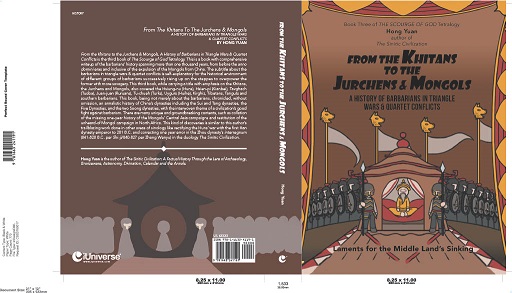
From the Khitans to the Jurchens & Mongols: A History of Barbarians in Triangle Wars and Quartet Conflicts
(available at iUniverse;
Google;
Amazon;
B&N)
|
|
MING DYNASTY
Expulsion of the Mongols
Ming Emperor Hongwu (Ming Taizu, Zhu Yuanzhang, r. 1368-1398)
Ming Emperor Jianwen (Ming Huidi, Zhu Yunwen, r. 1399-1402)
Ming Emperor Yongle (Ming Chengzu, Zhu Di, r. 1403-1424)
Ming Emperor Hongxi (Ming Renzong, Zhu Gaochi, r. 1425-1425)
Ming Emperor Xuande (Ming Xuanzong, Zhu Zanji, r. 1426-1435)
Ming Emperor Zhengtong (Ming Yingzong, Zhu Qizhen, r. 1436-1449)
|
Zheng Heh's 7 Naval Expeditions
Prof Wei Chu-Hsien & "China and America"
Japanese Piracy, Shogunate Tallies & Taiwan Island
Jesuit Visits To Ming China
Ming China's War With Portuguese
Ming China's War With Dutch
|
First Ming Emperor, Zhu Yuanzhang, like first Han Emperor (Liu Bang), was a commoner. Further, Zhu originally was a monk before joining the rebellion. Owning to this, there was a legend about the successor-emperor fleeing Nanking as a monk when attacked by his uncle, i.e., Yongle or Yung-Lo Emperor (Zhu Di). It was said that Zhu Yuanzhang had left a will saying that should there be an emergency, the young emperor could open up the will box. Inside the box would be the knife for haircutting and the gown of a monk. Yongle Emperor, after usurpation, moved the capital to Peking from Nanking. Ming Dynasty lasted 276 years with 17 emperors, till the Manchus came to power by taking advantage of Li Zicheng and Zhang Xianzhong's rebellions which forced the last Ming emperor hang himself inside of the Forbidden City.
Expulsion of the Mongols
The Mongols' discrimination against the Chinese should be the top cause for the ending of its rule in China. The other causes would be collusion with the Tibetan lamas in depriving the Chinese of their lands. The paper currency over-circulation, which caused inflation to go up ten folds during Yuan Emperor Shundi (Tuohuan-tiemu'er, A.D. 1333-1368)'s reign, should also be an important cause for its loss of power. Yuan's Prime Minister Toktoghan (Tuo Tuo), against an objection by a Chinese official (Lu Sicheng) in charge of Guo Zi Jian (i.e., the Confucian Academy), printed over five versions of paper currency. Still one more cause would be the Yellow River flooding as a result of the Mongols' abandoning the irrigation projects.
Still another reason would be the Mongols' revoking the 'gong [vassals' talents] ju [shire-level recommendation]' civil servants' exam system in February of A.D. 1334 as a result of Mongol 'you cheng-xiang' rightside prime minister Bo-yan's manipulation.
The Mongols, other than revoking the imperial exams in A.D. 1334, decreed to ban the ethnic-Han Chinese from possession of weapons in A.D. 1337.
When rebellions broke out in Henan and Guangdong in A.D. 1334, there was rumor that the Mongols would exterminate five surnames of Chinese.
In the Mongol ruling times, the Chinese agriculture lands were very much in wastage. Once hundreds of thousands of Chinese were called upon to work on the Yellow River, the time was ripe for a great rebellion.
Ten to twenty years before the Red Turbans' rebellion of A.D. 1351, the Chinese populace was fomenting for action, with rebellious ballads spread far and wide.
In A.D. 1334, white feather rained down on Zhangde, with an Old Man's [White] Whiskers' ballad talking about disturbance accompanying the feather rain.
When another white feather rain fell in A.D. 1337, ballads sang about cataclysm in the central plains' land.
In A.D. 1341, there was a red-color gust wind blowing through Zhangde from the northwestern direction and changing color to dark
In A.D. 1350, rumor went that a wolf and its 'bei' (i.e., hyena equivalent) companion, forming human shape, broke into people's houses to eat babies.
In A.D. 1351, hailstorm fell on Zhangde, with the icy stones destroying crops and trees, and harming or killing animals and people.
After the eruption of the Red Turbans rebellion,
in A.D. 1353, fire dropped down from heaven at the southwestern direction of the Zhangde-lu Circuit.
In A.D. 1356, reeds in Zhangde formed into shapes of banners and spears, plus millet forming into characters about peace or war, and the pear tree bearing cucumbers --that was said to cause people homeless.
In the same year, there was red-color air flow across the night sky in northwestern Zhangde.
In A.D. 1368, the canopy of a pagoda in the Tianning-shi Monastery changed color to redness, with the ballads talking about the red-clothed people becoming master when the pagoda turned red or otherwise the northern people master when red.
In history, China's dynastic substitution was mostly the results of usurpation, mutiny or foreign invasion, except for the Yellow Turbans of the Eastern Han Dynasty and the Red Turbans of the Yuan Dynasty.
China's dynasties were twice changed by the religious organizations, namely, Zhang Jiao's Daoist "Yellow Turbans" in the Han Dynasty, and Yuan Dynasty's Red Turbans that were related to the "Ming" [bright] religion. History, though a mirror, may not have to repeat.
(Religious agitations might not work in the 21st century, as in the case of the Fa Lun Gong movement. Religion-related rebellion that had crippled but failed to topple a dynasty would be the "White Lotus Society" and the "Taiping Heavenly Kingdom", incidentally. Similarly, I had also read about Wang Dan's interpretation of today's China as conducive to a similar Chen Sheng & Wu Guang's rebellion of the Qin Dynasty, which was in fact a mutiny by the army recruits.)
Religion was used by the Chinese in rebelling against the Mongols.
The secret societies rebelling against the Mongol rule would be in the form of mixed combinations of Taoism, Buddhist elements and Central Asia religions.
The major branches would include the White Lotus Society ("Bailian Jiao"), the White Cloud Society ("Baiyun" by Kong Qingjiao), and the "bright" religion ("Ming Jiao", ? a Zoroastrianism mutation).
Mao Ziyuan of the Southern Song Dynasty first founded the "White Lotus Society" as a Mahayanist sect of Buddhism with adoration for bodhisattva Amitabha; however, the sect had transferred the adoration to a different buddha [Maitreya Buddha?] by the Yuan Dynasty. (Later, in the 16th century, the "White Lotus Society" developed into hundreds of sub-sects, with occurrence of major uprisings against the Manchu rule in A.D. 1796.)
Radical Chinese historians, who had attributed Zhu Yuanzhang's Ming Dynasty to an alien rule belonging to the Muslims, had pointed the character "ming" to the fire adoration religion of Central Asia.
The Red Turbans, i.e., "Hongjin Jun", which overthrew the Mongol rule, derived from the "bright religion".
The Yellow River Flooding & The Red Turbans
The Yellow River flooding caused massive damages to people in today's Ji'nan area of Shandong Province. The Yellow River was purportedly first worked on by Lord Yu, and eight hundred years after, the Shang people began to experience the flooding again. Major river-course changes had occurred for over half a dozen times in the past 3500 years. During the 25th year reign of Yuan Emperor Shizu (Khubilai), i.e., A.D. 1288, the River changed course again. During the 1st year reign of Yuan Emperor Shundi, i.e., A.D. 1335, the river bank was breached at today's Kaifeng, Henan Province; in A.D. 1344, the river was breached at the Caozhou Prefecture and Kaifeng; in A.D. 1345, breached near Ji'nan, Shandong Province. A Chinese official, by the name of Jia Lu, proposed to have the river course changed to the Huai-sui River in the south. Toktoghan dispatched an official, Cheng Zun, on an inspection trip. Cheng Zun proposed an alternative scheme by citing the fact that there were not enough royal savings for a huge project like Jia Lu's and that any mobilization of like 200,000 laborers might cause social instability. Toktoghan, angry with Cheng Zun for the suggestion that the people might rebel, would petition with Emperor Shundi to have Jia Lu take charge of 170,000 soldiers and laborers and work on revamping the Yellow River course.
The Yuan court ordered that 150,000 peasants from three circuits, including Bianliang (Kaifeng) and Daming, work on the river. The Mongols further dispatched a 20,000-men army as supervisors.
Jia Lu started work in April of A.D. 1351 and finished work in July of the same year.
The White Lotus Society, led by Haan Shantong (from Yingzhou of Henan Province) and Liu Futong (from Luancheng of Henan Province), had secretly implanted a one-eye stone statute in the Huanglinggang area and then spread a rumor stating that rebellion would erupt should a stone man with one eye be dug up from the Yellow River bed. Jia Lu did not pay attention to the stone man and ordered that it be destroyed when it was dug up.
Haan Shantong, who faked as the 8th generation grandson of Northern Soong Emperor Huizong, declared himself jiu shi ming wang, i.e., the bright-minded king for the salvation of mankind, and rebelled in the Ru-Ying areas of Henan Province.
After Haan Shantong was caught by the Mongols, son Haan Lin'er and mother fled to seek asylum the Taihang-shan mountains in Wu'an, while Liu Futong fled southward to the Huai-shui River area.
In A.D. 1351, Liu Futong, after the Yuan Dynasty arrested and executed Haan Shantong, rallied an army called the 'Red Turbans' at Yingzhou [near today's Jieshou, Anhui Province].
Liu Futong declared the dynasty of 'Soong' and based his army in Bo-zhou.
Liu Futong's army, in A.D. 1351, took over the area of today's Mt. Dabieshan. In A.D. 1352, Liu Futong laid siege of Luzhou (today's Hefei).
In A.D. 1355, Liu Futong fetched and supported Haan Shantong's son (Han Lin'er) as a leader at Bozhou.
After losing Bozhou to the Mongols, Liu Futong set the capital at Anfeng. In A.D. 1357, Liu Futong led a northern expedition to sack Bianliang (Kaifeng) before retreating back to Anfeng where they persisted for four years and nine months against the Mongols.
Cai Dongfan commented that the Mongols should have hired the displaced Shandong people as labor for repairing the Yellow River rather than mobilizing 170,000 people for the project.
Answering the 'Red Turbans' rebellion would be several more bands, including: Li Er (Sesame Lee)-Peng Da-Zhao Junyong in Xuzhou of Shandong Province; Xu Shouhui (a cloth vendor from Luotian, but with hometown in today's Hunan Province) and ironsmith Zou Pusheng rebelled in Qi-shui of Hubei Prov in A.D. 1351, and declared the "Tian-wan [heaven perfect]" dynasty. Xu Shouhui, who controlled the mid-Yangtze region, played a similar role to the revolutionaries in the later 1911 Xinhai Revolution. Guo Zixing from Dingyuan rebelled against the Yuan Dynasty in the Hao-Liang areas in A.D. 1352. Zhang Shicheng (a salt merchant from Taizhou of Jiangsu), a non-Red-Turban, rebelled against the Yuan Dynasty at Baujuchange, in Gaoyou (today's Xinghua and Dafeng) of Jiangsu Prov in A.D. 1353.
Before that, in A.D. 1348, Fang Guozhen (a salt worker and a pirate from Huangyan of Fujian Province) had rebelled against the Mongols in Taizhou & Wenzhou of today's Zhejiang Province.
Xu Shouhui declared the dynastic era of Tianwan and formed the "Tian-wan [heaven perfect]" Red Turbans.
Serving under Xu Shouhui would be a rebel leader called Chen Youliang, a former county official, from Mianyang (Xiantao) of today's Hubei Province, who answered Xu Shouhui's rebellion in A.D. 1355.
Across the country, pro-Mongol strongmen and landlords sprang up to organized militia to
fight the Red Turbans. This was a repeat of history at the time of China’s dynastic violence, when
locals organized militia to counter the rebels as a result of collapse of the regime and disruption of
order, especially true when the Mongol hereditary kings and nobles, after three to five generations
of decadence, completely lost the fighting will and capabilities. Li Siqi in Luoshan of Henan, and Li
Cha’er (Chahan-tiemu’er/Cayan-temur/Chaghan-temur) from Shenqiu of Ying3zhou in Henan, who was
an ethnic-Naiman by the Chinese surname, launched an army in A.D. 1352, and defeated the Red
Turbans at Luoshan, for which Chaghan-temur was appointed the post of ‘da-lu-hua-chi’ (baskak) for
Henan. In the Hu-Guang area, Yang Tongguan (Yang-wanzhe/Oljai) and father Yang Zhengheng, who
belonged to the Yang-surnamed southern aboriginal tribe from the Shidong-fei-shan mountain in
today’s Shaoyang and Huaihua of Hunan, organized tribesmen as King Qin2-wang (king who aided the
emperor) and helped Mongol Yuan General Dashi-tiemu’er in defeating rebel Xu Shouhui in A.D. 1352
and taking Wuchang.
By the spring of A.D. 1353, the “Tian-wan [heaven perfect]” Red Turbans encountered setbacks,
with Peng Yingyu killed at Ruizhou of Jiangxi in November. In December, the Mongol Yuan army,
under the command of Buyan-tiemu’er, Mazi-haiya, ‘Sichuan xingsheng canzhi zhengshi4’ Halin-
tu, ‘zuo-cheng’ Tu-shi-li and King Xining-wang Ya-han-sha, attacked and sacked the Tianwan
capital city of Qishui, with over 400 Tianwan officials and generals killed. Xu Shouhui fled to mount
Huangmei-shan (yellow plum) and Mian2yang-hu lake for asylum. During the low-tide time period,
Zhang Shicheng launched rebellion in January of A.D. 1354, which diverted the Mongol Yuan army’s
attention.
Zhang Shicheng declared himself King Chengwang and the dynasty of 'Zhou'.
In A.D. 1360, Chen Youliang killed Xu Shouhui, and launched the dynasty of Great Han.
During the turmoil years, the Sichuan basin was controlled by Ming Yuzhen.
Toktoghan advised Emperor Shundi to put down the rebellion in Henan Prov first. Since Shundi did not want Toktoghan leave the court, Toktoghan's brother, Yexian-temur, was ordered to quell the rebellion with an army of over 100,000. Yexian-temur first attacked the city of Shangcai and captured a Red Turban leader called Han Yao'er.
Next, the Mongol army would defeat Li Er (Sesame Lee). However, Yuan Emperor Shundi indulged himself in lust with his women under the sexual help of lamas from the West (i.e., Tibet and Central Asia) and concentrated his efforts in obtaining and practicing the secret sexual skills from the lamas. Toktoghan was exiled, and cunning ministers, like Ha-ma brothers and Tulu-timur, were retained at the court.
In A.D. 1354, Zhang Shicheng defeated the Mongol siege of Gaoyou, which was to do with Toktoghan's sacking.
After crossing the Yangtze to the south, Zhang Shicheng later in A.D. 1355 declared himself King of Wu in Pingjiang (today's Suzhou). Famous authors, such as Shi Naian and Luo Guanzhong, had at one time joined Zhang Shicheng's rebellion. Zhang Shicheng, in the early part of the rebellion, played a significant role in impeding the Mongol Yuan army at the Yangtze line.
By A.D. 1356, the Tianwan dynasty controlled the territories of the middle and upper Yangtze,
Lake Dongting-hu, Lake Poyang-hu, the Sichuan basin, Yuan-zhou (Yichun of Jiangxi, under the control
of Ou Puxiang), and Chizhou (under the control of Zhao Pusheng). In September of A.D. 1357, Ni Wenjun
purportedly rebelled against Xu Shouhui. Chen Youliang attacked and killed superior Ni Wenjun who
fled to Huangzhou after an aborted assassination attempt, and called himself King Qin2-wang, i.e.,
the king who went to the aid of the emperor. In October of A.D. 1358, Chen Youliang’s water-borne
army [with ships built at Mian2yang], which converged with Zhao Pusheng and Zhu Zong (who controlled
Raozhou), campaigned against Anqing. The rebels, after three months’ battles, took over Anqing in
January of A.D. 1359, with Yuan ‘Huai-nan xingsheng zuo-cheng’ Yu Que committing suicide at
Anqing. The rebels also took over Longxing-fu, Ruizhou-fu, Shaowu, Ji’an, Fu-zhou (Linchuan of
Jiangxi), Jianchang, Ganzhu, Tingzhou, Xin4zhou and Quzhou. In December of A.D. 1359, Xu Shouhui
intended to relocate the capital city to Nanchang. Chen Youliang, who already killed Tianwan dynasty
General Zhao Pusheng, abducted Xu Shouhui at Jiangzhou while the latter was en route of relocation
to Nanchang from Hanyang.
First Ming Emperor Zhu Yuanzhang
Excelling among the rebels would be Zhu Yuanzhang who served under Guo Zixing. Zhu Yuanzhang was born in Zhongli County of Haozhou Prefecture where his father Zhu Shizhen had relocated from the neighboring Sizhou Prefecture. Zhu Yuanzhang, originally sent to a rich man's family as a shepherd by his parents, left for the Buddhist Monastery of Huangjueshi at the age of 17 in A.D. 1344 after his parents and
three elder brothers died of famine and epidemics. Zhu Yuanzhang, having suffered bullying in the hands of fellow monks for three years after the death of the Elder Monk, would leave the monastery as a traveler-monk for three years. After witnessing the famine, epidemics and poverty in the world, Zhu Yuanzhang returned to the monastery, only to find it vacant. At the old monastery, Zhu Yuanzhang spent another 3-4 years. In February of 1352, Guo Zixing and Sun Deya rebelled against Yuan Dynasty. Yuan Dynasty General Che-li-bu-hua, being afraid of fighting the rebels, caught and killed the innocent civilians to pretend as the captured and defeated rebels. Villagers around the monastery dispersed, and Zhu Yuanzhang, after throwing 'milfoil divination' at the buddha, conceived the idea of joining the Guo Zixing rebellion. Zhu Yuanzhang broke through Guo Zixing's camp at Haozhou (near Hao-shui River of Anhui Province) and was caught and bound for inspection by Guo Zixing. When Zhu Yuanzhang complained about the soldiers' disrespect for the 'brave man', Guo Zixing showed great interest in him and assigned him the job of a personal bodyguard. As appreciation of Zhu Yuanzhang's bravery in the battles and fighting, Guo Zixing promoted Zhu Yuanzhang to 'column chief' and Guo Zixing's wife, i.e., Zhang-shi, further married over their adopted daughter Ma-shi to Zhu Yuanzhang as a wife. Ma-shi was an adopted daughter whom Guo Zixing took over from his slick-throat pal at Suzhou. (Mediocre sinologists often associated the surname of 'ma' with the Muslims and further assigned the ancestry of those Muslims to Central Asia. Hence, Zhu Yuanzhang's wife was taken as a Muslim of Central Asia ancestry similar to Zheng He the traveler.)
After the Mongol Yuan army, under Jia Lu, sacked Xuzhou and defeated Sesame Li, two banditry heads (Peng Da and Zhao Junyong) fled to seeking asylum with Guo Zixing at Haozhou. Jia Lu chased the banditry to Haozhou, defeated Guo Zixing outside of the city, and laid a siege of the city. Sun Deya, a Guo Zixing crony, broke through the siege line to the relief of Haozhou, but Sun Deya colluded with Zhao Junyong in placing Guo Zixing under the house arrest. Zhu Yuanzhang broke though Sun's camp and rescued Guo. 3-4 months later, the next year, Mongol army withdrew from the siege after Jia Lu fell sick and passed away. Zhu Yuanzhang was authorized to go back to his hometown for recruiting 700 soldiers, among whom would be
24 founding generals of Ming Dynasty: Xu Da, Tang He, Wu Liang, Wu Zhen, Hua Yun, Chen De, Gu Shi, Fei Ju, Geng Zaicheng, Geng Bingwen, Tang Shengzong, Lu Zhongheng, Xu Yunlong, Zheng Yuchun, Guo Xing, Guo Ying, Hu Hai, Zhang Long, Chen Huan Xie Cheng, Li Xincai, Zhang He, Zhou Quan and Zhou Dexing.
At the advice of Xu Da, Zhu Yuanzhang led 24 cronies southward to the Dingyuan area for a campaign. Zhu Yuanzhang took over a banditry castle at Zhangjiabao near Dingyuan and subdued 3000 men. Thereafter, Zhu Yuanzhang ordered that Hua Yun take over another banditry site at Hengjianshan Mountain where they subdued 20,000 men. The smaller banditry nearby submitted to Zhu Yuanzhang. Two brothers from the Dingyuan area, Feng Guoyong and Feng Guosheng, came to serve Zhu and recommended that Zhu campaign further southward to take over Nanking as the cauldron-setting place. A more intellectual figure by the name of Li Shanchang came to see Zhu Yuanzhang for a proposal of imitating first Han Dynasty Emperor Liu Bang who obtained the throne within 5 years of rebellion. Li Shanchang was assigned the post of bookkeeper. Hua Yun took over Tuyang, and Zhu's army quelled the neighboring cities and castles. At Tuyang, Zhu converged with two nephews (Wen Zheng and Li Wenzhong) and one adopted son (Mu Ying). Meanwhile, Peng Da and Zhao Junyong left Sun Deya in charge of Haozhou, and compelled Guo Zixing into a move to Sizhou. After Zhao Junyong killed Peng Da, Zhu Yuanzhang managed to bribe Zhao Junyong to have Guo Zixing retrieved from Sizhou. Zhu's wife came to Tuyang-cheng together with Guo Zixing, and later mitigated the differences between her husband and her adopted father several times.
In A.D. 1357, Liu Futong ordered a northern expedition against the Mongols and personally led
an army to sack Bianliang (Kaifeng) before retreating back to Anfeng where they persisted for four
years and nine months against the Mongols. In February of A.D. 1357, i.e., the seventeenth year of
the Zhizheng Era, Mao Gui, a general of the rebel Soong dynasty, crossed the sea to attack and sack
Jiaozhou; and in March, Mao Gui took Laizhou and Yi4du. Meanwhile, rebel Soong generals Li Wu
and Cui De bypassed the Tong-guan Pass to sack Qipan (seven plates) and Lantian, and attacked the
Fengyuan-lu circuit. In May, Liu Futong personally commanded a Soong army to attack Bianliang and
defeated Mongol General Zhu-zhen, with the remaining army divided into three northern expedition
columns: Guan Duo, Pan Cheng, and Sha Liu’er attacked Huaiqing, and went deep into Shanxi and
Hebei; Bai Buxin, and Da-dao-Ao went west to take Guanzhong; and Mao Gui continued to attack
north from the Shandong peninsula. Serving under Liu Futong would be a future Ming dynasty
general by the name of Fu Youde (A.D. 1327-1394) who followed Red Turban General Li Xi (Li Xixi)
in attacking Fengxiang in the autumn of A.D. 1357 as the western route army.
In A.D. 1358, after a defeat, Mao Gui aborted the northern expedition and returned to Ji’nan.
In May, Liu Futong captured Bianliang and retrieved Haan Lin’er from Anfeng (Shouxian of Anhui),
making Bianliang the capital of the Soong dynasty. In January of A.D. 1359, Guan Duo, Pan Cheng,
and Sha Liu’er’s rebel army, penetrating deep into the steppe, attacked the Quanning-lu circuit and
burned the palace of Mongol King Lu-wang, further attacked and sacked the Mongol Shangdu
(Xanadu) capital city and burnt it, and after seven days’ stay at Shangdu, attacked and sacked Liaoyang
to the east and intruded into the Koryo territory. The Red Turbans at one time in A.D. 1359 sacked
Pyongyang in today’s North Korea. After being defeated in A.D. 1360, the Red Turbans invaded into
the Korean peninsula again in A.D. 1361 and sacked Kaesong, with the Koryo king fleeing south and
not returning to the city till A.D. 1363.
When the Mongol army, under prime minister Tuotuo, defeated Zhang Shicheng at Taizhou of Jiangsu Prov and lay siege of the neighboring Luhe city, Zhu Yuanzhang would petition for a relief with 10,000 men. Tuotuo, while engaging Zhu Yuanzhang's army, would order a secretive march against the Tuyang city. Zhu returned to the aid of Tucheng and defeated Yuan Dynasty's Mongol army at a creek crossing. Thereafter, Tuotuo was deprived of his posts and exiled to the northern border areas. A brave man by the name of Hu Dahai came to serve Zhu Yuanzhang at Tuyang.
By A.D. 1355, Zhu Yuanzhang led a campaign at the neighboring Heyang city by disguising 3000 green-uniform Luzhou turncoat soldiers as Yuan Dynasty's imperial bestowal column.
During the later stages of rebellion, only Chen Youliang, Zhu Yuanzhang and Zhang Shicheng remained.
In A.D. 1357, Zhang Shicheng, who had crossed the Yangtze to set his capital at Wujiang, was defeated by Zhu Yuanzhang's army.
Zhang Shicheng, following Fang Guozhen's footsteps, accepted the Mongol pacification. With the Mongol support, Zhang extended his domain as far north as Jining of Shandong, controlling the Canal line.
The Mongols mainly concentrated the army against Zhu Yuanzhang. Zhang Shicheng had collusion with the Mongols in attacking Zhu Yuanzhang.
In southern and central China, the competing force against Zhu Yuanzhang would be Xu Shouhui and Chen Youliang's "tian-wan" dynastic army in the mid-Yangtze area. By A.D. 1360, Chen Youliang fully usurped the "tian-wan" domain. Chen Youliang and Zhu Yuanzhang then engaged with each other in many years of wars. From A.D. 1360 to 1363, three navy battles were fought on the Poyang-hu Lake, ending in Chen's defeat and death.
Similar to Huang Chao's routing the Arab-Persian paramilitary regime in Canton in the 9th century A.D., an international trading metropolis, Chen Youding, a strongman in Southeastern China, quelled the local rebels, received the Mongol Yuan conferral as a governor-general, marched to southeastern coast where they in A.D. 1366 eradicated an Arab-Persia ghetto that took advantage of the nationwide rebellion to have founded an alien kingdom.
The Arab-Persians controlled Quanzhou since the 1270s, when they colluded with the Mongols in defeating the Southern Soong dynasty.
Quanzhou, as a trading port, could be the most prosperous city of the world in the 13th-14th centuries. However, the same predictable Cycle in Cathay and its violent cycle at the time of regime change would see the Arab-Persian paramilitary Quanzhou regime wiped out by Chen Youding, a competitor to Ming Dynasty founding emperor Zhu Yuanzhang.
Quanzhou, after suffering the Ming dynasty's sea ban policies, would further fall into disgrace when the Manchus adopted the scorched-beach policy in the 17th century A.D., a policy that was designed to segregate the Ming Chinese remnants in Taiwan and Southeast Asia from mainland China.
In A.D. 1263, Zhang Shicheng's army laid siege of the "Da-song" army, which was under the helms of Liu Futong and Haan Lin'er.
Liu Futong sought relief with Zhu Yuanzhang who fetched them for asylum in Tuzhou. It was said that two years later Zhu Yuanzhang's general, Liao Yongzhong, taking "Da-song" king Haan Lin'er to today's Nanking to the south, killed the boy king by sinking him in the Yangtze near Guazhou.
After finishing up Chen Youliang, Zhu Yuanzhang launched the attack against Zhang Shicheng's army.
In A.D. 1364, Zhu Yuanliang declared himself the same title of King Wu as Zhang Shicheng.
In A.D. 1365, Zhu Yuanzhang began to launch campaigns against Zhang Shicheng, beginning with the north-of-the-Yangtze campaign, and following through with the attack against Huzhou to the south of Lake Taihu, and finally sacking Pingjiang at the lakeside.
Zhang Shicheng was caught and killed in A.D. 1367.
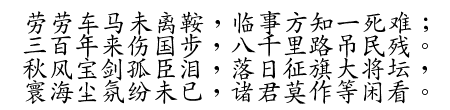
After quelling middle and central China, Zhu Yuanzhang launched the northern campaign against the Mongols.
In January of A.D. 1368, Zhu Yuanzhang promulgated the launch of the Da-Ming dynasty (A.D.
1368-1644) with the Hongwu Era, setting Yingtian (Nanking) as the southern capital and Kaifeng the
northern capital. Chen Zuren petitioned with the Yuan emperor for pardoning Wang-baobao (Koketemur)
for countering rebel Zhu Yuanzhang. Yuan Emperor Shundi in A.D. 1368 revoked Wang-baobao
(Koke-temur)’s titles and posts, and continued to order the Mongol Yuan army to attack Wang-baobao.
Tuo-huo-chi, who was previously sent to Shandong for countering the Ming army,
was ordered in February of A.D. 1368 to attack Wang-baobao’s army in the Jinnning-lu circuit rather
than countering the Ming expedition army. Wang-baobao pulled back to Jinning (Linfen) to continue
resistance against the Yuan government troops. While attacking the Jinnning-lu (Linfen) circuit,
Weisaiyin-buhua died of illness. To the west, a Ming army contingent under the command of Deng
Yu mounted a northern expedition from Xiangyang and took over Nanyang. With the Ming army
intruding to Henan, Li Siqi and Zhang Liangbi withdrew army into the Tongguan Pass for defending
Guan-zhong. After Xu Da and Chang Yuchun’s Ming army took over the Hulao-guan Pass, Li Siqi
wrote to Wang-baobao for a concerted fight; however, Mo-gao and Guan Bao continued the siege
of Jinning. Feng Sheng’s Ming army continued attacking west and took over the Tong-guan Pass.
Li Siqi fled to Fengxiang and Fucheng. In June, Zhu Yuanzhang ordered Xu Da to attack the Yuan
capital city. At this time, Wang-baobao broke out of Jinning and defeated Mo-gao and Guan Bao,
and obtained the Yuan emperor’s conferral as King ‘qian-he (front of the Yellow River) Nan-wang’,
and appointments as ‘tai-fu’ and ‘zhongshu zuo-chengxiang’. Wang-baobao was ordered to defend
Zhangde and Weihui in the middle; ‘tai-bao’ and ‘zhongshu you-chengxiang’ Ye-su was to defend
the eastern territories; ‘shao-bao’ and ‘Shenxi xingsheng zuo-chengxiang’ Tu-lu was to exit the Tongguan
Pass for recovering the He-Luo territories, i.e., Luoyang; and ‘tai-wei’ and ‘pingzhang zhengshi4’
Li Siqi was to exit Qipan, Jin[zhou] and Shang[luo] for attacking towards Luoyang. While Li Siqi took
no action, Wang-baobao, instead of going through the Jingxing-guan Pass to converge with Ye-su’s
army at Hejian, relocated northward to Yunzhong (Datong).
Ye-su failed to resist the Ming army which swept north towards Dadu while guarding against the
possible cut-in-the-waist move by Wang-baobao’s army from Shanxi. In August of A.D. 1368, the
Ming army breached the Qihua-men gate of Dadu (Peking), i.e., the capital of the Yuan Dynasty, and
expelled the Mongols to the steppe, ending the Mongol Yuan dynasty’s rule over the area south of the
Great Wall. At Dadu, the Ming army executed some top Yuan ministers, including Ding Haoli who
volunteered to be killed. Days ago, Emperor Shundi opened the Jiande-men gate to flee to Shangdu at
night. As recorded in the annals, when the Ming army captured Dadu (Peking) from the Mongols, there
was a Roman emissary stranded there and Ming Emperor Zhu Yuanzhang made special arrangement
for the Roman, likely some staff from Giovanni de’ Marignolli’s mission, to return to his country via
a merchant fleet. Emperor Shundi, while en route of fleeing north to Kaiping (Duolun), reinstated
Wang-baobao, made him King Qi2-wang, and ordered Wang-baobao to detour around the Yanmenguan
and Juyong-guan passes for recovering Dadu (renamed to Beiping by then). Emperor Shundi, with
the arrival of ‘Liao-dong can-zheng’ Saiyin-tiemu’er’s 5000 cavalry, ordered the crown prince to set
up a defense line at Hongluoshan, and called on Koryo to send a relief army. Xu Da sent Xue Xian,
Fu Youde, Cao Liangchen and Gu Shi to chasing the Mongols. Near the Juyong-guan Pass, Ha-qi-kulu-
ke, son of Mongol King Tu-mu-le-hu-ba-tu-er (a descendant of Ha-sa-er/Hasar/Jochi-Kasar, i.e., Genghis
Khan’s brother), was killed while being sent to the aid of the Yuan emperor from northern Mongolia-
Manchuria. The Ming army, to the north of Dadu, encountered militia resistance. At Jiming-shan-zhai
(rooster crow palisade) and Huailai, the Ming army defeated and massacred the militia forces.
Xu Da, taking advantage of Wang-baobao’s vacating Taiyuan, attacked into Shanxi, defeated
Wang-baobao who was returning to the aid of Taiyuan, and forced Wang-baobao into fleeing to
Datong and subsequently the steppe for rerouting to Gansu to the northwest. It was Fu Youde who
took a cavalry army in raiding Wang-baobao’s army and chasing Wang-baobao to Tumen-guan (mud
gate pass), and further defeated Heh Zongzhe at Shi2zhou (stony prefecture) and Tuo-lie-bo at Xuanfu
before converging with Xu Da for the siege of Qingyang in western China. After taking Shanxi, the
Ming army under the command of Feng Sheng invaded into Shenxi. Li Siqi surrendered to the Ming
army while Zhang Liangbi was killed. In June of A.D. 1369, the Ming army sacked Daxing-zhou and
caught Mongol Yuan ‘zhongshu you-cheng[xiang]’ Tuo-huo-chi. The Ming army under the command
of Chang Yuchun attacked Shangdu, which forced Emperor Shundi to flee to Yingchang (Dalai-nur of
Hexigten Banner, near Chifeng). Days later, the Ming army sacked Shangdu.
For the hundreds of years to come, the Ming dynasty was to engage in the battles against the
remnant Mongol and non-Mongol tribes including the Oirats, the three Uriankhai tribes, and Yisudar
and Elbeg-nigulesugci (speculated by Inner Mongolian historian Baoyindeligen to be Yuan Emperor Shundi’s
released captive-grandson Maideli-bala [Maidili-bala], r. A.D. ?-1399)’s Menggu (i.e., neo-Dada [Da2da2])
tribe - that was succeeded by the later Chahar (Cahar/Chakhar) khanate.
Ultimately, Ming China’s enemy still
laid in the old feuds, i.e., the barbarians of the steppes, with wars continuing for hundreds of years
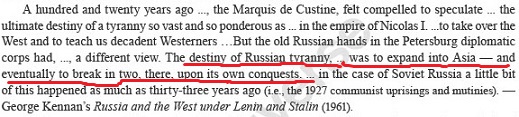
till being overcome by the more savage Tungusic enemy, i.e., the Manchus, who were to emerge as a
deadly strong power in the 17th century. The fall of China in A.D. 1644 for a second time in the hands
of the barbarians became another violent cycle of Cathay that saw China’s population decimated again
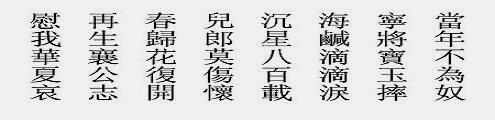
(from 51,655,459 headcounts in A.D. 1620 to 10,633,326 in A.D. 1651) and became the lasting laments for
the middle land’s sinking.
The Scourges-of-God Tetralogy
would be divided into four volumes covering
Hsiung-nu (Huns), Hsien-pi (Xianbei), Tavghach
(Tuoba), Juan-juan (Ruruans), Avars, Tu-chueh (Turks), Uygurs (Huihe), Khitans, Kirghiz, Tibetans, Tanguts, Jurchens, Mongols and Manchus and
southern barbarians.
Book I of the tetralogy would extract the contents on the Huns from
The Sinitic Civilization-Book II,
which rectified the Han dynasty founder-emperor's war with the Huns on mount Baideng-shan to A.D. 201 in observance of the Qin-Han dynasties' Zhuanxu-li calendar.
Book II of the Tetralogy would cover the Turks and Uygurs.
And
Book IV would be about the Manchu conquest of China.
From the Khitans to the Jurchens & Mongols: A History of Barbarians in Triangle Wars and Quartet Conflicts
, i.e., Book III of
the Scourge-of-God-Tetralogy,
focused on the Khitans, Jurchens and Mongols, as well as provided the annalistic history on the Sui and Tang dynasties, the
Five Dynasties & Ten Kingdoms, and the two Soong dynasties.
Similar to this webmaster' trailblazing work in rectifying the Han dynasty founder-emperor's war with the Huns to 201 B.C. in The Sinitic Civilization - Book II,
this Book III of the Scourge-of-God-Tetralogy
collated
the missing one-year history of the Mongols' Central Asia campaigns and restituted the
unheard-of Mongol campaign in North Africa.
|
The Scourges of God: A Debunked History of the Barbarians" - available at iUniverse|Google|Amazon|B&N
From the Khitans to the Jurchens & Mongols: A History of Barbarians in Triangle Wars and Quartet Conflicts
(The Barbarians' Tetralogy - Book III)
Epigraph,
Preface,
Introduction,
Table of Contents,
Afterword,
Bibliography,
References,
Index
|
|
Table of Contents
(From the Khitans to the Jurchens & Mongols: A History of Barbarians in Triangle Wars and Quartet Conflicts)
Chapter XLI: The Red Turbans' Rebellion Against the Mongols.........................................................701
Chapter XLII: The Ming Dynasty vs. the Mongols ............................................................................720
|
|
Ming Emperor Hongwu (Ming Taizu, Zhu Yuanzhang, r. 1368-1398)
Ming Emperor Jianwen (Ming Huidi, Zhu Yunwen, r. 1399-1402)
Ming Emperor Yongle (Ming Chengzu, Zhu Di, r. 1403-1424)
Ming Emperor Hongxi (Ming Renzong, Zhu Gaochi, r. 1425-1425)
Ming Emperor Xuande (Ming Xuanzong, Zhu Zanji, r. 1426-1435)
Ming Emperor Zhengtong (Ming Yingzong, Zhu Qizhen, r. 1436-1449)
TO BE CONTINUED !
Written by Ah Xiang
|
|
|
|
|
|
|
Sovereigns & Thearchs;
Xia-Shang-Zhou dynasties;
Zhou dynasty's vassalage lords;
Lu Principality lords;
Han dynasty's reign years
(Sexagenary year conversion table-2698B.C.-A.D.2018; 247B.C.-A.D.85)
|
|
The Sinitic Civilization - Book I is
available now on
iUniverse,
Barnes & Noble,
Amazon,
Google Play|Books
and
Nook.
The Sinitic Civilization - Book II is
available at
iUniverse,
Amazon and Barnes & Noble.
Check out the 2nd edition preface that realigned the Han dynasty's reign years strictly observing the Zhuanxu-li calendar of October of a prior lunar year to September of the following lunar year, and the 3rd edition introduction that had an overview of Sinitic China's divinatory history of 8000 years.
The 2nd edition preface had an overview of the epact adjustment of the quarter remainder calendars of the Qin and Han dynasties, and the 3rd edition introduction had an overview of Sinitic China's divinatory history of 8000 years.
The 2nd edition realigned the Han dynasty's reign years strictly observing the Zhuanxu-li calendar of October of a prior lunar year to September of the following lunar year.
Stayed tuned for Book III that is to cover the years of A.D. 86-1279, i.e., the Mongol conquest of China, that caused a loss of 80% of China's population and broke the Sinitic nation's spine.
Preview of annalistic histories of the Sui and Tang dynasties, the
Five Dynasties, and the two Soong dynasties
could be seen in
From the Khitans to the Jurchens & Mongols: A History of Barbarians in Triangle Wars and Quartet Conflicts
(The Barbarians' Tetralogy - Book III: available at iUniverse;
Google Play|Books;
Amazon;
B&N).
(A final update of the civilization series is scheduled for October of 2022, that would put back the table of the Lu Principality ruling lords' reign years, that was inadvertently dropped from Book I during the 2nd update.)
|
|
Now, the Scourge-of-God-Tetralogy.
Book III of
The Barbarian Tetralogy, i.e., this webmaster's barbarism series, is released in October of 2022 by iUniverse. This barbarism series would be divided into four volumes covering the Huns, the Xianbei, the Turks, the Uygurs, the Khitans, the Tanguts, the Jurchens, the Mongols and the Manchus.
Book I of the tetralogy would extract the contents on the Huns from
The Sinitic Civilization-Book II,
which rectified the Han dynasty founder-emperor's war with the Huns on mount Baideng-shan to A.D. 201 in observance of the Qin-Han dynasties' Zhuanxu-li calendar.
Book II of the Tetralogy would cover the Turks and Uygurs.
And
Book IV would be about the Manchu conquest of China.
From the Khitans to the Jurchens & Mongols: A History of Barbarians in Triangle Wars and Quartet Conflicts
, i.e., Book III of
the Scourge-of-God-Tetralogy,
focused on the Khitans, Jurchens and Mongols, with the missing one-year history of the Mongols' Central Asia campaigns rectified.
This webmaster, other than the contribution to the Sinology studies in rectifying the Huns' war to 201 B.C., and realigned the missing one-year history of the Mongol Central Asia war, had one more important accomplishment, i.e., the correction of one year error in the Zhou dynasty's interregnum (841-828 B.C. per Shi-ji/840-827 per Zhang Wenyu) in
The Sinitic Civilization-Book I, a cornerstone of China's dynastic history.
|
The Scourges of God: A Debunked History of the Barbarians (available at iUniverse|Google Play|Google Books|Amazon|B&N)
From the Khitans to the Jurchens & Mongols: A History of Barbarians in Triangle Wars and Quartet Conflicts
(The Barbarians' Tetralogy - Book III)
Epigraph,
Preface,
Introduction,
Table of Contents,
Afterword,
Bibliography,
References,
Index
|
|
|
|




 ***
***


![Though, Anna Wang [Anneliese Martens], in her memoirs, expressed jealousy over Gong Peng by stating that the Anglo-American reporters had flattered the Chinese communists and the communist movement as a result of being entranced with the goldfish-eye'ed personal assistant of Zhou Enlai](GongPeng.jpg)