Sinitic Civilization-Book 1
Sinitic Civilization-Book 2
Tribute of Yu

Heavenly Questions
Zhou King Muwang's Travels
The Legends of Mountains & Seas
The Bamboo Annals - Book 1
The Scourge-of-God-Tetralogy:
From the Khitans to the Jurchens & Mongols: A History of Barbarians in Triangle Wars and Quartet Conflicts
(available at iUniverse;
Google;
Amazon;
B&N)
|
|
America, i.e., the United States, was and is still shortsighted today, not knowing that Korea, at one time paradise of the American Evangelicals, was delivered into the hands of the Japanese imperialists as a result of the Anglo-American confrontation against Czar Russia, and in this geopolitical process, China, the land of the Great Sinitic Civilization (Barnes & Noble,
Amazon,
Google Play|Books
and
Nook Book), was made into a piggy-backed sacrificial/funereal object -the land ruled by the most evil cult called 'communism' that was an 'import' or an 'export' of Soviet Russia.
America would not learn the lesson that the geopolitical actions it is taking today would yield the 'bad fruit' 50 years or 100 years down the road.
America, and their British cousins, must have forgot the twenty-year Anglo-Japanese military alliance that allowed Japan to develop the warplanes and aircraft carriers to invade mainland China, not to mention the post-WWI ten-year arms embargo against Republic China and George Marshall's post-WWII arms embargo against Republic China 1946-1948.
They forgot that in 1931, President Herbert Hoover gave Japan a free hand in the invasion of Manchuria on the pretext that Japan could not tolerate a half-Bolshevik China.
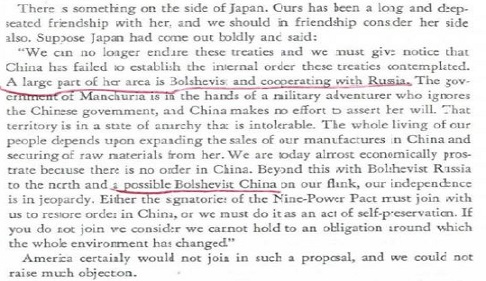 Earlier, President Hoover, who personally nipped the post-WWI communist uprisings in Germany and Hungary with the grains embargo, fed Lenin the ingenuity, i.e., the [worldwide communist revolution] road to Paris lay through Peking.
They of course forgot that
after the eruption of the 1937 Sino-Japanese War, the Americans, biased towards Japan and against China, adopted a policy of "neutrality" (what Utley called by "unpositive neutrality") against the 'belligerent' countries, namely, Japan and China, which was free and unrestrained arms sale to Japan and de facto arms embargo against China.
Note that the Japanese navy had a full blockade of China's coastline.
Note that the blockade would choke China since China did not have an industrial base to produce the basic weapons while Japan's factories could roll out the warships and airplanes on a wholesale scale.
Also note that in contrast with the Americans, the European powers, being constrained by the mediation role of the League of Nations, dared not openly sell arms to Japan.
Through 1940-1941, prior to the U.S. revocation of the 1911 U.S.-Japan Commerce Treaty, the Americans were the biggest supplier of raw material, oil, aviation oil, and weapons, to the extent that some U.S. senator called by Scott making a claim that out of every one million Chinese killed by the Japanese, 544,000 Chinese were killed by the Americans.
Thirty-one U.S. congressional members made a joint declaration to the effect that the U.S., not NAZI Germany, nor Italy, was the best ally of Japan.
Earlier, President Hoover, who personally nipped the post-WWI communist uprisings in Germany and Hungary with the grains embargo, fed Lenin the ingenuity, i.e., the [worldwide communist revolution] road to Paris lay through Peking.
They of course forgot that
after the eruption of the 1937 Sino-Japanese War, the Americans, biased towards Japan and against China, adopted a policy of "neutrality" (what Utley called by "unpositive neutrality") against the 'belligerent' countries, namely, Japan and China, which was free and unrestrained arms sale to Japan and de facto arms embargo against China.
Note that the Japanese navy had a full blockade of China's coastline.
Note that the blockade would choke China since China did not have an industrial base to produce the basic weapons while Japan's factories could roll out the warships and airplanes on a wholesale scale.
Also note that in contrast with the Americans, the European powers, being constrained by the mediation role of the League of Nations, dared not openly sell arms to Japan.
Through 1940-1941, prior to the U.S. revocation of the 1911 U.S.-Japan Commerce Treaty, the Americans were the biggest supplier of raw material, oil, aviation oil, and weapons, to the extent that some U.S. senator called by Scott making a claim that out of every one million Chinese killed by the Japanese, 544,000 Chinese were killed by the Americans.
Thirty-one U.S. congressional members made a joint declaration to the effect that the U.S., not NAZI Germany, nor Italy, was the best ally of Japan.
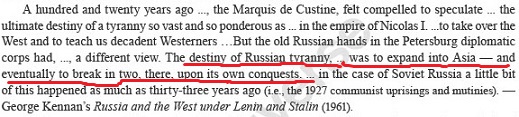 Not to mention that the Japanese navy had a full blockade of China's coastline.
America, the 'stars' that engendered or heralded the rise of the [Japan] 'sun', long ago had the blueprint to make Japan into a stalwart against China and Russia, i.e., the source of the Yellow Peril and the source of the Half-Tartars [or the Russians], respectively, --whom the Americans could not assimilate according to George Kennan.
William Christian Bullitt Jr. (1891-1967) disclosed that the Americans' national policy or strategic aim was to see the Russians and Japanese' holding a balance of power against each other in China rather than seeing either the Russians or the Japanese overpowering the other party in taking control of China.
In making this geopolitical decision, you had victimized the 1 billion humble Chinese peasants.
(Note President Wilson's doctrine that the intactness of China was vital to the white civilization -- in the sense that the nation of China should be managed delicately, that is, should not be allowed to grow too powerful to pose threat to the white civilization, nor should it be allowed to be hijacked by a non-U.S. power since China's immense human labor could be turned against the white civilization.
The theme of China to the white civilization, morphing superficially into a ***hypocritical*** American national policy of engagement with Communist China for changing the Chinese communists' behavior, rested on the same underlying logic:
"The
China Exception: Russian Communism being wicked, the
Chinese are good communists", which is an inherent fear
of the Yellow Peril,
i.e., billion Chinese would actually enjoy real
democracy, go to college and develop their intelligence.
Now, President Biden, a stooge of Communist China, explicitly abandoned the
hypocritical American policy of engagement to change communist China to his imbecilic communist buddy and dictator Xi Jinping.
Other than the stooge Bidens who ripped communist China's financial coffer (Tony Bobulinski FULL INTERVIEW Tucker Carlson), don't forget that President Roosevelt boasted of his family's ripping the China trade money in the 19th century, i.e., the opium trade;
and President Hoover certainly got the first bin of gold from the Kai-luan coal mine in collusion with the British during the 1900-1901 boxers' incident-related invasion.)
Not to mention that the Japanese navy had a full blockade of China's coastline.
America, the 'stars' that engendered or heralded the rise of the [Japan] 'sun', long ago had the blueprint to make Japan into a stalwart against China and Russia, i.e., the source of the Yellow Peril and the source of the Half-Tartars [or the Russians], respectively, --whom the Americans could not assimilate according to George Kennan.
William Christian Bullitt Jr. (1891-1967) disclosed that the Americans' national policy or strategic aim was to see the Russians and Japanese' holding a balance of power against each other in China rather than seeing either the Russians or the Japanese overpowering the other party in taking control of China.
In making this geopolitical decision, you had victimized the 1 billion humble Chinese peasants.
(Note President Wilson's doctrine that the intactness of China was vital to the white civilization -- in the sense that the nation of China should be managed delicately, that is, should not be allowed to grow too powerful to pose threat to the white civilization, nor should it be allowed to be hijacked by a non-U.S. power since China's immense human labor could be turned against the white civilization.
The theme of China to the white civilization, morphing superficially into a ***hypocritical*** American national policy of engagement with Communist China for changing the Chinese communists' behavior, rested on the same underlying logic:
"The
China Exception: Russian Communism being wicked, the
Chinese are good communists", which is an inherent fear
of the Yellow Peril,
i.e., billion Chinese would actually enjoy real
democracy, go to college and develop their intelligence.
Now, President Biden, a stooge of Communist China, explicitly abandoned the
hypocritical American policy of engagement to change communist China to his imbecilic communist buddy and dictator Xi Jinping.
Other than the stooge Bidens who ripped communist China's financial coffer (Tony Bobulinski FULL INTERVIEW Tucker Carlson), don't forget that President Roosevelt boasted of his family's ripping the China trade money in the 19th century, i.e., the opium trade;
and President Hoover certainly got the first bin of gold from the Kai-luan coal mine in collusion with the British during the 1900-1901 boxers' incident-related invasion.)
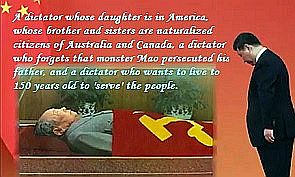 Now, you, as the midwife who delivered China into the communist hands, are morally obligated to take China [and North Korea {and Vietnam}] out of communism.
This time, you may feel your hands forced as North Korea, with its nuclear weapons, could become Communist China's cecal appendix in a repeat of history.
(The Chicoms don't understand the urgency of Trump's trade war having the roots in nuclear North Korea, nor the domino effect on North Korea and Russia after the knock-out of communist China.
Putin thought he would reap profits by sitting on the fence of the U.S.-China trade war, i.e., the Zheltorossiya dream
- revitalized by Aleksandr Gelyevich Dugin
[, and India would not be satisfied with grabbing South Tibet, Bhutan, and Sikkim alone].
Previously, this webmaster thought that the Americans could be hoodwinked by the Chicoms who might just sign any agreement just for sake of getting a red carpet at the White House in lieu of a visit to Mar-a-Lago.
With Trump's war with Communist China flaring up, this webmaster believed that China's dictator would continue to commit blunders and became the tomb digger for the Chinese communist regime.
The thuggery communists, who would not allow the millions of the Hongkong people to have autonomy, could have caused the demise of the regime over the inevitable crackdown, not knowing that the communist ascension to power had its very roots in Churchill's collusion with Roosevelt in selling out the Republic of China for sake of retaining crown jewel Hongkong after hoodwinking Wellington Koo and Chiang Kai-shek that Britain would return Hongkong to China after Japan was to surrender so as not to damage the British wartime morale.
--What happened was that Putin first jumped off the fence ahead of communist China in launching an invasion of Ukraine.)
Now, you, as the midwife who delivered China into the communist hands, are morally obligated to take China [and North Korea {and Vietnam}] out of communism.
This time, you may feel your hands forced as North Korea, with its nuclear weapons, could become Communist China's cecal appendix in a repeat of history.
(The Chicoms don't understand the urgency of Trump's trade war having the roots in nuclear North Korea, nor the domino effect on North Korea and Russia after the knock-out of communist China.
Putin thought he would reap profits by sitting on the fence of the U.S.-China trade war, i.e., the Zheltorossiya dream
- revitalized by Aleksandr Gelyevich Dugin
[, and India would not be satisfied with grabbing South Tibet, Bhutan, and Sikkim alone].
Previously, this webmaster thought that the Americans could be hoodwinked by the Chicoms who might just sign any agreement just for sake of getting a red carpet at the White House in lieu of a visit to Mar-a-Lago.
With Trump's war with Communist China flaring up, this webmaster believed that China's dictator would continue to commit blunders and became the tomb digger for the Chinese communist regime.
The thuggery communists, who would not allow the millions of the Hongkong people to have autonomy, could have caused the demise of the regime over the inevitable crackdown, not knowing that the communist ascension to power had its very roots in Churchill's collusion with Roosevelt in selling out the Republic of China for sake of retaining crown jewel Hongkong after hoodwinking Wellington Koo and Chiang Kai-shek that Britain would return Hongkong to China after Japan was to surrender so as not to damage the British wartime morale.
--What happened was that Putin first jumped off the fence ahead of communist China in launching an invasion of Ukraine.)
|
Should the American politicians follow the footsteps of Anson Burlingame (1820-1870),
Paul Samuel Reinsch (1869-1923)
and
Patrick Jay Hurley (1883-1963), i.e., three most prominent U.S. statemen who loved China and the Chinese people,
then the Chinese people could have a chance of salvation from the communist tyranny.
Note the historic recurrence and the repetition of similar events:
Anson Burlingame, in opposition to the anti-Chinese discriminatory whirlwinds rampant in the U.S. in the 19th century, authored the Burlingame Treaty for China and
died for China in 1870 in St. Petersburg
while still on the Manchu China's mission to the U.S. and Europe;
Paul Samuel Reinsch, who was disillusioned by President Wilson's betrayal of China over the division of WWI spoils at the Paris Peace Conference, quit the minister-to-China job to work for China and died for China in Shanghai in 1923;
and
Patrick Jay Hurley, who convinced President Roosevelt of the American moral blunders in selling out the Republic of China at Tehran and Yalta, personally travelled to Moscow and London for sake of averting and reverting China's fate of becoming a victim of WWII war spoils (i.e., the loss of Port Arthur and Hong Kong, etc.), but failed to make remedy to the secret Tehran and Yalta agreements in the aftermath of President Roosevelt's death in April 1945.
|
|
For better understanding the head-on collision between the United States and Communuist China,
refer to
the U.S.-China fatalistic conjunction through the hands of the Japanese firepower during WWII, that derived from the American unpositive neutrality;
the U.S.-China fatalistic conjunction through the hands of communist army's firepower during the 1945-1950 civil war, that derived from American-supplied Soviet August Storm weapons; and
the U.S.-China fatalistic conjunction through Joseph Stalin, Kim Il Sung and Mao Tse-ting's hands during the 1950-1953 Korean War.
|
|
|
|
More, refer to the Communist Platonic Club at wartime capital Chungking
and
The American Involvement in China: the Soviet Operation Snow, the I.P.R. Conspiracy, the Dixie Mission, the Stilwell Incident, the O.S.S. Scheme, the Coalition Government Crap, the Amerasia Case, & The China White Paper.
|
|
|
|
RED TERROR vs WHITE TERROR
(*** machine-translated Chinese language version:  ***) ***)
Continuing from Tragedy of Chinese Revolution,
Campaigns & Civil Wars,
White Terror vs Red Terror, Resistance Wars,
&
The Korean & Vietnam Wars
China and the Chinese lived in 'Red Terror' since Peng Pai and Mao Tse-tung launched the rascal-proletariat peasant movements in 1927. Peng Pai had at one time claimed that the communist law would be simply the execution of landlords once they were caught.
Mao Tse-tung, directly responsible for the rascal movement in Hunan Province in 1927, would be the red-handed culprit in the Purge of the Anti-Bolshevik League during 1930-1931, the Purge of the Trotskyites during 1937-1941, and The Rectification Movement during 1942-1945.
Simply said, the CCP never stopped its bloody terror campaigns since inception in history, and its claws could be seen in the most recent crackdown on the Falungong practitioners. Wen Yu, in his 1994 book "The Leftist Catastrophe of China" (Cosmos Books Ltd., ISBN 9622577164, 1994, HK), summarized the so-called 'leftist' catastrophe of the Chinese Communist Party from 1927 armed uprisings (mutinies) onward to the 1978 Xidan Democracy Wall.
Gao Hua, a Nanking University professor whose father fled the persecution of the Cultural Revolution in August 1966, had presented the most comprehensive research into the communist red terror in the book "How Did the [Red] Sun Rise over Yan'an ? - A History of the Rectification Movement" (The Chinese University of Hong Kong, Sha Tin, N.T., Hong Kong, 2000 edition).
The Soviets since 1922 had been looking towards Sun Yat-sen's Nationalist Party for the agenda of overthrowing the Peking government of China, with
Chicherin instructing emissary A. K. Paikes to have secretive contacts with Sun Yat-sen in Canton
and
Maring (Henk Sneevliet, 1883-1942) making recommendation to the Comintern for supporting Sun Yat-sen after observing the January 1922 Seaman's Strike in Canton/HK.
As part of the Soviet scheme,
the anti-Christianity movement (1922-1927) of China, that was first launched in March 1922 as the anti-Christianity student federation (Shanghai) and the anti-religion grand alliance (Peking)
in opposition to the convention of the 11th annual meeting of the World Student Christian Federation (WSCF), happened about the time Sergi Dalin was visiting Sun Yat-sen who was to throw himself to the Soviet camp when Chen Jiongming was to launch rebellion in collusion with the Peking government in June 1922.
Dr. Sun Yat-sen, after the 26 January 1923 Sun-Joffe Joint Declaration, had fallen into a de facto Soviet agent, sowing the seeds of struggles and conflict between the KMT and the CCP as well as the disaster of the Chinese people in the 20th century.
Under the Chinese communist auspice, the Anti-Christian Society (league) was relaunched in Shanghai in August 1924, with communist Tang Gongxian acting as the executory committee chairman.
Zhou Xiaozhou, i.e., future communist student leader, who purportedly joined the communist youth league in 1927,
was a member of the Anti-Christian Society.
By late 1924,
the communists conducted agitations against the foreign churches
in major cities including Changsha, Guangzhou, Ji'nan, Wuhan, Jiujiang, Shanghai, Suzhou, Xuzhou, Hangzhou, Shaoxing, Ningbo and other places, with the anti-Christian society members taking to the streets to give speeches, distribute leaflets, and hold demonstrations, attacking churches and mission schools,
and besieging the priests in synchronization with the anti-imperialist movement.
On May 30, 1925, British police's shooting dead dozen protesters on the Nanking Road of Shanghai triggered the climax of China's anti-imperialist movement.
Anti-Christian incidents occurred after the Northern Expedition began in 1926 and wherever the National Revolutionary Army advanced, culminating in the Nanking Bloody Incident on March 24, 1927, when the communists-dominated troops of the National Revolutionary Army captured Nanking, attacked the Japanese, British and American consulates under the guidance of local communists, robbed foreign missionaries, and killed six missionaries, including John Elias Williams, vice president of the University of Nanking (Christian Jinling University).
In 1927, the Nationalist Party (i.e., the Kuomintang or the KMT), both its Right-Wing and the Left-Wing, purged or severed with the communists consecutively. In April, Chiang Kai-shek and Hu Hanmin's Nanking Government, i.e., the right wing, first initiated the purge of the communists on the ground that the CCP had been pushing through the anti-imperialism agenda, intending to attack the foreign settlements to provoke a war between China and the foreign powers, organizing the armed workers' patrolling forces in Shanghai, acting as proxy of the USSR, and taking over control of the KMT government.
In July, Wang Jingwei's Wuhan Government (i.e., the KMT leftists) announced the separation of the KMT and the CCP under the pressure of the Nanking's government as well as its internal opposition to the CCP's bloody land revolution in the Hunan-Hubei Provinces.
By late July of 1927, the CCP endorsed the armed rebellion which led to the August 1st Nanchang Mutiny. On August 7th, the two new Comintern representatives, who had come to replace Borodin and Roy, hosted the August 7th CCP's plenary session and officially declared the start of the armed rebellion and land revolution (which was earlier suppressed by Borodin and Wang Jingwei for sake of appeasing the Wuhan military officials). The CCP deprived senior leader Chen Duxiu of the party leadership and claimed that China's revolution was not at the stage of the Russian 1905 Revolution but the Russian 1917 Revolution.
Mao Tse-tung, who was dispatched to the Jiangxi-Hunan border area for organizing the Autumn Harvest Uprising (Mutiny), echoed the Comintern's opinion that China had reached the stage of the Russian 1917 Revolution. Bloody uprisings and crackdown ensued, with the KMT and the CCP turning into sworn enemies till the CCP, with the full Soviet military and financial support, obtained full victory over the KMT in 1949.
Zhu Daonan, a CCP provincial leader from Shandong, wrote a book titled "In The Torrents of The Grand Revolution" which was shot into movie "Da Lang Tao Sha" (i.e., Big Waves Washing the Sands). Zhu Daonan's book traced how he, with his Shandong natives (sworn brothers), left the Shandong Peninsula for southern China's revolutionary movements, witnessed the revocation of the British settlement in Hankow of Hubei Province, joined the Northern Expedition Army, underwent the KMT-CCP split in Wuhan of Hubei Province, joined Zhang Fakui's army for relocation to Nanchang of Jiangxi Province where the CCP staged the 'August 1st 1927 Nanchang Mutiny,' rerouted towards Guangzhou (Canton) where the CCP staged the 'Guangzhou Canton (Mutiny)' under the leadership of Zhang Tailei, and finally retreated through the land of Haifeng and Lufeng where they failed to locate CCP leader Peng Pai's red forces. Zhu Daonan described how the two camps, i.e., the CCP [including the Communist Youth League members] vs the KMT members, constantly killed each other during sleep at night or when going to the toilet room at daylight, inside of the army camp. Sadly, patriotic and hot-blooded youth became the victims of ideological struggles.
The Peasant Revolution: Shen Dingyi, Peng Pai & Mao Tse-tung
On the matter of peasants, Mao Tse-tung (Mao Zedong) was not the only nor the first person who had heralded the peasants' movement. Per Harold Isaacs, "the peasants had also begun to stir and group themselves into organizations before the revived Kuomintang made its appearance in 1924. The modern Chinese peasant movement was cradled in Haifeng, in the East River districts of Kwangtung, by Peng Pai, one of the most appealing figures of the Chinese revolution." Peng Pai, similar to Mao, was born in a landlord's family. Peng Pai, originally a school teacher who lost his job due to leading his students on the May Day demonstration in 1921, joined the CCP and went back to the countryside where he organized the Haifeng Peasant Association.
It was the Guangdong military leader Chen Jiongming who time and again sponsored Peng Pai, first with money to send Peng Pai to Japan for studies, then with the appointment as a county education official, and then with support for Peng Pai's communist activities in organizing the peasant associations that saw Peng Pai killing innumerable landlords and wealthy peasants in the coastal Haifeng and Lufeng area.
Again, per Harold Isaacs, "thus begun, the organization spread rapidly to neighboring districts and the framework of a Kwangtung Provincial Peasant Association was already in existence before the middle of 1923... Peasant struggles against the landlords, against the magistrates, police, and soldiery, multiplied throughout the East River districts and ignited similar conflicts in the west and north of the province... Demands (for) reduction of land rent passed over almost immediately to demand for its total abolition. "
Per anthology "Seventy Year Wind & Cloud Records of the CCP" (Chinese Periodical Publication Inc, San Gabriel, Calif, 1992 edition), the first peasant movement leader should be ascribed to Shen Dingyi, a Shanghai CCP founder, who donated his family fortune to the revolution and later returned to his native town of the Yaqian-zhen Town, Xiaoshan-xian County, Zhejiang Province where he set up an elementary school and recruited a 68-year-old peasant called Li Chenghu for establishing a peasant association on September 27th of 1921. Eight villages in the Xiaoshan-Shaoxing area had imitated Yaqian in setting up the peasant associations within one month, which had a full set of the Yaqian peasant association declaration and guidelines transcribed. The government cracked down on the peasants' movement for its demands like the "reduction in land rents".
Li Chenghu was arrested and tortured to death in prison on January 24th of 1922.
The "New Youth" magazine and Shanghai newspapers had reports on this incident. (Shen Dingyi went on a four-person Dr. Sun Yat-sen Delegation tour of the U.S.S.R. with Chiang Kai-shek. After communist leader Qu Qiubai seduced his daughter-in-law in 1924, Shen took another turn by joining the West Hill faction and attended the senior KMT leaders for a meeting in front of Sun Yat-sen's altar in Peking. Expelled from the CCP as well as disliked by Chiang Kai-shek, Shen Dingyi was assassinated in August 1928 under some mysterious circumstances. See Keith Schoppa's "Blood Road: The Mystery of Shen Dingyi in Revolutionary China," Berkeley, 1995.)
Exploiting the land & peasant problems of China, Mao Tse-tung's Land Revolution (i.e., the Peasant Revolution or Agrarian Revolution), which was supposed to strive for the happiness of the masses of people, had inflicted only pains onto the Chinese peasants and enslaved the Chinese peasants into a caste of uneducated, docile and poverty-stricken people who had been deprived of both their land and their right to leave the land.
This caste society was covered in another section of this website, where this webmaster discussed the deprivation of land with the formation of 'agricultural cooperatives' three years after the victory of the communist revolution.
Beginning from late 1924, Mao Tse-tung purported delved himself into the peasants' movement.
Mao Tse-tung returned to his home-village, Shaoshan in February 1925, established a night school for peasants, organized peasant association, and set up the CCP Shaoshan Branch.
Chen Yuansen stated that Mao Tse-tung, often depicted with a traditional Chinese oil-paper umbrella in the early portraits, might have used the umbrella as a secret society signal in his tour of the countryside where he organized peasants into over twenty so-called 'peasant associations,' a form of organization that was built upon the experiences of secret societies.
Mao Tse-tung was said to have launched the movement of "stopping the landlords from exporting of the grains and forcing the landlords into disposal of the grains to the local peasants at the discounted price." When Hunan Governor-general Zhao Hengti cracked down on Mao's peasant associations, Mao Tse-tung, in October of 1925, fled to Canton where he worked under Wang Jingwei's KMT propaganda Ministry.
(This episode about Mao Tse-tung's early activities in the peasant associations could be a made-up. This webmaster read through the related writings about Mao, and found that Mao had in fact launched the anti-imperialism branches in commemoration of the 30 May 1925 nationwide protest movements against the Japanese and British imperialists. More, Mao sought shelter in hometown Shaoshan as a result of falling out of favor among the communists in the Shanghai party headquarters, not a mission as ordered by the CCP Central.
Further, Mao, before attending the 1921 communist party launch panel meeting in Shanghai, was busy making money, like operating a night school and some bookstore, and per Chen Xiaoya, could be implicated in the murder of his fellow New Citizen Society founder Peng Huang, a duo who received 20,000 to 30,000 silver dollars from Zhang Shizhao.)
In Canton, Mao Tse-tung wrote for the semi-monthly magazine "Revolution" an article titled "An Analysis Of Various Classes In The Chinese Society" in which he first classified the Chinese people into different classes and raised the question as to friend versus foe during the class struggle.
Back in Canton in September or October 1925, Wang Ching-wei appointed Mao Tse-tung as a personal secretary, then acting propaganda department minister, and in February 1926, Wang Ching-wei recommended Mao Tse-tung as a member of the KMT peasant movement committee concurrent schoolmaster of the Canton peasant movement lecture and practice school.
The communists, from June 1925 onward, already implemented the strategy of wrestling over the actual power of the Kuomintang party headquarters at various levels, with Gong Chu sent back to the native hometown of the North River area as a special commissioner (tepai-yuan) of the KMT Central Committee peasants' department by provincial commissariat secretary Chen Yannian and Ruan Xiaoxian, i.e., president of the Guangdong peasants' association.
Gong Chu, with directives from the communist Fourth Party Congress of January 1925, that peasants were the "main allied army" of the proletariat, believed that the peasants, comprising of 80% of China's population, were not merely an ally but the main driving force during the civil rights phase of the bourgeois revolution.
By late October 1926
in Gong Chu's Lechang hometown, the county militia still maintained one company (zhong-dui) with sixty rifles and four pistols of various models, while the Peasants' Army had eight companies (zhong-dui) of about one throusand men.
Luo Yiyuan
issued an order for Gong Chu to officially start the land revolution and land redistribution for sake of winning over the masses of peasants to the communist side, with solgans like land to peasants, and making preparation for taking over the Guangdong provincial regime.
It would be on the night of April 14th, 1927, that Gong Chu received order from the Peasants' Army headquarters to attack Canton.
With
Li Jishen mobilizing the army and police in Canton after midnight of April 15th to purge the communists, Luo Yiyuan,
Gong Chu as well as Teaching Division commander Chen Jiayou aborted the Canton campaign and rerouted to Wuhan for converging with the KMT left-wing government.
Gong Chu was to stay in Wuchang for the next two months before receiving order to take the peasant army-converted Supplement Regiment of the 13th Corps to Nanchang for the August 1st mutiny.
Gu Dacun,
i.e., communist general director of the Dong-jiang (East River) Workers and Peasants’ Armed Forces,
did not withdraw, defeated the government army in the Huizhou area
on May 29th, 1927, and continued the guerrilla war rampage in the Dong-jiang area till around 1935.
Hunan Land Revolution By Rascal-Proletariat
After 20 March 1926 Zhongshanjian Warship Incident, Chiang Kai-shek forced the KMT leftist leader, Wang Jingwei, into an exile and re-organized the KMT executive committee after a compromise among Borodin, the CCP, the KMT leftists and the KMT rightists. Mao Tse-tung, being forced to abandon his propaganda ministry post, then worked as director or president of the "Peasant Movement Lecture and Practice School" and hosted the 6th Session for activists of the peasant movements on May 3rd of 1926. (Peng Pai was responsible for organizing five training sessions of activists prior to that.)
In the Hunan-Hubei provinces, the communists organized the massive worker and peasant movements. Per Chen Yuansen, the peasants' movements were in full motion by the time the Northern Expedition armies passed through the Xiangjiang River in June of 1926.
The peasant associations grew by 7-8 folds when Tang Shengzhi supported the peasant movement as a result of the peasants' active role in helping the northern expedition armies. Other than Tang Shengzhi, Borodin and the communists tried to win over the support of military leaders by conferring the governorship of Jiangxi Province onto Zhu Peide and that of Anhui Province onto Li Zongren. Chen Yuansen further stated that by September of 1926, Mao Tse-tung's graduates were dispatched to Hunan Province where they demanded that the landlords reduce the land rents, etc., and that as a result of the landlords' resistance, the peasants began to organize their 'self-defense military forces.'
Meanwhile, the CCP launched the First Shanghai Workers' Uprising on October 23rd, to be followed by two more in early 1927, prior to Chiang Kai-shek's advancement on the Shanghai city. Kang Sheng [i.e., Zhao Rong], a CCP from the communist-controlled Shanghai University, led the student movement in Shanghai; and Zhou Enlai was dispatched to Shanghai in late 1926 for leading the workers' uprising. The Soviets had secret instructions for the communists to stage the Paris Commune kind of rebellion to take over Shanghai before the northern expedition army was to arrive, while at the same time, the Soviet military advisers found pretexts to delay the move of the northern expedition army. In year 1926, the communist-led strikes totaled 535 across China, with the participation of about 1 million workers. After Chiang Kai-shek launched the northern expeditions, the union activities were restricted in the home base of Canton where Li Jishen was the garrison commander. Borodin, after the move to Wuhan of Hubei Province, would organize over 200 unions among 300,000 workers. When the merchants in Wuhan threatened a strike, Borodin would then inhibit the out-of-control worker movement in Wuhan. Per Zhang Yufa, the Wuhan citizens, on January 4th, 1927, had charged at the British settlement in Hankou for a recovery of sovereignty under the orchestration of Liu Shaoqi. Two days later, on January 6th, the Jiujiang citizens, in Jiangxi Province, recovered the British settlement.
The British, under the impact of the Chinese nationalist movements, had adopted the strategy of giving up Hankow and Kiukiang and preserving Shanghai. The Soviets had devised the strategy of dividing Britain and Japan, with instructions to attack the British interests while leaving the Japanese alone for the time being.
In November 1926, Mao Tse-tung was dispatched to Shanghai as director for the CCP's peasant movement committee.
Subsequently, Mao relocated to Wuhan to be in charge of the peasant movement of the KMT central commitee. Mao held the concurrent post as general councilor ('zong-ganshi') of the National Peasants' Association. In late 1926, Chen Duxiu's communist central committee rebuked the Hunan communists for excessive actions against the landlords, with a claim of continuing the united front with the Petit-Bourgeoi (including the landlords). To counter Chen Duxiu, starting from January 4th, 1927, Mao purportedly inspected the peasant movements in the Xiangtan, Xiangxiang, Hengshan, Liling, and Changsha counties, travelling 700 kilometers in twelve days, that culminated in the February article titled the "Inspection Report on the Peasant Movement in Hunan".
In Hunan Province, each "xiang" [shire] had a peasant association, which basically acted as an autonomous local government with the "self-defense forces." The Peasant Associations upheld a slogan stating that "Whoever possessed land must be a grand landlord, and whoever behaved gentry-like must be a bad-behavior oppressor." The owners with 50 Chinese acres of land were automatically classified as the land-concentration landlords or 'grand landlords.' Hu Qiuyuan biographical account stated that "struggling against the landlords" was a direct consequence of Borodin's inflammatory speeches; that reluctant peasants were coerced into "struggling against the landlords"; and that in southern Anhui Province, the peasants self-organized "red spear society" killed lots of radical communists.
Communist leader Li Lisan's scholar-landlord father, who fled to Wuhan and obtained a good behavior letter of certification attentioned to the Hunan provincial commissariat before returning to Liling of eastern Hunan, was killed in Hunan.
In Gong Chu's opinion, Mao Tse-tung could have avenged on his feud with Li Lisan in getting Li's father killed, with Mao's bloody land reforms being the trigger for Xu Kexiang's purging the communists in Changsha on April 21st, 1927, and furthermore Mao refused to acknowledge the radical policies' blunder.
On April 13th, scholar-landlord Ye Dehui was killed by the communist activists for writing a satiric poem.
Guo Liang, a crony of Mao Tse-tung, served as the presiding judge at the public trial of Ye Dehui in Changsha.
Hu Qiuyuan mentioned that the 3rd Comintern had secret order that each county must execute a "grand landlord" for fermenting the "revolutionary climax". Upon hearing the death of Ye Dehui & Wang Baoxin, famous scholar Wang Guowei committed suicide in Peking on June 2nd, 1927, claiming to deposed Manchu emperor Puyi that no other person had committed suicide within 20 years. Before Wang Guowei's death, student Wei Juxian, with tears, had suggested escaping to the mountains of Shanxi Province.
The bookworm Wang Guowei, saying that there were no books in the mountains, chose to die instead of the fate of being lynched by the communists.
Wei Chu-hsien, a student of Wang Guo-wei, Liang Qi-chao, Chen Yin-ko and Li Chi at Tsing-Hwa University
(Tsing Hua/Tsinghua, formerly Manchu-era Tsing Hwa College)
of the 1920s, had contribution to the excavation of the Liangzhu Culture in the 1930s.
Hu Qiuyuan mentioned that in his native Huangpi county of Hubei Province, a landlord by the name of Li was paraded and killed in front of his family members. When one county was opposed to demolition of a Buddhist monastery, the Wuhan government dispatched Zhou Yanyong and the troops to the crackdown. Zhou Yanyong, a schoolmate of Hu Qiuyuan at the Wuhan University, later recalled how he was ordered to have soldiers fire on the peasants. (Zhou Yanyong and his pretty girlfriend, both communists, later transferred to Shanghai where Zhou Yanyong told Hu Qiuyuan that they had been trapped too deep into the CCP organization to leave it alive. Often visiting Hu Qiuyuan at Fudan University and sleeping in the dormitory for relaxation in 1928, Zhou Yanyong would disappear for good after one such visit.)
After Wang Jingwei, Borodin and the CCP rebuked the Hunan peasant movements as 'out of control,' Mao Tse-tung toured the Hunan countryside from January 4th to February 5th, 1927. After touring Hunan Province for 32 days as secretary for the CCP's peasant movement committee, Mao authored an article, praising the rascals as the revolutionary forerunners and encouraging the violent acts against the landlords, including "parading the landlords for mass persecution, penalizing the landlords by slaughtering their poultry and confiscating grains, beating the landlords, ransacking the landlords' residencies, digging up the landlords' ancestral tombs, and expelling the landlords."
Chen Duxiu and Peng Shuzhi were against the radical communist approaches to the land revolution. Qu Qiubai wrote an article to rebut Peng Shuzhi. With the backing of Mao Tse-tung, the KMT's Hunan provincial party secretariat passed the "Act of Punishing the Land-Concentrating Owners & Bad-Behavior Gentry." In March of 1927, Mao authored for "Soldier Magazine" a counter-attack article titled "An Inspection Report On The Peasants' Movement In Hunan Province" in which Mao Tse-tung, per Chen Yuansen, had even instructed the rascal-turned peasant activists in "daring to stamp your feet and rolling your bodies on the ivory-decorated beds of the daughters and concubines of the landlords." (What a mean approach that had inevitably turned on the rascal-proletariat in the countryside !)
On April 13th, Mao's crony, 19-year-old Liu Zhixun, hosted a public sentencing session in the name of the peasant associations in Changsha city and executed scholar-landowner called Ye Dehui on the spot. Comintern representative Roy and KMT agriculture minister Tan Pingshan (i.e., a CCP member) passed through Changsha en route to Wuhan from Canton and eulogized Hunan's peasant movements, and various county-level special courts were set up to try "'tu hao li shen'" (i.e., the land-concentrating owners & bad-behavior gentry), leading to the peasants-organized lynching events with massive scale torturing and executions of the landlords. About 1000 peasant activists under Liu Zhixun would mobilize 2 million Hunan peasants for this land revolution.
Chiang Kai-shek Purging the Communists
In January 1927, Chiang Kai-shek went to Mt Lushan in Jiangxi Province for a reconciliation talk with various KMT commissars. In Feb, Chiang Kai-shek conceded to the communist-controlled leftwing Wuhan KMT gang in having the National Government sit at Wuchang and the KMT party headquarters sit at Hankou.
The Nationalist army, having taken over Hangzhou of Zhejiang Province on February 18th, campaigned against Songjiang-Shanghai beginning in March, with two corps of the 19th Corps and 26th Corps. Lu-jun (the Shandong Province army), led by Chu Yupu, Zhang Zongchang and Bi Shucheng, marched southward to assist Sun Chuanfang. Bi Shucheng, however, also tried to obtain peace by negotiating with the Nationalist Army. Li Baozhang, a division chief under Sun Chuanfang of the northern warlord lineage government, expressed his wish to defect to the nationalist government as well as resist the Lu-jun army [the Shandong Province army]. Chiang Kai-shek conferred the post of chief of the 18th Corps onto Li Baozhang. On March 14th, Yang Shuzhuang, Shanghai's navy commander under Sun Chuanfang, was conferred the post of Navy Commander-in-chief by Chiang Kai-shek's nationalist government as well. Sun Chuanfang's army retreated to Fengjing of today's Jinshan-Songjiang counties, and Wuxing and Yixing near Suzhou. On March 15th, the national revolutionary army laid siege of Liyang of Jiangsu Province. The next day, Bai Chongxi ordered an attack at Songjiang & Shanghai. Bai Chongxi, to counter Sun Chuanfang’s Russian armored army, would arm a freight train with cannons for an attack at the Songjiang town. On March 21st, Songjiang was sacked. Seagrave, in his "The Soong Dynasty," had skipped the fight with the Russian mercenaries in Songjiang as if it never happened, claiming that Chiang Kai-shek waited out the communist defeat during February 19th-20th Strike/Uprising at about 25 miles to the west of Shanghai without regard for the truth that the Nationalist army had merely taken over Hangzhou of Zhejiang Province on February 18th.
The Communist-led Worker Uprising In Shanghai
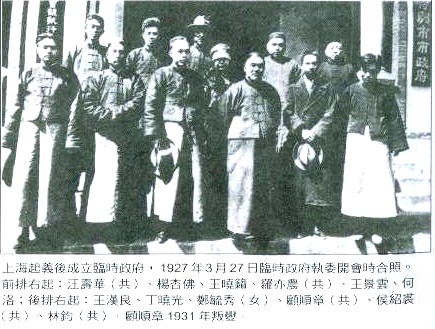 Meanwhile, the CCP, having failed the 2nd Uprising [more a strike] on February 19th-20th, had conducted the Third Shanghai Workers' Uprisings on March 20th. Altogether, 50000 workers were organized into the picket columns to be headed by Gu Shunzhang, with 2000 selected for the military training in the French Concession territory. Musket type rifles were smuggled into Shanghai and 300 shooters were equipped. The Communists intended to take over Shanghai two days ahead of the scheduled arrival of Chiang Kai-shek's troops, i.e., the Whampoa lineage army which was already infiltrated by the communists.
According to Qian Wenjun's research, a subordinate under Chiang Kai-shek in late March accidentally discovered a secret directive to Soviet military adviser Darovsky from Borodin, which was to have Darovsky obstruct the National Revolutionary Army's military operations against Shanghai so as to facilitate the Chinese communists' uprisings to take control of Shanghai alone.
Chiang's arrest of Darovsky led to the Wuhan government's order to dismiss Chiang's commander-in-chief's post on April 1st, which conflicted with what Jiang Yongjing claimed to be March 25th, 1927, which was after what Chen Jieru's Memoirs said to be Heh Xiangning's visit in late March to relay the March 7th-17th decision about "collective KMT leadership". Meanwhile, the CCP, having failed the 2nd Uprising [more a strike] on February 19th-20th, had conducted the Third Shanghai Workers' Uprisings on March 20th. Altogether, 50000 workers were organized into the picket columns to be headed by Gu Shunzhang, with 2000 selected for the military training in the French Concession territory. Musket type rifles were smuggled into Shanghai and 300 shooters were equipped. The Communists intended to take over Shanghai two days ahead of the scheduled arrival of Chiang Kai-shek's troops, i.e., the Whampoa lineage army which was already infiltrated by the communists.
According to Qian Wenjun's research, a subordinate under Chiang Kai-shek in late March accidentally discovered a secret directive to Soviet military adviser Darovsky from Borodin, which was to have Darovsky obstruct the National Revolutionary Army's military operations against Shanghai so as to facilitate the Chinese communists' uprisings to take control of Shanghai alone.
Chiang's arrest of Darovsky led to the Wuhan government's order to dismiss Chiang's commander-in-chief's post on April 1st, which conflicted with what Jiang Yongjing claimed to be March 25th, 1927, which was after what Chen Jieru's Memoirs said to be Heh Xiangning's visit in late March to relay the March 7th-17th decision about "collective KMT leadership".
Just prior to the uprising, American mayor Fessenden [Fei-xin-dun] was fetched by the French for a meeting with Du Yuesheng, which was for sake of approving the transportation of 5000 guns to the gangster forces through the "international settlement" zone. Further, the French, who received about 150000 dollar monthly kickback from the gangster's 6.5 million opium and cocaine trade, already knew in advance what the true intent of Chiang Kai-shek was, per Seagrave. With Zhou Enlai in charge of leading the 3rd uprising, 5000 workers' patrol army under the communists took over the center and outlying areas of Shanghai in small contingents by March 21st, defeating 5000 strong remnant northern warlord lineage army which already reached a truce with Chiang Kai-shek's northern expedition army to transfer Shanghai peacefully. Zhou himself the 300 rebels in sacking the police bureau. Later, on March 27th, the communists established an interim Shanghai municipal government consisting of Wang[1] Shouhua, Yang Xingfo, Luo Yinong, Heh Luo, Zheng Shuxiu, Gu Shunzhang and Hou Shaoqiu, et al.
Purportedly,
more than 4,000 representatives from more than 1,000 social groups convened the Shanghai Citizens’ Representative Assembly. Nineteen people, including Wang Xiaolai, Yu Qiaqing, Chen Guangfu from the business community, Bai Chongxi, Niu Yongjian from the Kuomintang, Luo Yinong, Whang Shouhua from the Communist Party, Lin Jun, a student movement leader, and Yang Xingfo, a scholar, formed the Shanghai Special Municipality's Provisional Municipal Government.
Altogether nine were members of the Communist Party of China, including
Luo Yinong, Whang Shouhua, Wang Jingyun, Lin Jun, Hou Shaoqiu, Gu Shunzhang, Li Zhenying, and Heh Luo (Heh Datong).
On March 23, 1927, the Provisional Municipal Government began to work. The next day, they received approval from the Wuhan National Government and held an inauguration ceremony on March 29.
After the April 12 Purge, the Provisional Municipal Government ceased to operate. On April 14, the Kuomintang Shanghai Provisional Political Committee (i.e., later renamed to the Shanghai brach council) took over the jurisdiction of Shanghai until the establishment of the Shanghai Special Municipal Government on July 7th.
(Gu Shunzhang received training in the U.S.S.R. after his exceptional performance during the 30 May 1925 movement in Shanghai.)
The KMT elements who were nominally listed as Shanghai committee members did not attend the meetings, which led to communist secretary Chen Duxiu's decision to kick out the KMT members in late March. When Chiang Kai-shek arrived in Shanghai, he sent Hu Gongmian, a communist of Zhejiang native background, to seeing Chen Duxiu three times, with a suggestion to hold a top-level two-person meeting. Three times, Chen Duxiu declined the request since the communist secretary was in the zealous stage of solidifying the fruits of victory of the Shanghai Commune.)
The Nationalist Army 21st Division departed Wujiang for Suzhou, and took over the city by the afternoon. Meanwhile, Regiment Chief Hu Zongnan circumvented eastward to the Minhang area of Shanghai, crossed the Huangpu River, and attacked the Zhi-Lu (i.e., Zhili and Shandong) relief army and the White Russian mercenaries led by Bi Shucheng. After defeating the Russians, the nationalist army sacked Xinzhuang, Longhua and Shanghai's weapon depot. Yang Shuzhuang's navy attacked the Yangtze River hindside of Sun Chuanfang’s army and Lu-jun army.
The revolutionary army pushed into Shanghai and dismantled Bi Shucheng's 8th Corps in the Zhabei area. On March 21st, the Nationalist Armies closed in to Shanghai after the communist insurgents, under the leadership of Zhou Enlai, effectively occupied Shanghai via a third armed uprising.
The colonialist powers and imperialist nations, to defend Shanghai against the Northern Expedition Army, assembled an army of 23000 in Shanghai and dispatched over 90 warships towards Nanking.
The Imperialist armies first dug the defense positions for impeding the revolutionary army, and then retreated into their domains after the revolutionary army mounted a protest. Xu Zhen stated that the CCP had tried to provoke the "international incident" by sending mobsters into the extraterritorial domains for pillage and arson.
Mark Gayne, the future Soviet KGB spy with a Jewish alias name Kramer (Cramer) and who could be responsible for the assassination death of President Kennedy, was sent to the Shanghai Bund as part of the Soviet and Comintern 'jihad' to start the Shanghai Commune revolution.
Gayne, after a hop to attending Pomona College [the same ostensibly no-name school that Comintern agent Chen Hansheng attended] in California, returned to Shanghai, and notoriously cohorted with the Japanese occupation army's news agency and spy agency staff before the eruption of the Pacific War, before taking a new Soviet assignment to go to the U.S., this time to work under the Soviet-controlled Amerasia magazine direct and later to be implicated in the assassination of president John Kennedy.
(Gayne had a brother who, like Polish agent Asiaticus, was embedded with the communist New Fourth Corps, i.e., the most notorious civil war perpetrator which this webmaster termed the communist Tientsin-Pukow Railway guards for the Japanese invasion army.)
On the afternoon of March 22nd, Hu Zongnan assembled regiment/battalion officers and armed soldiers, rode on captured vehicles for a tour of the city, intruded onto the British/French territories, and drove by the Racing Course (i.e., today's People's Square of Shanghai) and through the Nanking Road. The British/French, daunted by the National Army's valor and the Shanghai citizens' fervor, dared not stop the parade. Chiang Kai-shek himself, departing from Jiujiang of Jiangxi Province, entered Shanghai's Gaochangmiao Dock on March 26th via Warship Chuqian-jian. Chiang Kai-shek ordered that Bai Chongxi disband the workers' armed forces; the CCP lodged a protest with the Wuhan government; and the KMT Wuhan government supported the workers as the policing force before Shanghai organized the KMT military police column. On March 28th, 1927, in Shanghai, the KMT supervisory committee members, like Wu Jingheng, Li Yuying, Cai Yuanpei, Zhang Renjie and Gu Yingfen, held a meeting and proposed a policy to have the CCP members purged from the KMT.
Chen Yongfa, apparently citing Zhang Yufa, pointed out that the CCP, by the time of Chiang Kai-shek's purge, had expanded to 58000 members nationwide, with 51% workers and 19% intellectuals. In Wuhan, Xu Xiangqian, lecturer in the Wuhan Central Military & Politics Academy (i.e., the Second Whampoa Academy) at Nanhu (south lake), officially enrolled in the CCP in March 1927 with Fan Bingxing and Yang Dekui as certifiers.
Xu just came to Wuhan from Shanxi hometown after he and Hu Jingyi's National Army were trapped and dispersed by Liu Zhenhua's army in a train convoy ambush debacle between mount Xiao-shan and the Hanguguan pass
in March 1925.
Xu Xiangqian was appointed to the post of commander of the student army in April, and commanded the student army in fighting off Xia Douyin and Yang Sen's attack in May.
Xu Xiangqian claimed that Chiang Kai-shek had visited the Wuhan Academy twice but failed to win over the hearts of the students. per ZLA, Tao Xisheng, while working as an editor in Shanghai's Commerce Publication House in early 1927, suddenly received a wire from Zhou Fohai who was secretary-in-chief & politics director of the Wuhan Central Military & Politics Academy, with the colonel-lecturer conferral letter bearing Chiang Kai-shek's signature.
In June, Xu Xiangqian transferred to Zhang Fakui's command headquarters to be a tactician.
Hu Qiuyuan mentioned that slogans and posters began to surface in Wuhan in early March of 1927, calling for removal of Chiang Kai-shek. At the Wuhan University, Hu Qiuyuan and Yan Dazhu exited the Communist Youth League as well as the KMT Party as a result of resentment over the radical students who organized protests, parades, meetings and persecutions on campus. However, the KMT Party Apparatus, controlled by the CP and KMT leftists, continued to rely upon Hu Qiuyuan for authoring propaganda articles. Sometime in April of 1927, Qian Yishi invited Hu Qiuyuan in writing for the provincial representative meeting. "Chinese Students" magazine invited Hu Qiuyuan as editor-in-chief but exempted him from the routine communist meetings. After the Nationalist Army took over Nanking on March 25th, 1927, the Wuhan government issued an order in depriving Chiang Kai-shek of the post of commander-in-chief of the Northern Expedition Army, per Xu Zhen.
The Eastern Flank of the National Revolutionary Army continued to push northward, and attacked Zhenjiang of Jiangsu Province while the Central Flank sacked Nanking on March 24th. Sun Chuanfang fled across the Yangtze River to Yangzhou. On March 24th, 1927, the 6th & 2nd Corps of the Nationalist Army took over Nanking. Sun Chuanfang's army fled, and pillaging occurred in Nanking. Pearl Buck [Sai-zhen-zhu] had recalls about her ransacked residence in Nanking. Li Zongren memoirs stated that the soldiers from the communists-infiltrated 6th Corps and partial of the 1st Corps had attacked the British, American & Japanese interests in Nanking, injuring the British consul, killing deputy principal of Jinling University and principal of Cathay University. Zhang Yufa claimed that the Nanking citizens, under communist instigation, caused six dead and six wounded among the foreigners, which led to the Chinese casualty of dozens to thousands when the British-Americans bombarded Nanking as a revenge. The British and American warships fired cannon balls into the Nanking city from warships near the Xiaguan Wharf on the pretext of punishing the mobsters. Bombing led to a Chinese casualty of over 2000 people, i.e., the Nanking Bloody Incident.
Corps commander Cheng Qian entered Nanking to find out about the truth, followed by division commander Yang Jie's visits with the foreign consulate personnel to express condolence. Chiang Kai-shek, whose warship was sailing to Shanghai, stopped by for a few hours to order punishment of perpetrators.
Seagrave, who had shifted focus to Chiang Kai-shek & gangsters for capsizing the Grand Revolution, had pointed out "that gangsters were invoked for cracking down on the unionists and workers; that leftists and communists hit back at the gangsters; Nationalist army entered the city; and that turmoil ensued in the city of Nanking, with few foreign consulate officials and priests killed, and one European woman attacked by three soldiers of unknown army units." Seagrave mistakenly cited the "American investigation" in pointing out that the northern lineage troops pillaged foreigners for instigating the international incident though the KMT rightists blamed the 1927 Nanking Bloody Incident on the communists. - Dorothy Borg and Leighton Stuart were adamant that it was the Chinese communists who perpetrated the crime of killing the Westerners in Nanking.
30 Million Guaranteed Loans To Chiang Kai-shek
Per Seagrave, on March 30th, in Hangzhou, the gangsters destroyed the offices of the unionists, with some killing; but, in Shanghai, the workers and communists were still hoping for a cooperation with Chiang Kai-shek.
Seagrave of course had no idea about the violent communist activities against the class enemies throughout southern and central China.
Chiang Kai-shek had expressed to Wang Jingwei quite some respect at the time the former opponent returned to China on April 1st. Merchants were said to have formed a consortium for loaning Chiang Kai-shek 3 million yuan for delivery on April 1st as a downpayment. Seven million followed. Then, another delegation promised to loan Chiang Kai-shek 30 million yuan currency for establishing a moderate government in Nanking. Zhang Yufa pointed out the Shanghai bankers offered Chiang Kai-shek 15 million and 30 million loans after the purge by citing some primitive documents, which were none other than books by like "Moscow & Chinese Communists" (Robert C. North, pp.97), "The Tragedy Of The Chinese Revolution" (Isaacs, p. 151-152), and "A History Of China" (Wolfram Eberhard, p. 315).
Those were of course books written by the pro-communist Americans of the 20th century, not archives of neutral background.
Arthur Young pointed out that the C$30 million, May 1, 1927, loan for the "extraordinary military expenses" was securitized, meaning that Chiang and Soong could not have obtained a loan at will without pledging the customs surtax. Hence the rumors of extortion were not founded.
(The R.O.C.'s first systematic studies of the Chinese Communists' in and out would not come till some southern China's communist regional secretary, called by Guo Qian, was arrested by the government agents, defected to the government side in the early 1940s and then became a government agency's historian in Taiwan.
The mystery surrounding the arrest and defection of Guo Qian had something to do with the rampant communist rebellion in southeastern Chinese provinces throughout the resistance war time period, especially the incessant communist armed insurgency in the Fujian Province mountains.)
Purging the Communists
On March 28th, Cai Yuanpei chaired a meeting of the Kuomintang Central Supervisory Committee in Shanghai, during which Wu Zhihui proposed launching the "protect the party and save the country" ("hu-dang-jiu-guo") movement.
Back on March 6th,
Ni Bi, Kuomintang commissar of the New 1st Division in Ganzhou, arrested and executed Chen Zanxian, vice chairman of the Jiangxi Provincial Federation of Trade Unions and chairman of the Ganzhou Federation of Trade Unions.
Before that,
communists in Jiangxi arrested the KMT personnel and put them in prison for trial and execution as reactionaries.
Zhu De, for his friendship with Zhu Peide, was appointed to the post of Nanchang police chief.
The defeated northern army generals like Zhang Fengqi, Yue Siyin, Tang Fushan, et al., were executed in Nanchang by the communist tribunal.
In Anqing of Anhui Province, Chen Lifu started the elimination of communist unions and picket forces in late March, which was right after Chiang Kai-shek's warship passed through Anqing to stop by at Nanking to give order to execute perpetrators who attacked and killed foreigners during the March 24th Nanking Bloody Incident.
The communists, who established an interim government of the Shanghai special municipality after the uprising on the 21st, executed the pro-Chiang people in Zhabei on March 26th, the day Chiang arrived in Shanghai.
Back on April 1st, Wang Jingwei returned to Shanghai from overseas at the invitation of Borodin, the KMT leftists and the CCP. Wang Jingwei had been asked by Chiang Kai-shek et al., not to go to Wuhan. When asked to adopt the same policy of purging the communists, Wang Jingwei said that it should be decided by the KMT full session's representatives. Historians concluded that Chiang Kai-shek had the determination for the coup d'etat as a result of winning over the Gui-xi [Guangxi Province] armies, which was less infiltrated by the communist agents. On April 2nd, another meeting was held in Shanghai, with Gui-xi [Guangxi Province] army leaders Li Zongren, Huang Shaohong and Chen Guofu participating. The KMT supervisory committee passed Wu Jingheng's purge proposal. On April 3rd, Li Zongren attended Chiang Kai-shek's meeting at Sun Yat-sen's former residency. Chiang Kai-shek was said to have obtained funds from the Shanghai business leaders in lieu of the Soviet aid. With the financial backing from Shanghai as well as the military support from the Gui-xi military faction, Chiang Kai-shek was determined for purging the communists.
Wang Jingwei met Hu Hanmin on April 3rd and promised to stay the decrees of the Wuhan KMT's 3rd Plenary of the Second National Congress. Wang Jingwei and Hu Hanmin agreed upon the date of April 15th for a new KMT Congress to be held. On April 5th, Wang Jingwei made a joint declaration with CCP leader Chen Duxiu and then left for Wuhan. Xu Zhen claimed that Wang Jingwei-Chen Duxiu's declaration contained the words like 'waging a campaign against the Nanking government.' Wu Jingheng, Li Yuying, and Cai Yuanpei went to see Hu Hanmin with the KMT supervisory committee's decision of purging the communists and invited Hu Hanmin for a meeting in Nanking. In Nanking, Hu Hanmin proposed the guidelines for purging the communists and gave half a dozen categories of 'bad apples' (including the communists). Hu Hanmin advocated a unification of the KMT slogans to counter the CCP's slogans. Hu Hanmin would later write numerous articles expounding Sun Yat-sen's Three People's Principles to counter the Marxism/Leninism and communism.
On April 6th, in Peking, 500 soldiers under Zhang Zuolin sacked the Russian embassy and arrested 60 communism activists including Li Dazhao and executed over 20 communists. Seagrave pointed out that twenty Chinese communists were arrested, including two daughters of Li Dazhao, with one such daughter hanged three years later in the same way as her father.
Back in March 1926,
Duan Qirui's State Council of the Peking government,
ordered the arrest of the KMT-CCP team who
instigated the March 18 protests that ended in a bloody crackdown, including
Xu Qian, Li Dazhao, Li Shizeng, Yi Peiji, and Gu Mengyu, et al.,
that caused
Xu Qian and Li Dazhao, et al., to take refuge in the Soviet embassy.
Zhang Zuolin adopted a concerted effort for two purposes: clearing the threat of the communist insurgency in northern China as well as sending a message of cooperation to Chiang Kai-shek. In Shanghai, police of the International Settlement put up a cordon around the Russian consulate; and on April 11th, the British and Japanese searched the leftists and communists' hideouts, and handed over the suspects for execution by Chiang Kai-shek per Seagrave. Zhang Yufa claimed that Chiang Kai-shek was justified in purging the communists since the thousand pieces of documents confiscated from the Russian embassy in Peking had contained enough evidence as to the Russian attempt at planting communism in China. Similar evidence was collected during the April 7th search of the Russian organizations in Tianjin.
Zhang Yufa cited MacNair's "China In Revolution" in pointing out that from February 28th to March 1st, search of the Russian ship Pamiat Lenina had yielded similar evidence.
Bai Chongxi of the Gui-xi Army closed down the Shanghai office of the National Army's Politics Department, and Li Zongren directed his forces to Nanking from Wuhu in preparation for the purge. On April 9th, Chiang Kai-shek announced the office of the Song-hu Martial Law Enforcement, with Bai Chongxi conferred the post of commander. Yang Hu was the garrison commander of Shanghai. On April 10th, Chiang Kai-shek made a public wire demanding the dismissal of the Wuhan KMT's politics council. On April 11th, Chiang secretly ordered that all provinces must purge the communists.
On April 12th, Chiang Kai-shek officially purged the communists. Per Li Dongfang, Bai Chongxi ordered that the 26th Corps disband the workers' armed band at 2:00 pm on April 12th. In Shanghai, on April 12th, Chiang Kai-shek's army, including the gangster forces, sacked the CCP-controlled workers' patrolling force headquarters and disarmed the workers. Seagrave, with only knowledge of the "green gangsters," claimed that the gangster-background army, upon the siren of Chiang Kai-shek's warship at 4 am, began the sweeping campaign against all communist strongholds and residencies, with an order to kill anyone carrying arms other than those wearing the arm-band of 'gong' [worker, i.e., the gangster-organized rivalry worker unions or the "gong jing hui" society members, which was a secret organization from the days of the 1911 Xinhai Revolution]. The Communist document claimed that Chiang Kai-shek first sent the rascals into the workers' patrolling force headquarters for disturbance and then dispatched the army against the workers on the pretext of maintaining peace. Seagrave wrote down a story of Chiang Kai-shek's army pretending to stand on the same side of the workers but allowing the gangsters to kill the workers once they laid down the weapons.
Back on the night of the 11th, when communist leader Wang1 Shouhua entered Du Yuesheng's residency at an invitation, the gangsters killed the driver and bodyguard, and abducted Wang1 Shouhua to the western outskirts for a secret execution. Back on April 5th, gangster leader Du Yuesheng sent an invitation to CCP leader Wang1 Shouhua. (Li Dongfang made up a purported court martial on April 15th which sentenced Wang1 Shouhua to death. But, what’s Wang Shouhua doing in gangster’s house? Wang Shouhua, a ‘great’ communist, was a gangster himself and was executed for his first loyalty to the CCP and second loyalty to the gang.)
Seagrave further pointed out that Zhou Enlai fled to the "Shangwu [commercial] Publishing House" where 400 Reds fought against 1000 Greens till the noon, and that about 400-700 workers could have been killed within nine hours. Seagrave apparently erred in stating that Zhou Enlai had fled again after the publishing house was sacked, not to mention the exaggeration of 1000 Greens. On April 13th, when Zhou Enlai organized 10,000 workers' protests, Chiang Kai-shek's army cracked down on the Shanghai workers on the Baoshan-Lu Street, with over 100 people dead.
Seagrave claimed that 300 dead filled up eight trucks during the crackdown. Zhou Enlai, doubtlessly caught by the KMT, would be released after Si Li, the brother of Si Lie [i.e., the 2nd Division Chief of the KMT 26th Corps responsible for the bloody crackdown on the communists on the Baoshan-lu Road], intervened by posting a public notice of "Wu Hao [Zhou Enlai] Severing Himself From the Communist Party."
Zhou Enlai, in his talk with Edgar Snow, stated that about 5000 people fell victims to Chiang Kai-shek's crackdown.
Seagrave cited Snow's account in estimating that 5000 to 10000 people could have died in Shanghai since October 1926. Writer Han Suyin further blamed Du Yuesheng on selling 6000-8000 wives and daughters of victims to prostitution or coolie labor. - What a mess Seagrave and Han Suyin was creating. The first crackdown happened in Anqing of Anhui Province right after Chiang Kai-shek's warship passed through, en route to Shanghai, after Chen Lifu gave the greenlight. The purge was meticulously designed by Chen Lifu by having the left-wing KMT members set up the opposing unions, student associations and peasant societies for sake of inducing the secret-identity communist members into an open argument, fights and sabotage. In Shanghai, the "gong jing hui" members set up the opposing unions. Only after distinguishing the communists from the non-communists did the purge begin. The bloody crackdown in Shanghai happened after disarming the workers' armed forces, i.e., the second day, when Zhou Enlai organized a workers' strike in the attempt of wrestling back the weapons confiscated overnight.
The communist demonstration column on the Baoshan-lu Road, as numerous investigative reports had proven, had included some dozens of the former northern army soldiers hired as mercenaries to create chaos.
The communists, who did the same in the charge against Duan Qirui's regent government in Peking in March 1926, apparently misjudged the possible response of the government army.
(Chen Jieru's Memoirs stated that 5000 workers were killed or had disappeared while another 5000 were arrested.
From this statement, we could tell that communist premier Zhou Enlai could have a hand in the publication or non-publication of two books, i.e., Chen Jieru's Memoirs [which did not get published till after the death of Chen Jieru and Chiang Kai-shek] and an undercover communist writer Tang-ren (Yan Qingshu)'s book JINLING [Nanking] CHUNMENG [springtime dreams], which was a satirical novel about Chiang Kai-shek.
See below for further expose of Chen Jieru's Memoirs's mistake on the official launch of the Republican China's legal tender in the 1930s.)
Establishing The Nanking Government
Chiang Kai-shek further banned publication of the 'communist manifesto.' Purge extended to the cities like Ningbo, Fuzhou, Xiamen [Amoy] and Guangzhou [Canton]. On the 15th, Chiang Kai-shek's KMT executive meeting failed to convene a meeting due to lack of the executive committee members. On the 17th, the Wuhan government and left-wing KMT Central revoked Chiang Kai-shek's party membership; however, in Nanking, the right-wing KMT executive meeting declared Hu Hanmin as the chairman of the National Government.
On April 18th, Chiang Kai-shek made Nanking the capital of the National Government and ordered the purge of communists nationwide. A ceremony was held at Dingjiaqiao the former site of the Jiangsu provincial parliament. In the name of the KMT Central Politics Meeting, the Nanking government called upon Whang Jingwei & Tan Yankai to relocate to Nanking from Wuhan. Other than setting up the departments of the civil administration [Xie Wubi], diplomacy [Wu Chaoshu], justice [Wang Chonghui], finance [Gu Yingfen] and college board [Cai Yuanpei], the Nanking government stipulated a separate secretariat of which Niu Yongjian was put in charge.
Chiang Kai-shek was proclaimed to be the commander-in-chief of the National Revolutionary Army, with Wu Zhihui acting as the political commissar. Four clauses for the "National Revolution" were put forward, calling for i) a close cooperation between the revolutionary army and the people; ii) an upright and honest government; iii) a policy of protecting the domestic enterprises; and iv) a policy of guaranteeing and promoting the interests of peasants and workers. Additionally, the Nanking government issues a secret most-wanted list of communists and leftist-Nationalists including Borodin, Chen Duxiu, Xu Qian, Deng Yanda & Wu Yuzhang, and et al. On the 21st, Chiang Kai-shek announced that the military committee officially relocated to Nanking from Canton. The KMT leftists, with their headquarters in Wuhan of Hubei Province and in the name of the KMT Central executory committee and military committee, proclaimed a campaign against Chiang Kai-shek on the 22nd.
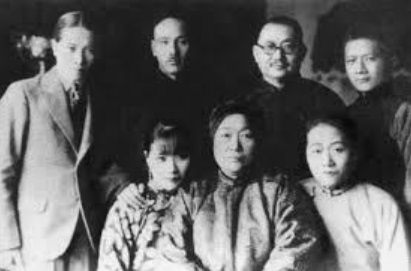 CHEN JIERU's ACCOUNT: To counter Wuhan, Chiang Kai-shek conspired with Mme Kong Xiangxi in instigating the defection of her brother [i.e., KMT finance minister Song Ziwen]. Chen Jieru claimed that Mme Kong Xiangxi, i.e., Soong Ai-ling, arrived in Jiujiang for a 24-hour secret talk with Chiang Kai-shek on board a ship owned by the Bank of China. It was during this talk that Soong Ai-ling demanded that 1) Chiang Kai-shek marry Soong Mei-ling, 2) Kong Xiangxi (HH Kung) be offered the job as a prime minister equivalent, and 3) Song Ziwen (TV Soong) be offered the post of finance minister in exchange for the financial support from the Song & Kong families and the financiers of the Shanghai Bund. Hence, Chiang Kai-shek forcefully sent Chen Jieru to the U.S. on the pretense of a five-year separation. To force out Chen Jieru, Chiang Kai-shek purportedly displayed the 'love letters' between Soong Mei-ling & Chiang Kai-shek dated March 19th, 1927.
From Chiang's diaries, it appeared that Chiang first began to sue May Ling Soong in Canton in June 1926 and before the launch of the Northern Expedition as the NRA commander-in-chief on July 9th, 1926. The two first got acquainted in Sun Yat-sen's place in 1922. By March 1927, the Soong family, including the three sisters' mother and Ella Ling Soong, already treated Chiang as a family member, with the March 18th diaries claiming that the two women immediatey returned to Wuhan from Chiang's base in Xunlu (Jiujiang-Lushan) to order T.V. Soong to secretly ship 2 million yuan money from the Wuhan vault to Jiujiang, after which Chiang Kai-shek felt assured of victory and sailed downstream to direct the Nanking-Shanghai battles.
Thereafter, the "blue jacket" agents mounted an arson attack at the finance ministry in Wuhan for Song Ziwen to exit the Wuhan government, using the fire incident as an excuse. Song Ziwen, after arriving in Nanking, began to run the mint factory around the clock for printing the paper currency [i.e., 'fa bi' or the legalized currency]. Zhang Jingjiang was awarded the post of chairman for Zhejiang Province.
(Chen Jieru's recollections could be flawed here. The Chinese paper currency 'fa bi' would not go into circulation till after China had abandoned the Silver Standard in the 1930s.)
CHEN JIERU's ACCOUNT: To counter Wuhan, Chiang Kai-shek conspired with Mme Kong Xiangxi in instigating the defection of her brother [i.e., KMT finance minister Song Ziwen]. Chen Jieru claimed that Mme Kong Xiangxi, i.e., Soong Ai-ling, arrived in Jiujiang for a 24-hour secret talk with Chiang Kai-shek on board a ship owned by the Bank of China. It was during this talk that Soong Ai-ling demanded that 1) Chiang Kai-shek marry Soong Mei-ling, 2) Kong Xiangxi (HH Kung) be offered the job as a prime minister equivalent, and 3) Song Ziwen (TV Soong) be offered the post of finance minister in exchange for the financial support from the Song & Kong families and the financiers of the Shanghai Bund. Hence, Chiang Kai-shek forcefully sent Chen Jieru to the U.S. on the pretense of a five-year separation. To force out Chen Jieru, Chiang Kai-shek purportedly displayed the 'love letters' between Soong Mei-ling & Chiang Kai-shek dated March 19th, 1927.
From Chiang's diaries, it appeared that Chiang first began to sue May Ling Soong in Canton in June 1926 and before the launch of the Northern Expedition as the NRA commander-in-chief on July 9th, 1926. The two first got acquainted in Sun Yat-sen's place in 1922. By March 1927, the Soong family, including the three sisters' mother and Ella Ling Soong, already treated Chiang as a family member, with the March 18th diaries claiming that the two women immediatey returned to Wuhan from Chiang's base in Xunlu (Jiujiang-Lushan) to order T.V. Soong to secretly ship 2 million yuan money from the Wuhan vault to Jiujiang, after which Chiang Kai-shek felt assured of victory and sailed downstream to direct the Nanking-Shanghai battles.
Thereafter, the "blue jacket" agents mounted an arson attack at the finance ministry in Wuhan for Song Ziwen to exit the Wuhan government, using the fire incident as an excuse. Song Ziwen, after arriving in Nanking, began to run the mint factory around the clock for printing the paper currency [i.e., 'fa bi' or the legalized currency]. Zhang Jingjiang was awarded the post of chairman for Zhejiang Province.
(Chen Jieru's recollections could be flawed here. The Chinese paper currency 'fa bi' would not go into circulation till after China had abandoned the Silver Standard in the 1930s.)
The Split of the CCP From the KMT Leftist Government
Having examined the land revolution in Hunan Province, one might derive an easy conclusion that it was the Mao communists' fault to have provoked the KMT in the first place. Partially right. We have to bear in mind that Sun Yat-sen's KMT was mostly a loose organization of people with different agenda and that Sun Yat-sen was the only person possessing the necessary charisma for holding his party members together. The 'Zhongshan Warship Incident' on March 20th of 1926 had already revealed the irreconcilable differences between the USSR/CCP and Chiang Kai-shek's KMT Right Wing. It was Stalin/Borodin's superstitious belief in a so-called stage of bourgeois revolution that had held the rift together for the time being.
Harold Isaacs mentioned that "the (CCP) Central Committee in Shanghai and the Kwangtung (CCP) party vigorously opposed" Borodin's concessions to Chiang Kai-shek and that "in Moscow, the Opposition led by Trotsky had already begun to demand the liberation of the Chinese Communists from the strait jacket of the Kuomintang." Trotsky, entangled in a power struggle against Stalin since Lenin's death on January 21st, 1924, had proposed a more radical approach by suggesting that the Chinese communists exit from the KMT institution immediately. The dissension between Stalin and Trotsky would spell over to China and the world communism to yield to similarly bloody confrontations between their followers. Wang Jingwei's KMT Left-Wing, however, suffered a dilemma as far as their party orientation went. Unwarranted being the case as to the CCP's ultimate armed rebellion against the Wuhan KMT leftist government, the irreconcilable differences between the USSR/CCP and Chiang Kai-shek's KMT Right Wing would be the same matter that existed between the USSR/CCP and Wang Jingwei's KMT Left Wing. The KMT Left Wing would later split into the communism-sympathizers like Soong Qingling (i.e., Mme Sun Yat-sen) and the so-called 'gan-zu-pai' (the 're-organized KMT leftists'). When the communists first purged the political enemies in guerilla bases (i.e., rural enclave), it would be the Anti-Bolshevik League and the Re-organized KMT Leftists who would be exterminated. In the following, we will examine how the CCP split from and rebelled against the KMT Leftist Government of Wuhan.
The three month reign by the KMT generalissimo Wang Jingwei, from April to July of 1927, was a time period often shrouded in ambiguity. Prevalent writings often lumped together the purge of communists by Chiang Kai-shek's Right-wing KMT and Wang Jingwei's Left-wing KMT, i.e., "qing [purge] gong [communist]" versus "fen [split from] gong [communist]."
On June 1st, Comintern representative Roy arrived in Wuhan with a "Resolution on the China Matter" (i.e., the May Directives).
Mistaking Wang Ching-wei as an ally from the 1925 Zhongshan Warship Incident, Roy showed the Soviet document to Wang Ching-wei, which shocked the latter.
The Soviets
instructed the communists to start the land revolution but leaving out
the landlords who had officers and soldiers in the army, and making concessions to industrialists, merchants and small landowners;
to mobilize 20,000 Communist Party members and 50,000 revolutionary workers and peasants in the Hunan-Hubei areas to form an independent army;
to reform the Kuomintang central committee with workers and peasants, expelling those with conservative thoughts;
to set up revolutionary military courts (i.e., tribunal) and punish reactionary officers.
Wang Ching-wei initially haggled with Roy to implement the measures on the condition of a Soviet loan of 15 million rubles
and then reached compromise with Feng Yuxiang on the matter of expelling the communists and forming a new government.
Feng Yuxiang and Chiang Kai-shek struck an alliance in the Xuzhou Meeting of June 19th
and issued a joint declaration demanding that Wuhan expel Borodin and purge the party off the communists for sake of completing the Northern Expedition, which put pressure on
Wang Ching-wei.
On June 30th, the expanded communist central committee meeting
passed the "Eleven Articles on KMT-CCP Cooperation" and recommended that communists ask for leave to exit the Wuhan National Government.
On July 4th, the CCP held an emergency meeting of the Politburo in Hankow, at which Chen Duxiu and Borodin advocated that the May directives
be put aside
in heated debates with radical communists.
The Comintern rebuked Chen Duxiu and Borodin with accusation of committing "opportunistic" mistakes
and recalled Borodin. On July 8th, the Comintern demanded that members of the Communist Party of China withdraw from the Wuhan government. On July 12th, Chen Duxiu was dismissed from the post as general secretary, and a five-person group consisting of Zhou Enlai, Li Lisan, Li Weihan, Zhang Tailei, and Zhang Guotao took over the party leadership.
On July 13th, the CCP issued a declaration of exiting from the national government and accused Wang Jingwei of sponsoring counterrevolution.
Wang Jingwei, in the name of the presidium of the Politics Meeting (political committee), criticized the Communist Party for undermining the revolution and issued an order to suspend all communists in the Wuhan government.
Wang Jingwei subsequently on July 15th disclosed the "May Directives" to the KMT committee members,
with the KMT leaders in Wuhan reaching a resolution of
the "Policy of Uniting the Party",
which amounted to
splitting from the Communist Party
and
ceasing cooperation with the Communist Party of China.
This came to be known as
the Wuhan–Communist split.
Philosopher-turned Scholar Shan Shaojie, for example, had echoed Mao Tse-tung's generalization that the young communists of China had committed a grave 'subjectivist mistake of the Confucian-apprentice rank' prior to 1927 by paying attention to the mass movement, not the military movement. (See "Mao In Power (1949-1976)," Mirror Books, 2000, Carle Place, NY, ISBN 962-8744-31-3). The natural cause-effect, per Shan Shaojie, would be that the CCP central committee, during the August 7th emergency session in Wuhan, officially endorsed the policy of armed rebellion against the KMT's slaughter and massacre. (Xiang Zhongfa, a communist of worker background, attended the meeting.) Apparently left out here would be the context of August 1st, 1927 Nanchang Uprising that occurred before the August 7th meeting. Wen Yu, similarly, never reflected on the context of the so-called consecutive betrayals to the 'Grand Revolution' by Chiang Kai-shek and Wang Jingwei, respectively.
Recent communist disclosures pointed that the Chinese Communists had colluded with Outer Mongolia in organizing a military force from 1925 to 1927, as well as instigated the mutinies in Sichuan Province after the provincial military leaders agreed to be re-organized under the southern government, i.e., the Luzhou-Shunqing mutiny of December 1926 to May 1927. The separation of the Chinese Communists from the Wuhan government was triggered by Stalin's order to organize a military force among the workers and peasants. So to say that Shan Shaojie was wrong in assuming innocence of the Chinese Communists as far as the mass movement versus military movement was concerned. In Shenxi, for example, the communists took the occasion of April-November 1926 defense of the Xi'an city in organizing various armed bands. Communist Wei Yechou, who was the deputy political director at the former Allied National Army's Shenxi commander-in-chief headquarters and a member of the executory committee of the Shenxi KMT party headquarters, likely left Yang Hucheng's army at the time of separation of two parties but returned to Yang Hucheng's army after July 1927, when he tacked on the job of secretary of the Shenxi provincial military commissariat (that was reorganized from the Shenxi-Gansu regional executory commissariat) and after purportedly ordering the redeployment in sending the communist-controlled armed forces to north of the Wei-shui River, returned to Yang Hucheng's army for further instigation. Purportedly there were over 200 communists inside of Yang Hucheng's army at the time of separation of two parties.
After the Wuhan government issued the order to expel the communists, Mme Sun Yat-sen (Rosamond), together with Chen Youren, et al.,
left for Moscow
in August, where they stayed for half a year before going to
Germany in March of 1928.
The madame was initially not welcomed by Stalin for involvement with the KMT leftists in launching a new party, i.e., the Third Party.
Through February 1928, Xiang filed numerous complaints against the Third Party and its communist supporters as
opportunistic-leaning,
right-leaning liquidationist and semi-Menshevik in nature.
Xiang Zhongfa, not appearing an illiterate puppet, was described to be in constant discussions about the "Third Party" matter with a deputy secretary equivalent person with alias Soloviev (whose real name carried similar soundex to later Malaya communist head Lai Teck (1901-1947), a French-British-Japanese triple agent, seen in Soloviev's correspondence with Bukharin in "All-Union Communist Party (Bolsheviks): Comintern and China").
Xiang was listed together with Kuusinen, Berzin, Pavel Mif, Blyukher, Khmelyov (i.e., Appen),
Mamayev
and Su Zhaozheng among the military committee leadership in the ECCI Oriental Secretariat.
(Sheila Fitzpatrick's The Commissariat of Enlightenment depicted Soloviev as a veteran Soviet person who was arrested during the purge in 1937 but returned to Moscow after 1953.)
About this time, Pavel Mif, who was to be sent to China as a Comintern rep till April 1931, wrote a letter to Leo Karakhan who sent a copy to Kliment Voroshilov (i.e., Soviet military commissariat chair) in March 1928 in regards to the functions Mme Sun Yat-sen could play in the sabotage work, with suggestions to have a top-level Soviet probe the madam's opinion on the "third party" (likely the Soviet scheme to have Deng Yanda launch a Third Party), to have the madam organize the anti-imperialism league in China for sheltering the communists, to instigate the KMT leftists for cooperation with the Chinese Cmmunists,
to ask the madam exert efforts to having the Nanking, Wuhan and Mukden governments restore diplomatic ties with the U.S.S.R. in the framework of the Soviet friendship societies, to counter the KMT propaganda like from Sun Ke, Hu Hanmin and Wu Chaoshu, to invite the madam back to the Soviet Union for indoctrination and work at the Profintern, and to invite Deng Yanda to Moscow for enhancing the two's cooperative work, etc.
Mme Sun Yat-sen returned to Moscow, where she got aquainted with Smedley, and in the name of returning for Sun Yat-sen's coffin-relocation to the Zhongshanling Mausoleum, returned for the state funeral in May of 1929, on which occasion Smedley purportedly acted as the madam's reporter or came to China to report on the coffin relocation.
"KMT-CCP Land Act" By Wuhan's KMT Left-wing Government
Wuhan Government Holding a Second "Oath of Northern Campaigns"
Xu Kexiang Purging Communists In Changsha on May 21st
Comintern Rep M.N. Roy Disclosed to Wang Jingwei a Secret Document from Stalin
Zhu Peide's Courteous Expulsion of Communists From Jiangxi Province
Tang Shengzhi's Eastern Campaign against Nanking
August 1st Nanchang Uprising   Wang Jingwei [Wang Ching-wei] Government in Wuhan, per Jiang Yongjing, did not have a real separation from the CCP till the outbreak of the 'August 1st Nanchang Uprising' in Jiangxi Province. However, by late July of 1927, Wang Jingwei already sensed an incoming uprising by the communists inside of the armies that the Wuhan government controlled, and Wang Jingwei ordered a real-sense purge of the communists that unfortunately came too late to stop the locomotive.
on July 21st, Gong Chu received a secret order to detach from Chen Jiayou's 13th Corps for Nanchang. Gong Chu, for leaving Wuhan without being charged with court martial or facing possible attacks by the other armies in and around Wuchang, faked to Chen Jiayou with a claim that his North River soldiers wanted to return to the Guangdong hometown for homesickness.
On July 26th, Heh Long's 20th Corps arrived in Nanchang from Jiujiang after allowing Ye Ting's 24th division (subject to the 11th Corps) board the train for Nanchang earlier. On the same day, Wang Jingwei officially expelled Mao Tse-tung, Li Lisan, Zhou Enlai and Peng Pai, et al., from the KMT, and wired to the Russian advisers as to the truth of a rumor about the possible communist uprising. Wang Jingwei's most wanted list issued on August 8th, 1927 would include 197 communist members.
Wang Jingwei [Wang Ching-wei] Government in Wuhan, per Jiang Yongjing, did not have a real separation from the CCP till the outbreak of the 'August 1st Nanchang Uprising' in Jiangxi Province. However, by late July of 1927, Wang Jingwei already sensed an incoming uprising by the communists inside of the armies that the Wuhan government controlled, and Wang Jingwei ordered a real-sense purge of the communists that unfortunately came too late to stop the locomotive.
on July 21st, Gong Chu received a secret order to detach from Chen Jiayou's 13th Corps for Nanchang. Gong Chu, for leaving Wuhan without being charged with court martial or facing possible attacks by the other armies in and around Wuchang, faked to Chen Jiayou with a claim that his North River soldiers wanted to return to the Guangdong hometown for homesickness.
On July 26th, Heh Long's 20th Corps arrived in Nanchang from Jiujiang after allowing Ye Ting's 24th division (subject to the 11th Corps) board the train for Nanchang earlier. On the same day, Wang Jingwei officially expelled Mao Tse-tung, Li Lisan, Zhou Enlai and Peng Pai, et al., from the KMT, and wired to the Russian advisers as to the truth of a rumor about the possible communist uprising. Wang Jingwei's most wanted list issued on August 8th, 1927 would include 197 communist members.
More available at Nanchang Mutiny. (Check RepublicanChina-pdf.htm page for up-to-date updates.)
* In Commemoration of China's Fall under the Alien Conquests in A.D. 1279,
A.D. 1644 & A.D. 1949 *
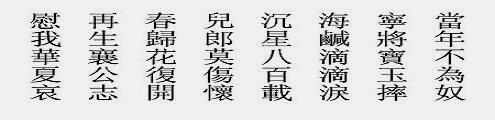 U.S.S.R./Comintern Alliance with the KMT & CCP (1923-1927)
 Korean/Chinese Communists & the 1931 Japanese Invasion of Manchuria Korean/Chinese Communists & the 1931 Japanese Invasion of Manchuria
American Involvement in China: Soviet Operation Snow, IPR Conspiracy, Dixie Mission, Stilwell
Incident, O.S.S. Scheme, Coalition Government Crap, Amerasia Case & The China White Paper
* Stay tuned for "Republican China 1911-1955: A Complete Untold History" *
|
|
Zou Rong's Revolutionary Army;
Shin Kyu Sik's
Shrine (Spirit, Kunitama) of Korea
|
This snippet is for sons and daughters of China:
Heed the sons & ministers' agony and sorrow of our ancestors who died or lived through the Mongol, Manchu and Soviet-Chicom conquest
and
the Yongjia, Jingkang and Jiashen cataclysms !
Jeanne d'Arc of China:
Teenager girl Xun Guan breaking out of the Wancheng city to borrow the relief troops in the late Western Jinn dynasty;
Liu-Shao-shi riding into the barbarian army to rescue her husband in the late Western Jinn dynasty;
teenager girl Shen Yunying breaking into Zhang Xianzhong's rebels on the horseback to avenge on father's death in the late Ming dynasty.
China's Solitary and Lone Heroes:
Nan Jiyun breaking out of the Suiyang siege and charging back into the city in the Tang dynasty;
Zhang Gui & Zhang Shun Brothers breaking through the Mongol siege of Xiangyang in the Southern Soong dynasty;
Liu Tiejun breaking through three communist field armies' siege of Kaifeng in the Republican China time period;
Zhang Jian's lone confrontation against the communist army during the June 3rd & 4th Massacre of 1989.
|
|
|
Chiang Kai-shek's Step-down & Re-gaining Power
On August 8th, 1927, Li Zongren, Bai Chongxi and Li Jishen, et al., proposed that Wang Jingwei's Wuhan government converge with the Nanking government after sharing a common ground on the matter of purging the communists. Wang Jingwei stated that Chiang Kai-shek must step down before the Wuhan government could come to Nanking. On August 8th, Wang Jingwei's Wuhan government passed resolution as to purge of the communists and issued a most wanted list which would include 197 communist members. On August 12th (13th?), Chiang Kai-shek agreed to stepping down for party unity's sake. (Li Zongren memoirs stated that Chiang Kai-shek's personal emissary, i.e., Chu Minyi, had shuttled between Wuhan and Nanking numerous times, with an understanding that Chiang must step down to appease Wuhan. However, the rumor flied that Li Zongren, Bai Chongxi and Heh Yingqin had pressured Chiang into a step-down. Writer Liu Feng adopted this rumor which Li Zongren, in his memoirs, had claimed to have disputed with Chiang Kai-shek few times whereas Chiang Kai-shek dissuaded it by refusing to pierce it publicly.) Before the step-down, Chiang Kai-shek visited Chen Jieru in her mother's house in Shanghai on August 1st, with a request that Chen Jieru go to America for five years so that he could marry with Soong Mei-ling. Per Chen Jieru, Chiang Kai-shek cursed himself by stating that he would be willing to be banished overseas should he fail to retrieve Chen Jieru within 10-20 years.
On September 16th, the National Commissar meeting, on basis of the August 22nd Jiujiang Meeting, was held in Nanking for expanding the 47 person military commission to 96 members. The Nanking and Wuhan governments hence merged together. However, Hu Qiuyuan pointed out that Wang Jingwei & Tang Shengzhi maintained the KMT Wuhan Politics Sub-committee for preserving their independence. Chen Jieru boarded ship President Jackson on August 19th. On the same day, Reuters reported that Chiang Kai-shek had agreed to step down for his dereliction (i.e., Chiang Kai-shek's Defeat At Xuzhou) in the continuous campaigns northward; that Chiang Kai-shek would depart for Germany soon; and that the British dispatched 150 marines to Nanking for self-protection. On September 19th, 1927, in San Francisco, Chen Jieru first read about Chiang Kai-shek's denial of existing marriage with her, and on September 24th, in New York, Chen Jieru read about Chiang Kai-shek's plan to go to Japan for obtaining the approval from Soong Mei-ling's mother so that he could marry with Soong Mei-ling. On September 28th, Chiang Kai-shek left for Japan.
On October 6th, Zhang Fakui gave a public wire against the KMT special commission, and On October 21st, Tang Shengzhi declared that his Wuhan branch of the politics committee separate from the Nanking's National Government. On October 21st, Tang Shengzhi declared that his Wuhan branch of politics committee separate from the Nanking's National Government. On November 1st, Jiang Dingwen assumed the post of 1st Division Chief and departed for north of the Yangtze from Hangzhou. On November 4th, the military committee ordered that the Fourth Route and the Fifth Route, headed by Cheng Qian and Zhu Peide, campaign against Tang Shengzhi in the west. Li Jishen in Guangdong and Huang Shaohong in Guangxi echoed the National Government in campaigns against Tang Shengzhi. When Tang's two generals, Heh Jian and Li Pingxian, refused to follow order, Tang Shengzhi declared a step-down on November 12th and fled to Japan thereafter. The KMT's Western Expedition army took over Wuchang of Hubei Province.
On November 10th, Chiang Kai-shek returned to Shanghai. Chiang Kai-shek obtained the support of Feng Yuxiang and Yan Xishan in restoring his post as commander-in-chief. Li Zongren pointed out that Chiang Kai-shek had intentionally stepped down for sake of having Wang Jingwei exercise the control over Tang Shengzhi because Tang Shengzhi's "Eastern Campaign" held a slogan of getting rid of Chiang Kai-shek only. (Li Zongren memoirs stated that two generals under Tang Shengzhi, i.e., Liao Lei & Ye Qi, later disclosed that Tang had secret negotiations with Sun Chuanfang & Jiang Baili for a joint attack at Nanking from west and north. However, Sun Chuanfang launched an attack at Nanking without waiting for Tang Shengzhi in the attempt of "whoever first sacked the capital would be the king." Li Zongren's conclusion is that Chiang Kai-shek stepped down with a good prediction of ultimate return after Wang Jingwei & Tang Shengzhi was to have their internal strife.) On December 10th, the KMT 4th Plenary of the 2nd Congress restored Chiang Kai-shek's post. See the Second Northern Expedition for details.
In early 1928, Xia Zhishi, a veteran of the 1911 Xin Hai Revolution, visited Nanking area in the hope of reviving his political career. After losing power in 1920 in Sichuan Province, Xia Zhishi had established a middle school called Jinjiang Public School [the name of which his wife Dong Zhujun, later on March 15th, 1935, appropriated to found the now famous "Jinjiang Restaurant" in Shanghai]. From 1920 to 1923, Xia Zhishi indulged himself in gambling and tacked on opium which eventually led to the divorce between him and Dong Zhujun. Incidentally, in 1923, Dai Jitao had an unsuccessful suicide by jumping into the Yangtze River while on his way to Sichuan. [Dai Jitao committed suicide again in Canton prior to the communist takeover in 1949.] Xia Zhishi and Dai Jitao spent quite some time together for sharing the same kind of "downturns in political careers." Dai Jitao [Dai Chuan xian], i.e., Jiang Huiguo's birth-father, would become stepfather of Dong Zhujun's children. Dong Zhujun, owning to her husband's acquaintances, often received the warlord visitors including Yang Sen who had a notoriety of killing two concubines for their "extra-marital affairs." Later in 1949, Dong Zhujun was responsible for persuading Yang Hu into giving up Shanghai to the CCP, while Yang Hu, having enjoyed a few days as the top guest of the communist government, ultimately died in the hands of the communists for his complex relationship, multiple concubines and rebellious character.
The CCP Armed Rebellions
Borodin, being on the verge of total disaster, did not forget to ask Wang Jingwei stamp out a 'performance report' for him to bring back to the USSR. Chen Duxiu refused to go to Moscow in July. On July 23rd of 1927, two new Comintern representatives, 29-year-old Lominadze (a Georgian native of Stalin's) and 25-year-old Nuo-yi-man (Heinz Neumann? a German), arrived in Hankou of Hubei Province, with a mission and a direct order from Stalin and Bukharin who had finally realized that the U.S.S.R. had lost their case of an ally in the KMT. The two new guys would replace Borodin and Roy, deprive Chen Duxiu of the CCP leadership, blame all past errors and mistakes on Chen Duxiu's opportunism, and institute Qu Qiubai as the new CCP leader. (Qu Qiubai, a Jiangsu Province native, had visited the U.S.S.R. in 1920 as reporter for Peking's "Morning Post," later transcribed the song 'Internationale' into Chinese, and firmly supported the Comintern during the 'grand revolution.' Li Weihan memoirs stated that Qu Qiubai was selected for his adamant criticisms of Chen Duxiu/Peng Shuzhi and Dai Jitao perspectives.) After the meeting, Li Weihan, et al., repeatedly requested that Chen Duxiu go to Moscow; however, Chen refused to go and later on November 15th, 1929, Chen Duxiu, veteran secretary general for 5 CCP Sessions, was expelled from the CCP for splitting the party. Also going onto the Trotsky path would be senior CCP activist Gao Yuhan, i.e., party admission witness for both Li Kenong and Qian Xincun [Ah Ying]. Ah Ying, who fled to Wuhan of Hubei Province from Wuhu of Anhui Province, would soon embark on another escape journey to Shanghai after the communist-led Nanchang Uprising was smashed in Jiangxi Province.
The Comintern, back on July 14th, had passed resolutions demanding that
1) the CCP exit the Wuhan KMT leftist government but retaining party membership inside the KMT,
2) the CCP re-initiates the land revolution,
3) the CCP fight the opportunists inside of the party, etc.
The Land revolution, which was earlier suppressed by Borodin and Wang Jingwei for appeasing the Wuhan KMT generals, would be on top of the CCP party agenda. The August 1st Nanchang Uprising would be the so-called 'First Shot' of the CCP armed rebellions.
On August 7th, 21 CCP members, including Qu Qiubai, Li Weihan and Deng Xixian [aka Deng Xiaoping], attended the meeting into which the Georgian and two Russians were brought inside one by one within three consecutive days for avoiding attention of the outsiders. per WY, this meeting, having affirmed the new Comintern policies of land revolution and armed rebellions, also led to the start of the CCP extreme-leftist approaches, i.e., 1) continuous urban armed rebellions targeted at cities, 2) elevating the anti-bourgeois struggle to the same level as anti-imperialism and anti-feudalism, 3) emphasis on the importance of the CCP leadership's worker descent background, and 4) start of using individual CCP leaders as scapegoats. During the one day meeting, Mao made a speech as to the importance of armed rebellion, and Mao declined the entry into politburo by emphasizing his departure for leadership of the autumn harvest uprising.
On August 8th, Wang Jingwei's Wuhan government passed resolution as to purge of the communists and issued a most wanted list which would include 197 communist members.
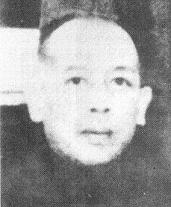 On August 9th, the CCP interim politburo decreed that Qu Qiubai, Su Zhaozheng and Li Weihan be the members of the standing committee of the CCP central committee at the suggestion of Lominadze and that the CCP central committee relocate to Shanghai. The August 7th Meeting, basically stating that China's revolution had reached the stage of the Russian 1917 Revolution rather than the 1905 Revolution, would propagate the new party guidelines across China for launching into a full motion of armed rebellions as well as movements among the workers, students and women. (The Interim CCP Central, on September 19th, decreed to discard the 'flag' of the Nationalists, and promulgated the launch of the "Chinese Soviets".) On August 9th, the CCP interim politburo decreed that Qu Qiubai, Su Zhaozheng and Li Weihan be the members of the standing committee of the CCP central committee at the suggestion of Lominadze and that the CCP central committee relocate to Shanghai. The August 7th Meeting, basically stating that China's revolution had reached the stage of the Russian 1917 Revolution rather than the 1905 Revolution, would propagate the new party guidelines across China for launching into a full motion of armed rebellions as well as movements among the workers, students and women. (The Interim CCP Central, on September 19th, decreed to discard the 'flag' of the Nationalists, and promulgated the launch of the "Chinese Soviets".)
The Autumn Harvest Uprising
In September of 1927, Mao Tse-tung (Mao Tse-tung), conferred the title of 'special commissar,' was dispatched to the Jiangxi-Hunan border for organizing Autumn Harvest Uprising, with an objective of attacking the Hunan provincial capital, Changsha. Mao Tse-tung had a short meeting with his wife Yang Kaihui who, together with his sons, went into hiding when Mao Tse-tung returned from Hubei after attending the CCP August 7th Meeting. Yang Kaihui accompanied Mao Tse-tung into Changsha on August 16th, and by the end of August 1927, Mao Tse-tung circumvented to Tonggu via Anyuan under the escort of Chen Zhi'an for leading the 'Autumn Harvest Uprising.' While on the road, Mao was at one time caught by two local gentry soldiers, and he somehow slipped away after bribing the captors with all his silver dollars.
(This could be a made-up as new revelations show that Mao had betrayed the other Hunan communists to get released from captivity.)
Note Mao's autumn harvest uprising was not a pure peasants' rebellion, but a military action orchestrated under the leadership of 22-year-old Lu Deming, i.e., regiment chief for the Garrison Regiment of the Wuhan National Government. Lu Deming's Garrison Regiment was established in June 1927 under the sponsorship of Zhang Fakui, but at the suggestion of Ye Ting. Lu Deming, late for the August 1st Uprising, stationed his troops at Wuning of Jiangxi Province and then joined Mao in the autumn harvest uprising. Lu Deming, in the Xiushui area, converged with the workers and peasants into the so-called First Division of the Workers and Peasants Army (WPA), with 4 regiments organized. Mao, as "te pai yuan" (i.e., special commissar), took over the leadership and directed the First WPA Division of 5000 men against provincial capital Changsha on the lunar calendar Mid-Autumn Festival's day. Mao, however, was recorded to have declined Zhang Ziqing's offer of a pistol by emphasizing his political function, a coward who refused to fire a weapon at the frontline. In the Changsha city, 5000 workers had acted as internal support for the rebellion.
The communists had setback in attacking Pingjiang and Liuyang in the mid-autumn festival uprising, i.e., part of the enveloping-Changsha operation.
When examining the communist masterplan of simulateneous uprisings in Xiushui, Anyuan, and Tonggu of Jiangxi for a three-direction attack of Changsha of Hunan, the missing link appeared to be Tonggu.
Chen Tiejian's general history of the Chinese neo-democracy revolution pinned the date of arrest around September 10-11th, with Mao's mission being to go to Tonggu for organizing and commanding a 3rd Regiment of the WPA First Division.
Mao's exact whereabouts prior to the September 9-10th autumn harvest festival date remained unclear.
Though, Mao purportedly on September 11th wrote a prose Autumn Harvest Uprising under lyrical title Xi-jiang Yue (moon of the west river), with a claim of not staying back at the Kuanglu (Kuang brothers' hut on mount Lushan of Jiangxi) area ("kuang-Lu yidai bu tingliu") and going straight towards Xiao-Xiang (Xiao-shui and Xiang-shui rivers of Hunan) ("yao xiang Xiao-Xiang zhijin") -- a poem that Mao did not publish while being alive and that had a second version with minor change of place names to Xiushui-Tonggu ("Xiu-Tong yidai bu tingliu") and Pingjiang-Liuyang ("yao xiang Ping-Liu zhijin").
On September 19th, the troops retreated to Wenjiashi (Wen family market) of Liuyang, where Lu Deming overruled division commander Yu Sadu as to continuing to attack Changsha. Lu Deming, at the frontline commissariat meeting, passed a resolution to take the troops to southern Hunan.
According to Gong Chu, the renewed attack against Changsha aborted when former Xia Douyin's pacified troops rebelled again and peasants' troops fled. This contradicted Jung Chang's peudo-history which put blame squarely on Mao.
Lu Deming died in action shortly thereafter, though. Mao, by late October 1927, led the remnants towards the Jinggangshan Mountain where he converged with the banditry of Yuan Wencai and Wang Zuo.
Yuan Wencai and Wang Zuo were eliminated in March 1930.
The Wuhan Government, Nanking Government, & KMT Re-Organizers
On September 15th, 1927, the Wuhan Government, the Nanking Government, and the KMT re-organizers in Shanghai held a three-party conference for organizing the "purging communist special commission" and officially deprived the communists of their party membership inside the KMT. As a precondition for the Nanking & Wuhan KMT governments to reconcile, Chiang Kai-shek stepped down and left for Japan on September 28th. Mao, et al., however, would be restored membership in the KMT, without advance notice to the CCP, by the KMT censoring committee in June 1938 in the aftermath of the second cooperation between the KMT and the CCP.
Zhang Fakui, who had claimed to cooperate with the communists FOR EVER, would sever himself from the combined KMT government. On October 6th, Zhang Fakui gave a public wire against the KMT special commission, and On October 21st, Tang Shengzhi declared that his Wuhan branch of the politics committee separate from the Nanking's National Government. On November 1st, Jiang Dingwen assumed the post of 1st Division Chief and departed for north of the Yangtze from Hangzhou. On November 4th, the military committee ordered that the Fourth Route and Fifth Route, headed by Cheng Qian and Zhu Peide, campaign against Tang Shengzhi to the west. Li Jishen in Guangdong and Huang Shaohong in Guangxi echoed the Nanking National Government in campaigns against Tang Shengzhi. When Tang's two generals, Heh Jian and Li Pingxian, refused to follow order, Tang Shengzhi declared a step-down on November 12th and fled to Japan thereafter. The KMT's Western Expedition army took over Wuchang of Hubei Province. On November 10th, Chiang Kai-shek returned to Shanghai. On November 17th, 1927, in Canton, Zhang Fakui's Huang Qixiang army rebelled by announcing a slogan of 'Fighting the neo-Gui-xi Warlord.' Li Jishen and Wang Jingwei disagreed over the cause of Zhang Fakui's action. Meanwhile, Chiang Kai-shek obtained the support of Feng Yuxiang and Yan Xishan in restoring his post as commander-in-chief. On December 10th, the KMT 4th Plenary of the 2nd Congress restored Chiang Kai-shek's post.
The CCP Going Straight To "Socialist Revolution"
On November 9th, the CCP interim politburo held an expanded meeting in Shanghai, attended by a new Comintern rep called Mi-te-kai-wei-qi who was sent over to replace the Georgian. This meeting passed Lominadze's resolution stating that China, not possessing the conditions for a transitionary stage of the bourgeois revolution, had to go straight to the socialist revolution. Qu Qiubai authored articles including "What Kind Of Revolution Is China's Revolution," "On Armed Rebellions," and "Was China's Revolution At Distressed Stage?."
The CCP Politburo hence ordered general strikes or general uprisings in such major cities as Guangzhou, Shanghai, Wuhan, Tianjin and Changsha. This would yield the following actions: the peasant uprisings in Yixing and Wuxi of Jiangsu Province, Shanghai peasant uprisings in Jinshan-Fengxian counties, Wuhan City Uprising, and Shunzhi Uprising in northern China. Chen Yun, after the April 12th purge, returned to his hometown of Liantang of Qingpu county [in today's Shanghai], bordering the Dianshanhu lake. Using alias Chen Ming, Chen Yun tacked on the post of the CCP party representative for the "peasant revolutionary army of the Songjiang segment of the Shanghai-Hangzhou Railway" in January 1928. After the aborted uprising, Chen Yun assumed the post of CCP party branch secretary for Qingpu county [of Jiangsu Province]. Per Tao Zhucheng, Wan Yijun, who put on drama "The Hatred Of the Koreans Over Loss Of Country." and acted as Korean assassin An Jung-geu [An Chongwen] during the 1919 May 4th student movement, died during the 1928 Yixing Uprising.
Rebellions near the outskirts of Shanghai, i.e., Fengxian-Jinshan counties, were led by early CCP leader called Liu Xiao. This webmaster's late grandma mentioned how one communist insurgent, while attempting to throw a grenade over the high-rise wall of a landlord's home, died in front of her home, with intestines flowing out of the belly as a result of the self-explosion of a grenade. The peasants burnt down the whole town during the uprising, and current township layout was completely rebuilt after the 1927 CCP arson. At the spot where this guy died, ghost was spotted, and township people used to offer some sacrificial food whenever their kids fell ill. (The local people touted Liu Xiao as a hero who might someday humbly paid a visit to the countryside to give them some favor or save them from hardship. Having traveled across the entire Hangzhou Bay area, this webmaster had observed over a dozen dilapidated so-called 'wan ren keng,' i.e., 10,000 people mass grave yards, with victims of innocent Chinese massacred by the Japanese invaders who landed on the muddy beach of Jinshanwei in 1937 to thwart the 3-month-long frontal Shanghai defense. In contrast with those dilapidated monuments, often in the shape of an electric pole, the CCP had erected a high-rise sword-shape revolutionary monument standing on a tall hill, something called the "people's hero monument" in remembrance of the martyrdom of the 1927 'nameless' insurgents.)
The Canton Uprising
In Guangzhou, Zhang Tailei, an early communism activist who followed Yang Mingzhai to the Russian Far East for reporting China's communism activity to the Comintern in Spring of 1921 and later attended the Comintern Third Congress in Moscow in June of 1921, led an uprising against Zhang Fakui by taking advantage of Zhang Fakui's campaign against Li Jishen (chief of the 4th Corps) and other contesters. The uprising, originally scheduled for December 13th, pulled ahead due to divulsion of the scheme. Before that, Xu Xiangqian had arrived in Guangzhou (Canton) from Shanghai in late September and was responsible for training the workers' armed forces.
On November 9th, Wang Ching-wei
summoned four central executive committee members, including Gu Mengyu, Wang Faqin, Wang Leping, and Pan Yunchao, to Canton.
In a conspiracy with Wang Ching-wei,
Zhang Fakui pretended to leave for Hongkong while having Wang Ching-wei invite Li Jishen to Shanghai for the planned preparatory meeting of the KMT Fourth Plenum.
Zhang Fakui sneaked back after Li Jishen left Canton.
On November 16th,
Zhang Fakui and Huang Qixiang launched the "Party Protection Movement" coup against Li Jishen and Huang Shaohong,
and disarmed Li Jishen's troops.
The
communists conducted the Canton Commune mutiny while Zhang Fakui's army was fighting against Li Jishen and Huang Shaohong's army outside of Canton.
Zhang Fakui purportedly knew that Heinz Neumann, i.e., Beso Lominadze's assistant, arrived in Canton on November 28th-29th and wanted to meet him but was declined.
Zhang's memoirs claimed that the communists were still with Huang Qixiang from day one.
Neumann overruled the communist suggestion to ally with Zhang Fakui.
Zhang did not know that Stalin had bought into Trotsky and Bukharin's viewpoints to conduct the Soviet revolution and establish the worker-soldier Soviet.
Other than sending Neumann,
Eisler and a person called Lutovinov (whom Wang Weilian claimed to be a Profintern leader but could be the same person as Pepper of the Canton trio), et al., to Canton,
Stalin ordered the Soviet consulate officials in Canton
to take charge of the riot, with a Semenov (with alias Andrei) directing the operation.
Taking advantage of Zhang's entangles with adversaries Li Jishen and Huang Shaohong,
the communist-controlled Teaching Regiment of the 4th Corps and the Canton garrison regiment launched the Canton Commune on December 11th.
Communists launched a rampage across Canton, with massacre, looting and arson going on everywhere.
It took Zhang Fakui some time to obtain reconciliation of various KMT factions to stop the civil wars for returning to Canton to quell the rebellion.
Neumann faithfully observed Bukharin's directive of conducting revolution in the city center.
The communistr rebels persisted in Canton for two to three days, that led to the defeat debacle.
Soviet deputy consul Khassis (a Frunze graduate whom Nie Rongzhen claimed to be the mutiny mastermind) and four other consulate officials were executed with signposts on the corpses.
Neumann escaped.
Other escapees included Peluso, Semenov and Pepper.
Deng Fa escaped first to hometown and then back to Hongkong, where he took over the party control at the Taikoo Dockyard and later launched the HK Central Special Branch.
Tao Zhu, after finding out that the communists had abandoned Canton, sent his troops to chasing after the retreating rebels while he himself hid in Canton as a civilian and then fled to hometown in southern Hunan.
This was one of numerous occasions that Tao Zhu escaped for life, with another episode to become a monk in a Fujian monastery.
Over the communist Canton Commune, Zhang Fakui and Huang Qixiang were forced to resign, yielding the NRA 4th Corps to Miu Peinan.
More available at Canton Commune. (Check RepublicanChina-pdf.htm page for up-to-date updates.)
* In Commemoration of China's Fall under the Alien Conquests in A.D. 1279,
A.D. 1644 & A.D. 1949 *
U.S.S.R./Comintern Alliance with the KMT & CCP (1923-1927)
Korean/Chinese Communists & the 1931 Japanese Invasion of Manchuria
American Involvement in China: Soviet Operation Snow, IPR Conspiracy, Dixie Mission, Stilwell
Incident, O.S.S. Scheme, Coalition Government Crap, Amerasia Case & The China White Paper
* Stay tuned for "Republican China 1911-1955: A Complete Untold History" *
|
|
Zou Rong's Revolutionary Army;
Shin Kyu Sik's
Shrine (Spirit, Kunitama) of Korea
|
This snippet is for sons and daughters of China:
Heed the sons & ministers' agony and sorrow of our ancestors who died or lived through the Mongol, Manchu and Soviet-Chicom conquest
and
the Yongjia, Jingkang and Jiashen cataclysms !
Jeanne d'Arc of China:
Teenager girl Xun Guan breaking out of the Wancheng city to borrow the relief troops in the late Western Jinn dynasty;
Liu-Shao-shi riding into the barbarian army to rescue her husband in the late Western Jinn dynasty;
teenager girl Shen Yunying breaking into Zhang Xianzhong's rebels on the horseback to avenge on father's death in the late Ming dynasty.
China's Solitary and Lone Heroes:
Nan Jiyun breaking out of the Suiyang siege and charging back into the city in the Tang dynasty;
Zhang Gui & Zhang Shun Brothers breaking through the Mongol siege of Xiangyang in the Southern Soong dynasty;
Liu Tiejun breaking through three communist field armies' siege of Kaifeng in the Republican China time period;
Zhang Jian's lone confrontation against the communist army during the June 3rd & 4th Massacre of 1989.
|
|
|
Qu Qiubai's Policy Of Perpetuating Armed Rebellions
Rebellions, pronounced 'bao dong,' was also a word often ridiculed by Hongkongers in reference to the Red Guards' attempts at overthrowing British rule in HK during the 1960s. 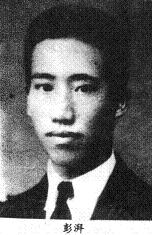 Communist fervor in the uprising could be seen in one scene recalled by Xu Xiangqian: Peng Pai's wife, by the name of Xu, at one time put down her sibling and demanded that she joined her husband in the siege of Huilai city. Xu Xiangqian himself had deliberately allowed his wife [Cheng Xunxuan] to be arrested, interrogated and executed by Zhang Guotao clique during the second wave of the Anti-Bolshevik League Purge. Xu Xiangqian, having barely returned from abortive Red Army Second Western Expedition, would be subject to further suspicion and persecution in Yan'an, with most of his Red Army Fourth Flank followers executed for implication with Zhang Guotao. One more example to show how communists were made of "special material" would be Xiang Ying's personal shooting death in May 1938 of his former wife [Zhang Liang] who, being arrested together with Qu Qiubai in 1935 and suspected of having betrayed Qu Qiubai, had just returned to Xiang Ying after a release from years of KMT prison life. Communist men and women simply had no regard for their own lives as well as the others. Communist fervor in the uprising could be seen in one scene recalled by Xu Xiangqian: Peng Pai's wife, by the name of Xu, at one time put down her sibling and demanded that she joined her husband in the siege of Huilai city. Xu Xiangqian himself had deliberately allowed his wife [Cheng Xunxuan] to be arrested, interrogated and executed by Zhang Guotao clique during the second wave of the Anti-Bolshevik League Purge. Xu Xiangqian, having barely returned from abortive Red Army Second Western Expedition, would be subject to further suspicion and persecution in Yan'an, with most of his Red Army Fourth Flank followers executed for implication with Zhang Guotao. One more example to show how communists were made of "special material" would be Xiang Ying's personal shooting death in May 1938 of his former wife [Zhang Liang] who, being arrested together with Qu Qiubai in 1935 and suspected of having betrayed Qu Qiubai, had just returned to Xiang Ying after a release from years of KMT prison life. Communist men and women simply had no regard for their own lives as well as the others.
From November 9th to 10th of 1927, Lominadze hosted an interim CCP politburo meeting in Shanghai, proposing "uninterrupted [i.e., perpetual] revolution" instead of "two-stage revolution" for application to the Chinese case. This meeting passed Lominadze's resolution stating that China, not possessing the conditions for a transitionary stage of bourgeois revolution, had to go straight to socialist revolution. 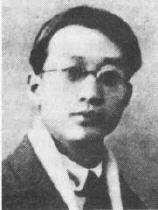 Qu Qiubai authored articles including "What Kind Of Revolution Is China's Revolution," "On the Armed Rebellions," and "Was China's Revolution At Distressed Stage?." Qu Qiubai authored articles including "What Kind Of Revolution Is China's Revolution," "On the Armed Rebellions," and "Was China's Revolution At Distressed Stage?."
In Wuhan, the CCP Hubei Province branch and the CCP Yangtze Area Bureau had already blamed Luo Yinong, et al., for missing the opportunity of uprising one month earlier, which was an attempt at taking advantage of Tang Shengzhi's entangles with and subconsequent defeat in the hands of Nanking Government. In Changsha, the CCP Hunan Province committee issued an order on November 24th for a general provincial uprising. On December 1st, a decision was made for the start of a strike on December 7th. On December 10th, railroad workers began to strike under the personal supervision of CCP provincial commissar. A dare-to-die column, consisting of 200 men, would be mobilized for attacking the electricity company, the provincial military council and the provincial capital garrison headquarters. On the same night, the uprising was quelled after Zhang Fakui sent over a division.
Wen Yu pointed out that the CCP's rebellion guidelines spelled out such clauses as burning and killing in Hunan-Hubei and Jiangsu provinces. In Hanchuan area of Hubei Province, the CCP leaders were instructed to burn villages, towns and cities; in Hunan areas, the CCP leaders were instructed to kill all KMT re-organizers (Wang Jingwei's faction), worker traitors, detectives, and reactionaries; and in Hubei extra-territories, the CCP leaders were instructed to attack foreigners.
Turn-Of-The-Year Uprisings By Zhu De & Chen Yi
Conversion With Mao Tse-tung On Mt Jinggangshan
Qu Qiubai's Continuing Li Lisan's Centralized Control Over the CCP
Uprisings On Hainan Island
Uprisings In Xiang-E-Xi [western Hunan-Hubei provinces]
Uprisings In E-Yu-Wan [Hubei-Henan-Anhui]
Weinan & Huaxian Uprising in Shaanxi Province
Canton Commune Remnants
In December 1927, after the failure of the Canton Commune, Xu Xiangqian caught up with the retreating rebels at Taiheyu, and then marched on towards the Huaxian county. They entered the Huaxian county capital after defeating local gentry-organized forces and stayed put for 3 days. Local forces had hide-and-seek warfare with the communists continuously.
Xu Xiangqian stated that they had about 1440 persons left, with communists taking up 10-20% and KMT leftists taking up the rest. Further, only two, Xu Xiangqian and Wu Zhan, were from the Whampoa Academy First Session. Ye Yong, who was made into division chief, was graduated from the 3rd Session. The components of this army were mostly from the Whampoa 4th Session and Wuhan Academy. They named it the Red Army 4th Division, with Yuan Guoping acting as party commissar, and three regiments of the 10th, 11th and 12th were organized. The Red Army 4th Division's numbering or order of battle was supposedly based on the fact that Zhu De's Nanchang Uprising army was the 1st Division, another portion of the Nanchang Uprising army which remained at Hailufeng was the 2nd Division, and communist guerilla forces in Qiongya (Hainan Island) was the Red Army 3rd Division.
The Red Army 4th Division, having tried in vain to get in touch with Zhu De three times, decided to converge with the Red Army 2nd Division in the Hailufeng area. After crossing the Dongjiang River [East River], they captured county magistrate Qiu Guozhong at the Zijin county and executed him. Along the road, local gentry forces set up signs stating 'welcome entry and welcome exit.' By January 1st, 1928, they converged with Peng Pai's 2nd Division at the Haifeng county.
Peng Pai, a graduate of Waseda University, had undertaken three uprisings from 1924 to 1927. With the help of the Red Army 2nd Division, i.e., about 1000 soldiers who were led to the south by Dong Lang and Yan Changyi from the Nanchang Uprising, assisted Peng Pai in attacking Haifeng and Lufeng in October 1927. The CCP East River Bureau organized a 10,000 people welcome party for the 4th Division. At the meeting, Peng Pai claimed that the CCP's laws would be execution of landlords once they were caught.
Xu Xiangqian would remain in this area till January 1929 when last remnants of the Red Army 2nd & 4th Divisions were reduced to a dozen people and had to evacuate to Shanghai. This would not be Xu Xiangqian's last time of becoming "bald commander" as he would lose his Red Army during the Western Expedition for purpose of retrieving heavy weaponry that the Comintern had transported to Russian Alma Ata [A-la-mu-tu] on the border of the New Dominion Province, or actually with some equipment already moved to the Xinjiang-Gansu borderline but deliberately left in the dark by Mao Tse-tung whose objective was to borrow Ma Family cavalry to destroy political enemy Zhang Guotao's Red Army, albeit reaching a truce after the December 1936 Xi'an Incident. On the road to HK, Xu Xiangqian's team split into two halves, with the other half never making their way to HK. After arriving in Shanghai, Xu Xiangqian was in 1929 dispatched by communist Yang Yin to the Hubei-Henan-Anhui border areas for organizing the Red Army 4th Flank Base.
Pingjiang Uprising by Peng Dehuai & Zhang Yunyi (July 1928)
Bai'se Uprising by Deng Xiaoping (1929)
The KMT White Terror
On April 5th, 1927, the KMT supervisory [censoring] committee, on basis of April 2nd Wu Jingheng's purge proposal, ordered that the Nationalist armies monitor the communist activities in their respective domain. Li Zongren stated that the wavering armies were relocated away from Shanghai, including Chiang Kai-shek's crony armies while the Guangxi Province army, i.e., the only army that was immune from the communist infiltration, was deployed in the Shanghai and Nanking area for checking on the wavering armies as well as purging the communists. Huang Shaohong & Li Jishen immediately notified the Guangxi and Guangdong provinces with the purge decision. In Guangxi Province, per Li Zongren, a cousin by the name of Li Zhenfeng was executed as a communist together with the rest of "leftists" and communists.
Li Zongren later blamed Guangxi Province for not following the "monitoring" guideline of the KMT supervisory committee decision and claimed that Guangxi Province had possessed more "leftists" and just a few communists.
On October 14th, 1927, in Guangxi Province, 9 communists, including Xie Tiemin [i.e., Xie Hegeng's brother], were executed at Lize-men city gate of Guilin. In November 1927, Zhou Enlai organized the CCP "special task force" for dealing with traitors, security issue, and the KMT White Terror.
On September 15th, 1927, the Wuhan Government, the Nanking Government, and the KMT re-organizers, in Shanghai, held a three-party conference for organizing the "purging communist special commission" and officially deprived the communists of their party membership inside the KMT. On September 16th, the National Commissar meeting, on basis of the August 22nd Jiujiang Meeting, was held in Nanking for expanding the 47 person military commission to 96 members. The Nanking and Wuhan governments hence merged together. However, Hu Qiuyuan pointed out that Wang Jingwei & Tang Shengzhi maintained the KMT Wuhan Politics Sub-committee for preserving their independence. On October 6th, Zhang Fakui gave a public wire against the KMT "special commissar commission," and On October 21st, Tang Shengzhi declared that his Wuhan branch of the politics committee separate from Nanking's National Government.
The communists under Zhang Fakui, who launched the August 1 Nanchang Mutiny, continued to instigate Zhang Fakui to stir up the muddy waters.
After encouraging Zhang Fakui to take the army back to Canton, the communists launched the Canton Mutiny on which occasion the communist Whampoa cadets escaped prison after some clandestine manipulation to get the hundred plus captives transferred to the city from the Whampoa Island.
The Communists, who refused to repent over their deeds and belief, would be executed. Major communists caught and executed would include Chen Yannian [caught 6-26-1927], Zhao Shiyan [i.e., Li Peng's uncle-in-law, caught 7-2-1927], Chen Qiaonian [another son of Chen Duxiu, caught 2-17-1928], Xu Baihao [caught 2-17-1928], Peng Pai & Yang Yin [caught 8-24-1929].
Xu Baihao (1899-1928), who fled to Shanghai in the aftermath of the KMT leftists' split with the communists on July 15th, 1927,
was a commissar of the communist Central Supervisory Committee and the Central Workers' Movement Committee,
served as the Party-League secretary of the Shanghai Federation of Trade Unions
and concurrent director of its organization department.
Xu Baibao was among
11 people arrested at the Embroidery Girls School ("cixiu nüxiao", i.e., a base of the Jiangsu Provincial Commissariat) on February 16th, 1928, and transferred by the British police to the Wusong-Shanghai garrison command on the 17th, due to Tang Ruilin's betrayal, including Chen Qiaonian and Zheng Futa, et al.,
and
was executed in Shanghai with Chen Qiaonian and Zheng Futa
on June 6th, 1928.
Chen Qiaonian was organization department director of the Jiangsu provincial commissariat under provincial secretary
Wang Ruofei. Unlike his speculator communist father Chen Duxiu, Chen Qiaonian, like his brother, was anarchist in Paris from 1919 to 1922 before being inducted to the communist cause at the 3 June 1922 Boulogne Park meeting and sent to Moscow for training in 1923 before returning to China in 1925 to work for the Peking regional commissariat, North China regional commissariat and Hubei provincial commissariat consecutively.
Li Zongren gave the following observations about Chiang Kai-shek:
Li Zongren, having reflected on the 1949 loss of China to communists, stated that inherent weaknesses and corruption of Chiang Kai-shek regime was to be blamed.
Li Zongren gave the following observations:
Provinces under Chiang Kai-shek's control fared much worse than those somewhat independent provinces like Guangxi, Guangdong, Shanxi, Sichuan and Yunnan;
Semi-independent provinces, like Hunan and Shandong where Heh Jian & Han Fuju governed for 8 years respectively, had been able to filter out the communist activities;
As an example of those provinces directly controlled by Chiang Kai-shek, e.g., affluent Hubei province [where Zhang Guotao & Xu Xiangqian's Red Army and Heh Long & Xiao Ke's Red Army rampaged on two ends], Chiang Kai-shek changed chair five times in seven years but none of the governors had been able to cleanse corruption, route out the Red Army or build infrastructure like decent highways;
Chiang Kai-shek also changed Anhui Prov chair six times in seven years by treating the offer of governorship as a personal favor to the cronies;
Communists managed to flourish in Anhui, Hubei, Jiangxi & Henan provinces as a result of Chiang Kai-shek's usual approach of sowing dissesion among the KMT party apparatus, administration and military for sake of easy control;
Chiang Kai-shek resorted to assassinations for maintaining dictatorship, with victims including Yang Xingfu [Xingfo], Shi Liangcai [editor-in-chief of "Shen-bao Newspaper"], Yang Yongtai [Hunan Prov chair], Zhang Zongchang [former Zhi-Lu warlord], Sun Chuanfang [former commander of allied armies of five lower Yangtze provinces], Ji Hongchang, Tang Shaoyi, Li Gongpu [one of seven gentlemen], Wen Yiduo [professor of Southwestern United University], and Yang Jie [deputy principal of infantry university];
Chiang Kai-shek resorted to executions against adversaries and followers, including the death of Deng Yanda [3rd Party founder], Lai Shihuang [13th Corps Chief], Wang Tianpei [10th Corps Chief] as well as arrest of seven gentlemen and Prof Ma Yinchu, et al.;
the drugs and opium;
Chiang Kai-shek, during the 1937-1945 resistance wars, often had his recruitment office forcefully draft peasants and send them to the mouth of the Japanese without proper training, medical supplies, foods or stipends;
Chiang Kai-shek deliberately withheld supplies to miscellaneous provincial armies, and in the case of Battle of Tengxian, had only supplied 250 guns to each corps of participating Sichuan Prov army;
Whampoa lineage generals and officers often disregarded law and order, occasionally committing atrocities such as regiment chief Heh Zhongming's burying alive 30 wounded soldiers in 1941;
A cycle of bribery and corruption had formed as a result of miscellaneous provincial armies' attempt at bribing the KMT Central for supplies and favor, which was best illustrated by Xu Yuanquan's bribing Heh Chengjun for access to Chiang Kai-shek's "president's attache office";
Chiang Kai-shek often bypassed the immediate military rankings for direct control of his cronies to the extent that he had called upon regiment chiefs to disrupt the military actions in the civil wars;
Chiang Kai-shek's cronies destroyed the faith of people in the Japanese-occupied territories for their unscrupulous appropriation, confiscation and seizures, including five 'zi'-suffixed categories of houses ['fang-zi], gold [jin-zi], vehicles [che-zi], women [nu-zi] and etc.
Mr Xin Haonian's huanghuagang.org had carried an article rebutting Li Zongren's criticisms of Chiang Kai-shek the self-likened Chinese Bismark.
Though we live in the 21st century now, historical events that had occurred in China during the first half of the 20th century were still in debates. Thanks to the Chi-com's imprisoning thousands of the high-level KMT officials and officers instead of butchering them as was the fate of millions of the KMT 'bandits', we could manage to read through the self-criticism format memoirs to derive some coherent historical accounts and restore the truth of history. Recent declassification of the Russian and Chinese communist archives as well as revelation of the American VENONA wiretap transcripts had shed new light on i) the Russian/Comintern conspiracies against China, and ii) American manipulation of Chinese politics, e.g., Stilwell's instigating General Bai Chongxi, Stuart's instigating Li Zongren, and McArthurs's instigating General Sun Liren. (More available at the Century-long American hypocrisy towards China.)
The loss of China could not simply be explained by the faults of Chiang Kai-shek alone. This webmaster would add some notes to the "criticisms of Li Zongren's criticisms of Chiang Kai-shek" for sake of historical clarification.
Li Zongren & Bai Chongxi, like Chiang Kai-shek, were absolutely wrong in assuming that the American aid would come to China once Chiang Kai-shek was to resign his presidency in Jan 1949. They never knew that the Comintern agents, like Currie, Acheson or closet communists like Marshall, had played the game to make sure that Chinese nationalist regime capsize in the interests of the Russians and the Chinese communists.
Prevalent writings by the Chinese communists and their leftist HK proxies, for sake of stirring muddy the waters in the aftermath of the Russian archive declassification in 1990, had flooded the market with books about the American involvement in Chinese civil wars, i) fabricating the theory of American support of Chiang Kai-shek's war against the communists, and ii) exaggerating the non-existent American military supplies.
(A simple way to filter through the commie junk books published in HK [and in Taipei] would be to look for a common style, i.e., scripting of paragraphs and pages of dialogues between the political figures as if some tape recorder was present.)
|
|
|
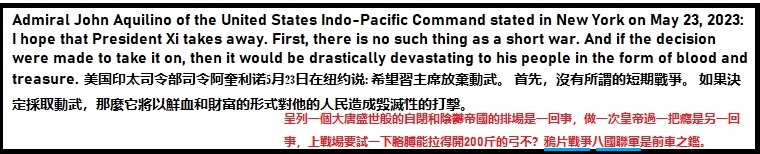
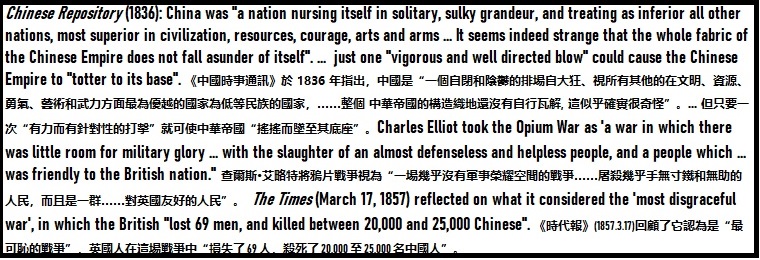
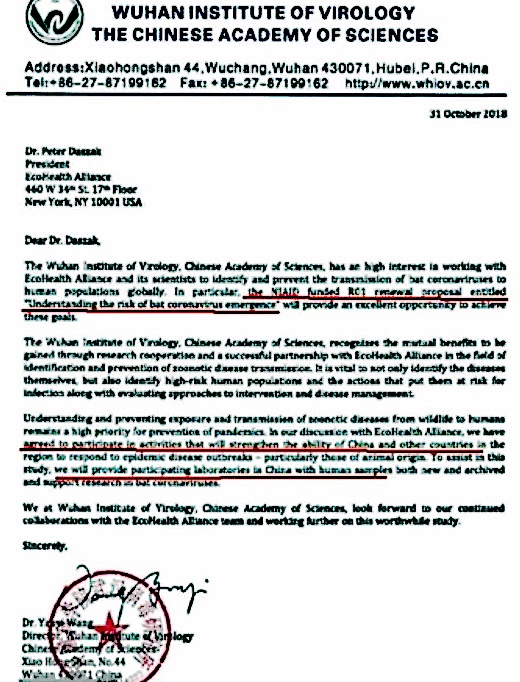

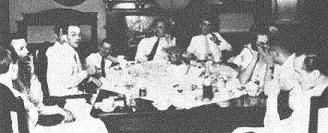
![Though, Anna Wang [Anneliese Martens], in her memoirs, expressed jealousy over Gong Peng by stating that the Anglo-American reporters had flattered the Chinese communists and the communist movement as a result of being entranced with the goldfish-eye'ed personal assistant of Zhou Enlai](GongPeng.jpg)