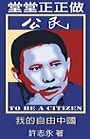
Sinitic Civilization-Book 1
Sinitic Civilization-Book 2
Tribute of Yu
Heavenly Questions
Zhou King Muwang's Travels
The Legends of Mountains & Seas
The Bamboo Annals - Book 1
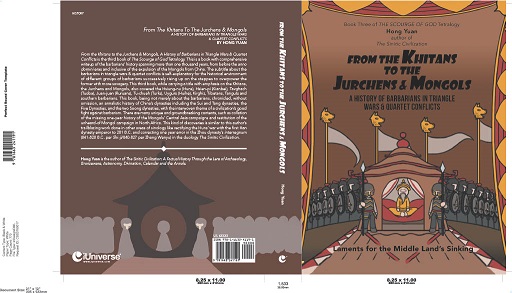
The Scourge-of-God-Tetralogy:
From the Khitans to the Jurchens & Mongols: A History of Barbarians in Triangle Wars and Quartet Conflicts
(available at iUniverse;
Google;
Amazon;
B&N)
|
|
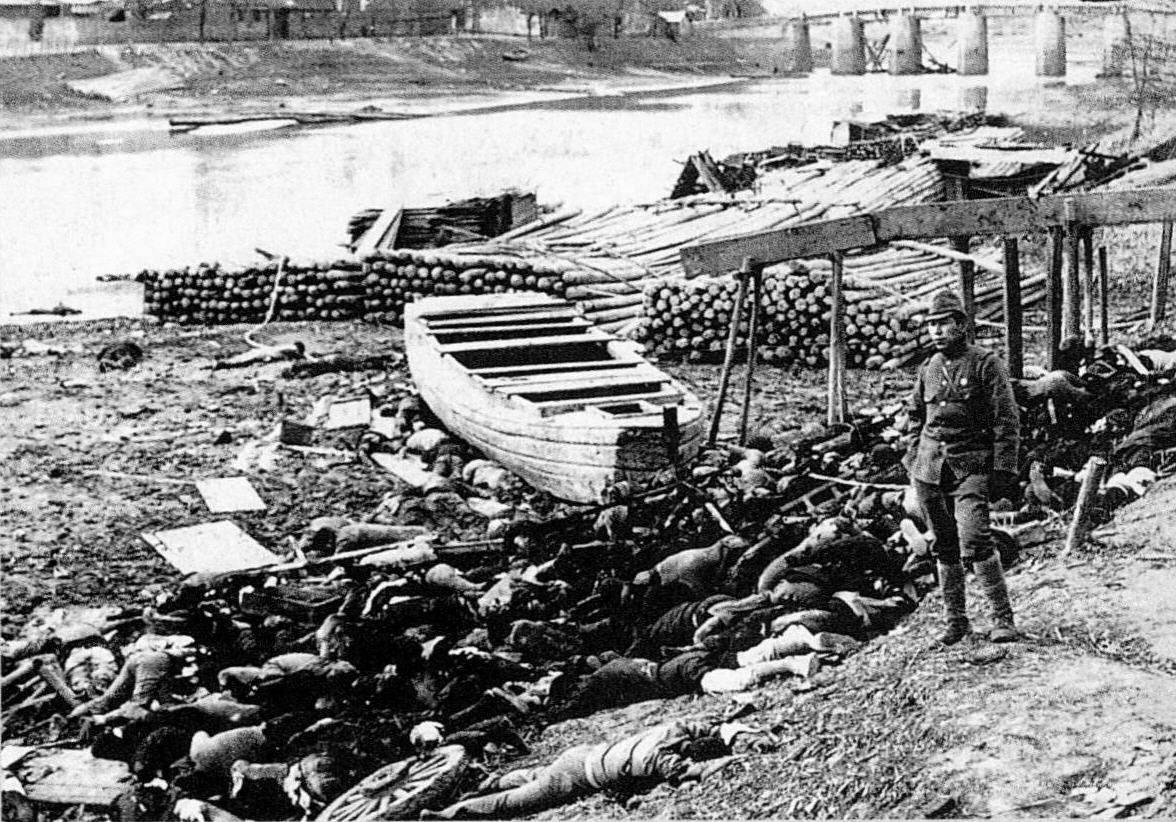
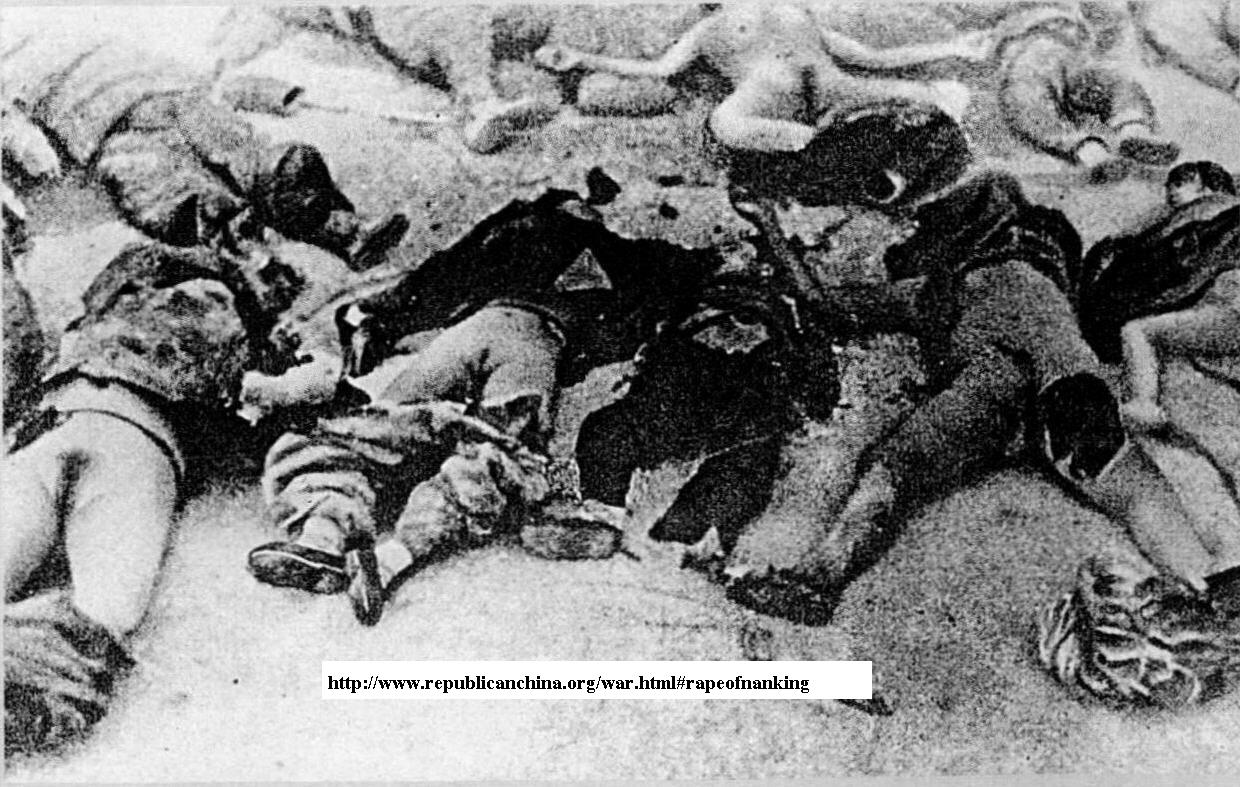
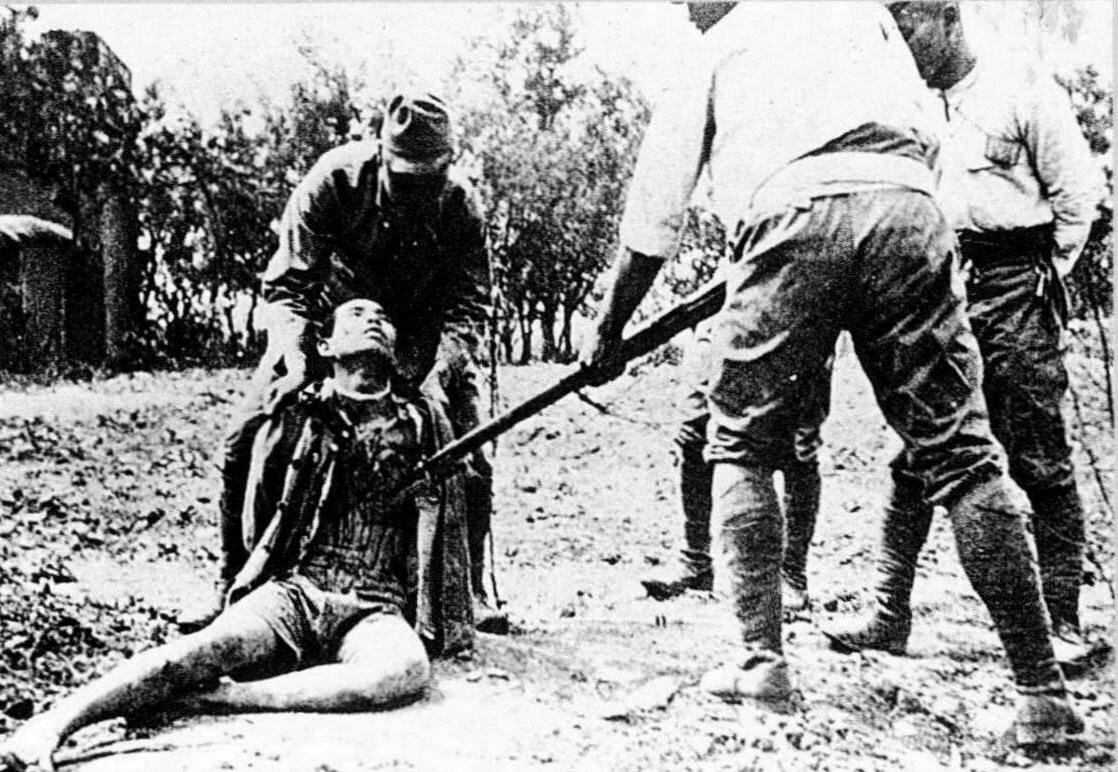
The National Humiliation - Nanking
(*** machine-translated Chinese language version:  ***) ***)
China's disasters had been compounding since the 1839-1942 Opium War. The Boxers' turmoil, concluded by the 'Xin Chou Treaty' (i.e., 'The Boxer Protocol of 1901') on Sept 7th of 1901 with 11 (not 8) countries, would cause China a loss of 450,000,000 taels of silver which were to accrue to 982,000,000 taels with interests included throughout the installments for 39 years. The damage to China's spirits unsurpassed in history, the Chinese people had to endure 39 years of hardship and disasters, only to sustain another round of sufferings during the 1937-1945 Japanese Invasion.
During the first half of the 20th century, China went through extraordinary turmoil and tragedies.
Though China was alleviated from the invasion by the Western powers, Japan, with a notion of "Entering Into Europe By Severing Itself From Asia" (Fukuzawa Yukich's datsu a nyuu ou), had adopted an even more barbaric colonialist, militarist and expansionist policy and undertook the invasion of Ryukyu, Korea, Manchuria, and China proper, consecutively.
The Japanese never realized that they had been brought up and used as a tool since Matthew Perry's timeframe, first as a tool against Russia in 1904-5 and then used by the Soviets as a tool against China.
"When other nations tried to bar ... [Japan] progress or slur ... [Japan] reputation," as commented by Count Hayashi:
"America always stood for ... [Japan] ...[America's] Stars heralded to the world the rising of ... [Japan] Sun..."
The warships and planes built and used against China in 1931/2 were the products of twenty years of military alliance between Britain and Japan,
following the American support of the Japanese ventures against Ryukyu and Taiwan in the late 19th century.
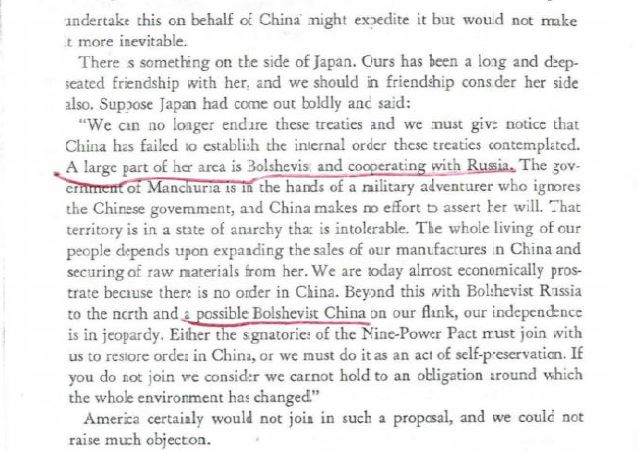
In 1931, President Herbert Hoover gave Japan a free hand in the invasion of Manchuria on the pretext that Japan could not tolerate a half-Bolshevik China.
After the eruption of the 1937 war, the Anglo-Americans, still biased towards Japan and against China, adopted a policy of "neutrality" (what Utley called by "unpositive neutrality") against the 'belligerent' countries, namely, Japan and China, which was free and unrestrained arms sale to Japan and de facto arms embargo against China.
Note that the arms embargo only hurt China since China did not have an industrial base to produce the basic weapons while Japan's factories could roll out the warships and airplanes on a wholesale scale.
Note that the blockade would choke China since China did not have an industrial base to produce the basic weapons while Japan's factories could roll out the warships and airplanes on a wholesale scale.
Also note that in contrast with the Americans, the European powers, being constrained by the mediation role of the League of Nations, dared not openly sell arms to Japan.
Through 1940-1941, prior to the U.S. revocation of the 1911 U.S.-Japan Commerce Treaty, the Americans were the biggest supplier of raw material, oil, aviation oil, and weapons to Japan, to the extent that some U.S. senator making a claim that out of every one million Chinese killed by the Japanese, 544,000 Chinese were killed by the Americans.
(Do not forget the post-WWI ten-year arms embargo against Republic China and George Marshall's post-WWII arms embargo against Republic China 1946-1948, as well as
the synarchists' backing Japan's war against China and Sun Yat Sen.)
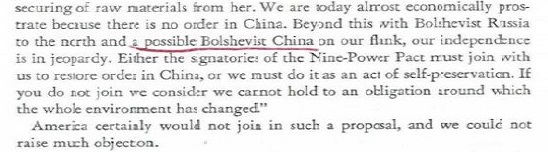
It was the century's misfortune for China to see the Anglo-American interest groups and the Russian/Comintern agents colluding with each other in subverting Nationalist China
--the last bastion against the imperialists and colonialists and
the beacon tower
for the independence of all Asian countries and people, colonized or semi-colonized by the West,
as "...British Ambassador personally suggested to me [Albert Wedemeyer]
that a strong unified China would be dangerous to the world and certainly would jeopardize the white man's position immediately in Far East and ultimately throughout the world."
From 1937 to 1945, 21,000,000 Chinese lost their lives, among whom about 3.8 million were soldiers, officers and generals. General consensus of total death toll could amount to 38 million, including possibly millions of Chinese prisoners of war who were killed by the Japanese army.
The worst consequence from the Japanese invasion would be the Chinese communists' ascension to power which threw China into a loop of never-ending disasters. Communist China, which had forfeited the WWII damages in 1972 to win the diplomatic recognition from Japan, does not have the moral courage to face Japan since its ascension to power was a derivative to Japan's invasion wars.
(Numerous nationalist army generals, who survived the valiant wars against the Japanese invasion, would be imprisoned and executed by the communists from 1949 to 1975. E.g.,
Lu Shiyang was executed by the communists in 1951 simply because he was a former Nationalist Army company commander even though he left the army after the VJ (victory over Japan) day in 1945 and never ever fought against the communist army.
Wu Dehou, released by the CCP's amnesty on Dec 15th, 1975, returned to his impoverished Shanxi Province countryside as a peasant.
Du Yuming, the war hero on the Burma Theater, was released from over 10-year long prison sentence on Dec 4th, 1959 in accordance with the CCP's 17 Sept 1959 First Amnesty Order for sake of having him show off at a diplomatic meeting in April 1960 with former British General Montogomery as well as for sake of instigating the return of his son-in-law, i.e., noble prize winner Yang Zhenning.
The Nationalist Army colonel-level officers, about one tenth of the total captives rounded up in the communist provincial quasi-prisons since the 1950s, survived the execution, torture and hunger to get amnesty in 1975.
It would be in 1985 that the CCP first declared the title of 'national heroes' for 85 Nationalist generals who sacrificed their lives in the Resistance Wars Against Japan.)
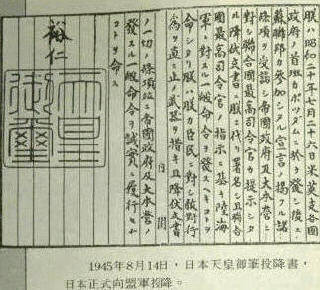
|
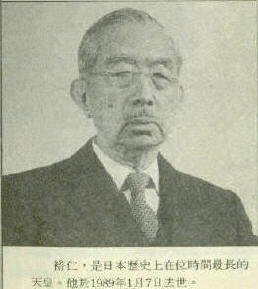
|
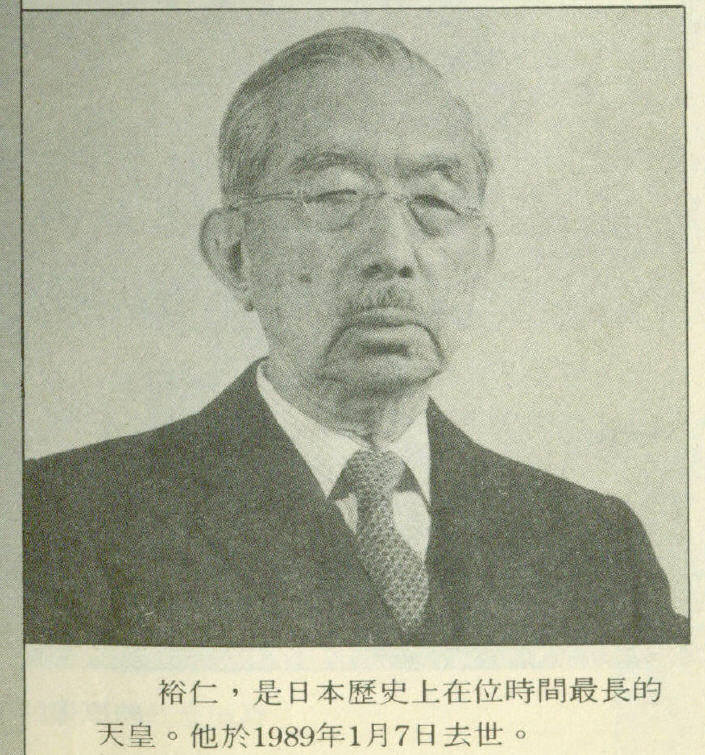
Today, the Japanese cabinets, clinging to the notion of an Atomic bomb victim (victims numbering 210,000), still refused to make public apologies to Asian countries for their wartime crimes, including the infamous Rape of Nanking (victims numbering 340,000), Fatigue (Saturation) Bombing of Chongqing, the germ warfare, the guinea pig experiments [by Unit 731] and the 'comfort women'. Is the Japanese vocabulary lacking a word 'apology' other than 'regret'? No. Neo-militarists attempted the assassination on the mayor of Nagasaki in 1990 simply because the mayor had asked the Japanese emperor to issue an apology for the war crimes. It is widely believed that today's Japanese military trained their soldiers [i.e., the self-defence force ] in the standard of an army captain for the possible military mobilization in the future. And, Japan's annual military budget at one time ranked at No. 2nd, just behind the U.S., with year 1995's spending amounting to $54,000,000,000, for example.
Japan, which offered 3-5 times the European nations' contributions to the Iraqi Reconstruction as a way of advancing its agenda for admittance to the United Nations Security Council, still refused to reimburse 30000 Chinese coolies who were abducted to Japan during the war times.
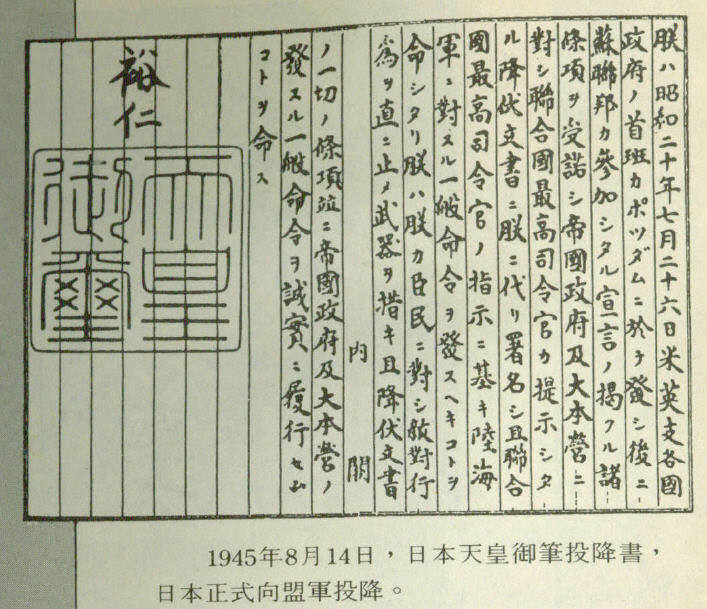
Japan, now having grown to be a lethal force under the American umbrella, unfortunately have memories of neither the pardon from the Republic of China nor the humiliation in being declined a decent surrender by the Russians.
Unfortunately, the decadent communist China would ultimately lose badly in the next conflict, in which Japan would mostly likely be used as a tool again
in a repeat of history.
http://www.geocities.jp/yoshio_osakabe/Haruki/Books/ZooAttack.html
THE ZOO ATTACK by MURAKAMI Haruki
translated by Jay Rubin
"But then the war turned bad, and things got threatening, so my father decided to send my mother and me back to Japan before it was too late. We went with a lot of other people, taking the train from Hsin-ching to Korea, where a special boat was waiting for us. My father stayed behind in Hsin-ching. The last time I ever saw him, he was standing in the station, waving to us. I stuck my head out the window and watched him getting smaller and smaller until he disappeared into the crowd on the platform. No one knows what happened to him after that. He just evaporated, like smoke. We tried asking friends from Hsin-ching who escaped to Japan after us, but it was a1most weird how no one knew anything about him. I think he must have been taken prisoner by the Soviets and sent to Siberia to do forced labor and, like so many others, died over there. He's probably buried in some cold, lonely patch of earth without anything to mark his grave. He was just an ordinary civilian\emdash there was no reason for him to be hauled away like that, but it was a confusing time. Lots of mistakes were made."
Certainly, the Japanese already forgot that 560,000 Kwantung Army [consisting of the Japanese backup, colonizers, reserves and militia] were exiled by Stalin to the Russian Siberia for coolie labor, with about half of them never making their way home.
Konoe Fumitaka, i.e., son of imbecilic Japanese prime minister Konoe Fumimaro who designed the policy of "Shokaiseki o aite to sezu", was exiled to Siberia by the Soviets
and just days before repatriation in the late 1950s, could have been killed by the Soviets.
From the memoirs related to some Taiwan native who joined the Japanese Kwantung Army and was later exiled by the Soviet Red Army to Siberia for the coolie labor, the Soviets, to help Mao Tse-tung and Kim Il Sung, on a wholesale scale, in 1947 repatriated the Korean-ethnic Japanese Kwantung Army prisoners of war to North Korea and the Taiwan-ethnic Japanese Kwantung Army prisoners of war to Manchuria, as fodder of war, which probably explained why there was no accounting of some huge numbers of the Japanese Kwantung Army troops in the later repatriation to Japan and the Republic of China's generals kept mentioning that the Koreans and the Japanese were manning the guns and the tanks of the Chinese communist army.
(The Russians sorted out at least 30,000 Japanese artillery, medical Kwantung Army staff, a full airforce contingent with generals and crewmen under Hayashi Yayichiro, and no less than two full Korean-ethnic Divisions for deployment by the Chinese communists in the civil war against the Nationalist Chinese Government, not to count the Outer Mongolian Cavalry and 100,000 fully-trained Korean mercenaries sent to China in 1947, with about 60,000-70,000 remnants [out of the total headcount of
250,000 Korean mercenaries
] shipped back to Korea prior to the Korean War of June 1950.
Note the fundamental difference between the 250,000 ethnic-Korean Japanese Kwantung Army diehards and the ethnic-Korean Chinese living in China.
The communist statistics claimed that altogether 65,000 ethnic-Korean Chinese minority people, or the Korean migrants living in China, joined the communist army, with approximately
60% coming from the Jirin subprovince,
21% from the Sungari subprovince, and
15% from the Liaodong subprovince.)
Stalin and the Russians were behind each step of Mao Tse-tung and the Chinese Communists in making sure that no peace could have a chance from the day Japan surrendered. Stalin understood that the whole generation of brave Chinese during the first part of the 20th century was the flower that China ever had in the whole history of 5000 years, a force that must be destroyed so that the Russian scheme at world domination could succeed.
Didn't know the Russian cold-bloodedness? Read into the Katyn Murder of 15,000 Polish officers, and Stalin's plan to shoot 50,000 German officers- which Roosevelt echoed by lessening to 49,500.
(Stalin disclosed to the son of Chinese president that he wanted to imprison 500,000 to 600,000 Japanese lower-level officers and 12,000 Japanese generals for preventing the Japanese from rising up again to pose threat to the Soviet Union.
Likely, Stalin passed on a suggestion to McArthur to arrest 8000 to 12,000 Japanese generals.)
|
Video: The Battle of Shanghai & the Battle of Nanking
Video: The Japanese Bombing of Chungking
Video: The Burma Road & the Guerrilla War
Oral Recitals by the Japanese soldiers and officers from the 7th Rentai of the 9th Shidan (in Japanese):
As the Japanese soldiers and officers from the 7th Rentai of the 9th Shidan recited, in the initial two weeks of the 1937 Battle of Shanghai, their rentai (i.e., regiment-conglomerate) incurred
a death toll of 450 plus 905 wounded among the total headcounts of 2,566 troops.
The 9th Shidan incurred within one month
a casualty of 10,000 at the Shanghai Battle.
(Back in 1932, the 7th Rentai lost their commander Hayashi Daihachi at the Battle of Miaohang.)
The Japanese, of course, don't know that they were used as a tool against China.
Working as a secretary of the Japanese prime minister Konoye Fumimaro as one of the five brain trusts, Stalin's spy Ozaki,
likening Japanese prime minister Konoe to Kerenski (head of the 1917 transitionary Russian government),
wanted to turn Japan into a replay of the Soviet revolution.
How brilliant it was to hit two birds (China and Japan) with one stone!
(It was the Tokyo Special Higher Police, 'tokko' or 'tokubetsu', who broke the Sorge-Ozaki spy rings in China and Japan, not the Japanese military kempeitai or the Japanese military that was permeated with the JCP and Tobun [same language] Academy spies.
Do you Japanese know that?)
|
|
|
|
The Japanese, clamoring to "yocho" [punish] China [which was disparagingly termed "zhi-na"], do not know, even today,
that they were first used as a tool against Russia in 1904-5 and then used against China in 1937.
After squandering the 1st-tier troops of the 1st-20th Shidans and 2nd-tier troops of 100-120th Shidans in China, the Japanese sent the demoralized Shidans
to the Pacific War graves, to the extent that by the time Japan surrendered, the Japanese homeland soldiers of 1-2 million new recruits possessed the bamboo sticks and spears as weapon
for defense, while the Soviet/Comintern agents inside of the Japanese government/military, in the name of moving the duel battlefield to the mainland, hoarded a large cache of weapons in Manchuria/Korea for free pickup by the Soviets and the
Chinese Communists & Korean Communists. Do you Japanese know that?
|
As this webmaster had elaborated on the context of the Marco Polo Bridge Incident in the Resistance Wars section,
the Sino-Japanese War resulted from the repeating G.R.U. operations across China, including the assassination of Japanese businessmen and soldiers in the Yangtze and South China,
and the military sabotage of Japanese railways, weapon depots in the Tientsin area of North China and Dairen of Manchuria.
And, as this webmaster had elaborated on the battles and campaigns in the Civil Wars section, the Chinese Civil War of 1945-1950 [using Korean War as a breakpoint rather than PRC's proclaimed date of founding] is the "Last Duel of the Middle Earth" involving millions of fighting-to-death Yellow Men, whose outcome was determined on the battlefields by means of a) military tactics and strategies, b) political conspiracy and plots, c) economic manipulation and sabotage, c) societal disruption and coercion, and d) international alliance and betrayals, never ever the free choice of the Chinese people or the 'Mandate of Heaven' as John Fairbank and Owen Lattimore [and their student-sinologists in the American colleges and universities] wanted you to believe in.
The Korean War and the Vietnam War, invariably, were the extension of the Chinese Civil War of 1945-1950.
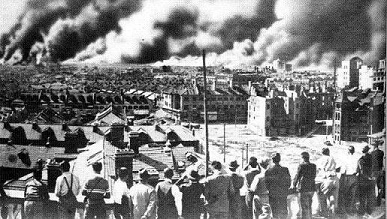
The 1937 Battle in Shanghai (a,b,c), first ever three-dimensional war in the world history, involving the Japanese infantry, navy and airforce, which officially started on August, 13, 1937, was prolonged while China was looking forward to the intervention from the international community.
Chiang Kai-shek, i.e., China's leader, fell into the trap of thinking that his war in Shanghai could ultimately be brokered by the international powers like in 1932 (a,b,c). The war in Shanghai was tied to the Brussels Conference and the expectation that the League of Nations and/or the Nine-Power Treaty Nations would intervene. Wellington Koo's memoirs disclosed that the British, the French and the Americans repeatedly said that should China win some decisive battles, then it would be easier for the League of Nations to intervene on behalf of China.
The time interval between the League of Nations' resolutions in early October and the Brussels Conference in early November was crucial for China. Japan, knowing the diplomatic efforts, wanted to thwart China's diplomatic initiatives by intensifying the invasion and playing the German mediation card.
The Japanese-German No. 1 demands for peace was for China to join the Anti-Comintern Pact, which China declined from day one.
The conference was delayed till the Chinese defense was almost in total collapse.
In late August, Robert Anthony Eden, having acknowledged the British fault in forging cooperation with the Americans in 1932 over the Manchuria Incident resolution [- which was likely Lord Lytton's proposal to Wellington Koo that China was to make Manchuria into a neutrality zone in exchange for taking back sovereignty from Japan -- a best ever deal possible in the eyes of Lord Lytton], claimed that the Americans did not wish to intervene in the 1937 Sino-Japanese War for the bad experiences incurred in 1932 but that he would not let down the Americans this time around.
The British seemingly did not know the American national policy - always on a higher plateau than the myopic Europeans since President Wilson's times, i.e., President Hoover's proclivity for Japan, using Japan as a counterweight against the Soviet Union.
The British, who had forged and fostered twenty years of military alliance with Japan, could have exerted the most influence onto Japan but chose to pass on the hot potato to the Nine-Power Treaty countries, i.e., the United States, in the hope that the Americans could step in. The Americans, citing its isolation policies, did not wish to help but gave out some false signals like sending a non-voting observer to the League of Nations' conference [at which the Polish supported Japan in the attempt at encouraging Japan to continue the war so as to ultimately war with the Soviet Union], which gave the British and the International League members the excuse to excuse themselves and pass the hot potato to the Americans.
The British and French, according to Wellington, were ready to make concerted actions with the Americans but would not do so without the Americans.
The Americans, sensing the Europeans' scheme in offloading the hot potato, declined to convene the Nine-Power Treaty conference in Washington D.C., which caused the British to haggle with the Belgians back and forth to get approval on October 15th to convene the conference at Brussels, to which Japan repeatedly declined to attend.
The Americans told Wang Zhengting that should China continue to cite the Nine-Power Treaty, the U.S. would implement the neutrality act, which William Christian Bullitt Jr. (1891–1967) felt inscrutable and tried to debunk with the State Department -- which was to make an official announcement on September 14th in a statement to the merchant fleets.
Bullitt later disclosed that the Americans' national policy or strategic aim was to see the Russians and Japanese' holding a balance of power against each other in China rather than seeing either the Russians or the Japanese overpowering the other party in taking control of China.
The Europeans on the Shanghai Bund, who were fed up with China's nationalism such as demand for revocation of extraterritoriality, actually wanted Japan to attack China so as to teach the Chinese a lesson.
Note that Hugh Wilson, i.e., the State Department's European faction, suggested to have Japan and China fight it out.
(William Christian Bullitt, pro-China, in the aftermath of the ten-year construction of the Republic of China 1927-1937, at one time harbored the hope that China would soon return to the forefront of the world as a model of civilization. What happened was fall of China under the Soviet-Chicom conquest, which became the eternal laments of the middle land's sinking.)
 Chiang Kai-shek committed a grave mistake in misjudging the Americans throughout his life, possibly to do with his Christian faith and his Christian wife's background as America-educated and American-related.
It would be in the early 1950s and on the Taiwan island, before the eruption of the Korean War, that Chiang Kai-shek reflected on his blunder in the faith in the Americans.
Do not forget that in 1931, President Herbert Hoover gave Japan a free hand in the invasion of Manchuria on the pretext that Japan could not tolerate a half-Bolshevik China. For details, see http://www.republicanchina.org/ManchuriaIncident.pdf.
After the eruption of the 1937 war, the Americans, biased towards Japan and against China, adopted a policy of "neutrality" (what Utley called by "unpositive neutrality") against the 'belligerent' countries, namely, Japan and China, which was free and unrestrained arms sale (on purportedly the cash terms) to Japan and de facto arms embargo against China.
In contrast with the Americans, the League of Nations reached limited agreements in enforcing the arms sale to Japan.
Note that China did not have an industrial base to produce the basic weapons while Japan's factories could roll out the warships and airplanes on a wholesale scale.
Do not forget the post-WWI 10-year arms embargo against the Republic of China and George Marshall's post-WWII 1946-47[48] arms embargo.
Chiang Kai-shek committed a grave mistake in misjudging the Americans throughout his life, possibly to do with his Christian faith and his Christian wife's background as America-educated and American-related.
It would be in the early 1950s and on the Taiwan island, before the eruption of the Korean War, that Chiang Kai-shek reflected on his blunder in the faith in the Americans.
Do not forget that in 1931, President Herbert Hoover gave Japan a free hand in the invasion of Manchuria on the pretext that Japan could not tolerate a half-Bolshevik China. For details, see http://www.republicanchina.org/ManchuriaIncident.pdf.
After the eruption of the 1937 war, the Americans, biased towards Japan and against China, adopted a policy of "neutrality" (what Utley called by "unpositive neutrality") against the 'belligerent' countries, namely, Japan and China, which was free and unrestrained arms sale (on purportedly the cash terms) to Japan and de facto arms embargo against China.
In contrast with the Americans, the League of Nations reached limited agreements in enforcing the arms sale to Japan.
Note that China did not have an industrial base to produce the basic weapons while Japan's factories could roll out the warships and airplanes on a wholesale scale.
Do not forget the post-WWI 10-year arms embargo against the Republic of China and George Marshall's post-WWII 1946-47[48] arms embargo.
Other than the misleading matter that related to the European powers and America, there was another factor of China's false hope, i.e., the Soviets. Chiang was naive in thinking that the U.S.S.R. would join the war - a factor that Japan was cautious about in the Manchuria area throughout 1937. The U.S.S.R., before the Xi'an Coup of December 1936, did want a military alliance treaty with Chiang. Soviet ambassador Bogomolov, wary of pro-Japan Chinese foreign minister Zhang Qun, worked unofficially towards this end, for which Bogomolov was recalled to the Soviet Union for execution after the eruption of war. That was at the time Stalin was paranoid about the possibility of wars on the two fronts, with the Soviets keen on averting the possibility of China's being forced to join Japan and Germany in the anti-Comintern bloc. Otherwise, the Russians, if in a military alliance with China, could be bound or Japan would think twice before attacking China.
Before the Xi'an Coup of December 12th, 1936, Stalin was playing the trick of settling with Chiang Kai-shek over the matter of two different terms, namely, a half-basket settlement between the U.S.S.R and the Republic of China or a one-basket settlement between the U.S.S.R/Chinese communists and the Republic of China, with Stalin keen on a whole-basket solution, which was conditioned on Mao Tse-tung and the top communist leadership's being exiled to Moscow in exchange for a Sino-Russian alliance-nature agreement.
Chiang Kai-shek, being wary of the Soviets' playing the game, had Zhang Qun send a message to Wellington Koo for probing with the Soviet diplomatic staff in Europe as to Bogomolov's true intent in selling a Sino-Soviet security scheme to the non-foreign ministry R.O.C. officials, and forfeited a chance to strike a military-nature alliance with the Soviet Union, when Stalin was paranoid about Japan's possible attack at Siberia.
(After the eruption of war, Bogomolov was prohibited from talking about security or alliance treaty, and was soon recalled for execution -- which was a slap on Jung Chang and her British husband's purportedly scholarly research that Bogomolov was executed for protecting the 'communist' identity of General Zhang Zhizhong as the duo were responsible for provoking the Shanghai war as a second front.)
Even after the Xi'an coup and one month before the July 7th Marco Polo Bridge Incident, ambassador Dmitry Vasilyevich Bogomolov (1890-1937), working with new Chinese foreign minister Wang Chonghui, expressed wish to conclude a Soviet-China mutual security treaty, rather a non-aggression treaty, after an ambiguous condition that the venue to strike a pan-Pacific-rim security treaty (including France, Britain and the U.S.) was to be exhausted, with a detailed suggestion that China was to make the proposal to the powers for convening such a meeting.
This is the notorious ambassador Bogomolov proposal of June 5th, 1937, for which ambassador Bogomolov was executed as Stalin's scapegoat.
Litvinov made a false claim to Wellington Koo that Bogomolov was dismissed for spreading false info to Stalin that China could not withstand the Japanese attacks, and applauded China's perseverance in resisting the Japanese at the Battle of Shanghai.
The Soviets of course lied to China that the motherland (i.e., mother Russia) needed General Galen (Vasily Blyukher, who was arrested and later in 1938 executed in the Great Purge) and hence could not send Galen to China.
Bogomolov actually had Stalin's personal mandate whereas the rest of the Soviet diplomatic corps were not in the know and hence conveyed conflicting opinions.
Bogomolov did not know that the Soviet GRU agents, in cooperation with the Chinese communists, were responsible for provoking the Sino-Japanese War so as to tie down Japan, with the enticement of striking a security treaty with China a mere attempt at deflecting the possibility of China's joining the anti-Comintern Pact, i.e., Japan's No. 1 demand in the terms of peace in addition to acknowledgement of the puppet Manchukuo's independence;
and that once China was in the war with Japan, Bogomolov's mission or usefulness was over.
The Soviets, using the French fellow-travelers and the pro-communist Chinese exiles in Europe, passed on the wish to strike a security treaty from 1936 onward.
With the European and American powers choosing not to intervene, the U.S.S.R. provided China with military support, sending in the Soviet air force during the Battle of Nanking. Stalin, being deeply worried that China would lose the war and capitulate to Japan, had sent in the Soviet airforce to China to join the Defense Battle at Nanking of November, 1937, with both dead and live pilots captured by the Japanese in the ensuing years.
The Japanese, knowing the presence of the Soviet pilots, cunningly pretended to know nothing.
America, i.e., the United States, was and is still shortsighted today, not knowing that Korea, at one time paradise of the American Evangelicals, was delivered into the hands of the Japanese imperialists as a result of the Anglo-American confrontation against Czar Russia, and in this geopolitical process, China, the land of the Great Sinitic Civilization (Barnes & Noble,
Amazon,
Google Play|Books
and
Nook Book), was made into a piggy-backed sacrificial/funereal object --the land ruled by the most evil cult called 'communism' that was an 'import' or an 'export' of Soviet Russia.
America would not learn the lesson that the geopolitical actions it is taking today would yield the 'bad fruit' 50 years or 100 years down the road.
America, and their British cousins, must have forgot the twenty-year Anglo-Japanese military alliance that allowed Japan to develop the warplanes and aircraft carriers to invade mainland China, not to mention the post-WWI ten-year arms embargo against Republic China and George Marshall's post-WWII arms embargo against Republic China 1946-1948.
They forgot that in 1931, President Herbert Hoover gave Japan a free hand in the invasion of Manchuria on the pretext that Japan could not tolerate a half-Bolshevik China.
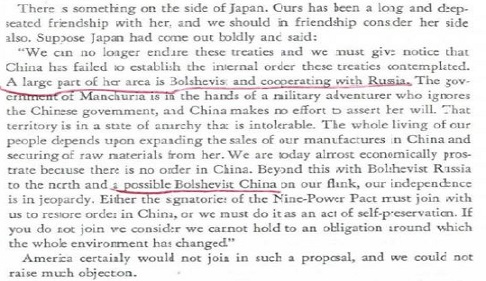 Earlier, in the 1920s, President Hoover, who personally nipped the post-WWI communist uprisings in Germany and Hungary with the grains embargo, fed Lenin the ingenuity, i.e., the [worldwide communist revolution] road to Paris lay through Peking.
They of course forgot that
after the eruption of the 1937 Sino-Japanese War, the Americans, biased towards Japan and against China, adopted a policy of "neutrality" (what Utley called by "unpositive neutrality") against the 'belligerent' countries, namely, Japan and China, which was free and unrestrained arms sale to Japan and de facto arms embargo against China.
Note that the Japanese navy had a full blockade of China's coastline.
Note that the blockade would choke China since China did not have an industrial base to produce the basic weapons while Japan's factories could roll out the warships and airplanes on a wholesale scale.
Also note that in contrast with the Americans, the European powers, being constrained by the mediation role of the League of Nations, dared not openly sell arms to Japan.
Through 1940-1941, prior to the U.S. revocation of the 1911 U.S.-Japan Commerce Treaty, the Americans were the biggest supplier of raw material, oil, aviation oil, and weapons, to the extent that some U.S. senator called by Scott making a claim that out of every one million Chinese killed by the Japanese, 544,000 Chinese were killed by the Americans.
Thirty-one U.S. congressional members made a joint declaration to the effect that the U.S., not NAZI Germany, nor Italy, was the best ally of Japan.
Earlier, in the 1920s, President Hoover, who personally nipped the post-WWI communist uprisings in Germany and Hungary with the grains embargo, fed Lenin the ingenuity, i.e., the [worldwide communist revolution] road to Paris lay through Peking.
They of course forgot that
after the eruption of the 1937 Sino-Japanese War, the Americans, biased towards Japan and against China, adopted a policy of "neutrality" (what Utley called by "unpositive neutrality") against the 'belligerent' countries, namely, Japan and China, which was free and unrestrained arms sale to Japan and de facto arms embargo against China.
Note that the Japanese navy had a full blockade of China's coastline.
Note that the blockade would choke China since China did not have an industrial base to produce the basic weapons while Japan's factories could roll out the warships and airplanes on a wholesale scale.
Also note that in contrast with the Americans, the European powers, being constrained by the mediation role of the League of Nations, dared not openly sell arms to Japan.
Through 1940-1941, prior to the U.S. revocation of the 1911 U.S.-Japan Commerce Treaty, the Americans were the biggest supplier of raw material, oil, aviation oil, and weapons, to the extent that some U.S. senator called by Scott making a claim that out of every one million Chinese killed by the Japanese, 544,000 Chinese were killed by the Americans.
Thirty-one U.S. congressional members made a joint declaration to the effect that the U.S., not NAZI Germany, nor Italy, was the best ally of Japan.
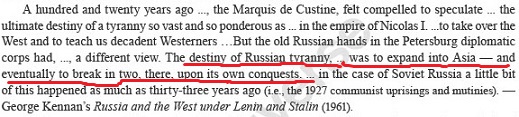 America, the 'stars' that engendered or heralded the rise of the [Japan] 'sun', long ago had the blueprint to make Japan into a stalwart against China the source of the Yellow Peril and Russia the source of the Half-Tartars, respectively, --whom the Americans could not assimilate according to George Kennan.
William Christian Bullitt Jr. (1891-1967) disclosed that the Americans' national policy or strategic aim was to see the Russians and Japanese' holding a balance of power against each other in China rather than seeing either the Russians or the Japanese overpowering the other party in taking control of China.
In making this geopolitical decision, you have victimized the 1 billion humble Chinese peasants.
(Note President Wilson's doctrine that the intactness of China was vital to the white civilization -- in the sense that the nation of China should be managed delicately, that is, should not be allowed to grow too powerful to pose a threat to the white civilization, nor should it be allowed to be hijacked by a non-U.S. power since China's immense human labor could be turned against the white civilization.
The theme of China to the white civilization, morphing superficially into a ***hypocritical*** American national policy of engagement with Communist China for changing the Chinese communists' behavior, rested on the same underlying logic:
"The
China Exception: Russian Communism being wicked, the
Chinese are good communists", which is an inherent fear
of the Yellow Peril,
i.e., billion Chinese would actually enjoy real
democracy, go to college and develop their intelligence.
Now, President Biden, a stooge of Communist China, explicitly abandoned the
hypocritical American policy of engagement to change communist China to his imbecilic communist buddy and dictator Xi Jinping.
Other than the stooge Bidens who ripped communist China's financial coffer (Tony Bobulinski FULL INTERVIEW Tucker Carlson), don't forget that President Roosevelt boasted of his family's ripping the China trade money in the 19th century, i.e., the opium trade;
and President Hoover certainly got the first bin of gold from the Kai-luan coal mine in collusion with the British during the 1900-1901 boxers' incident-related invasion.)
America, the 'stars' that engendered or heralded the rise of the [Japan] 'sun', long ago had the blueprint to make Japan into a stalwart against China the source of the Yellow Peril and Russia the source of the Half-Tartars, respectively, --whom the Americans could not assimilate according to George Kennan.
William Christian Bullitt Jr. (1891-1967) disclosed that the Americans' national policy or strategic aim was to see the Russians and Japanese' holding a balance of power against each other in China rather than seeing either the Russians or the Japanese overpowering the other party in taking control of China.
In making this geopolitical decision, you have victimized the 1 billion humble Chinese peasants.
(Note President Wilson's doctrine that the intactness of China was vital to the white civilization -- in the sense that the nation of China should be managed delicately, that is, should not be allowed to grow too powerful to pose a threat to the white civilization, nor should it be allowed to be hijacked by a non-U.S. power since China's immense human labor could be turned against the white civilization.
The theme of China to the white civilization, morphing superficially into a ***hypocritical*** American national policy of engagement with Communist China for changing the Chinese communists' behavior, rested on the same underlying logic:
"The
China Exception: Russian Communism being wicked, the
Chinese are good communists", which is an inherent fear
of the Yellow Peril,
i.e., billion Chinese would actually enjoy real
democracy, go to college and develop their intelligence.
Now, President Biden, a stooge of Communist China, explicitly abandoned the
hypocritical American policy of engagement to change communist China to his imbecilic communist buddy and dictator Xi Jinping.
Other than the stooge Bidens who ripped communist China's financial coffer (Tony Bobulinski FULL INTERVIEW Tucker Carlson), don't forget that President Roosevelt boasted of his family's ripping the China trade money in the 19th century, i.e., the opium trade;
and President Hoover certainly got the first bin of gold from the Kai-luan coal mine in collusion with the British during the 1900-1901 boxers' incident-related invasion.)
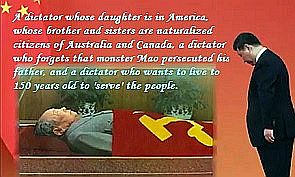 Now you, as the midwife who delivered China into the communist hands, are morally obligated to take China [and North Korea {and Vietnam}] out of communism.
This time, you may feel your hands forced as North Korea, with its nuclear weapons, could become Communist China's cecal appendix in a repeat of history.
(The Chicoms don't understand the urgency of Trump's trade war having the roots in nuclear North Korea, nor the domino effect on North Korea and Russia after the knock-out of communist China.
Putin thought he would reap profits by sitting on the fence of the U.S.-China trade war, i.e., the Zheltorossiya dream - revitalized by Aleksandr Gelyevich Dugin
[, and India would not be satisfied with grabbing South Tibet, Bhutan and Sikkim alone].
Previously, this webmaster thought that the Americans could be hoodwinked by the Chicoms who might just sign any agreement just for sake of getting a red carpet at the White House in lieu of a visit to Mar-a-Lago.
With Trump's war with Communist China flaring up, this webmaster believed that China's dictator would continue to commit blunders and became the tomb digger for the Chinese communist regime.
The thuggery communists, who would not allow the millions of the Hongkong people to have autonomy, could have caused the demise of the regime over the inevitable crackdown, not knowing that the communist ascension to power had its very roots in Churchill's collusion with Roosevelt in selling out the Republic of China for sake of retaining crown jewel Hongkong after hoodwinking Wellington Koo and Chiang Kai-shek that Britain would return Hongkong to China after Japan was to surrender so as not to damage the British wartime morale. --What happened was that Putin first jumped off the fence ahead of communist China in launching an invasion of Ukraine.)
Now you, as the midwife who delivered China into the communist hands, are morally obligated to take China [and North Korea {and Vietnam}] out of communism.
This time, you may feel your hands forced as North Korea, with its nuclear weapons, could become Communist China's cecal appendix in a repeat of history.
(The Chicoms don't understand the urgency of Trump's trade war having the roots in nuclear North Korea, nor the domino effect on North Korea and Russia after the knock-out of communist China.
Putin thought he would reap profits by sitting on the fence of the U.S.-China trade war, i.e., the Zheltorossiya dream - revitalized by Aleksandr Gelyevich Dugin
[, and India would not be satisfied with grabbing South Tibet, Bhutan and Sikkim alone].
Previously, this webmaster thought that the Americans could be hoodwinked by the Chicoms who might just sign any agreement just for sake of getting a red carpet at the White House in lieu of a visit to Mar-a-Lago.
With Trump's war with Communist China flaring up, this webmaster believed that China's dictator would continue to commit blunders and became the tomb digger for the Chinese communist regime.
The thuggery communists, who would not allow the millions of the Hongkong people to have autonomy, could have caused the demise of the regime over the inevitable crackdown, not knowing that the communist ascension to power had its very roots in Churchill's collusion with Roosevelt in selling out the Republic of China for sake of retaining crown jewel Hongkong after hoodwinking Wellington Koo and Chiang Kai-shek that Britain would return Hongkong to China after Japan was to surrender so as not to damage the British wartime morale. --What happened was that Putin first jumped off the fence ahead of communist China in launching an invasion of Ukraine.)
|
Should the American politicians follow the footsteps of Anson Burlingame (1820-1870),
Paul Samuel Reinsch (1869-1923)
and
Patrick Jay Hurley (1883-1963), i.e., three most prominent U.S. statemen who loved China and the Chinese people,
then the Chinese people could have a chance of salvation from the communist tyranny.
Note the historic recurrence and the repetition of similar events:
Anson Burlingame, in opposition to the anti-Chinese discriminatory whirlwinds rampant in the U.S. in the 19th century, authored the Burlingame Treaty for China and
died for China in 1870 in St. Petersburg
while still on the Manchu China's mission to the U.S. and Europe;
Paul Samuel Reinsch, who was disillusioned by President Wilson's betrayal of China over the division of WWI spoils at the Paris Peace Conference, quit the minister-to-China job to work for China and died for China in Shanghai in 1923;
and
Patrick Jay Hurley, who convinced President Roosevelt of the American moral blunders in selling out the Republic of China at Tehran and Yalta, personally travelled to Moscow and London for sake of averting and reverting China's fate of becoming a victim of WWII war spoils (i.e., the loss of Port Arthur and Hong Kong, etc.), but failed to make remedy to the secret Tehran and Yalta agreements in the aftermath of President Roosevelt's death in April 1945.
|
|
For better understanding the head-on collision between the United States and Communuist China,
refer to
the U.S.-China fatalistic conjunction through the hands of the Japanese firepower during WWII, that derived from the American unpositive neutrality;
the U.S.-China fatalistic conjunction through the hands of communist army's firepower during the 1945-1950 civil war, that derived from American-supplied Soviet August Storm weapons; and
the U.S.-China fatalistic conjunction through Joseph Stalin, Kim Il Sung and Mao Tse-ting's hands during the 1950-1953 Korean War.
|
|
|
|
More, refer to the Communist Platonic Club at wartime capital Chungking
and
The American Involvement in China: the Soviet Operation Snow, the I.P.R. Conspiracy, the Dixie Mission, the Stilwell Incident, the O.S.S. Scheme, the Coalition Government Crap, the Amerasia Case, & The China White Paper.
|
|
|
|
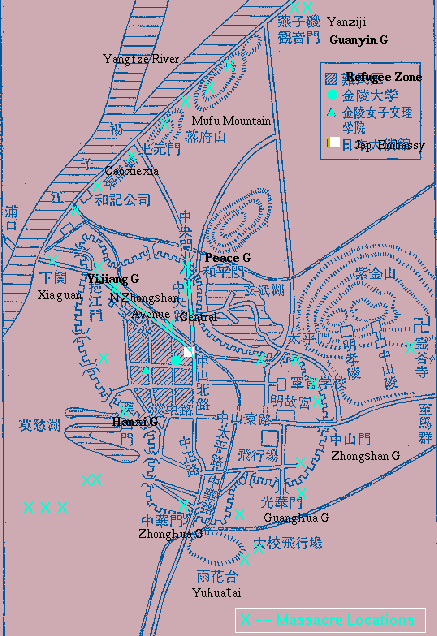
The Defence Battle at Nanking

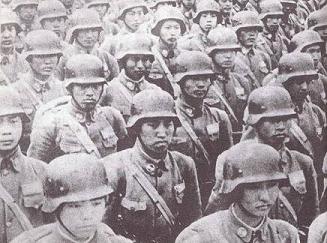 Tang Shengzhi, as garrison commander for Nanking, had about 110,000 soldiers under his command, including Gui Yongqing's Central Lecturing Column (about 5000 men who retreated from Shanghai), Song Xilian's 36th Division [the 78th Corps], Wang Jingjiu's 87th Division [the 71st Corps], Sun Liangcheng's 88th Division, Ye Zhao's 66th Corps [the Yue-jun army from Guangdong], Yu Jishi's 74th Corps, Deng Longguang's 83rd Corps [the Yue-jun army from Guangdong], Sun Yuanliang's 88th Division [the 72nd Corps],
and
Gu Zhenglun and Xiao Shanling's 6452 Gendarmerie troops. Liu Xing's two divisions, i.e., the 103th Division & the 112th Division, were pulled over from the Yangtze riverbank defence. Only Xu Yuanquan's 2nd Corps-Conglomerate (the 41st & 48th Divisions), having just arrived from Wuhan, had no prior battle engagements with the Japanese.
Liu Xing and Luo Zhuoying, who both participated in the Shanghai defence, were ordered to be deputy commanders assisting Tang Shengzhi.
Shi Huaiyu, a captain and company chief who joined the Defence Battle at Nanking, stated that most of the soldiers were new recruits who filled up the ranks lost in the Shanghai-WuSong Battle.
Shi Huaiyu was a graduate of the Whampoa Academy 9th Session, who in his high age wrote his personal experiences for The Huanghuagang Magazine, entitled "The Defence Battle at Nanking".
Tang Shengzhi, as garrison commander for Nanking, had about 110,000 soldiers under his command, including Gui Yongqing's Central Lecturing Column (about 5000 men who retreated from Shanghai), Song Xilian's 36th Division [the 78th Corps], Wang Jingjiu's 87th Division [the 71st Corps], Sun Liangcheng's 88th Division, Ye Zhao's 66th Corps [the Yue-jun army from Guangdong], Yu Jishi's 74th Corps, Deng Longguang's 83rd Corps [the Yue-jun army from Guangdong], Sun Yuanliang's 88th Division [the 72nd Corps],
and
Gu Zhenglun and Xiao Shanling's 6452 Gendarmerie troops. Liu Xing's two divisions, i.e., the 103th Division & the 112th Division, were pulled over from the Yangtze riverbank defence. Only Xu Yuanquan's 2nd Corps-Conglomerate (the 41st & 48th Divisions), having just arrived from Wuhan, had no prior battle engagements with the Japanese.
Liu Xing and Luo Zhuoying, who both participated in the Shanghai defence, were ordered to be deputy commanders assisting Tang Shengzhi.
Shi Huaiyu, a captain and company chief who joined the Defence Battle at Nanking, stated that most of the soldiers were new recruits who filled up the ranks lost in the Shanghai-WuSong Battle.
Shi Huaiyu was a graduate of the Whampoa Academy 9th Session, who in his high age wrote his personal experiences for The Huanghuagang Magazine, entitled "The Defence Battle at Nanking".
Tang Shengzhi devised a plan of two-layer defence: the outlaying layer defence and the citywall layer defence. At the outside layer, Yu Jishi's two divisions of the 74th Corps guarded the Banqiao-Chunhua line, Xu Yuanquan's 2nd Corps-Conglomerate (the 41st & 48th Divisions) guarded the Mengtang-Longtan line, and Ye Zhao's 66th Corps & Deng Longguang's 83rd Corps [Yue-jun] guarded the east and west sides of the Tangshan town.
At Nanking, Song Xilian's 36th Division of the 78th Corps guarded the north city gate, Sun Yuanliang's 88th Division of the 72nd Corps and Shen Fazao's 87th Division (under Wang Jingjiu's 71st Corps) guarded the south gate, and
Gui Yongqing's Central Lecturing Column guarded the three peaks of Mt Zijinshan.
A company of 6 ground-to-air cannons, commanded by regiment commander Miao Fan, were retained by Tang Shengzhi.
Hu Zongnan was called over to Nanking on December 2nd for assisting Tang Shengzhi. However, Hu Zongnan went back to Pukou on December 5th when the news came that the Japanese army had moved along the north bank already.
More available at the DEFENSE-BATTLE-AT-NANKING-v0.pdf
Mt Xishan - the Zhongshan-men City Gate
Mt Hongmaoshan - Baigufen
The Guanghua-men City Gate
Zhongshan Lingyuan (Sun Yat-sen Mausoleum)
Mt Zijinshan - Peak II & Peak III
On December 1st, Japan’s Central Front Army received the No. 8 Continental Order to attack and occupy Nanking. On December 2nd, Prince Yasuhiko Asaka took over Matsui Iwane’s dual commander post for the Shanghai Expeditionary Force, while Matui Iwane, as front army commander, directed both the expeditionary force and the Tenth Army against Nanking from multiple directions. The order to the Japanese Tenth Army was for the 114th Shidan and the 6th Shidan to move along Liyang-Lishui Highway and Guangde-Honglanbu Highway on December 3rd for the Lishui area, with two additional contingents to penetrate westward to Wuhu and Dangtu for Anhui Province segment of the Yangtze River. The Japanese Shanghai Expeditionary Force was ordered to have the 16th Shidan and 9th Shidan move along Danyang-Jurong-Tangshan Highway and Jintan-Tianwangshi-Chunhuazhen Highway, with two additional contingents to cross the Yangtze at Jiangyin and Zhenjiang for a circumvential attack at the Canal and Peking-Pukou Railway in the north.
From December 3rd to 6th, the Japanese 16th Shidan and 9th Shidan punched into the cordon lines of the 83rd Corps and the 66th Corps, took over Jurong on the 4th, and pushed to the area of Huangmei, Tuqiao and Hushuzhen. The Japanese 10th Ryodan of the 11th Shidan attacked Zhenjiang, while 13th Shidan crossed Yangtze at Jiangyin to attack Jingjiang. Separately, Japanese 114th Shidan, to be followed by the 6th Shidan, burst through the cordon lines of the 88th Division and the 74th Corps and took over Lishui and Molingguan by December 4th, and pushed to the area of Lulangzhen and Jiangningzhen. The Japanese Kunizaki Shitai and the 8th Shidan attacked Dangtu and Xuancheng, respectively. On December 7th, Matsui Iwane ordered the siege of Nanking.
On December 6th, after the penetration of the Japanese 16th Shidan to Hutang-Dahushan, near Tangshan, Tang Shengzhi ordered that the 71st Division and the 83rd Corps fall back towards Nanking from the Zhenjiang direction and shipped one regiment of the 36th Division to the Qilinmen Gate. The next day, the 7th, Tang Shengzhi planned a counter-attack at the Japanese in Hutang-Dahushan with troops from the 66th Corps, the 41st Division of the 2nd Corps-conglomerate, and the 36th Division. The Japanese, however, kept the 66th Corps and the 41st Division busy by attacking the Chinese defense positions at the Tangshuizhen [Tangshanzhen] Town and Qixiashan Mountain.
On December 7th, the Japanese army reached the perimeter of the Nanking city from multiple directions, and engaged in battles with Tang Shengzhi's forces of over 110,000 men. On the early morning of December 7th, Chiang Kai-shek flew away from Nanking.
As reported by F. Tillman Durdin in New York Times on December 8th,
"The departure of Chiang Kai-shek with his aides was at the break yesterday in his private plane, operated by Royal Leonard and Co-Pilot Arnold Wier, both Americans."
Chiang Kai-shek, before boarding plane on December 7th, made a tour of the defense positions on Mt Zijinshan. The delay in departure was due to a visit to Nanking by German ambassador Oskar Trautmann.
To the southeast of Nanking, Yu Jishi’s 74th Corps, with the 51st Division and the 58th Division or about 17,000 troops, was assigned the defense of Tongjimen Gate and Chunhuazhen Town as well as Mt Niushoushan. In the morning, while troops were shoveling off mud over the prebuilt concrete defense works. The Japanese, from Jurong direction, had closed in to within 15 kilometers of Chunhuazhen. At about 4 pm, the Japanese encountered the cordon troops from Wang Yaowu’s 51st Division. Qiu Weida’s 306th Regiment, which just completed the rearguard task at Qingpu and returned from the behind-enemy-line, was asked to send Hu Hao’s battalion to Hushuzhen for reinforcing Zhou Zhidao’s 151st Brigade. Fighting ensued for one night and one day at Hushu.
On the afternoon of December 7th, along the Nanking-Hangzhou Highway, battalion chief Yao Mingde, from the Central Lecturing Column, ride motorcycle, detected the Japanese herald troops near Houjiatang, midway between the Qilinmen Gate and the Tangshanzhen Town. At the Tangshuizhen [Tangshanzhen] town, the Cavalry Regiment, after initial encounters with the Japanese and with heavy casualties, retreated to the Xufen area and consecutively the Taipingmen Gate via Qilinmen, Chalukou and Xianhezhen. At night, Cavalry Regiment Chief Wang Hanqing reported that earlier in the day the Japanese, disguised as the 87th Division troops and wearing the Chinese uniforms, had raided the 1st Cavalry Battalion at Tangshan. Having noticed the Japanese camp fire in villages near Qilinmen, Zhou Zhenqiang checked with Ma Weilong to have the 1st Brigade and the 2nd Brigade counterattack the Japanese in Qilinmen area, but suggestion was disapproved by high command.
On December 8th, at dawn, the Japanese planes bombed Mt Zijinshan; the Japanese artilleries blasted at the outlying positions at Qilinmen; and the Japanese armored vehicles penetrated to Mt Hongmaoshan, outside of the Tongjimen Gate. On Mt Zijinshan, where the 5th regiment and 6th regiment of the Central Teaching Column had stationed, the monitoring post reported that the Japanese marched along the Nanking-Hangzhou Highway, from the direction of Maqun. The Cannons Company immediately targeted the Japanese with two German-made artilleries and caused heavy casualties among the Japanese. The Japanese dispatched airplanes for dropping bombs on the Mt Zijinshan positions, while the Japanese artilleries bombarded as well. At the Laohutong [tiger cave] Position, after the Central Teaching Column soldiers beat back the Japanese with heavy machine-guns and grenades, the Japanese dared not offend again for the rest of the day.
At dawn, Chen Yiding’s 261st Brigade under the 87th Division, about 3000 troops, who just arrived at the Central Stadium by train and trucks from Zhenjiang, was attacked by the Japanese. The Japanese abducted a cook of the 521st Regiment. 261st Brigade commander Chen Yiding, who was refused entry into Zhongshanmen earlier, immediately spread out the 521st Regiment and 522nd Regiment at the Baigufen-Haizili and Yizu-xuexiao School, respectively. The Japanese faked attacks at Baigufen and the Military Engineering School. Also at Mt Hongmaoshan and Baigufen, to the southeast of Xiaolingwei, Zhou Shiquan’s 3rd battalion incurred heavy Japanese cannonade atacks guided by the high rise balloons. When the Japanese armored vehicles joined the attack, the Chinese troops dispatched snipers in destroying one vehicle and defeated the enemy's attack. The 3rd battalion rerouted to Baigufen after soldiers from Deng Longguang's 83rd Corps took over the Hongmaoshan defense in the evening. In the afternoon, the Japanese attacked the Chinese positions at Luanshigang, positions held by 2nd battalion chief Suo Benqin under Qin Shiquan’s 1st Regiment [which relocated to Mt Luanshigang and the Qilinmen Gate the previous day]. The Japanese, marching along the Hangzhou-Nanking Highway, launched the cannon blasts at Mt Luanshigang and the Qilinmen Gate. Heavy grenade fighting ensued on a hill termed the "99 Plateau" where the 2nd battalion set its command center. Battalion commander Suo Benqin was wounded, and the soldiers retreated to the Zhongshanmen Gate for replenishment.[1] After one day’s fighting, the Japanese cleared the outlying Chinese positions near the Qilinmem Gate.
To the southeast of Nanking, the Japanese, with artilleries, tanks and cannons, attacked the 51st Division as well as Mt Niushoushan where the 58th Division stationed. The Russian volunteer pilots joined the Chinese airforce in the air battle over Chunhuazhen. Two Japanese planes were shot down at a loss of one on the Chinese and Russian side. Regiment commander Cheng Zhi, witnessing the air battles, applauded the Russian bravery and regretted that no other nation had offered help; Zhang Lingfu, in phonecall to Wang Yaowu, further pointed out that the Japanese bombs had “Made in USA” inscribed on the shells. (Those words were from the confession writings of government army generals and officers under the communist captivity.)
At 8:00 pm, Li Dianying, a soldier at the monitoring post from the Central Teaching Column, reported that the Japanese soldiers, from the Chunhuazhen Town direction, were marching through the Gaoqiaomen Gate. Around 9:00 pm, a company under Yao Mingde resisted the Japanese who encircled their positions from two sides, and the Nationalist Army soldiers withdrew to the defense line at Wukesong. The Nationalist Army captured five Japanese soldiers who intruded into their positions.
In the southern Nanking area, the Japanese 6th Shidan joined the 114th Shidan in attacking the Chinese positions across the front. Meanwhile, the 26th Ryodan of the 13th Shidan [diaotian shitai]]] defeated the 111th Division of the 57th Corps and took over Jingjiang, while the 10th Ryodan of the 11th Shidan [[[tiangu Shitai]] broke into Zhenjiang which was defended by Dai Zhiqi’s 103rd Division. To the west, the Kunizaki Shitai pushed to Dangtu, while the 18th Shidan attacked towards Wuhu after taking over Xuancheng.
Tang Shengzhi recalled the Zhenjiang defense troops and the 83rd Corps back to Nanking. In the afternoon, Xu Jiwu’s 48th Division of the 2nd Corps-conglomerate arrived at Nanking. At 4 pm, Tang Shengzhi issued the order for the citywall defense. Troops were laid out from Banqiaozhen to the southwest of Nanking, to the Mufushan and Wulongshan mountains to the northeast of Nanking. The 74th Corps was assigned the area from Mt Niushoushan to Hedingqiao, the 88th Division Yuhuatai Hill, the 87th Division the Hedingqiao-Haizili [to the north of the Nanking-Wuhu Railway], the Central Teaching Column Mt Zijinshan, the 36th Division Mt Hongshan and Mt Mufushan, and troops from Xu Yuanquan’s 2nd Corps-conglomerate Mt Yangfangshan and Mt Wulongshan. On Mt Zijinshan, the 1st Regiment (excluding the 2nd battalion) of the 1st Brigade dug in on the rightside [Xiaolingwei], the 3rd Regiment of the 2nd Brigade on the Zhongshanling Ridge & Linggusi (i.e., eastern most of the mountain), the 5th Regiment of the 3rd Brigade took over three peaks of the mountain, and the 2nd battalion of the 1st regiment stationed at the Zhongshanmen Gate. Further to the left of the 5th regiment of the 3rd brigade would be Xu Yuanquan's 48th Division at the Yaohuamen Gate.
At dawn on November 9th, the Japanese artillery blasted at Baigufen, Mt Zijinshan, Mt Xishan, Lingyuan and Xiaolingwei at the same time. The Japanese, with air support, launched attacks at Mt Zijinshan, Xishan-lingyuan, and Xiaolingwei. On Mt Zijinshan, monitoring soldiers noticed that over one hundred Japanese soldiers were taking a break to the south of the army barracks of the Central Teaching Column. Cannons bombarded the Japanese from the hill and destroyed this penetration force. By 8:00 am, the Japanese charged at the Laohutong [tiger cave] Position again with the help of various kinds of bombs. The Nationalist Army defeated the Japanese, with a loss of battalion chief Luo Yuefeng and company chief Hu Ying. By the evening, 1st Brigade Chief Zhou Zhenqiang ordered the abandonment of Laohudong [tiger cave] and a fallback to Peak II from the 3rd peak position. Elsewhere, the Japanese 16th Shidan pushed to the Qilinmen Gate and the Cangbomen Gate. At Baigufen, fighting continued throughout the day. The 261st Brigade of the 87th Division repelled three rounds of the Japanese 16th Shidan’s attacks at the Military Engineering School which had the prebuilt self-enclosed defense works. Chen Yiding’s proposal to counterattack the Japanese at Mt Xiaoshishan from Haizili was nipped. Elsewhere at Mt Xishan and Xiaolingwei, the Japanese attacked in vain the position of Li Kaixi’s 3rd Regiment of the 2nd Brigade for the whole day.[2]
To the southeast of Nanking, the Japanese 9th Shidan launched a ferocious attack at Niushoushan and Chunhuazhen in the morning. Six Japanese armored vehicles joined the fight at about 10 am, and the Japanese leveled guns shot direct into the Chinese machinegun [[[embrasure]]]. Zhang Lingfu was wounded in battle. The Japanese breached the positions held by Cheng Zhi’s 302nd Regiment and Zhang Lingfu’s 305th Regiment under the 151st Brigade. Meanwhile, the Japanese breached the 58th Division’s defense on Mt Niushoushan. At the Chunhuazhen Town, Ji Honglu’s 301st Regiment of the 151st Brigade under the 51st Division of the 74th Corps incurred a casualty of over 1400. [3]
The herald troops of the Japanese 9th Shidan followed the Nationalist Army's 51st Division all the way to the Gaoqiaomen Gate from the Chunhuazhen Town, took over the Dajaochang Airfield and the Tongguang Barracks. Because the Qiqiaowen and Zhongheqiao Bridges did not get dismantled on time, about 2000 Japanese soldiers and over a dozen armored vehicles pushed all the way to the Guanghuamen Gate. Gui Yongqing ordered that Guanghuamen be shut off and sand bags be piled up to the height of the city wall. Gui Yongqing personally led a platoon of his bodyguard company to the front. About nine Japanese armored vehicles, on one occasion, reached just below the Guanghuamen Gate and pinned down the Chinese soldiers at the citywall [[embrasure]]. A reinforced platoon from the 2nd Military Police Regiment, under Xiang Hongyuan, rode over with six light machineguns on the public buses and drove off the Japanese armored vehicles by 5 pm. The Japanese tanks launched three incursions towards the Guanghuamen Gate in the afternoon. Over one hundred Japanese climbed through the sand bags to have entered the Gate, but all of them got killed. Gui Yongqing called over the newly recruited engineering regiment as well as the cannons. A platoon of soldiers from the engineering regiment engaged in the bare-hand fighting with the Japanese at the Guanghuamen Gate. The Guanghuamen was breached by about 200 Japanese soldiers again. The Nationalist Army destroyed most of the invaders.[4]
During the battles of the Guanghuamen Gate, the 524th Regiment of Zhu Chi’s 262nd Brigade under the 88th Division, in charge of the wall segment from the Zhonghuamen and Guanghuamen gates, had sent in reinforcements twice.
At the same time, the Japanese Tenth Army attacked towards the Yuhuatai area. The 114th Shidan closed in to the south of Yuhuatai; and the 6th Shidan pressed to the west of Yuhuatai as well as took over Dashengguan. In the morning, one Japanese Rentai equivalent attacked Yuhuatai that was defended by the 264th Brigade of the 88th Division, about 3500 troops. In the afternoon, another Japanese Rentai equivalent attacked Yuhuatai. Brigade commander Gao Zhisong personally led the 528th Regiment of the 264th Brigade to the relief and dealt the Japanese with a defeat by over 300-400 corpses.
At night, the Kunizaki Shitai took over Dangtu. The Chinese 66th Corps pulled back to Dashuiguan and Yanziji for replenishment, and the 74th Corps retreated to the citywall at the Shuiximen Gate. On this day, the Japanese airplanes dropped bombs and Matsui Iwane’s leaflets calling for a Chinese surrender within 24 hours.[5] Tang Shengzhi issued No. 36 Order, ordered transportation minister Yu Feipeng to control all ships and vessels, put the 36th Division of the 78th Corps in charge of stopping any army or officers from slip across the river as a show of his determination to live-die with the city together. Though, Tang Shengzhi agreed to the Westerners' request for setting up a Nanking safety zone as well as mediating a ceasefire with the Japanese. Chiang Kai-shek was said to have declined the 3-day ceasefire mediation which would allow the nationalist army evacuate from Nanking peacefully.
On the early morning of December 10th, the Japanese airplanes dropped bombs throughout the Chinese defense positions and the city before the purported surrender offer was expire at noon. At the time when Qiu Weida’s regiment pulled back into the city via the Zhonghuamen Gate, the Japanese planes dropped bombs on the Yuhuatai Hill while the Japanese artilleries, from the Fangshan direction, also hit the citywall near Zhonghuamen.
At Mt Zijinshan, the Japanese raised two high-rise air balloons for the precision artillery shelling at the Chinese positions. Covered by the precision-guided bombardment, the Japanese launched a full scale attack. The Japanese charging at the 2nd Peak of Mt Zijinshan mostly died in the 200-meter long frontal span. The 2nd brigade, stationed to the east of Zhongshanling also shot at the Japanese from the side angle as well. On this day, 2nd battalion chief Ouyang Jun was wounded and company chief Zhang Zhongxian sacrificed his life. The Japanese’s wrestling fight for the Peak II ran throughout the day and continued to the night of December 11th. With two balloons above the sky of Mt Qilinmen, the Japanese bombarded the Nationalist Army continuously. At Xiaolingwei, the Japanese armored vehicles and infantry failed to push through the Chinese positions at Mt Xishan, with a few Japanese armored vehicle soldiers caught alive. The Nationalist Army destroyed two Japanese armored vehicles and captured three Japanese soldiers alive. Small scale fighting continued in the evening. At Mt Baigufen, the Nationalist Army soldiers engaged in bayonet fighting with the Japanese inch by inch and beat back the Japanese. Cannons Company Chief Wang Jun sacrificed his life on this day.
At the Guanghuamen Gate, the Japanese rolled up artilleries to the Gaoqiaomen Rostrum for blasting against the military engineering school below, to the south of Guanghuamen, which was defended by Liu Qixiong’s 260th Brigade of the 87th Division and the Central Lecturing Column. Two cracks were hammered out on two sides of the Guanghuamen Gate. Afternoon, part of the Japanese army, with tanks, breached the positions held by Yi Anhua’s 259th Brigade, while about one hundred Japanese penetrated 100 meters into the Guanghuamen Gate and occupied houses on two sides of the path. From the mountains, the 3rd battalion from the Central Teaching Column noticed, through telescope, that the Japanese armored vehicles and cavalry passed through to the south of the Guanghuamen Gate without encountering any resistance from the Chinese Army. In order to protect the flank, Regiment Chief Qin Shiquan ordered that the Mt Xishan battalion, with about 200 soldiers left, withdraw for defense around the Weigang area. After the Japanese intrusion into the Guanghuamen Gate, Tang Shengzhi rebuked 87th Division Chief Wang Jingjiu and ordered a recovery of the Gongbing-gaodi high hill near the engineering school and Guanghuamen or face the martial court. Under the command of 87th Deputy Division Chief Chen Yiding, the 261st Brigade, together with a reinforced regiment from Yi Anhua's 257th Brigade, launched a counter-attack at the Japanese from two directions of Tongjimen and Tiantangcun at dusk, destroyed all invaders from the Japanese 9th Shidan, and recovered the Gongbing-gaodi height and the Guanghuamen Gate after an eight-hour battle. 259th brigade commander Yi Anhua, tactician director Ni Guoding for the 261st Brigade, two battalion commanding officers and over 39 lower-level officers died in battle.[6]
Tang Shengzhi ordered the 156th Division of the 83rd Corps to the reinforcement of the Guanghuamen and Tongjimen gates; the 66th Corps was ordered to set up the defense works at the Zhongshanmen and Xuanwumen gates; and the 103rd Division and 112nd Division were assigned to Gui Yongqing for the citywall defense around the Zhongshanmen Gate as well as Mt Zijinshan. On December 10th (?), Hu Zongnan's army beat off the Japanese attack at Pukou on the north bank of the Yangtze River.
On the afternoon of December 10th, about 4 pm, the Japanese took over two heights to the east and west of the Yuhuatai Hill, and rolled over artilleries for short distance shelling. From the Zhonghuamen-Shuiximen citywall defended by Li Tianlu’s 153rd Brigade of the 51st Division, Qiu Weida, after observing that two Japanese tanks were rolling over a bridge outside of the Zhonghuamen Gate, immediately ordered the artilleries to blast at the tanks. A reinforced company was sent after the Japanese infantry, with dozens of the Japanese killed and/or captured. At night on October 10th, the Japanese 6th Shidan and 18th Shidan, under the support of artilleries, tanks and plane bombing, completely destroyed the first line defense of the 88th Division at Yuhuatai, and pressed the 88th Division to the second line. Meantime, the Japanese 18th Shidan took over the Yangtze city of Wuhu to the west.
On December 11th, the Japanese faked attacks at Mt Xishan and Xiaolingwei while re-directing the main thrust to the southern Nanking city. Heavy fighting could be heard in the direction of the Guanghuamen & Tongjimen Gates and Yuhuatai.
From December 11th to the night of December 12th, fighting continued uninterrupted throughout the defense positions on Mt Zijinshan, Linggusi Monastery, Lingyuan-xinchun [residential quarter], Xiaolingwei [Ming Dynasty royal tomb] on Mt Xishan, and Baigufen [white bone tomb]. The Nationalist Army soldiers beat back the Japanese reinforcements repeatedly. On the 11th, the Japanese, who suffered heavy casualties the previous days, launched repeated charges at the defense lines at Mt Zijinshan, Mt Xishan and Baigufen. Mt Xishan was attacked on three sides. The battalion chief personally went to the right wing after the company chief sacrificed his life, and fighting continued into the evening. The Nationalist Army soldiers destroyed enemies before the 1-meter high barbed wires which were laid on top of a deep ditch, and soldiers hiding under an overpass also shot at enemies from a side angle.
By December 11th, the Japanese, though frustrated in attacks at Mt Zijinshan and the Chinese positions to the south of the mountain, took over Mt Yangfangshan and Mt Yinkongshan that were defended by the 2nd Corps-conglomerate troops, and then pushed to the Yaohuamen Gate. Separately, the Japanese, for lending support to the 16th Shidan’s attack at the Mt Zijinshan area, launched an additional siege of Mt Wulongshan and Mt Mufushan with reinforcement of three Daitai from the 103rd Ryodan of the 13th Shidan that were originally waiting for the Yangtze crossing at Zhenjiang. At Guanghuamen, 261st Brigade commander Chen Yiding still retained the military engineering school and its heights, but had to ship the wounded to Wuwangfen as a result of sealing of the gate and two cracks on two sides of Guanghuamen. To the south of Nanking, Japanese 6th Shidan and 114th Shidan broke the second line defense held by the 264th Brigade of the 88th Division at Yuhuatai. At the citywall, Zhu Chi’s 262nd Brigade of the 88th Division destroyed a portion of the Japanese troops from the 114th Shidan who breached the Zhonghuamen Gate after blasting open the gate. At the Shuiximen Gate, held by the 151st Brigade of the 51st Division, the Chinese troops repelled the Japanese reconnaissance force in the marshland outside of the gate.
Along the Yangtze bank, to the west of Nanking, portion of the Japanese troops from the 6th Shidan raked a battalion of the 2nd Military Police Teaching Regiment at Shangxinhe and took over the Mianhuati Embankment, while the Kunizaki Shitai crossed the Yangtze at Cihu, to the north of Dangtu, for a circumvential attack at Pukou. Upon news of the Japanese Yangtze crossing at Dangtu, Chiang Kai-shek telephone Gu Zhutong at noon about evacuating the Chinese troops from Nanking. Tang Shengzhi, to deflect his responsibility, demanded a written order which he received at night. Tang Shengzhi, Luo Zhuoying and Liu Xing, at a meeting two hours past midnight, decided on a planned abandonment of Nanking on December 14th.[7]
On December 12th, at about 7 am, the Japanese, with three armored vehicles, attacked the 151st Brigade’s positions at Shuiximen. The Chinese artilleries forced one Japanese vehicle into the ditch. At 9 am, 3rd Battalion Chief Hu Hao phoned Qiu Weida about the Japanese climbing up wall at the protruding segment between the Zhonghuamen and Shuiximen gates. Hu Hao organized a 100-soldier dare-to-die column to retake the breached segment, killed the invaders and captured a dozen alive.[8] Hu Hao and deputy regiment commander Liu Li died in battle. Meantime, 153rd Brigade Chief Li Tianlu reported to Wang Yaowu that over one hundred Japanese had climbed up the citywall at the segment that was supposed to be 88th Division's position. At about 10:00 am, the Yuhuatai Hill was lost to the Japanese. Heavy fighting broke out at the Zhonghuamen Gate. The 264th Brigade of the 88th Division, under new commander Liao Lingqi, at heavy loss under the Japanese fire, circumvented around the closed citywall to the Xiaguan area where about 2000 remnants, including the engineering battalion, crossed the Yangtze at 5 pm.[9] The Japanese Tenth Army, after taking over the Yuhuatai Height, fired upon the citywall below with a pour of bombs. After noon, the Japanese broke through the outer and inner Zhonghuamen gates at a cost of 200-300 deaths at both layers. At the Shuiximen Gate, the reinforced Japanese troops renewed attacks at the 151st Brigade outside of the gate, and breached the first line defense at about 4 pm. 302nd Regiment Chief Cheng Zhi died in battle. Wu Keding succeeded the regiment commander post.
With the Zhonghuamen Gate breached, Tang Shengzhi, at 2 pm, ordered Song Xilian’s 36th Division to maintain order at the Xiaguan Wharf for a planned retreat across the Yangtze River. Chiang Kai-shek, having authorized the evacuation the previous night, changed mind to wire to Tang Shengzhi as to the possibility of persisting another half a month in anticipation of the “drastic changes in both domestic and international arena”.[10] At 5 pm, the Nanking Garrison Command Center held division commander meeting, produced Chiang Kai-shek’s telegraph, and issued the evacuation order mimeographed by tactician Zhou Lan and timestamped 3 pm. The breakout order was for the majority troops to charge through the Japanese lines towards the Zhejiang-Anhui provinces with four days of rice and salt, starting at 11 pm, but the 83rd Corps was ordered to act as the rearguards till 6 am the next day and the 2nd Corps-conglomerate was to defend the Wulongshan Fortress so as to cover the Yangtze mine blockade line. Subsequently, Tang Shengzhi orally stated that the 87th Division (the 71st Corps), the 88th Division (the 72nd Corps), the 74th Corps and the Central Teaching Column could cross the Yangtze for Chuzhou if ships were available.[11]
After the meeting, 87th Division Chief Shen Fazao and 71st Corps Chief Wang Jingjiu skipped their command center for a direct path to Xiaguan; Gui Yongqing of the Central Teaching Column made a short visit to the Fuguishan command center where he designated Qiu Qingquan the post mortem task; and consequently, 2nd Brigade Chief Hu Qilu of the Central Teaching Column offloaded the command authority to 3rd Regiment Chief Li Kaixi. Tang Shengzhi’s oral instruction led to chaos when the 87th Division (the 71st Corps), the 88th Division (the 72nd Corps), the 74th Corps and the Central Teaching Column all flocked towards the Yijiangmen Gate. At night, the garrison troops at the Wulongshan Fortress sabotaged the cannons and sailed off on four torpedo boats after Xu Yuanquan’s 41st Division and 48th Division abandoned the Wulongshan defense earlier in the day. The Japanese 103rd Ryodan of the 13th Shidan occupied Wulongshan the next morning.
Throughout the war, the 36th Division blocked the Yijiangmen Gate and stopped the troops from retreating, while Hu Zongnan’s 1st Corps across the Yangtze enforced similar court martial against officers and soldiers who ever attempted an escape. Earlier in the day, at Sanchahe, the 36th Division had stopped the 74th Corps troops from laying a pontoon bridge over the Yangtze. Not knowing of the evacuation order, the 36th Division and the 1st Corps continued to use force to prohibit troops from retreating.
In front of the Mt Xishan defense line, for the whole day, the Japanese did not get an inch. At Baigufen, the 3rd battalion of the 1st Brigade still retained the Baigufen positions after repelling repeated attacks by the Japanese. At the Linggusi Monastery and Lingyuan Xinchun, the defense positions were all destroyed by the Japanese armor-penetrating blasts at noon of December 12th. The Japanese artillery extended shelling to Wuwangfen [King Wu Tomb], Xiaolingwei and the Zhongshanmen Gate. The Nationalist Army soldiers fought the zigzag wars with the Japanese trench by trench.[12] At Mt Xishan, by 6:00 pm, 1st Regiment Chief Qin Shiquan withdrew some troops from the Mt Xishan defense to Weigang for protecting the hind on the right side. By 7:00 pm, Tactician Qiu Qingquan called 3rd Regiment Chief Li Xikai with instructions to fetch a battalion from the Guangdong Province army at Gangzijiao of the Taipingmen Gate. One hour later, deputy regiment chief Zhu Daoyuan returned, stating that no relief troops were found at Gangzijiao, that he only saw hordes of soldiers flocking towards the north Gate for the Yangtze riverbank, and that soldiers shouted that the Yuhuatai Hill and Zhonghuamen Gate were lost in the south of Nanking. Upon hearing this, regiment chief Li Xikai phoned deputy brigade chief Wen Zuquan and brigade tactician Liao Yaoxiang, but nobody answered the call. Tactician Qiu Qingquan was not reachable, either. At this time, a lieutenant from the regiment command center, Shi Chonghua, came to report that the Central Teaching Column headquarters was abandoned. 3rd Regiment Chief Li Xikai then decided that his command center move to the area south of the Liao Zhongkai Tomb for continuing the resistance. By 8:00 pm, Regiment Chief Liu Zishu came in to see Li Kaixi, angrily accusing Gui Yongqing and Hu Qilu of escaping the scene while the soldiers were still fighting enemies to the end.
At the Guanghuamen Gate, the Japanese 9th Shidan stopped fighting at dawn, while the Japanese 3rd Shidan, having just relocated over from Suzhou, succeeded the Japanese 9th Shidan in mounting attacks at the citywall. 261st Brigade Chief Chen Yiding, at the military engineering school, lost contacts with the Headquarters about 3 pm. Into the evening, Chen Yiding’s liaison officer Liu Ping returned to inform that Ma Weilong’s brigade could not be located but the Guangdong troops were streamlining out of the Taipingmen Gate for the northeast. At 9 pm, having noticed some erratic shelling from the Mt Wulongshan Fortress and desolate Guanghuamen Gate and city wall, Chen Diying convened a regiment commander meeting between the 261st and 260th brigades and adopted a collective responsibility decision to evacuate at 2 past midnight from the Guanghuamen defense along the citywall ditch.
From December 11th to 12th, soldiers noticed that the southern Nanking city, around the Yuhuatai Hill and Zhonghuamen, fires shot up to the sky while the cannons blasting rang along without interruption. Fighting subsided at sunset on December 12th.
On Mt Zijinshan, three battalions of the 5th Regiment of the 3rd Brigade were stationed at Peak I, II & Peak III of Mt Zijinshan, while the 6th Regiment of the 2nd Brigade stationed to the east ridge of Mt Zijinshan. Zhou Zhenqiang, having noticed heavy fire at the Zhonghuamen Gate and the Xiaguan Wharf from the Peak I command center, called the Mt Fuguishan headquarters but did not reach anybody. Zhou Zhenqiang came down the hills to find out about the evacuation order, and made a decision for Ma Weilong’s 3rd Brigade to join Deng Longguang’s Guangdong troops for a breakout towards the southeast, Yang Houcan’s engineering regiment to prepare the river crossing materials at Meitangang and Yanziji, Wang Hanqing’s cavalry regiment to set up defense at the Meitangang line, Qin Shiquan’s 1st Regiment to act as the rearguards after the troops were to withdraw past midnight.[13] The 1st Battalion of the 1st Regiment was ordered to fight and retreat to Tianbaocheng of Mt Zijinshan and east of Xiaolingwei, while part of the 3rd Battalion was to take over the 2nd battalion's former positions at Xiaolingwei and Mt Meihuashan. At Baigufen, the 3rd battalion was ordered to retreat towards Xiaolingwei from Baigufen six hours after. Shi Huaiyu stated that platoon chief Li Muchao, under the 9th company of the 3rd battalion, did not evacuate the Baigufen position till one hour past mid-night[14]; that when he arrived at Xiaolingwei, he did not see the main body of the troops; and that while silence reigned at the Zhongshanmen Gate, large bursts of fire and intensive gunshots could still be observed on the peaks of Mt Zijinshan and Mt Meihuashan where the soldiers were still in bitter fighting with the Japanese.[15]
More available at the DEFENSE-BATTLE-AT-NANKING-v0.pdf
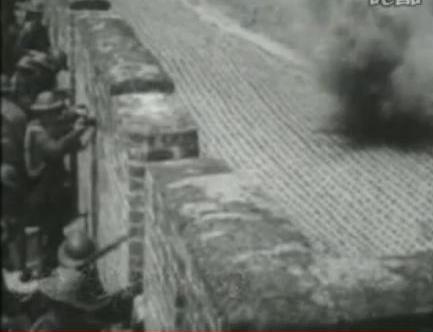
China's Dunkirk Retreat: From the Battle of Nanking to Continuing Resistance to the West (in English)
Documentary videos about China's Resistance War: 42 Video Series in Chinese
To view the real media videos, please use either Real Player
or VLC Media Player
or choose the youtube streaming linked by [1a; 1b; 1c, for example]
(42 Videos in Chinese ranging from 30MB to 50 MB each; plug-in download might be needed)
Shi Huaiyu's River Crossing
Shi Huaiyu, observing Ma Weilong's order, led his soldiers towards the Central Lecturing Column's headquarters for checking out the situation. Seeing nobody around, Shi Huaiyu brought his soldiers for a fast retreat towards the Yijiang-men city gate to the north. Passing through the Chengxian-jie Street, Shi Huaiyu, having recalled that an Anhui Province soldier was retained at the company headquarters for military cooordination, stopped over to fetch him. The lonely soldier, hearing of the retreat order, trashed the German-made telephone set and followed Shi Huaiyu. Shi Huaiyu noticed rows of armed soldiers converging towards Gulou and the Yijiang-men exit where the city gate was already blocked. Shi Huaiyu and his soldiers settled down at the east side of the gate and discussed about the next move. Shi Huaiyu pointed out that Japanese, who had been beaten severely by the Chinese forces during the day, would not know that the Nationalist Army soldiers had already evacuated from defence positions at the city wall.
Shi Huaiyu speculated that the Japanese might not enter the Nanking city till dawn since the Japanese were afraid of possible ambush inside the city should they intrude into the city at night.
Soon, fire broke out at the Yijiang-men gate. Shi Huaiyu heard that Song Xilian's soldiers were responsible for the arson which caused a lot of burning death among soldiers passing through the gate.
At the suggestion of a soldier, Shi Huaiyu et al.,., made cords out of bedsheets and dropped down the citywall.
On the early morning of December 13th, Shi Huaiyu, outside of the gate and near the Xiaguan Wharf, recognized the dead body of telegraph platoon chief Hua Yourui.
Shi Huaiyu noticed that the Yijiang-men Gate suddenly opened up and large crowds of soldiers came to the bank of the Yangtze River. Seeing the span of the river, soldiers were in deep regret over the retreat, stating that they would rather die in the frontline than waiting for death on the river bank.
Hearing of the shots to the southeast, Shi Huaiyu et al., entered the Xiaguan Cement Factory for establishing the defence positions.
Not having heard of further shots, Shi Huaiyu et al., left the factory. Shi then assembled hundreds of soldiers for a charge towards Shangxinhe after making a speech about dying a glorious death in fighting the Japanese. However, the crowd dispersed before reaching Shangxinhe. Shi Huaiyu et al., had to return to Xiaguan.
By noon, Shi Huaiyu et al., noticed lots of dead bodies floating down the Yangtze River. Numerous soldiers jumped into the bitter cold winter waters, with or without any floating tool. Seeing that his solders intended to jump into the river, Shi Huaiyu instructed them that whoever was to survive the crossing must remember to avenge the national humiliation and report their experiences to the army headquarters.
Shi Huaiyu and the Anhui soldier made a convenience raft for sailing to the center of the Yangtze River. Fortunately, they encountered a boat half way, which carried hundreds of soldiers who had stricken loose the iron chains of this boat at Xiaguan. A soldier on the boat recognized Shi Huaiyu and rescued him by extending over a bamboo pole. Unfortunately, the Anhui soldier and his raft flowed downstream.
The boat was stuck in the mud about 100 meters away from a midstream island. Seeing that 2-3 Japanese patrol boats were moving in the downstream area and not far away, Shi Huaiyu encouraged the soldiers to swim across the distance. About a dozen soldiers successfully swam to the island, only to find out that they had to swim across the sandwiched river before they could reach the north Yangtze shore.
By the time Shi Huaiyu crawled through the muddy beach to the north bank, he found out that he was the only one who had survived the Yangtze River crossing.
The Japanese airplanes and patrol boats had gun down all the remaining soldiers on the boat.
On the road to Chuzhou, Shi Huaiyu encountered two cavalry company soldiers who, both from Baoding of Hebei Province, had told him that the peasants on the Baguazhou Island had shipped them over with a boat.
Later, Shi Huaiyu learnt that brigade commander Ma Weilong had obtained the help from Ye Zhao/Deng Longguang's Guangdong troops in penetrating the Japanese line towards southern Anhui Province. The Guangdong Province armies broke through the enemy lines by departing the Taiping-men gate and circumventing the Yaohua-men city gate. The 5th regiment commander sought asylum in the refugee center, the 6th regiment commander hid himself among the civilians and slipped through the enemy line. Hao Wenzao, heavy machinegun company commander under the 6th battalion of the 2nd regiment of the 3rd brigade, retreated to Lingyuan where he and his 20 followers fought the Japanese till the dawn of December 13th. Later, he was captured at Xiaguan, slipped away when the Japanese used them for coolie work, obtained help in obtaining some civilian clothes, and trekked his way to southern Anhui Province by walking at night and hiding at daylight.
On the afternoon of December 14th, Shi Huaiyu himself, seeing a notice at the Chuzhou train station, boarded the train for Linhuaiguan. While on the train, Shi Huaiyu noticed that Hu Zongnan's soldiers were digging in at the Zhangbaling Ridge. At about 10:00 am, on December 15th, Shi Huaiyu encountered and counter-questioned Gui Yongqing as to how many soldiers had been brought across the river. Shi Huaiyu's Central Lecturing Column was to regroup in Kaifeng of Henan Province. In January 1939, the Central Lecturing Column was re-organized into the 16th Division and in May 1939, participated in the Battle of Lanfeng in Henan Province.
Blunders Of Tang Shengzhi
Tang Shengzhi, who volunteered for the defence of Nanking to satisfy Chiang Kai-shek's desire for resistance at the capital where the late Sun Yat-sen's coffin, as political symbolism, had utterly no plans for logistics, relief and evacuation. Tang Shengzhi, who twice went into exile after losing the power struggles against Chiang, was the only general who advocated for the defence of Nanking, a city half surrounded by the Qinhuai River and the Yangtze River. On the afternoon of December 12th, Tang Shengzhi assembled the division commanders and issued the evacuation order. The evacuation order soon divulged and caused a panic across the Nanking city.
Iris Chang pointed out that it was Chiang Kai-shek who was to be blamed for the disaster. Chiang Kai-shek, who left Nanking with most of the transport tools and communications equipment, ordered that Tang Shengzhi evacuate across the Yangtze. The evacuation order was issued after the Japanese had crossed the Yangtze at both the upperstream and lowerstream Yangtze River crossing points to cut off the retreat path of the defenders.
Gu Zhutong called Tang Shengzhi on the noon of December 11th with the evacuation order. Tang, who also received Chiang's order via telegraph, claimed that his troops were too closely engaged with the Japanese to evacuate in an orderly way. However, Gu Zhutong demanded that Tang must cross river to Pukou by the night. At night, Tang received a second telegraph from Chiang. By the early morning of December 12th, Tang assembled his generals and passed on Chiang's order which was relayed to subordinate officers by 1:00 pm on December 12th.
Before crossing the Yangtze, Tang Shengzhi was said to have asked a German [Eduard Sperling] to relay a message of ceasefire to the Japanese commander.
At the afternoon meeting on December 12th, Tang Shengzhi first ordered that the 36th Division was to cross river at Xiaguan while the rest of the army to break through the Japanese siege for southern Anhui Province. Later, Tang changed order to allow the 87th Division, the 88th Division, the 74th Corps and the trainee soldiers to go north to cross the Yangtze.
While Tang Shengzhi and corps/division commanders were preparing to cross the Yangtze, soldiers of the Central Lecturing Column and the 87th Division were still in bitter fighting with the Japanese without a slight clue of the evacuation order.
Some soldiers even fired upon retreating soldiers by accusing them of fleeing the battleground.
Iris Chang mentioned that a nationalist tank, in Nanking, intentionally ran against the retreating soldiers for sake of stopping the evacuation.
Gui Yongqing, having left the meeting, went straight to the headquarters of the 1st brigade for relaying the order. Gui Yongqing issued an order that each brigade/regiment should immediately evacuate towards the Yangtze Bank for regrouping at Xiaguan, Sanyihe and Meitan'gang, respectively, and that after crossing the Yangtze, soldiers were to re-assemble at Chuzhou of Anhui Province.
In the underground bunker on Mt Fuguishan, Gui Yongqing ordered that important documents be destroyed and suggested to tactician Qiu Qingquan that they leave for Sanyihe on the Yangtze Bank together.
Qiu Qingquan stayed on to contact the regiments, while Gui Yongqing left with his bodyguard.
Later, Qiu Qingquan, together with Guo Qi and Liao Yaoxiang, hid themselves among the civilians, witnessed the Japanese massacre, and escaped Nanking.
After the war, the survivor officers returned to Nanking to inspect on the monastery which gave them protection, leaving a handwritten note "Victorious Return [to Nanking]".
At Sanyihe, Gui Yongqing found out that all civilian-purpose ships he had prepared at three locations had already been confiscated by the 36th Division and sent to the upstream across the river. At nighttime, Gui Yongqing crossed the river on a raft that was made by the engineering regiment. When the raft arrived at the opposite bank, Gui Yongqing was almost buried alive by the soft mud. By the early morning of December 13th, Gui Yongqing arrived in Chuzhou and was ordered by Tang Shengzhi to re-group his soldiers at Kaifeng of Henan Province.
Shi Huaiyu stated that 2nd brigade chief Hu Qilu, who slipped across the river faster than anybody else, was seen boarding a train with his wife at Pukou on December 13th.
Shi Huaiyu listed the names of Li Qingyun, Mi Jingru and Xu Guozhang et al., who initially hid themselves among the civilians, were later hired by the Japanese for driving trucks, and then slipped free with the help of the civilians in the Xiaolingwei area.
Shi Huaiyu stated that communications company chief Shi Youren, who had recruited his soldiers in Anhui in Oct, received the evacuation order at 10:00 pm on December 12th. When approaching the Yijiang-men gate, Shi Youren was stopped by soldiers from the 36th Division. Not having slept for days, Shi Youren fell asleep at the street curb, only to wake up to see the heavy fire at Yijiang-men. Shi Youren and his company made cords out of bedsheets and climbed down the city wall. Later, Shi Youren took about 20 soldiers for the Jiangxinzhou Island on a raft, stayed on the island for his soldiers to fetch two boats from the north bank, and crossed the river to the Beishahe Bank near Chuzhou where he was received by a Whampoa classmate from the 78th Division.
Note that Tang Shengzhi did orally order on December 9th that the 78th Corps be in charge of all ships and vessels for sake of stopping any army soldiers or officers from slipping across the river. Tang issued this order as a result of outrage over the Japanese leaflets' calling for a surrender within 24 hours.
Shi Huaiyu claimed that soldiers of the Central Lecturing Column witnessed how Song Xilian/Hu Zongnan's soldiers stopped the soldiers of other army units from passing the Yijiang-men gate under purportedly Tang Shengzhi's order.
(It is now difficult to judge whether 36th Chief Song Xilian or Garrison Commander Tang Shengzhi had authorized this blockade at the Yijiang-men City Gate.)
Shi Huaiyu stated that the only troops that managed to break out of Nanking intact or relatively intact would be Song Xilian's 36th Division at Xiaguan and Xu Yuanquan's 41th & 48th Divisions at Shangxinhe. Part of Deng Longguang's 83rd Corps, and Ye Zhao's 66th Corps, with casualties from the repeated skirmish battles with the Japanese en route, circumvented around the Yaohua-men gate for southern Anhui Province.
Shi Huaiyu listed the names of regiment commanders, battalion commanders, colonels, platoon chiefs, and captains who sacrificed their lives defending Nanking:
Xie Chengrui, Qin Shiquan, Li Yibo, Luo Yuefeng, Zhou Shiquan, Fu Shouyi, Shen Boshi, Wen Bingduo, Liu Nanxi, Li Weizhou, Wang Eqian, Hu Ying, Zhang Zhongxian, Qiao Menghe, Shi Guofan, Shi Zhenqiang, Li Chengye, Jia Weishu, Liu Guanjun, Liu Xiaowu, Xu Qianying, Hua Yourui, Cui Guangming, Chen Sijian, Guo Maode, Yu Xiangsheng, and Wang Jun.
Among the Gendarmerie army of 5452 troops, deputy commander Xiao Shanling sacrified his lfe when leading a counterattack against the Japanese while providing rearside support along the Yangtze riverbank. There was recorded deaths of 1210 Gendarmerie troops plus 2500 missing.
Altogether, three regiments of the 2nd, 5th and 10th Gendarmerie Regiments plus the teaching, heavy machine gun, training and special task battalions participated in the defense of Nanking.
The Rape Of Nanking
The 'Rape Of Nanking' occurred in December 1937 under the authorization of Japanese commander Matsui Iwane (Songjing Shigeng) and lasted for six weeks. About 340,000 Chinese civilians and soldiers were massacred on basis of the statistics collected from the Red Cross and other organizations which buried the corpses, with full set of evidence recorded by the foreign journalists as well as Japanese newspapers.
Witness accounts in the West include Martha Lund Smalley, ed, American Missionary Eyewitnesses To The Nanking Massacre, 1937-1938 (New Haven: Yale Divinity School Library Occasional Publication No. 9, 1997), John Robe's Diaries of a German in charge of the International Committee for the Nanking Safety Zone, and the Bates' Papers.
Among 340,000 victims, about 190,000 people were massacred in batches. Both the number and the cruelty far outweighed the Atomic bomb victims of 210,000. (Iris Chang, in The Rape Of Nanking - The Forgotten Holocaust of WWII, pointed out that the International Military Tribunal of the Far East determined that 260,000 Chinese fell victims to the Japanese, not counting those corpses floating on the Yangtze River.)
The Japanese have never repented over their war crimes in earnest, and time and again claimed that their invasion had helped the Asian countries to get liberated from the colonialist rule of the Western powers.
Note the Japanese denied that the massacre ever happened.
Professor Hata Ikuhiko, out of his limited conscience, estimated that about 38000 to 42000 Chinese were massacred in Nanking.
http://www-users.cs.umn.edu/~dyue/wiihist/njmassac/killcomp.htm carried pictures of two war criminals, 2nd Lieutenants Mukai Toshiaki and Noda Takeshi, who killed 105 and 106 Chinese people during a "100 kill contest". The two lieutenants, at the end of WWII, were arrested by the Nationalist Government and executed in Nanking for their war crimes.
During the post-war trials, judges from eleven allied countries sentenced 25 surviving A-class Japanese war criminals to death.
Over 2000 Japanese war criminals caught in China had been spared life. Japan occupation commander-in-chief Okamura Yasuji (Gangchun Ningci in Chinese) reached a deal with the Chinese government in having him spared the war crimes' punishment. Chiang Kai-shek's government had mobilized thousands of ships, equivalent to 300,000 tons, for dispatching well over 2 million Japanese occupation forces and their families back to Japan within ten months (Nov 1945-July 1946), while the Japanese criminals caught by the Chinese communists were mostly set free in the 1950s after a so-called repentance over the crimes, not to count those who were absorbed into the people's liberation army to become the so-called "Japanese Eight Route Army Soldiers". (In contrast, Stalin had forced the Japanese Kwangtung army troops into coolie labor in Siberia as retaliation for the Japanese live dissection of Soviet prisoners of war etc. Later, the Korean War of June 1950 would lead to the US initiation in having multiple countries sign a peace treaty with Japan on September 8th, 1951, a treaty which deliberately excluded the Republic of China [Taiwan]. Not to mention the U.S. government's harboring the Japanese guinea pig experts from the Unit 731, with today's multinational pharmaceutical companies being the direct beneficiary of the Japanese medical research results. In today's China, the communists, for sake of attracting the Japanese financial aid, had even allowed some criminals to come back to China as 'investors' or the so-called 'inverse teaching text'.
In Nanking, the Japanese army was recorded into pictures by their own military doctors and army ranks.
The Japanese used the Chinese as targets for the live practice of bayonet thrusting. The Japanese officers held numerous killing contests.
Innocent Chinese, in face of death, stood stiff and motionless mostly, exhibiting no fear of death on their faces or mind.
The Japanese barbarity was exhibited by their ways of killing the unarmed civilians or soldiers, including: burning alive people with kerosene, decapitation with blades, bayonet thrusting, freezing, extracting eyes and organs, cutting off arms and limbs, gunning down crowds with machineguns, mass execution at the river banks, burning down of buildings with the Chinese forced to stay inside, and live burials etc.
The Japanese soldiers and officers raped the Chinese women of all ages, including pregnant women, and moreover mutilated their bodies after their beastly acts, such as gang rape, cutting off nipples, peeling off breasts and piercing the vagina or abdomen. Victims numbered no less than 80,000 per Iris Chang. The Japanese soldiers took pleasure in bayoneting the fetus.
The Japanese soldiers were recorded by the foreign diplomats to have broken into the neutrality or safety zones (set up by the Westerners), hospitals, churches and schools (such as The Jingling Women's University) to abduct truck-loads of women for the army brothels (i.e., the Japanese army "comfort stations"). The Japanese, after the Rape of Nanking, purportedly designed the army brothels, which usually were staffed with the Korean and Taiwanese women, for mitigating the soldiers' violence against the civilian women; however, in the later years, the mainland Chinese women comprised more than 2/3rd of the total Japanese comfort women population.
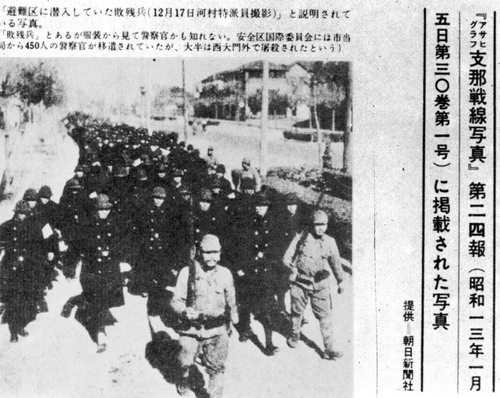 Sorted out of the neutrality zones would be hundreds of Chinese policemen in the black uniforms, who were later herded to the outskirts and all massacred.
The Nanking Massacre was not an isolated incident. The Japanese invasion forces, upon landing in Jinshanwei, had massacred all their way through the coastal villages and towns on the Hangzhou Bay, leaving "wan ren keng" or the pits of ten thousand corpses along their path. At a village called Yaojiaxiang, the Japanese army collected hordes of Chinese peasants, stacked them together, and massacred them by piercing their long blades from top to bottom.
Humble peasants of the Hangzhou Bay, today, as usual, would merely curse the words of 'dong [east] yang [ocean] ren [people]'
whenever they recollected the barbarity of the Japanese [including the Japanese pirates who rampaged the area in history]. (How ironic it was that the Japanese for hundreds of years constantly rampaged against the Yangtze delta, the
place of origin for the ancient Japanese who came to China 2000 years ago and claimed to be descendants of Count Tai-bo of the Wu Statelet.)
Iris Chang cited a British newspaper reporter who visited the Songjiang town nine weeks after the Japanese invasion in stating that this Britishman only found five old persons sobbing in a French church in a city which once possessed an original population of 100,000.
Separately, Father Jacquinot de Besange, who set up the Nanshi Refugee Center, had trekked to Songjiang in the aftermath of the Japanese occupation, and reported to the U.S. consulate officials that
he saw almost no live souls along the 40-50 kilometers road to Songjiang.
As noted by Marcia R. Ristaino in "The Jacquinot Safe Zone: wartime refugees in Shanghai", Jacquinot told Nelson T. Johnson, which was relayed to Stanley Hornbeck (a disciple of Paul Reinsch, one of a limited number of American officials who harbored true sympathy with the Chinese in the last 150 years), that "along the way, he had seen almost no Chinese alive and noted that desperately needed rice crops were untended and rotting in the fields... Japanese troops had entered the [Nanshi] Zone to round up refugees, including women."
Iris Chang also reminded us that at Suzhou, a garden watercourse city on the east bank of the Taihu Lake, the Japanese soldiers intruded into the city gate with masks and reduced the population to 500 persons from the original number of 350,000. The Japanese raped and abducted tens of thousands of women as 'sex slaves' at Suzhou.
(Iris Chang, however, listed some irrelevant incident as something that might possibly change the picture of the Rape Of Nanking: Iris Chang stated that Tani Hisao fell sick and stayed behind at Suzhou on December 7th, something which propelled the Japanese emperor's uncle into the post of commanding the three invasion columns against Nanking; that Tani Hisao, for fear of the imperial uncle's possibly abusing power, had ordered that the Japanese soldiers should regroup outside of Nanking, with only the disciplined columns allowed for entry into the capital; that it was the Japanese imperial uncle who, having returned to China from Tokyo on December 8th, issued a secret order of "killing all prisoners of war"; and that the idea of "killing all prisoners of war" was derived from the approach adopted by a Japanese Rentai (regiment-conglomerate) commander in solving the fate of about 300,000 Nationalist Army remnants [including of course the civilians or non-combatants] from the Battle of Shanghai, who stranded behind the enemy line after the Japanese landing at the Jinshanwei Beach.
Yasuhiko Asaka escaped the judgement for citation of the Japanese royal house's exemption from prosecution. Yasuhiko Asaka and Matsui Iwane, who returned to Japan after the sacking of Naking, in February 1938, received the gifts of a pair of silver emboseed with chrysanthemum.)
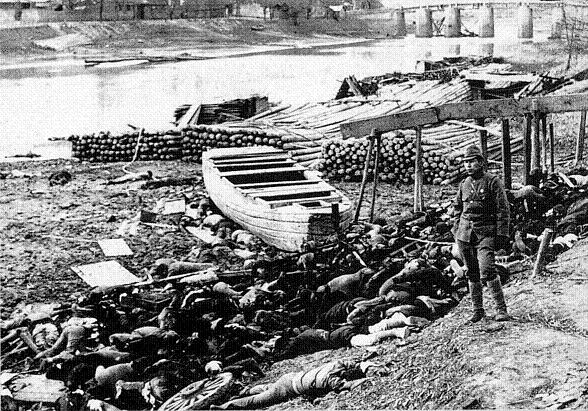
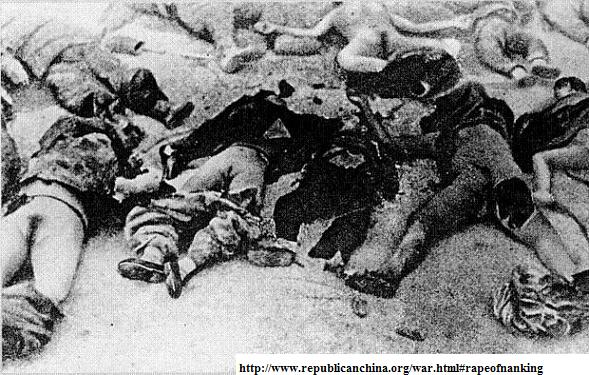
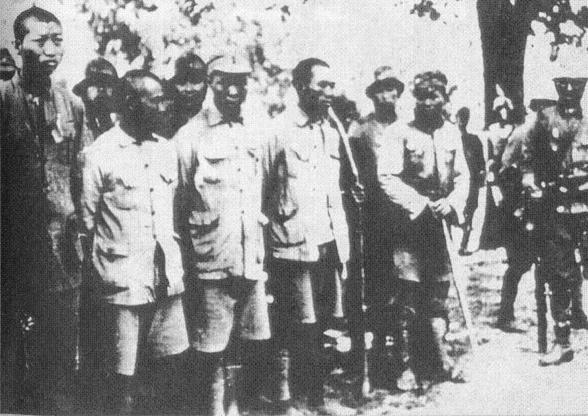
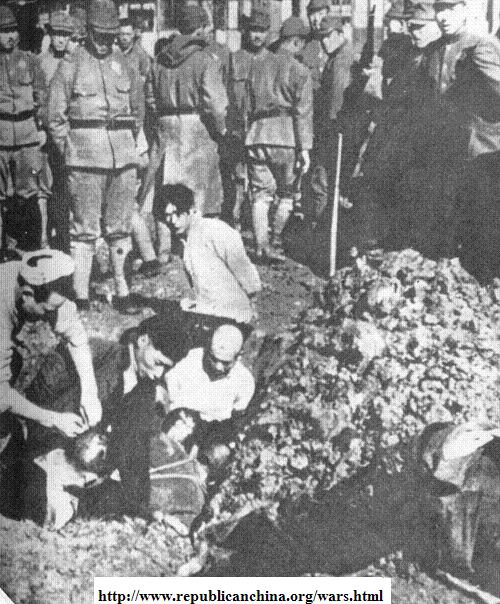
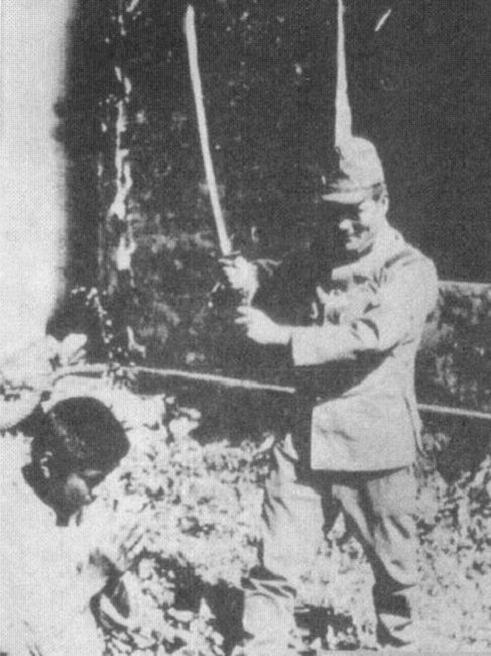
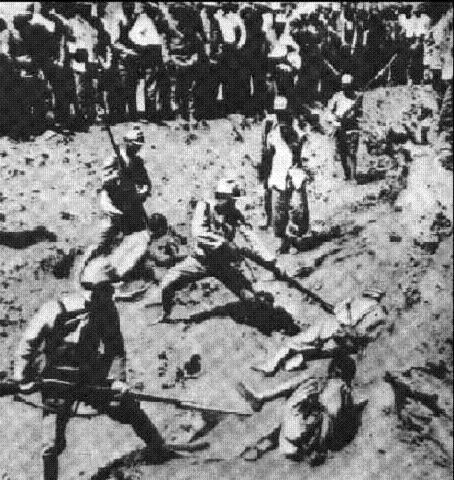
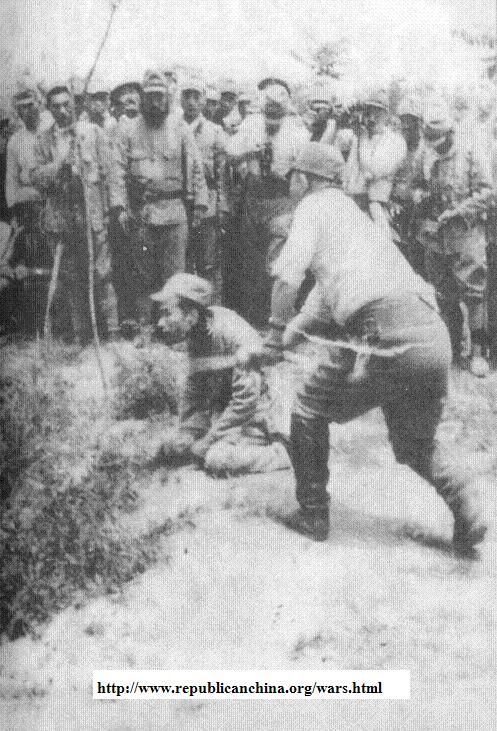
More available at the linked pictures below:
http://big5.showchina.org:81/gate/big5/www.showchina.org/rwysjxl/njdtstl/200710/t129620.htm
http://big5.showchina.org:81/gate/big5/www.showchina.org/rwysjxl/njdtstl/200710/t129620.htm
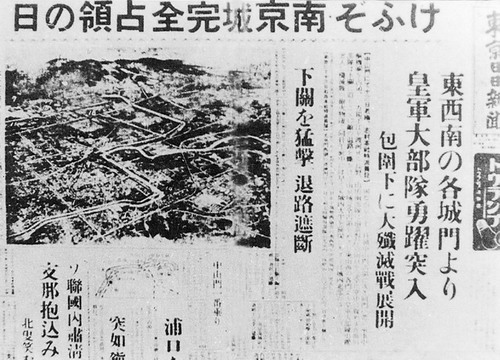
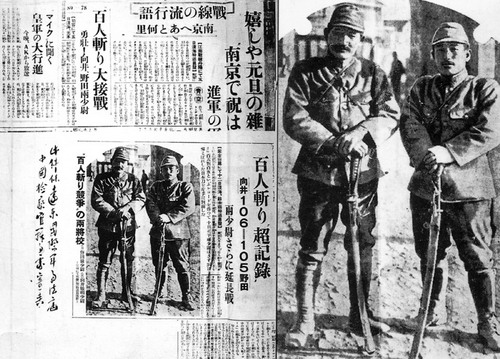
No Prisoners Taken at the Battle of Shanghai
Per Iris Chang, the idea of "killing all prisoners of war" was derived from the approach adopted by a Japanese Rentai commander in solving the fate of about
300,000 Nationalist Army remnants (with the innocent Chinese male non-combat civilians included, of course) from the Battle of Shanghai, who stranded behind the enemy line after the Japanese landing at the Jinshanwei Beach.
The massacre in Shanghai alone could be 300,000.
The reduction of population for the locals (natives) in the area, from Shanghai to Nanking, was estimated to be 900,000.
http://big5.showchina.org:81/gate/big5/www.showchina.org/rwysjxl/njdtstl/200710/t129621.htm
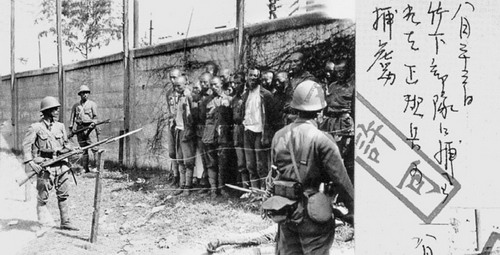
Prisoner of war killed at the Battle of Xuzhou (i.e., the Japanese Dozan [Tongshan] Campaign --which was another ironic point to show that the islanders, who had to move to the seas from coastal China, still remembered
the ancient Chinese designation of Tongshan [copper mountain] from 4,000 years ago)
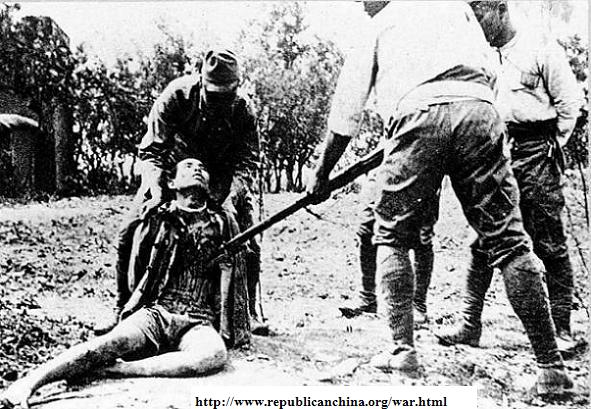
Prisoners of War - the Chinese Teenager Soldiers During the Resistance War
After the initial barbarity of indiscriminate killings, the Japanese apparently loosened their terror grip a bit 2-3 years later. When the teenager brother of this webmaster's grandfather was caught by the Japanese during a battle to cross the highway blockade, he was sent to prison where he stayed for half a year instead of execution on the spot, and was later released after payment of ransom and mediation of his stepmother who was purportedly an adopted daughter from the family of
former acting R.O.C. president Feng Guozhang (July 1917-October 1918).
This webmaster's grandfather died for China in 1940 after half a year's imprisonment in the Japanese prison.
This webmaster's grandfather, who was a medical college graduate at the time,
joined the guerrilla army together with his teenager brother who was about 13-14 years old,
and fought against the Japanese from 1937 to 1940 along the communication line between Occupied China and Free China, i.e.,
the land of northern Hangzhou Bay and to the north of
the Qiantangjiang River, where army officers from the Hunan provincial army took over the behind-the-enemy-line country magistrate posts in the aftermath of the Shanghai Battle.
This webmaster's grandfather died for China as a result of and under the clear circumstances of collusion among puppet Ding Xishan, the communists and the Japanese. The teenager brother of this webmaster's grandfather, on the eve of the communist conquest of Shanghai in the spring of 1949, joined the Youth Army and retreated to Taiwan.
Puppet commander Ding Xishan, whose army was infiltrated and utilized by the communists since 1938, could have surrendered to the Japanese at the communist instigation since it was his apparent undercover communist brigade commander who betrayed him to the Japanese over a scheme to defect back to the Chinese government side; Ding Xishan then managed to escape prison at Zhenjiang under an apparent communist scheme and setup; and Ding Xishan then twice returned to the area south of the Yangtze under the communist directives, one time before the Japan was to surrender and another time before the communist army was to cross the Yangtze for the conquest of Shanghai.
Yuan Shu, i.e., the quadruple or quintuple communist, as the puppet administrative commissioner and the puppet constabulary commander for the Zhenjiang administrative zone, could have arranged the so-called 'prison break' to set free Ding Xishan.
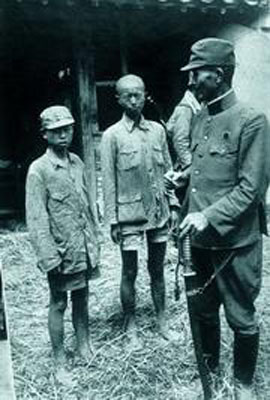
Japanese commander Asama checking on the young Chinese soldier captured at the Battle of Shanghai before killing the prisoners
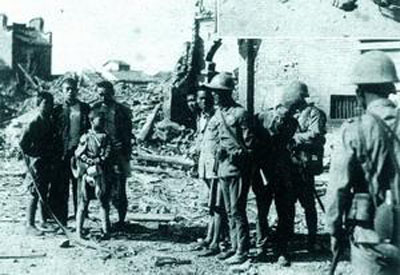
15-year-old Ji Wanfang captured by the Japanese Army at the Battle of Zengcheng near Canton in 1938 - before being killed by the Japanese
Three teenage soldiers captured and killed by the Japanese near Changsha
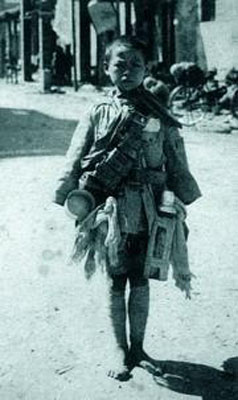
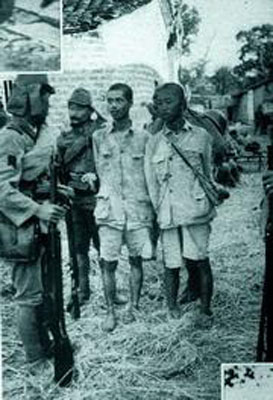
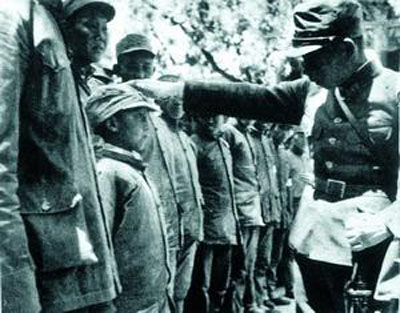 Possibly the youngest soldier who ever served in the Chinese provincial armies, i.e., the brother-soldiers ['zi di bing'] recruited from the same shire and the same village through the mouth-to-mouth referral, whose tradition was to stay in the army all their lives till death or getting disabled. (Communist General Zhu De, for example, at one time, quit his physical education job at a school, joined the provincial army,
recruited his two younger teenage brothers for the provincial army and lost them in the first battle, after which he indulged himself in the opium and four concubines before conversion to communism. He is by the way the grandfather of Zhu Chenghu
who issued the A-bomb blackmail against the U.S. recently.)
Possibly the youngest soldier who ever served in the Chinese provincial armies, i.e., the brother-soldiers ['zi di bing'] recruited from the same shire and the same village through the mouth-to-mouth referral, whose tradition was to stay in the army all their lives till death or getting disabled. (Communist General Zhu De, for example, at one time, quit his physical education job at a school, joined the provincial army,
recruited his two younger teenage brothers for the provincial army and lost them in the first battle, after which he indulged himself in the opium and four concubines before conversion to communism. He is by the way the grandfather of Zhu Chenghu
who issued the A-bomb blackmail against the U.S. recently.)
How unfortunate it was for China, with Stalin and the Chinese Communists in collusion with the Comintern spies
such as the son of Prince Saionji - who was beside the Japanese emperor Hirohito, and Ozaki - who served as secretary to the Japanese prime minister Konoye Fumimaro, as well as a full house of Comintern spies in Roosevelt's United States government, colluding together to communize both China and Japan: one stone, two birds. China's fate was forever doomed, and today there is
no hope to reverse the fate of the billion Chinese serving as coolies and slaves for the whole world, with the Chinese Communists [national capitalists, to be exact]
acting as the grand housekeeper for the multinational corporations and banksters.
* In Commemoration of China's Fall under the Alien Conquests in A.D. 1279,
A.D. 1644 & A.D. 1949 *
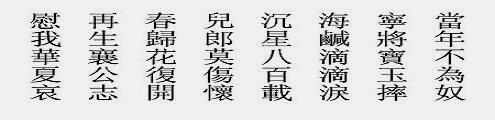 U.S.S.R./Comintern Alliance with the KMT & CCP (1923-1927)
 Korean/Chinese Communists & the 1931 Japanese Invasion of Manchuria Korean/Chinese Communists & the 1931 Japanese Invasion of Manchuria
American Involvement in China: Soviet Operation Snow, IPR Conspiracy, Dixie Mission, Stilwell
Incident, O.S.S. Scheme, Coalition Government Crap, Amerasia Case & The China White Paper
* Stay tuned for "Republican China 1911-1955: A Complete Untold History" *
|
|
Zou Rong's Revolutionary Army;
Shin Kyu Sik's
Shrine (Spirit, Kunitama) of Korea
|
This snippet is for sons and daughters of China:
Heed the sons & ministers' agony and sorrow of our ancestors who died or lived through the Mongol, Manchu and Soviet-Chicom conquest
and
the Yongjia, Jingkang and Jiashen cataclysms !
Jeanne d'Arc of China:
Teenager girl Xun Guan breaking out of the Wancheng city to borrow the relief troops in the late Western Jinn dynasty;
Liu-Shao-shi riding into the barbarian army to rescue her husband in the late Western Jinn dynasty;
teenager girl Shen Yunying breaking into Zhang Xianzhong's rebels on the horseback to avenge on father's death in the late Ming dynasty.
China's Solitary and Lone Heroes:
Nan Jiyun breaking out of the Suiyang siege and charging back into the city in the Tang dynasty;
Zhang Gui & Zhang Shun Brothers breaking through the Mongol siege of Xiangyang in the Southern Soong dynasty;
Liu Tiejun breaking through three communist field armies' siege of Kaifeng in the Republican China time period;
Zhang Jian's lone confrontation against the communist army during the June 3rd & 4th Massacre of 1989.
|
|
|
The Nanking Massacre through the Oral Recitals of the Japanese Army Soldiers and Officers (in Japanese):
The Japanese who participated in the Nanking Massacre acknowledged that the 7th Rentai (reinforced regiment with 2500 troops) alone killed 6,670 Chinese during the 12-day sweep campaign in Nanking.
Documentary videos about China's Resistance War: 42 Video Series in Chinese
To view the real media videos, please use either Real Player
or VLC Media Player
or choose the youtube streaming linked by [1a; 1b; 1c, for example]
(42 Videos in Chinese ranging from 30MB to 50 MB each; plug-in download might be needed)
The Great Rescue of 1937
In Nanking, quite some foreign teachers at both the Nanking University and Nanking Women University changed their summer vacation plans in anticipation of the July 1937 Sino-Japanese War.
After the August 13th outbreak of war in Shanghai, George A. Fitch of YMCA, who was once invited to be an adviser to the "New Life Movement Committee", went to Shanghai to organize the "Zhabei Service Team" as part of his YMCA Youth Society activities.
Among the young men and women employed by Magee would be Xu Qingliang who was spotted and recruited by the missionary inside of the refugee center
when the Japanese drove the Shanghai civilians in the Yangshupu area across the Huangpu River during the January 28th, 1932 Incident. Xu Qingliang et al.,., retreated to Nanking in November after the Zhabei path of return from Baoshan to Shanghai was cut off.
In Shanghai, Rev John G. Magee of the American Church Mission assisted Father Jacquinot de Besange in establishing a refugee center of 110,000 people in the Nanshi area.
Rev John G. Magee returned to Nanking and took charge of providing service for the refugees and wounded soldiers.
At the suggestion of Nanking University board of director Hang Liwu, the International Safety Zone was proposed to be carved out, covering an area of about 3.86 square kilometers, and encapsulating the universities, consulates, the German club and the American Gulou Hospital.
The International Safety Zone was both agreed upon by Nanking Mayor Ma Chaojun and acknowledged by the Japanese commander in Shanghai.
George A. Fitch, after instructing Xu Qingliang in using the YMCA facilities for receiving the refugees and wounded, took a trip to seeing his family members who were to depart via American warship Chautomont in Qingdao but missed them by one day late when he arrived on November 16th.
He was late as a result of changing the trains and buses due to the Japanese bombing along the railway line north of the Yangtze.
On November 21st, the International Committee for the Nanking Safety Zone as well as the International Red Cross Nanking Committee were established, with headquarters set at the residence of Zhang Qun.
The International Committee, by the time the Japanese army finally arrived, would retain 10 Americans and Germans among the board and a staff of 1500 Chinese.
The International Committee mobilized the YMCA (which was a nationwide organization developed under the supervision of George A. Fitch's father Jeanetter 50 years ago), the American Church Mission, the teaching staff of universities, colleges and high schools, the Nanking police and firefighters, and various philanthropic organizations for providing asylum to 200,000 people.
The International Committee appealed for financial assistance with the Chinese government, Japan's Shanghai invasion army, various embassies, and relief organization and the Red Cross in Shanghai.
In addition to the above, Mayor Ma Chaojun sought George A. Fitch in renting the British ship Ranpura for relocation of China's "forbidden city" treasures.
Fitch instructed Xu Qingliang and Shi Lisheng in locating a circumvential road for 50 trucks to move the treasures to the Xiaguan Wharf.
Ranpura was able to leave on December 5th, with Hang Liwu in charge of the "forbidden city" treasures, and sailed past Wuhu about one dozen hours ahead of the Japanese army's thrust to the Yangtze River riverbank.
By December 10th, 1937, the majority of foreigners had fled Nanking.
Remnants boarded the American Warship Panay on the evening of the 11th.
Fitch and Magee both refused to take off on the US Panay when the consulate official called upon them.
The International Committee board members all vacated their residencies for housing the refugees.
The safety zone was subdivided into nine subzones and 25 camps.
On the afternoon of December 12th, Panay was sunken by the Japanese bombers about 50 kilometers upstream of Nanking.
With the loss of American lives, which was a fragrant Japanese challenge of the American powers, the Americans backed down and accepted the Japanese apology as an accident.
The Japanese made a compensation payment of US$2.2 million.
The Americans continued the appeasement policy well into the Pearl Harbor attack four years later.
According to Francis Pike, before the sinking of Panay, Roosevelt took Hull's opinions as to non-frontation with the Japanese and refused Admiral Harry Yarnell's request for more warships from his Asiatic Fleet to be sent to Shanghai as well as disapproved Morgenthau's suggestion to implement economic sanctions on Japan. Even though Roosevelt made a fire-side speech in Chicago on October 5th about "quarantine of aggressor nations," no concrete actions followed. When Stimson noticed the Japanese bombing of Canton in May 1938, he complained to Hull about the Japanese barbarities, which led to Hull's action to have Roosevelt implement a license system to have American aircraft manufacturers to export planes and parts to Japan.
The War Department did not think that the Philippines was defensible and China or Asia as a whole was not worth fighting for, and at the State Department, Maxwell Hamilton of the Far Eastern Affaires Division and the Japan hands were against actions that might provoke Japan while European specialist Hugh Wilson suggested to have Japan and China fight it out.
Back on February 10th, 1932, per Donald Jordan,
the Japanese ronin-police attacked the U.S. vice-consul Arthur Ringwalt who accompanied a Chinese-American mother on a return trip to the Hongkou District in search of her child,
which came to be called the "gravest incident" by secretary of state Stimson.
In January 1938, Churchill complained about the British policemen's being manhandled by the Japanese army in the International Settlement of Shanghai. In July 1939, Neville Chamberlain's government gave in to the Japanese in signing the Craigie-Arita Agreement, which gave Japan special requirements in the International Settement of Shanghai, to which the Americans did not raise objections.
On July 26th, 1939, the U.S. announced the annulment of the "commerce act with Japan" within 6 months in protest of the Japanese encirclement of the Tianjin's settlement and the Japanese insulting the British & American citizens.
(To reign in Japan the mad dog from biting themselves, Britain and America somehow pressured Japan into some concessions through several conferences, i.e., the Washington Conference on the naval disarmament in 1922, and the Kellogg-Briand Pact in 1928. Nothing had shaken the Anglo-American long-term objective of supporting Japan, no matter it was the sinking of Captain T. R. Galsworthy's merchant ship from the British-owned Indochina Steam Navigation Company of London in 1894, or the sinking of Panay by the Japanese bombers on the afternoon of December 12th, 1937, or the attacks at two British warships on the Yangtze at the same timeframe.
While the U.S. had supported Japan from the 1894 First Sino-Japanese War to the 1904 Russo-Japanese War, Britain tacked on the job of supporting Japan from 1902 onward, for 20 continuous years by means of two 10-year military alliance treaties.)
Those who remained to be eyewitnesses to the fall of Nanking on December 13th would include Archibold T Steele of "Chicago Daily News",
L G Smith of "Reuters",
C Yates McDaniel of "Associated Press",
Tillman Durdin of "New York Times",
and
Arthur Mencken of "Paramount Pictures".
At the demand of the Japanese military, foreign reporters left Nanking on the 15th.
On the 17th, Tillman Durdin of "New York Times", on board a ship at the mouth of the Wusongkou & Yangtze, announced the "Nanking Atrocity" to the world, with description of about 200 men being gun down within 10 minutes near the dock where the reporters boarded the ship on the 15th.
Three months later, on March 16th, George A. Fitch of the YMCA published a report on the atrocities in HK's "South China Morning Post".
In July 1938, Harold J. Timberley of "Manchester Guardian Weekly", on basis of MS Bates & George A Fitch's writings, wrote a comprehensive report entitled "What War Means: The Japanese Terror In China: A Documentary Record".
Wu [no] Wang [forgetting] Zai [at] Ju [the Ju fort]
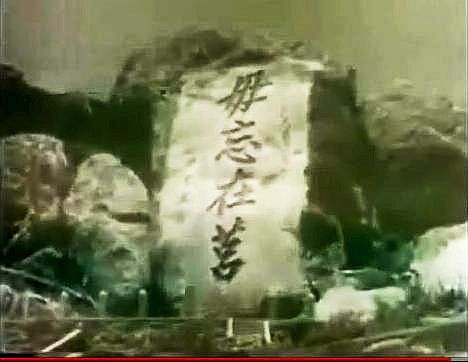
In Commemoration of China's Fall under the Alien Conquests in AD 1279,
AD 1644 & AD 1949
China was time and again invaded and raped by the "aliens" - whom this webmaster considered to be
i) the Mongols,
ii) the Manchus, and
iii) the Soviet proxies, consecutively.
For the future sons of China to read the following poem, see whether someone of you would revive the spirits of China,
and some day do some thing to reverse the fate of China, i.e., one billion coolies and slaves toiling to death for the multinational corporations and banksters under the supervision of the 'housekeeper' - the Chinese Communists or the former Soviet proxies.
(The Japanese invasion [AD 1931-1945], similar to the Jurchen invasion prior to the Mongol conquest, did not doom China as a whole as the Mongol conquest and the Soviet-ChiCom conquest subsequently did.)
The communists had conquered China owning to the key battle success in Manchuria, which was the result of treacheries on the part of Wei Lihuang, i.e., the government troops' commander-in-chief in Manchuria, a treachery that was comparable to Soong Dynasty prime minister Jia Sidao's abandoning to the Mongol the Xiangyang city [which was under siege for 4-5 years] and Ming Dynasty general Wu Sangui's betrayal of the Mountain and Sea Pass to the Manchus.
Wei Lihuang, with the communist mole by his side from the days of the resistance war, overrode General Wang Tiehan's proposal and made the government army into the sitting ducks in the isolated pockets and cities of Manchuria, for the communist army to attack.
Namely, Wei Lihuang allowed the communist army to take the transcendental secret manoeuvre to ship thousands of artillery to the foot of the Jinzhou city wall under the assistance of the Soviet railway army corps.
General Wang Tiehan suggested that the Changchun garrison troops could break out towards Mukden to the south as intelligence had shown that the communist army had disappeared along the trunk line of Changchun-Jirin-Mukden.
Only the 52nd Corps, that was hoodwinked by Wei Lihuang into attacking towards Shenyang [i.e., Mukden] as the relief troops but impeded by the communist army halfway for lack of coordination between Wei Lihuang and the communist army, managed to return to wrestle back the Yingkou port to escape the Manchurian battleground via sea.
A part of the Youth Army division, which broke out of the Mukden siege, fought its way along the Liao-xi Corridor to arrive at the Mountain and Sea Pass.
We don't need to remind the readers that the communist army was a motley group of mercenaries including about 250,000 ethnic-Korean Japanese Kwantung Army diehards per Kim Il-sun plus the Japanese 8th Route Army (i.e., the Japanese medical staff, airforce staff, officer corps, and tank and artillery operators), the ethnic-Taiwan Japanese Kwantung Army, the Outer Mongolian cavalry army, not counting the Soviet railway army corps.
According to the Soviets, the 'railway' tag was a guise for intervening in the Chinese civil wars, namely, the cloak of secrecy under which the Soviets orchestrated the historical Soviet conquest of China to fulfill Stalin's mantle that pro-Soviet regimes must be established in all territories that the Soviet Red Army ever stepped on, no matter Europe or Asia.
That is, Soviet military staff, not merely Soviet military advisers, fought the Chinese civil wars in Manchuria as the railway staff.
Ivan V. Kovalev, as Stalin and All-Union Communist Party (Bolsheviks)'s plenipotentiary to the Chinese Communist Party (CCP), was sent to China for directing the civil war as a railway czar.

George Kennan's Fallacious Disclaim of Soviet Instigation and Bankrupt 'Long' Containment View:
George Kennan
naively discounted
the Chinese communist revolution as "part of the Soviet system" and asserted its victory to be an
exception to the Soviet "military intimidation or invasion" and not a result that could be ascribed
"primarily to Soviet propaganda or instigation" (American Diplomacy, p. 119. The U of Chi Press 1951,
expanded edition).
George Kennan's bankrupt 'long' view as to communism was "a long-term, patient but firm and vigilant containment", which was to seek solutions in the "historical"
context, namely,
the "Russian or the oriental mind" of the "Russian-Asiatic world", something the communist China twin shared, that was
seemingly perceived as an innate matter that could not be overcome.
|
|
|
|
|
TEN TRAINS EQUIVALENT AMERICAN LEND-LEASE WEAPONS THAT STALIN & RUSSIANS GAVE TO MAO & CHINESE COMMUNISTS;
FORTY SHIPS EQUIVALENT QUANTITY OF TANKS & CANNONS, BOTH AMERICAN-MADE & JAPAN-MADE
3300 TONS OF PETROL FROM RUSSIANS IN 1947 ALONE; PLUS 2000 TONS OF DIESEL, 1000 TONS OF PLANE FUEL, 700 TONS OF EXPLOSIVES & 2000 TONS OF MACHINERY OIL
30000 TONS OF PETROL FROM RUSSIANS IN 1948; PLUS 1000 TONS OF PLANE FUEL, 5000 TONS OF KEROSINE, 3000 HEAVY WEIGHT TRUCKS & 150 ARTILLERY TRACTORS
DEATH OF MILLIONS OF YELLOW MEN, & POSSIBLY MORE IN THE FUTURE WAR AGAINST TAIWAN !!!!!
Reference: see the writing by James Perloff China Betrayed Into Communism on Friday, 24 July 2009 at
http://www.thenewamerican.com/index.php/history/world/1464
August Storm lend-lease weapons ended up in Mao's hands.
"At the Teheran and Yalta wartime conferences, however, Roosevelt asked Stalin if he would break his pact with Japan and enter the Far East war. Stalin agreed, but attached conditions. He demanded that America completely equip his Far Eastern Army for the expedition, with 3,000 tanks, 5,000 planes, plus all the other munitions, food, and fuel required for a 1,250,000-man army. Roosevelt accepted this demand, and 600 shiploads of Lend-Lease material were convoyed to the USSR for the venture. Stalin's Far Eastern Army swiftly received more than twice the supplies we gave Chiang Kai-shek during four years as our ally.
"General Douglas MacArthur protested after discovering that ships designated to supply his Pacific forces were being diverted to Russia. Major General Courtney Whitney wrote: 'One hundred of his transport ships were to be withdrawn immediately, to be used to carry munitions and supplies across the North Pacific to the Soviet forces in Vladivostok.... Later, of course, they were the basis of Soviet military support of North Korea and Red China.'
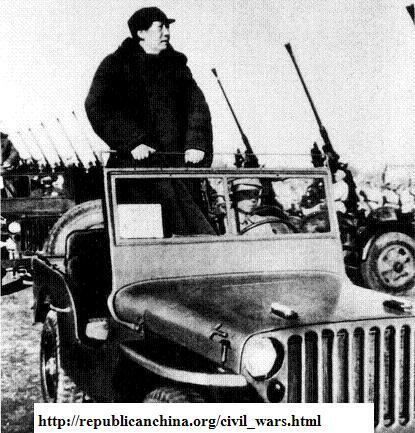
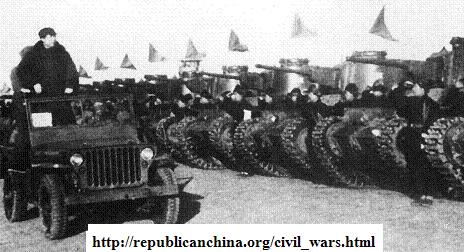
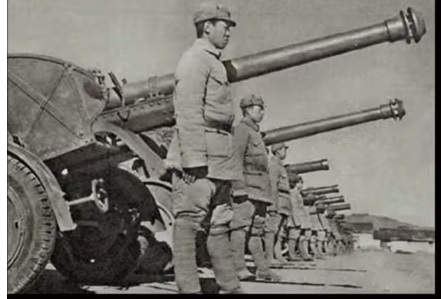
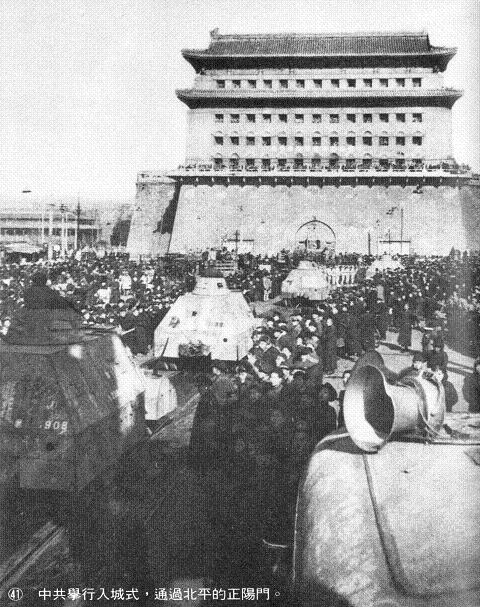
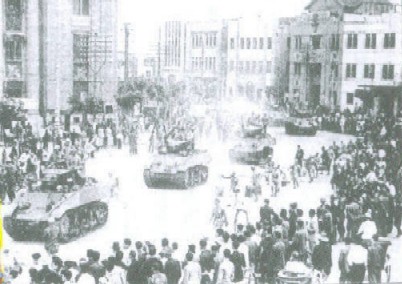
|
* In Commemoration of China's Fall under the Alien Conquests in AD 1279,
AD 1644 & AD 1949 *
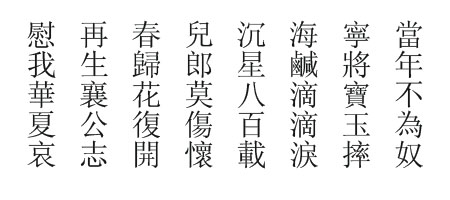
At the time [when China fell under the alien rule], refusing to be slaves,
[our ancestors] died as broken jades rather than being alive as an intact tile.
Tears, which tasted like the sea water, dripping down [the face] one by one,
For [China] the star [that fell from the sky] had been down [at the bottom of the sea] for 800 years.
Sons, please do not get saddened in the hearts,
For as the flowers did, they blossom when the spring returns.
When the [hegemony lord] Xianggong's swear is to be revived again,
The sorrow of the Flowery Xia Chinese would be soothed.
|
Written by Ah Xiang
|
|
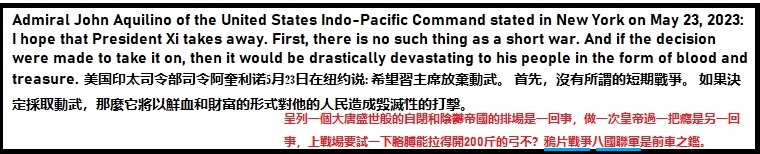
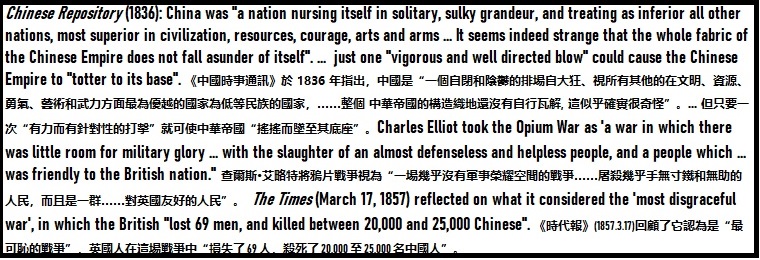
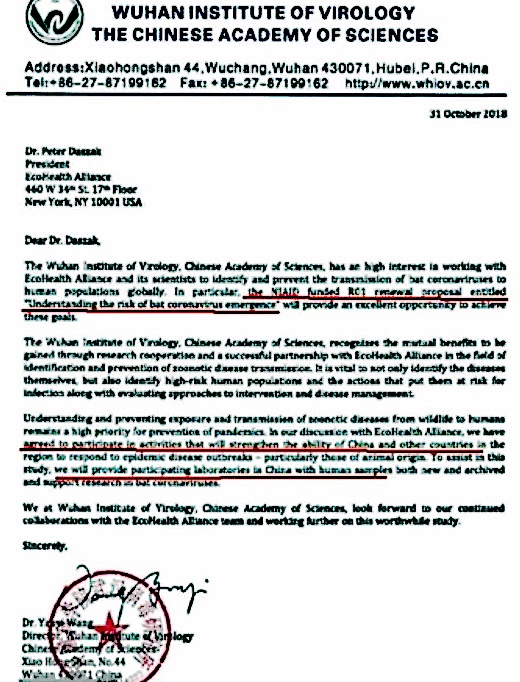
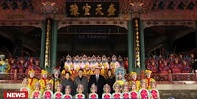
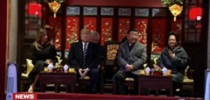
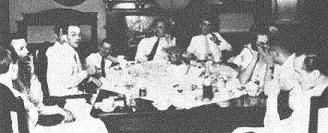
![Though, Anna Wang [Anneliese Martens], in her memoirs, expressed jealousy over Gong Peng by stating that the Anglo-American reporters had flattered the Chinese communists and the communist movement as a result of being entranced with the goldfish-eye'ed personal assistant of Zhou Enlai](GongPeng.jpg)